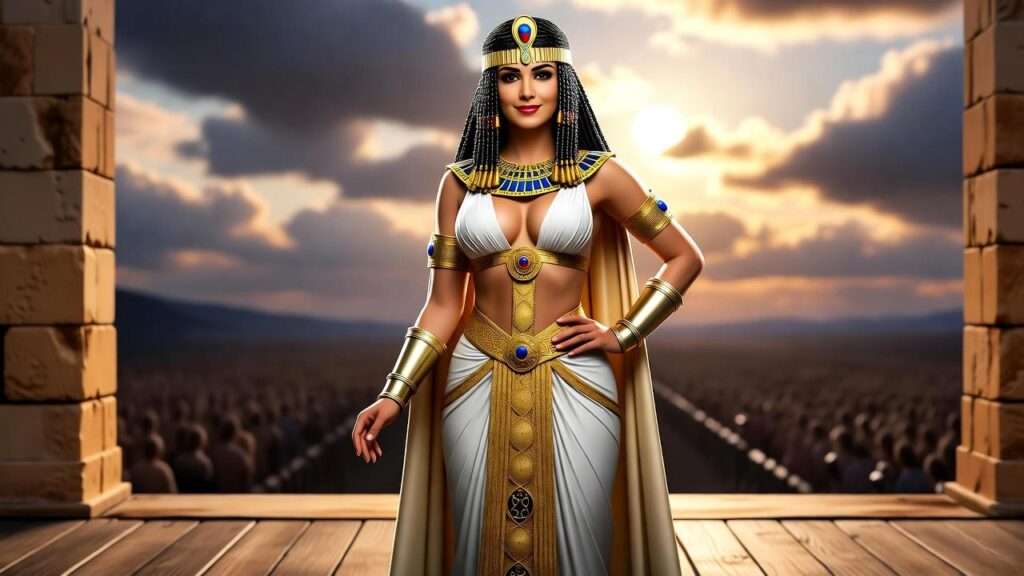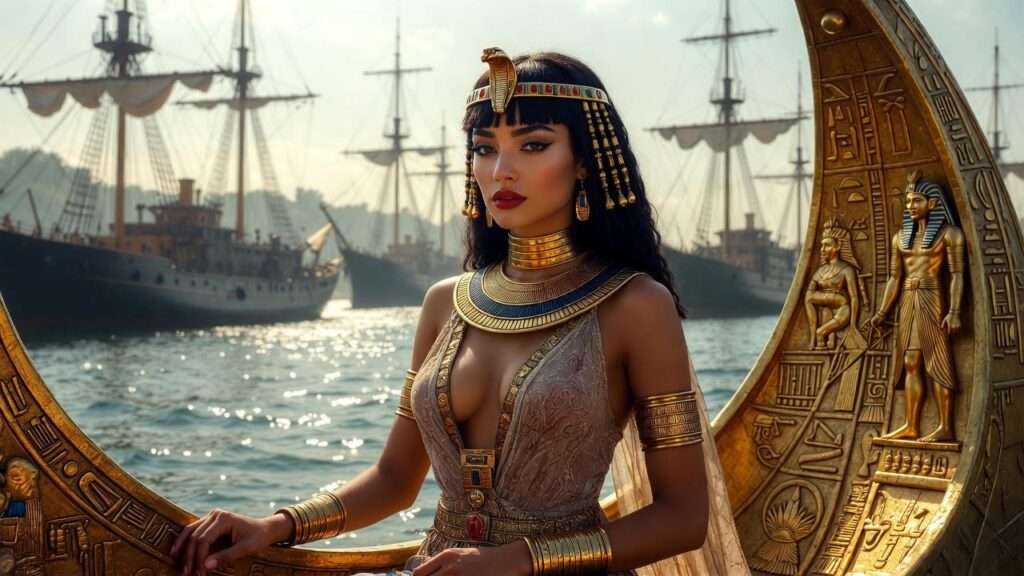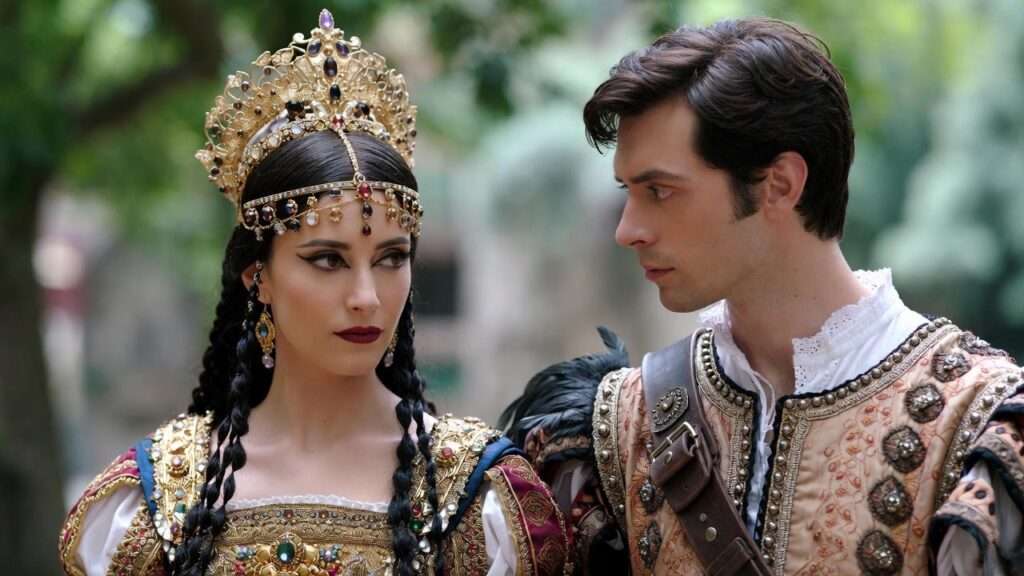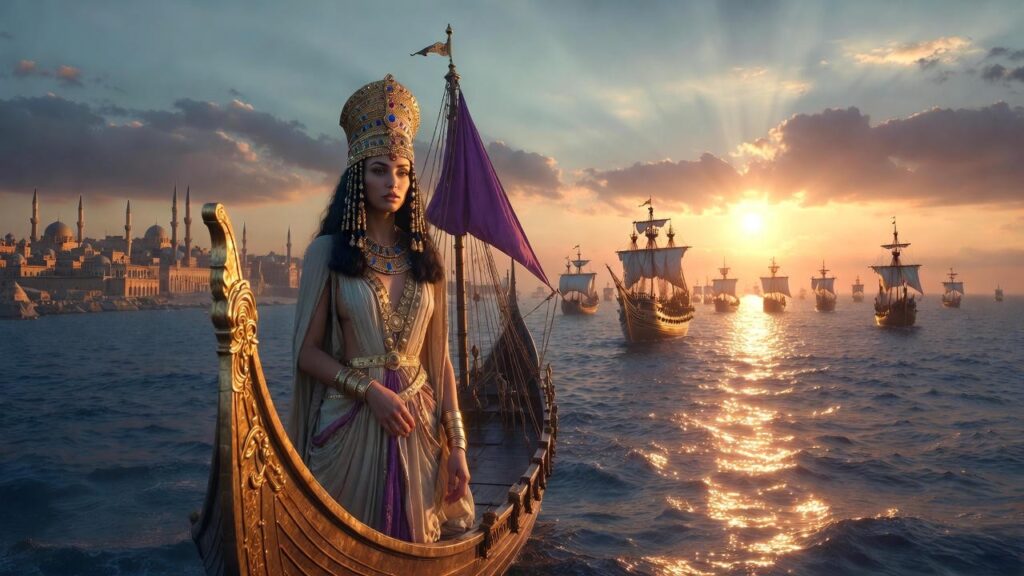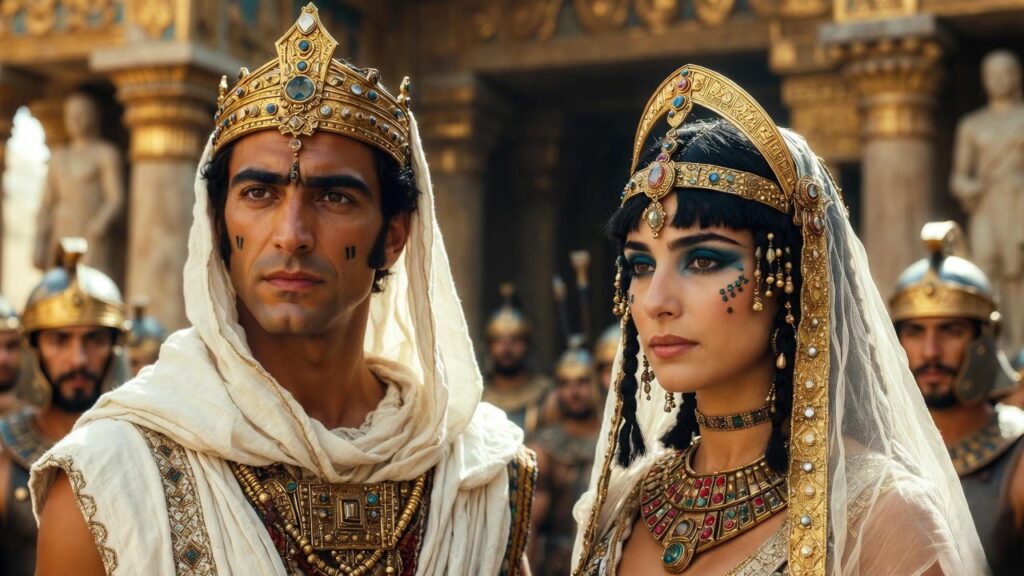
The barge she sat in, like a burnish’d throne, Burn’d on the water: the poop was beaten gold; Purple the sails, and so perfumed that The winds were love-sick with them…
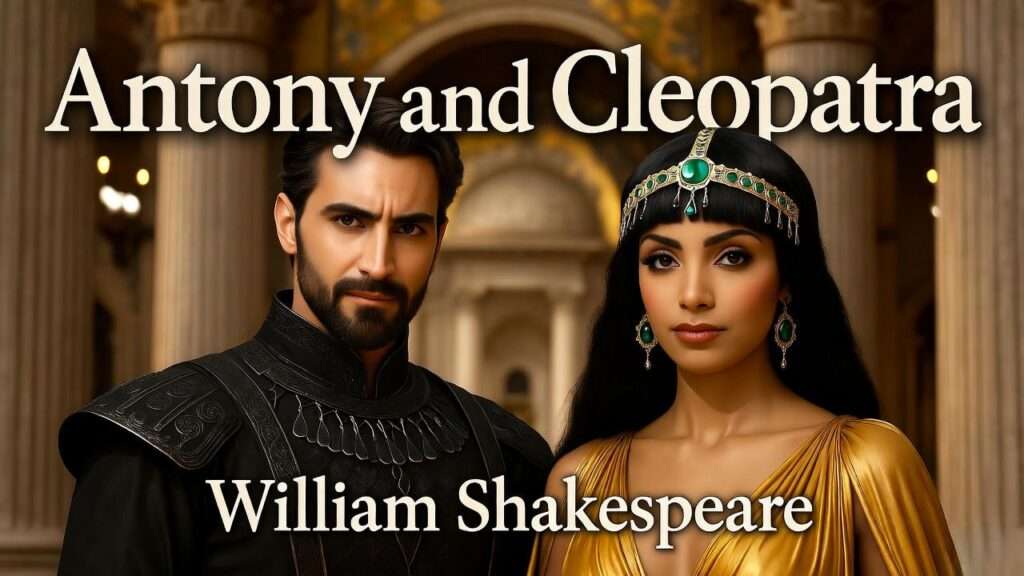
These immortal lines from Enobarbus’s speech in Act 2, Scene 2 capture the mesmerizing allure of Cleopatra like no other moment in literature. Shakespeare’s Antony and Cleopatra transports us to a world of epic passion, political intrigue, and tragic downfall, where the characters in Antony and Cleopatra stand as some of the most psychologically complex and unforgettable in his entire canon.
Whether you’re a student preparing for an exam, a teacher seeking deeper insights, a theater enthusiast analyzing performances, or simply a reader drawn to one of the Bard’s greatest tragedies, understanding these characters is essential to appreciating the play’s depth. This comprehensive guide provides a complete list of all characters in Antony and Cleopatra, followed by in-depth analysis of the major and key supporting figures, their relationships, thematic roles, and enduring interpretations on stage and screen.
Drawing from Shakespeare’s primary source—Plutarch’s Parallel Lives—and informed by decades of scholarly criticism and theatrical tradition, this article goes beyond basic summaries to offer fresh, expert insights into why these iconic figures continue to captivate audiences centuries later.
Historical and Dramatic Context
To fully grasp the richness of the characters in Antony and Cleopatra, it’s crucial to understand the historical and dramatic foundations Shakespeare built upon.
The play, written around 1606–1607 and first performed shortly thereafter, is one of Shakespeare’s late Roman tragedies, alongside Julius Caesar and Coriolanus. It draws heavily from Sir Thomas North’s 1579 translation of Plutarch’s Lives of the Noble Grecians and Romans, particularly the parallel biographies of Mark Antony and Octavius Caesar (later Augustus).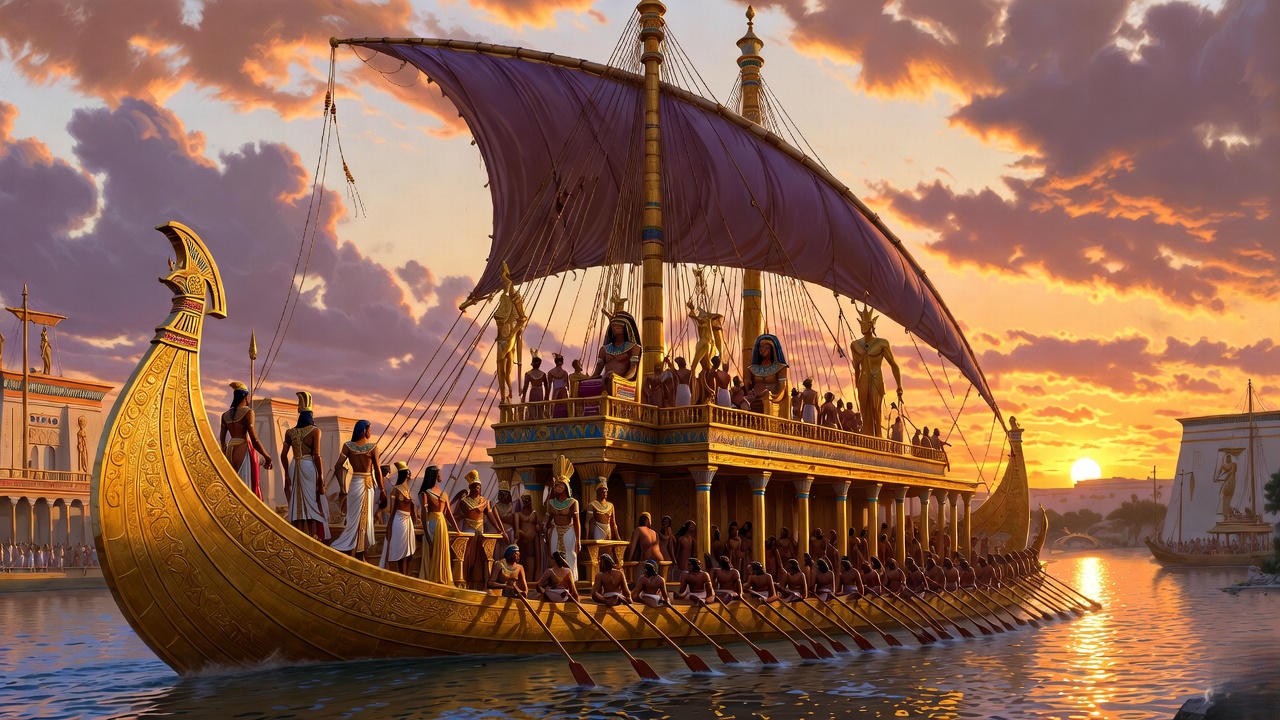
Plutarch portrayed Antony as a noble but flawed soldier undone by his love for Cleopatra VII, the last Ptolemaic queen of Egypt. Shakespeare, however, dramatically innovates: he elevates Cleopatra from a cunning seductress in historical accounts to a multifaceted, transcendent figure of infinite variety. He compresses events, invents scenes (like Enobarbus’s death from grief), and shifts focus from pure history to psychological drama.
The play’s genre as a tragedy is debated—some critics, like Northrop Frye, classify it as a “tragedy of passion” distinct from Shakespeare’s earlier revenge tragedies. Set against the backdrop of the Roman Empire’s transition from Republic to Empire following Caesar’s assassination, it explores binaries: Rome (duty, order, masculinity) versus Egypt (pleasure, chaos, femininity). These oppositions shape every character, making them embodiments of larger forces.
Shakespeare’s late style—dense poetry, rapid scene shifts across continents, and ambiguous morality—demands active engagement from readers and audiences. Understanding this context illuminates why characters like Antony appear divided and Cleopatra defies easy categorization.
Complete List of Characters in Antony and Cleopatra
Shakespeare’s Antony and Cleopatra features a sprawling cast reflecting the play’s epic scope—over 40 named characters, plus attendants, soldiers, and messengers. Unlike more intimate tragedies like Hamlet, this play’s ensemble mirrors the vast political world of the Roman triumvirate and Egyptian court.
Below is a complete dramatis personae, organized by affiliation for clarity. I’ve included brief descriptions, key traits, and notable appearances to make this the most user-friendly reference available.
Character Reference Table
| Character Name | Affiliation/Role | Key Traits | Notable Scenes/Acts |
|---|---|---|---|
| Mark Antony | Roman Triumvir | Passionate, heroic, flawed | Throughout; dies Act 4, Scene 14 |
| Cleopatra | Queen of Egypt | Charismatic, manipulative, tragic | Throughout; dies Act 5, Scene 2 |
| Octavius Caesar | Roman Triumvir (later Augustus) | Calculated, ambitious, restrained | Key in Acts 1, 3, 5 |
| Enobarbus | Antony’s follower | Loyal, pragmatic, remorseful | Dies Act 4, Scene 9 |
| Charmian | Cleopatra’s attendant | Loyal, witty | Acts 1, 5 |
| Iras | Cleopatra’s attendant | Loyal, devoted | Acts 1, 5 |
| Octavia | Octavius’s sister, Antony’s wife | Virtuous, dutiful | Acts 2, 3 |
| Lepidus | Roman Triumvir | Weak, conciliatory | Acts 1–3 |
| Pompey (Sextus Pompeius) | Rebel leader | Ambitious, naval power | Act 2 |
| Eros | Antony’s servant | Loyal to death | Act 4 |
| Soothsayer | Fortune-teller | Prophetic, mysterious | Acts 1, 2 |
| Mardian | Eunuch in Cleopatra’s court | Witty, loyal | Various |
| Alexas | Cleopatra’s attendant | Servile | Act 1 |
| Seleucus | Cleopatra’s treasurer | Honest, revealing | Act 5 |
| Canidius | Antony’s lieutenant | Practical soldier | Acts 3, 4 |
| Scarus | Antony’s soldier | Brave, outspoken | Act 4 |
| Demetrius | Antony’s follower | Critical | Act 1, Scene 1 |
| Philo | Antony’s follower | Critical of Antony’s decline | Act 1, Scene 1 |
| Agrippa | Octavius’s advisor | Practical, diplomatic | Acts 2, 3 |
| Maecenas | Octavius’s advisor | Loyal, perceptive | Acts 2, 5 |
| Dolabella | Octavius’s follower | Sympathetic | Act 5 |
| Proculeius | Octavius’s follower | Deceptive | Act 5 |
| Thidias | Octavius’s messenger | Arrogant | Act 3 |
| Menas | Pompey’s pirate ally | Ruthless, ambitious | Act 2 |
| Menecrates | Pompey’s pirate ally | Loyal pirate | Act 2 |
| Varrius | Antony’s friend | Minor | Act 2 |
| Taurus | Octavius’s lieutenant | Military | Act 3 |
| Ventidius | Antony’s general in Parthia | Victorious but cautious | Act 3 |
| Silius | Ventidius’s officer | Minor | Act 3 |
| Clown | Asp bringer | Comic, rustic | Act 5, Scene 2 |
The Romans in Egypt
- Mark Antony: The central tragic hero, torn between duty and desire.
- Demetrius and Philo: Frame the play by criticizing Antony’s transformation.
- Enobarbus: Antony’s closest confidant and the play’s most eloquent commentator.
- Eros, Scarus, Canidius, Dercetus: Soldiers whose defections mark Antony’s decline.
Cleopatra’s Court
- Cleopatra: The magnetic queen at the heart of the drama.
- Charmian and Iras: Faithful attendants who share her fate.
- Mardian the eunuch: Provides comic relief and insight into court life.
- Alexas, Diomedes, Seleucus: Reveal the practical and political side of Cleopatra’s rule.
Octavius Caesar’s Camp
- Octavius Caesar: The rising power, embodying Roman discipline.
- Octavia: His sister, used as a political pawn.
- Agrippa and Maecenas: Trusted advisors who contrast with Antony’s followers.
- Dolabella, Proculeius, Thidias, Gallus: Envoys and officers in the final act.
Soldiers, Followers, and Minor Figures
- Pompey (Sextus Pompeius): Represents the lingering threat of civil war.
- Menas and Menecrates: His pirate supporters.
- Ventidius and Silius: Demonstrate Antony’s military successes offstage.
- Lepidus: The weakest triumvir, quickly sidelined.
Messengers, Attendants, and Others
- Numerous unnamed messengers drive the plot with news of battles and betrayals.
- Soothsayer: Offers cryptic prophecies that underscore fate.
- Clown: Delivers the asp in Act 5, blending comedy with tragedy.
In-Depth Analysis of Major Characters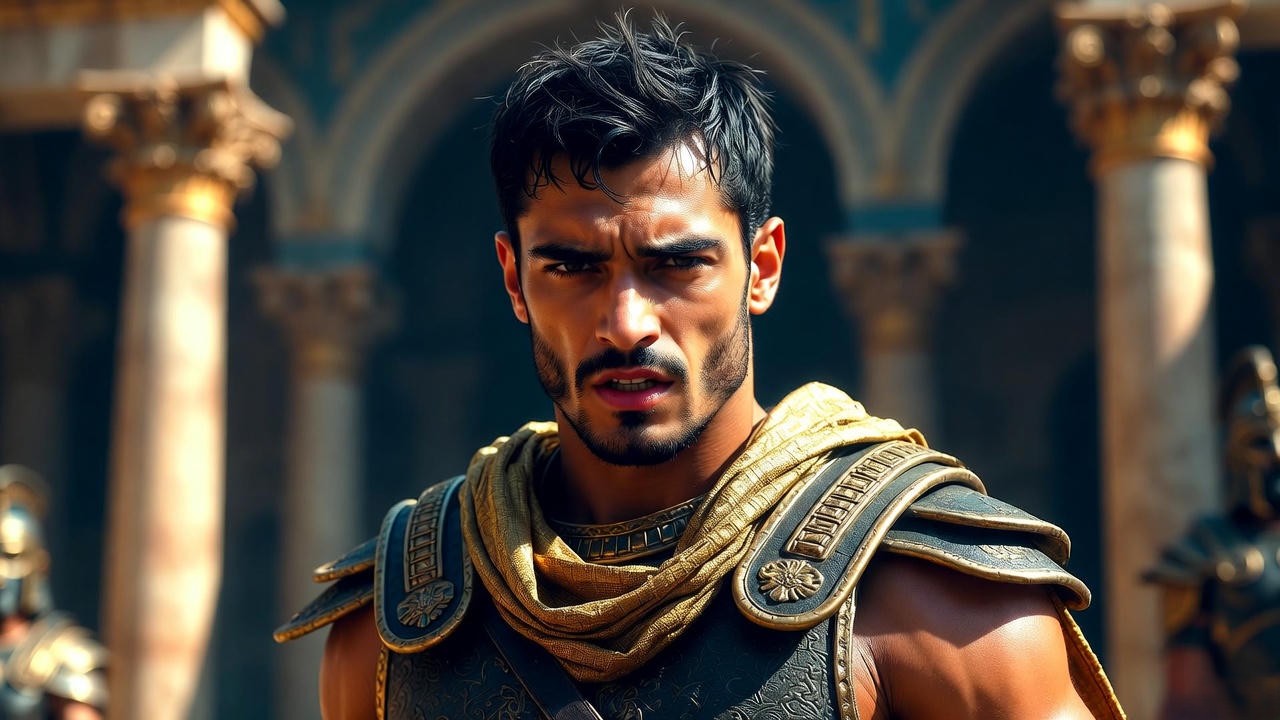
Mark Antony – The Tragic Hero Divided
Mark Antony is one of Shakespeare’s most conflicted protagonists—a “triple pillar of the world” transformed into a “strumpet’s fool” (Act 1, Scene 1). Unlike the decisive heroes of earlier tragedies, Antony is defined by internal division: Roman soldier versus Egyptian lover, public leader versus private man.
His greatness is evident in his charisma and military prowess—soldiers adore him, and even Octavius acknowledges his valor. Yet his tragic flaw is not simple lust but an inability to reconcile opposing worlds. As Janet Adelman notes in The Common Liar (1973), Antony seeks transcendence through love, imagining a “new heaven, new earth” with Cleopatra (Act 1, Scene 1).
Key moments reveal his decline:
- His impulsive return to Rome after Actium.
- The botched suicide (Act 4, Scene 14), where he bungles even his own death.
- His final vision of reunion with Cleopatra in the afterlife.
Antony’s language shifts from martial rhetoric to hyperbolic passion, reflecting his transformation. Critics debate whether he is a noble hero undone by love or a self-indulgent leader deserving his fall. The truth lies in Shakespeare’s ambiguity—he is both magnificent and fatally flawed.
Cleopatra – Shakespeare’s Most Enigmatic Queen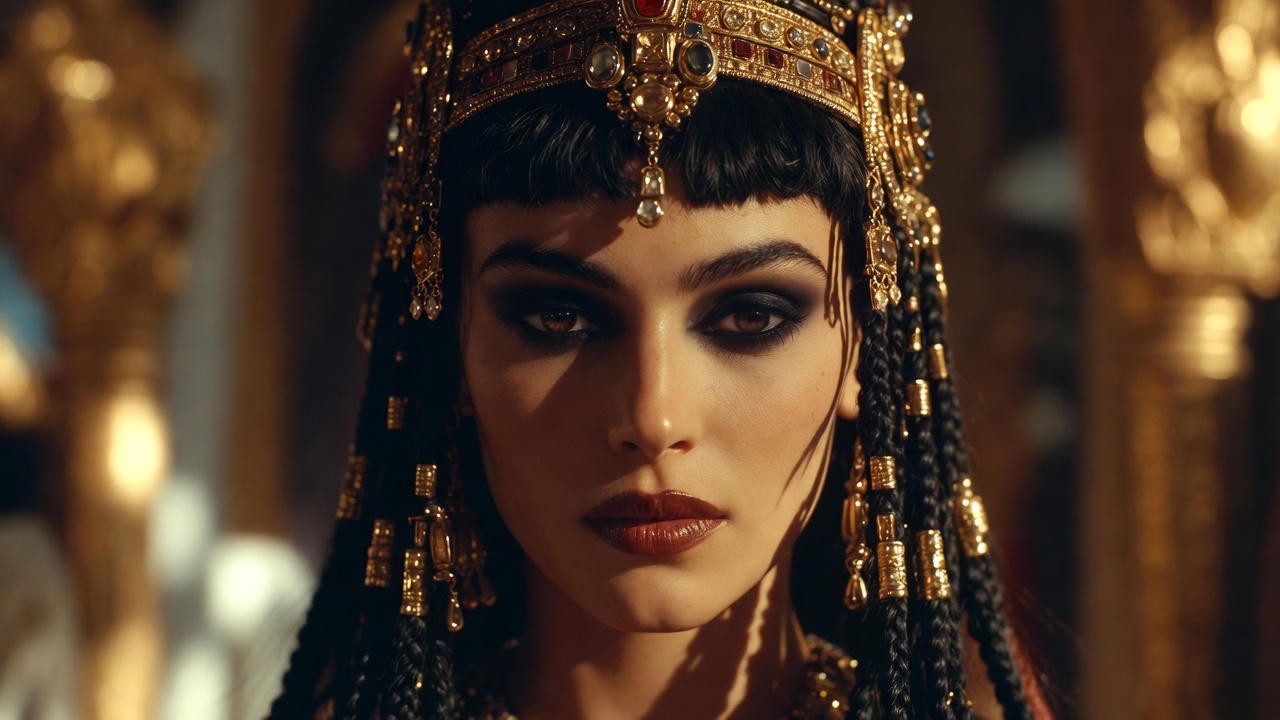
Cleopatra is perhaps Shakespeare’s greatest female creation: “Age cannot wither her, nor custom stale / Her infinite variety” (Act 2, Scene 2). Far from the historical Cleopatra’s political strategist, Shakespeare’s queen is a performer of identity—seductive, imperious, playful, and profoundly tragic.
She manipulates through theatrics: feigning illness, staging tantrums, even her suicide becomes a grand performance (“Give me my robe, put on my crown”). Yet beneath the role-playing lies genuine passion and political acumen. Her love for Antony is real, seen in her despair after Actium and her transcendent death speech (“I am fire and air”).
Feminist critics like Phyllis Rackin highlight how Cleopatra subverts Roman gender norms, embodying fluidity against Octavius’s rigidity. Her race and ethnicity have sparked ongoing debates in modern productions, reflecting broader questions of identity.
Cleopatra’s final act—dressing in royal regalia to die by asp—transforms defeat into victory, immortalizing her as “a queen, not a slave.”
Octavius Caesar – The Architect of Empire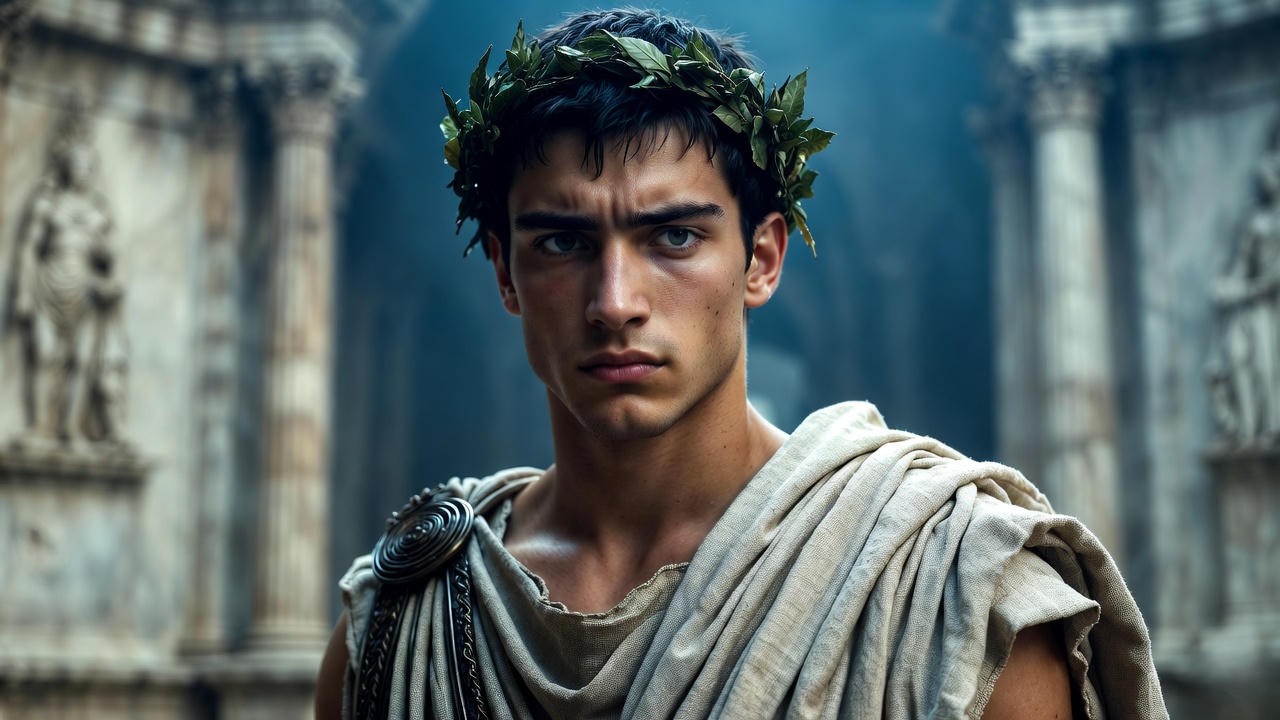
Octavius Caesar (historically Octavian) serves as Antony’s foil: where Antony is passionate, Octavius is cold; where Antony embraces excess, Octavius practices restraint. He is the play’s political victor but dramatic loser—his scenes lack the poetic fire of Egypt.
Shakespeare portrays him as masterful politician: calculating alliances, using propaganda (spreading rumors of Antony’s decline), and showing calculated grief at Antony’s death. His emotional limitation is evident in his response to Cleopatra’s suicide—he admires her but seeks to capture her for his triumph.
As the future Augustus, Octavius represents the imperial order that will dominate Rome. Yet Shakespeare subtly critiques this new world: Octavius’s victory feels sterile compared to Antony and Cleopatra’s transcendent passion.
Enobarbus – The Voice of Reason and Tragedy’s Chorus
Domitius Enobarbus is often considered Shakespeare’s finest supporting character. A plain-speaking soldier, he serves as both loyal follower and critical commentator, delivering the play’s most famous speech describing Cleopatra’s barge.
His arc is heartbreaking: initially pragmatic (“I see that men’s judgments are / A parcel of their fortunes”), he deserts Antony after Actium but dies of remorse (“O Antony… I am alone the villain of the earth”). His death—purely from grief—is Shakespeare’s invention, emphasizing loyalty’s power.
Enobarbus functions as a chorus, articulating what others feel but cannot say. His defection and death mark the moral turning point, highlighting Antony’s tragic isolation.
Key Supporting Characters and Their Dramatic Functions
Charmian and Iras – Loyalty and Female Solidarity
Cleopatra’s attendants provide intimacy and humanity to her court. Their witty banter (especially with the Soothsayer) offers comic relief, while their deaths alongside Cleopatra underscore female loyalty transcending politics.
Pompey (Sextus Pompeius) – The Forgotten Third Threat
Pompey’s naval rebellion in Act 2 reminds us of ongoing civil strife. His rejection of Menas’s suggestion to assassinate the triumvirs shows fleeting honor, but his quick defeat foreshadows Antony’s fate.
Octavia – Symbol of Roman Duty and Failed Reconciliation
Octavia’s brief marriage to Antony is doomed from the start. Described as having “a holy, cold, and still conversation,” she embodies Roman virtue but cannot compete with Cleopatra’s vitality. Her quiet suffering humanizes the political machinations.
Eros and the Soothsayer – Minor Roles with Major Thematic Weight
Eros’s refusal to kill Antony (“I will not do’t”) exemplifies loyalty’s triumph over duty. The Soothsayer’s prophecies (“Thy demon… is noble, courageous, high unmatchable / Where Caesar’s is not”) subtly undermine Roman superiority.
Character Relationships and Dynamics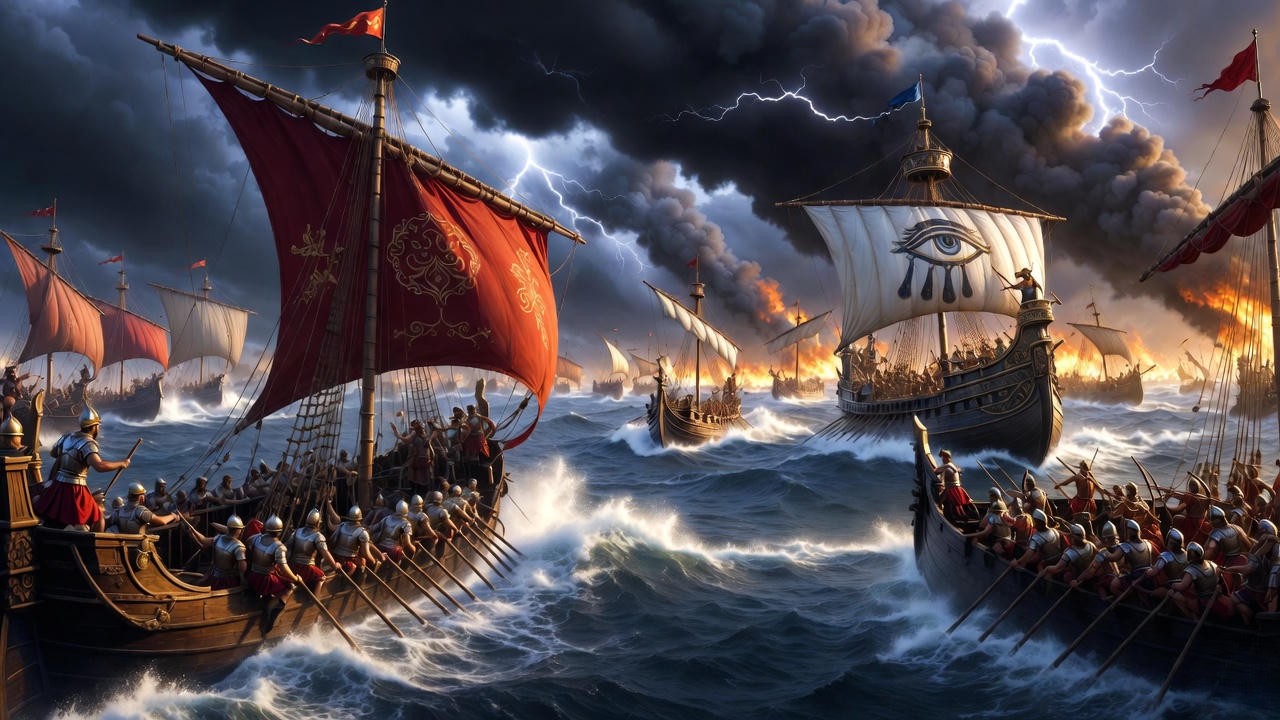
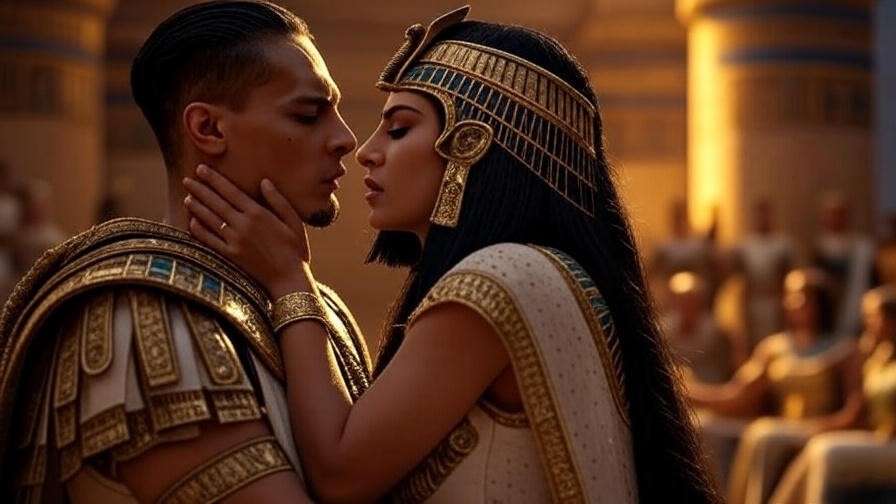
The play’s central relationship is the passionate, volatile love between Antony and Cleopatra—equal parts genuine devotion and theatrical performance. Their banter reveals mutual fascination: “If it be love indeed, tell me how much” (Act 1, Scene 1).
The triangle with Octavius adds political tension: Octavia’s marriage attempts reconciliation but fails. Shifting alliances—Enobarbus’s desertion, soldiers fleeing after Actium—mirror the instability of power.
Gender dynamics are crucial: Egypt’s matriarchal sensuality challenges Rome’s patriarchal order. Relationships reflect the Rome-Egypt binary: duty versus desire, restraint versus excess.
Themes Reflected Through the Characters
- Love vs. Duty: Antony’s central conflict; Octavius chooses duty, Antony love—with tragic consequences.
- Public Image vs. Private Self: All major characters perform roles—Cleopatra most explicitly.
- Empire and Identity: Characters embody shifting identities in a changing world.
- Mortality and Legacy: Final acts focus on how characters shape their endings (Cleopatra’s triumphant suicide vs. Antony’s botched one).
Characters on Stage and Screen: Notable Interpretations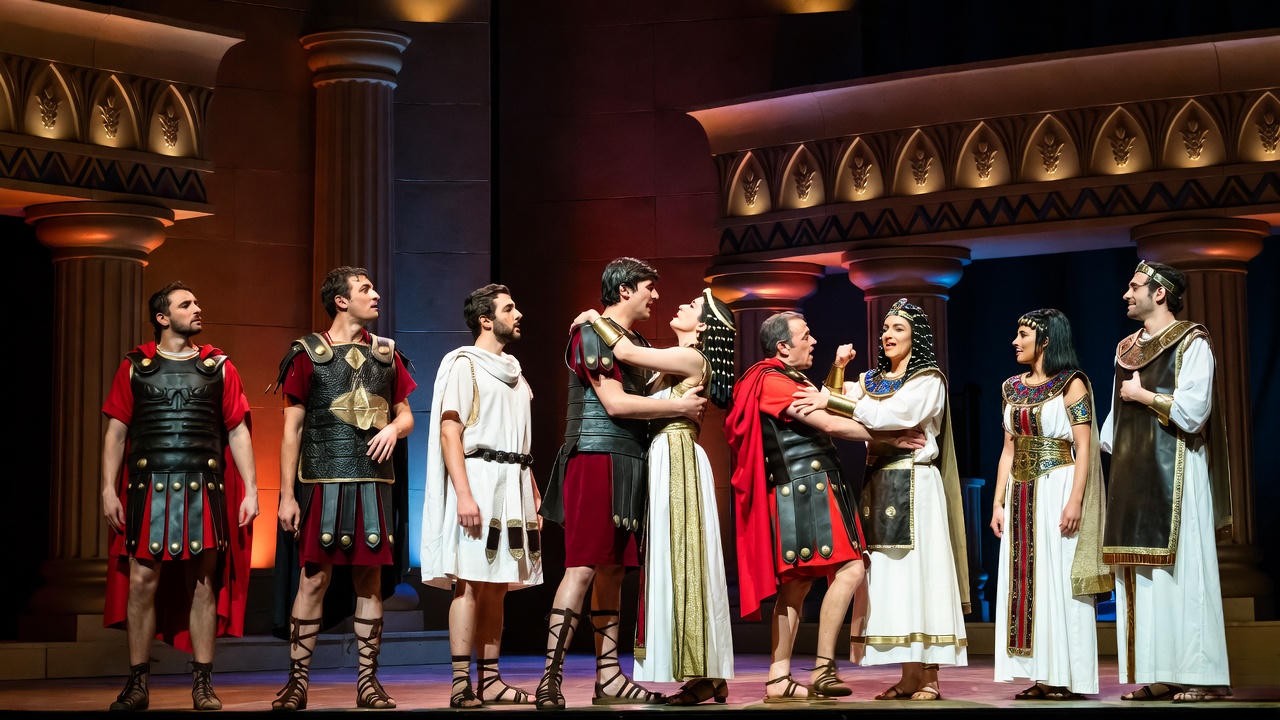
The play’s demanding roles have attracted legendary actors:
- Royal Shakespeare Company productions often emphasize political intrigue (e.g., Michael Gambon and Helen Mirren, 1982).
- The National Theatre’s 2018 production with Ralph Fiennes and Sophie Okonedo explored racial dynamics.
- Film adaptations include the lavish 1963 Elizabeth Taylor/Richard Burton version (criticized for excess but iconic) and the 1974 Charlton Heston version (Heston directing and starring as Antony).
- The 1981 BBC version with Jane Lapotaire and Colin Blakely is praised for psychological depth.
Modern productions increasingly cast diverse actors as Cleopatra, reflecting her historical Greek-Egyptian heritage and challenging traditional portrayals.
Expert Insights and Study Tips
Common exam/essay topics include:
- Compare/contrast Antony and Octavius as leaders.
- Analyze Cleopatra’s “infinite variety.”
- Discuss Enobarbus’s role as commentator.
For close reading:
- Antony’s “Let Rome in Tiber melt” speech (Act 1, Scene 1).
- Cleopatra’s “I dreamt there was an Emperor Antony” (Act 5, Scene 2).
- Enobarbus’s barge description.
Recommended editions: Folger, Arden, or Oxford with detailed notes.
Frequently Asked Questions
Who are the main characters in Antony and Cleopatra? The four central figures are Mark Antony, Cleopatra, Octavius Caesar, and Enobarbus. Supporting roles like Charmian, Iras, and Octavia are also significant.
Is Cleopatra a villain or a hero? Neither—Shakespeare presents her as complex: manipulative yet genuinely passionate, politically astute yet tragically vulnerable.
Why does Enobarbus die of grief? His death symbolizes the triumph of loyalty over pragmatism. Deserting Antony breaks his heart, showing the moral cost of betrayal.
How does Octavius Caesar differ from Antony? Octavius is disciplined, calculating, and future-focused; Antony is impulsive, generous, and present-oriented.
What is the role of minor characters like the Clown? The Clown bringing the asp provides comic relief while underscoring mortality—the rustic wisdom contrasting royal grandeur.
Shakespeare’s Antony and Cleopatra endures because its characters transcend their historical moment. Antony and Cleopatra’s grand passion, Octavius’s cold ambition, Enobarbus’s heartbreaking loyalty—these figures explore timeless questions of love, power, identity, and legacy.
Whether reading for study or pleasure, or watching a production, these iconic characters continue to challenge and move us. Their world may be ancient, but their dilemmas remain profoundly human.