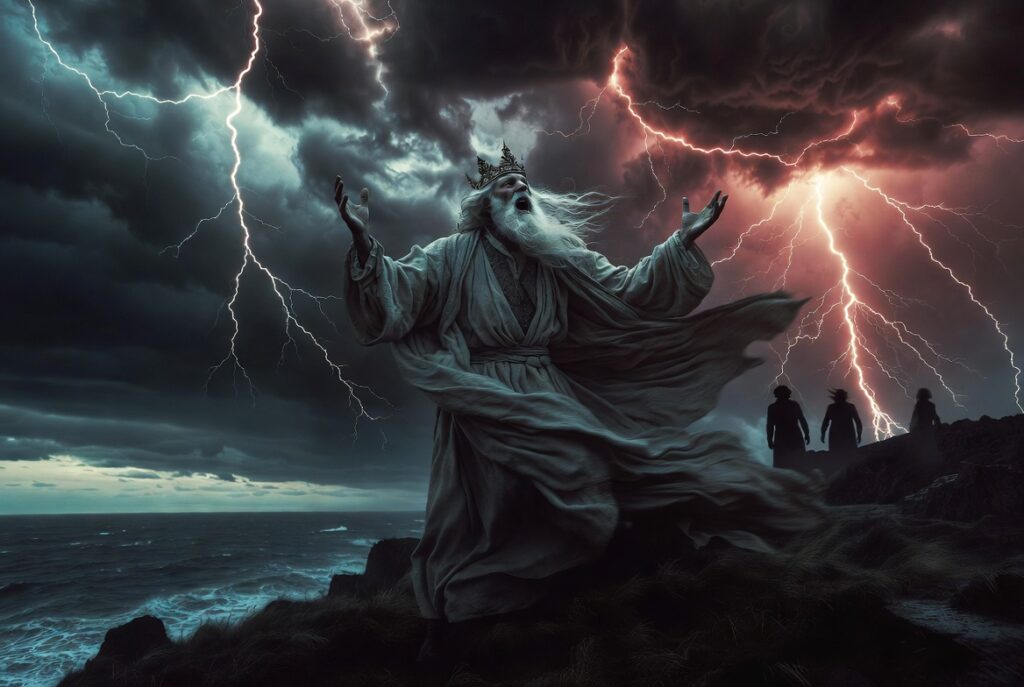
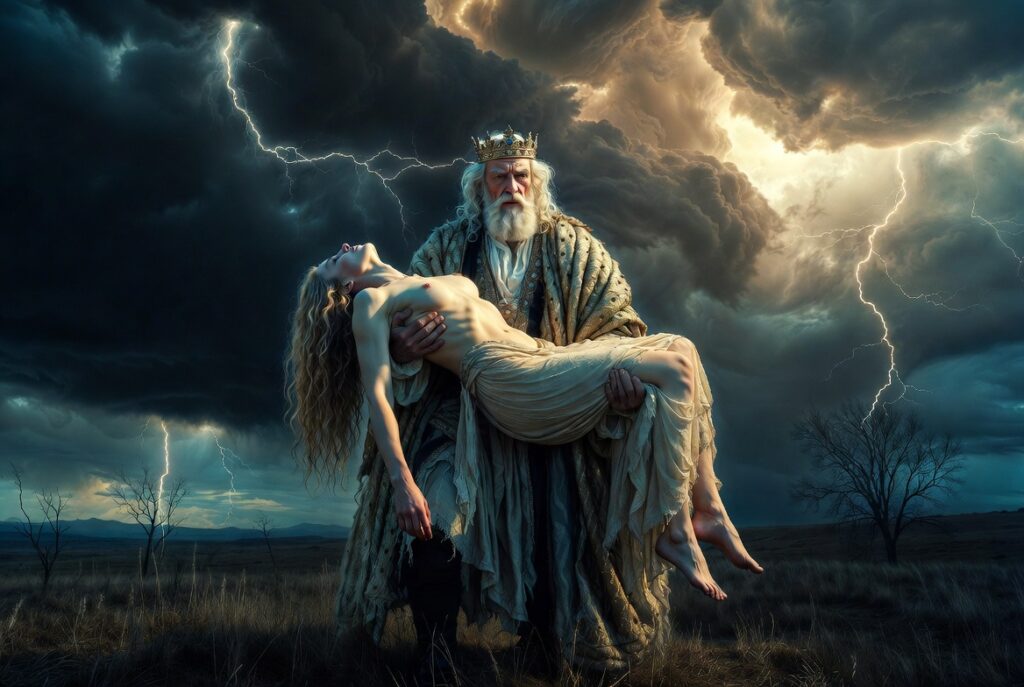
These three words—uttered by a shattered old king cradling the corpse of his only faithful daughter—still echo as one of the most devastating moments in all of world literature. If you’re looking for a king lear plot summary that finally makes Shakespeare’s darkest tragedy crystal clear, without the confusion of archaic language or scattered study notes, you’ve found it.
In this definitive, act-by-act guide, I deliver a complete, spoiler-aware King Lear plot summary that reads like a gripping novel while staying rigorously faithful to Shakespeare’s original text. Whether you’re a student preparing for exams, an actor rehearsing a role, a book-club member, a teacher building lesson plans, or simply a lover of great stories who wants to understand why King Lear is widely regarded as Shakespeare’s greatest tragedy, this article solves your exact need: an accurate, accessible, and deeply insightful breakdown that goes far beyond basic summaries.
You will receive:
- A concise historical and literary context so you understand why the play hits so hard.
- A quick-reference character guide with motivations and relationships.
- A scene-by-scene plot summary that explains every major turning point, key speech, and emotional shift in plain modern English.
- Illuminating explorations of themes, symbolism, and literary devices.
- Expert insights, modern relevance, major adaptations, and an expanded FAQ section.
By the end, you’ll not only know the King Lear plot summary inside out—you’ll feel why this 400-year-old play still feels urgently, painfully alive today.
Table of Contents
- Historical and Literary Context of King Lear
- Meet the Characters – A Quick Reference Guide
- Act-by-Act Plot Summary – The Complete Step-by-Step Breakdown
- Key Themes Illuminated by the Plot
- Symbolism, Imagery, and Literary Devices That Deepen the Tragedy
- Expert Insights and Modern Relevance
- Notable Adaptations and How They Handle the Plot
- Frequently Asked Questions (FAQs)
- Conclusion – Why King Lear Still Matters
Historical and Literary Context of King Lear
William Shakespeare wrote King Lear between late 1605 and early 1606, during the early reign of King James I. The play was first performed at court in December 1606, a time when England was still reeling from the Gunpowder Plot and anxieties about royal succession, political division, and the stability of the kingdom were at a fever pitch.
The story itself draws from ancient British legend. Shakespeare’s main sources were:
- The anonymous play The True Chronicle Historie of King Leir (printed 1594),
- Raphael Holinshed’s Chronicles of England, Scotland, and Ireland (1587),
- Edmund Spenser’s The Faerie Queene,
- And a contemporary story of a blind father betrayed by his legitimate son (from Sir Philip Sidney’s Arcadia).
What Shakespeare did with these sources was revolutionary. He transformed a relatively simple tale of a foolish king and his ungrateful daughters into a double tragedy—one royal, one domestic—that probes the darkest corners of human nature. The 1608 Quarto and 1623 First Folio texts differ in significant ways (roughly 300 lines), which scholars still debate; modern editions often blend the two for the fullest experience.
King Lear is universally ranked among Shakespeare’s four greatest tragedies (Hamlet, Othello, Macbeth, and itself). While Hamlet is philosophical and Macbeth is psychological, King Lear is elemental. It strips away civilization and asks what remains when power, family, and even language collapse. As the great critic A.C. Bradley wrote in 1904, “The greatness of King Lear lies in its sheer imaginative intensity.”
This context matters for any King Lear plot summary because the play was written to speak directly to Jacobean fears of a divided kingdom—fears that feel eerily contemporary in our own era of political fracture and generational conflict.
Meet the Characters – A Quick Reference Guide
Before diving into the plot, a clear understanding of the major players prevents confusion. Here is a concise dramatis personae with motivations and key relationships:
The Royal Family
- King Lear: Aging monarch of Britain. Once powerful and imperious, he now craves public displays of love from his daughters. His fatal flaw is demanding flattery as proof of affection.
- Goneril: Eldest daughter. Ambitious, cold, and eloquent. Married to the Duke of Albany. Quickly reveals her ruthless nature once she gains power.
- Regan: Middle daughter. Equally cruel but more sadistic and opportunistic than Goneril. Married to the Duke of Cornwall.
- Cordelia: Youngest daughter. Honest, principled, and quietly loving. Her refusal to flatter her father sets the entire tragedy in motion.
The Gloucester Household (Parallel Subplot)
- Earl of Gloucester: Loyal but gullible nobleman and father. His story mirrors Lear’s in miniature.
- Edgar: Gloucester’s legitimate eldest son. Virtuous, loyal, and resourceful. Forced into disguise as “Poor Tom.”
- Edmund: Gloucester’s illegitimate younger son. Charismatic, ambitious, and bitterly resentful of his bastard status. The play’s most calculating villain.
Loyal Retainers and Truth-Tellers
- Earl of Kent: Lear’s most faithful nobleman. Banished for defending Cordelia; returns in disguise as “Caius” to serve his king.
- The Fool: Lear’s court jester. Sharp-witted, loyal, and heartbreakingly honest. Uses songs and riddles to speak truth when no one else dares.
Other Key Figures
- Duke of Albany: Goneril’s husband. Initially weak but grows a conscience.
- Duke of Cornwall: Regan’s husband. Brutal and impulsive.
- King of France and Duke of Burgundy: Suitors to Cordelia at the play’s opening.
These two intertwined families—Lear’s and Gloucester’s—create a structural symmetry that makes the tragedy feel both intimate and epic.
Act-by-Act Plot Summary – The Complete Step-by-Step Breakdown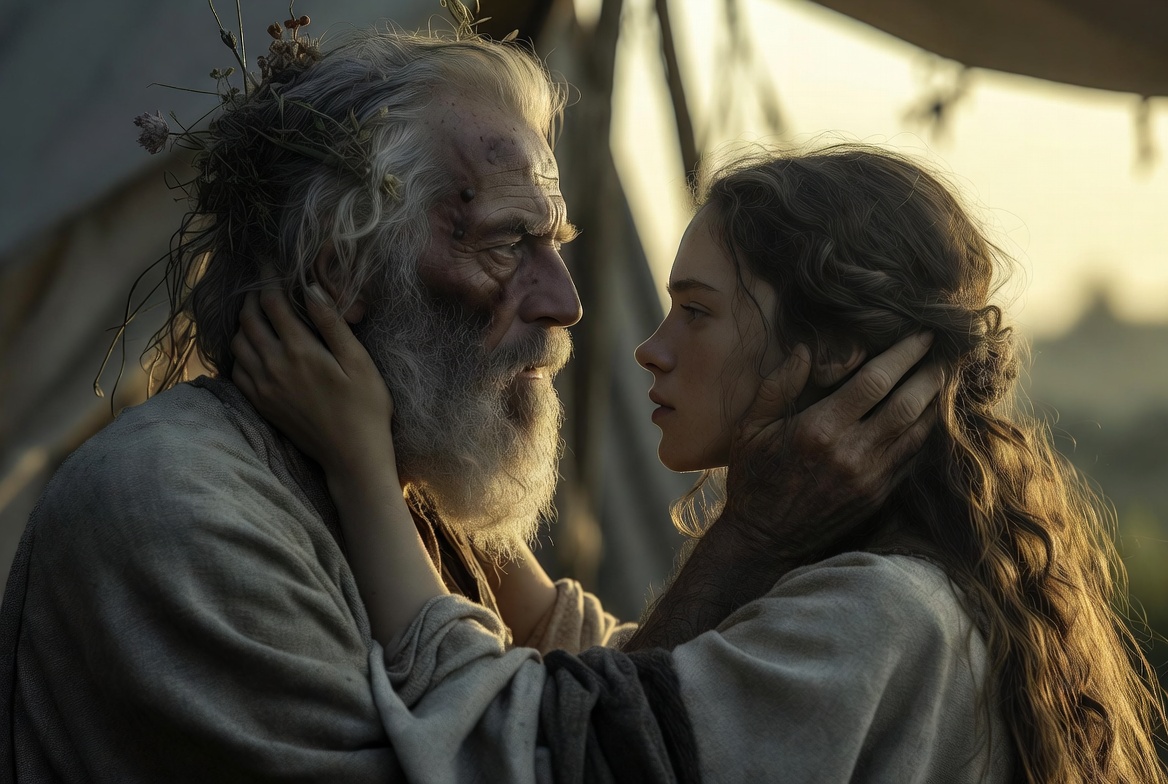
Act 1 – The Fatal Division of the Kingdom
The play opens in King Lear’s palace with a public ceremony that will destroy everything.
Lear announces he is dividing his kingdom into three parts and will give the largest share to the daughter who professes the greatest love for him. Goneril and Regan deliver extravagant, insincere speeches and receive rich portions. Cordelia, however, refuses to play the game. When asked, she simply replies, “Nothing, my lord.” Pressed further, she says she loves him “according to my bond, no more nor less”—the honest love a daughter owes her father.
Furious at what he sees as ingratitude, Lear disowns Cordelia, banishes her, and divides her portion between Goneril and Regan. He retains only the title of king and a retinue of 100 knights. The Earl of Kent protests this rash decision and is immediately banished for his honesty.
In a parallel scene at Gloucester’s castle, Edmund—Gloucester’s illegitimate son—stages a fake letter to convince his father that the legitimate son, Edgar, is plotting patricide. Gloucester falls for the deception instantly. Edmund then warns Edgar to flee, beginning his campaign of calculated betrayal.
By the end of Act 1, Lear has handed absolute power to his two eldest daughters and is already beginning to feel the consequences. Goneril and Regan privately agree to strip their father of his remaining authority.
Act 2 – Rejection and Rising Treachery
The storm clouds gather rapidly in Act 2.
Lear, now a guest in his daughters’ homes, quickly discovers the cost of his earlier decision. He arrives at Gloucester’s castle (where Goneril and Regan have gathered) expecting respect and the full complement of his 100 knights. Instead, Goneril has already reduced his train and treats him with cold disdain. Regan, even more calculating, suggests he dismiss half his followers and come live with her—on her terms.
When Lear protests, the two sisters unite in a chilling display of solidarity, whittling his retinue down to a mere 25, then even fewer. Lear’s famous outburst reveals his dawning horror:
“O, reason not the need! Our basest beggars Are in the poorest thing superfluous. Allow not nature more than nature needs, Man’s life’s as cheap as beast’s.”
This speech is one of the emotional pivots of the entire King Lear plot summary. Lear begins to understand that stripping away ceremony and power leaves something terrifyingly naked.
Meanwhile, Edmund’s subplot accelerates. He stages a fake fight with Edgar, wounds himself, and convinces Gloucester that Edgar attacked him. Gloucester proclaims Edgar a traitor and puts a price on his head. Edgar, realizing he has been framed, escapes and decides to disguise himself as “Poor Tom,” a mad beggar, the lowest creature in society.
The act ends with Kent (still in disguise as Caius) being stocked—publicly humiliated—for attacking Oswald, Goneril’s servant. Lear arrives to find his loyal servant in the stocks and is forced to confront the reality that his daughters now control the kingdom and have no intention of honoring their promises.
By the close of Act 2, Lear stands on the threshold of the storm—both literal and psychological. His world has shrunk from absolute monarch to a man whose own children treat him as an inconvenience.
Act 3 – The Storm and Descent into Madness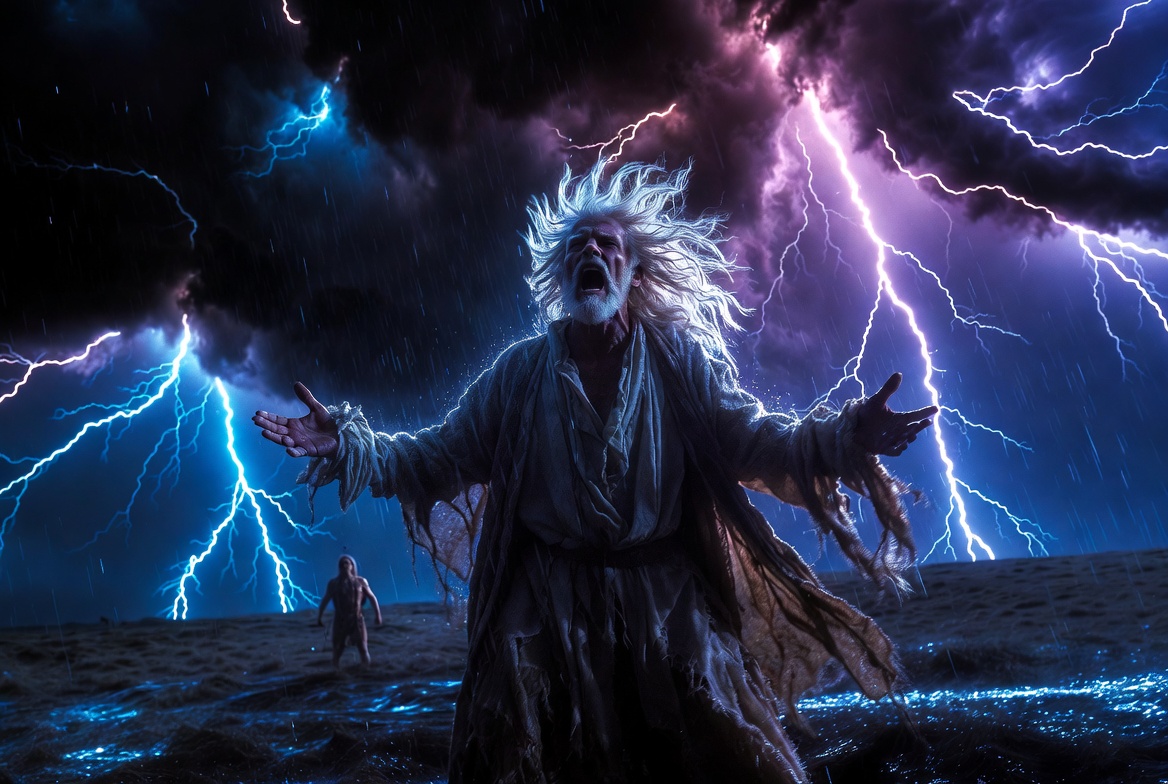
Act 3 is the emotional and theatrical heart of King Lear. Shakespeare unleashes nature itself as a mirror to Lear’s inner turmoil.
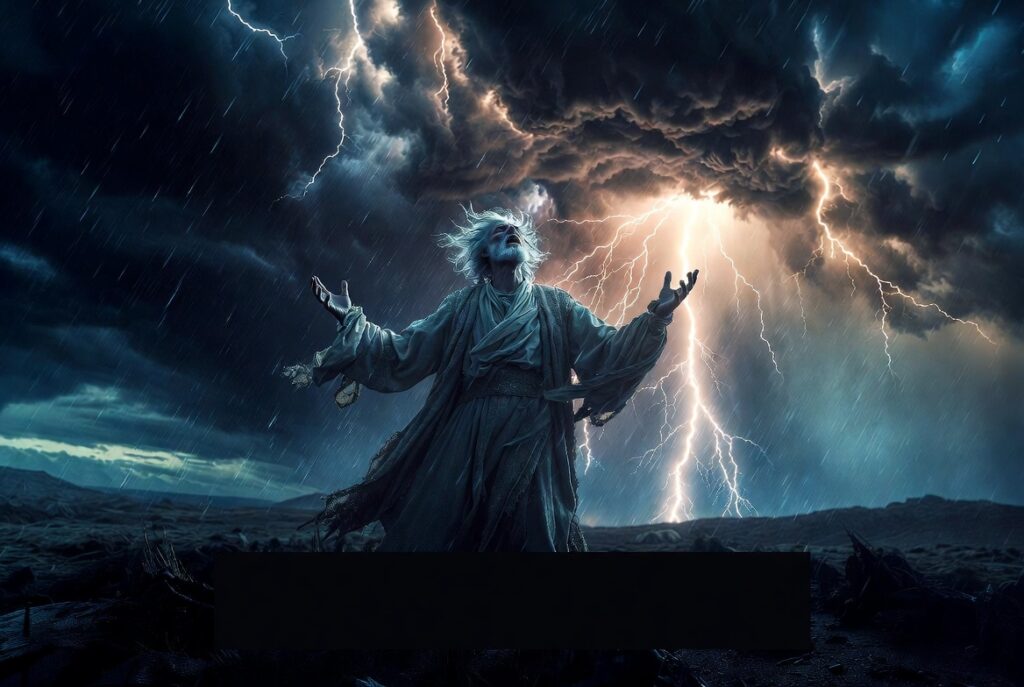
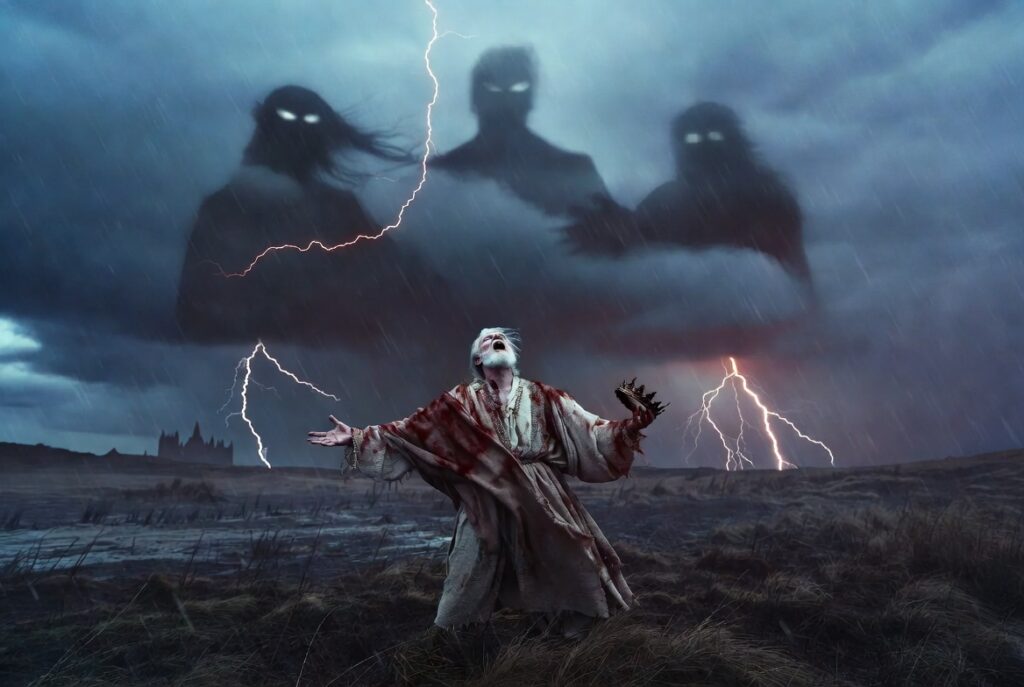
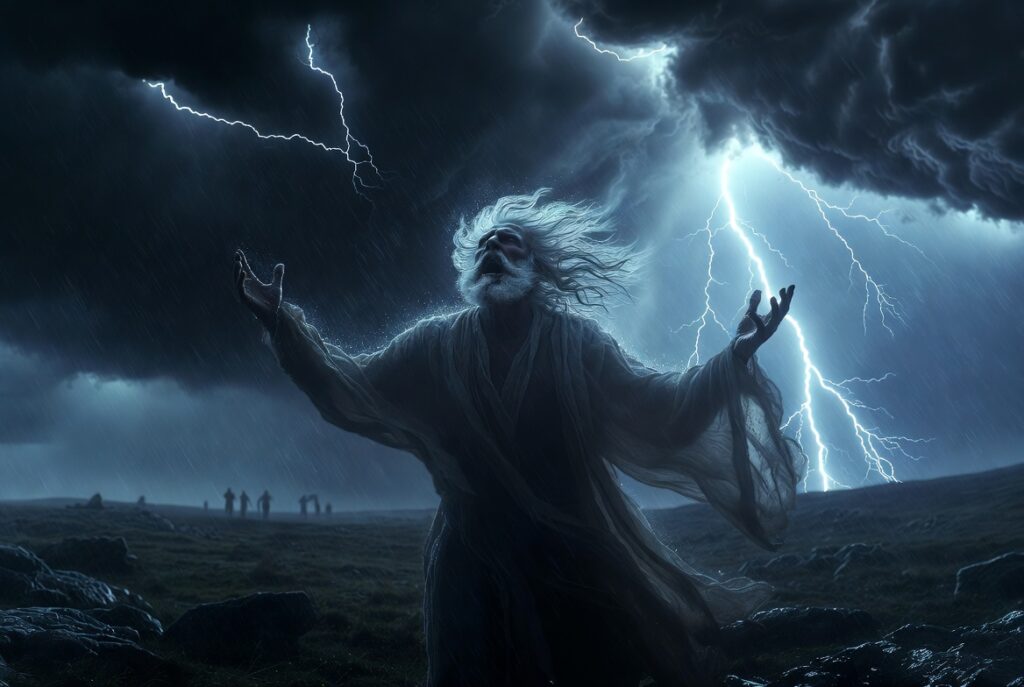
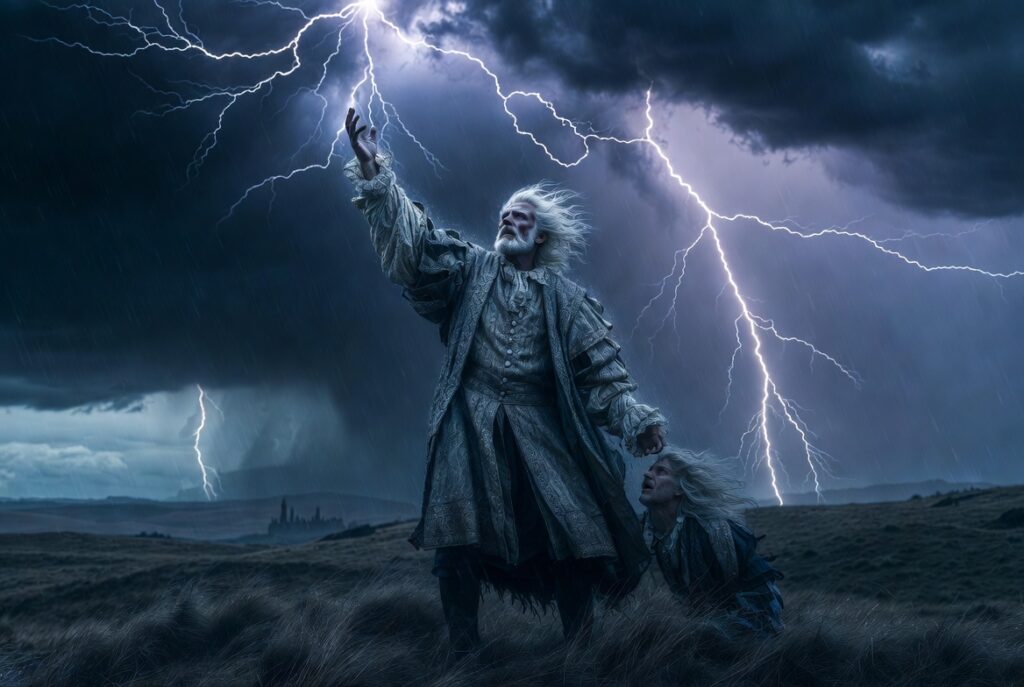
On a wild heath during a ferocious storm, Lear rages against the elements, which he now sees as allies of his ungrateful daughters:
“Blow, winds, and crack your cheeks! Rage! Blow! You cataracts and hurricanoes, spout Till you have drench’d our steeples…”
He refuses the shelter offered by his few remaining companions—Kent and the Fool—insisting that the physical storm is nothing compared to the storm in his mind caused by filial betrayal.
The Fool delivers some of his sharpest, most poignant lines here, mixing bitter humor with profound wisdom. His songs and riddles constantly remind Lear (and the audience) of the king’s folly.
Enter Edgar as Poor Tom—a half-naked, ranting madman. Lear, already slipping into madness, seizes on Poor Tom as a profound philosopher of human suffering. In one of the play’s most famous moments, Lear strips off his own clothes, declaring, “Unaccommodated man is no more but such a poor, bare, forked animal as thou art.”
Parallel to this, Gloucester secretly helps Lear despite the danger. He confides in Edmund about a letter revealing that the French army is landing to restore Lear. Edmund immediately betrays his father to Cornwall and Regan.
The act reaches its most horrifying climax in Gloucester’s blinding. Cornwall and Regan gouge out Gloucester’s eyes as punishment for aiding the king. The moment is brutally graphic—“Out, vile jelly!”—and marks the play’s lowest point of human cruelty. A servant tries to intervene and is killed, showing that even minor characters can display moral courage.
Gloucester, now blind, suddenly “sees” the truth: “I stumbled when I saw.” Edgar (still disguised as Poor Tom) leads his blinded father away, beginning their redemptive journey.
Act 3 leaves the audience stunned. Civilization has collapsed. The king is mad, the loyal are punished, and the innocent are maimed. The storm has exposed the raw savagery beneath the surface of power and family.
Act 4 – Recognition, Madness, and Hope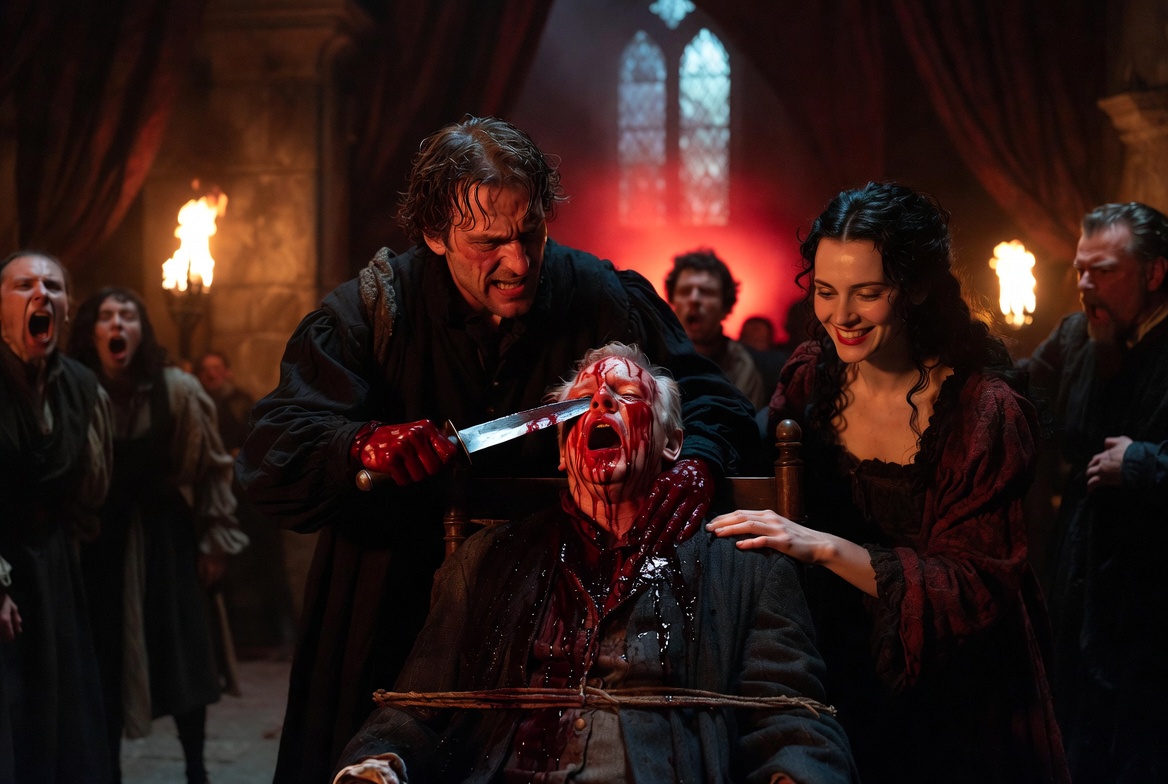
Act 4 offers flickers of redemption amid continuing horror.
Lear, still mad and crowned with weeds and flowers, is found by Cordelia’s forces. In a tender scene, the once-mighty king is brought gently to his youngest daughter. Their reunion is heartbreakingly beautiful. Lear slowly regains fragments of sanity and begs forgiveness from Cordelia, who responds with pure, unconditional love: “No cause, no cause.”
Meanwhile, Gloucester, led by Edgar (still disguised), reaches Dover. Edgar stages a fake suicide attempt from the cliffs to cure his father’s despair. The trick works—Gloucester accepts his survival as a miracle and resolves to endure.
The evil sisters’ alliance begins to fracture. Both Goneril and Regan become obsessed with Edmund, the ambitious bastard. Goneril poisons her husband Albany’s mind while secretly plotting with Edmund; Regan, now widowed after Cornwall’s death (from a servant’s wound during the blinding), openly competes for Edmund’s favor. Their rivalry turns deadly.
The French army, led by Cordelia, prepares to fight for Lear’s restoration. Yet the audience senses that political victory may not be enough to heal the deeper wounds.
Act 5 – Catastrophe and the Final Reckoning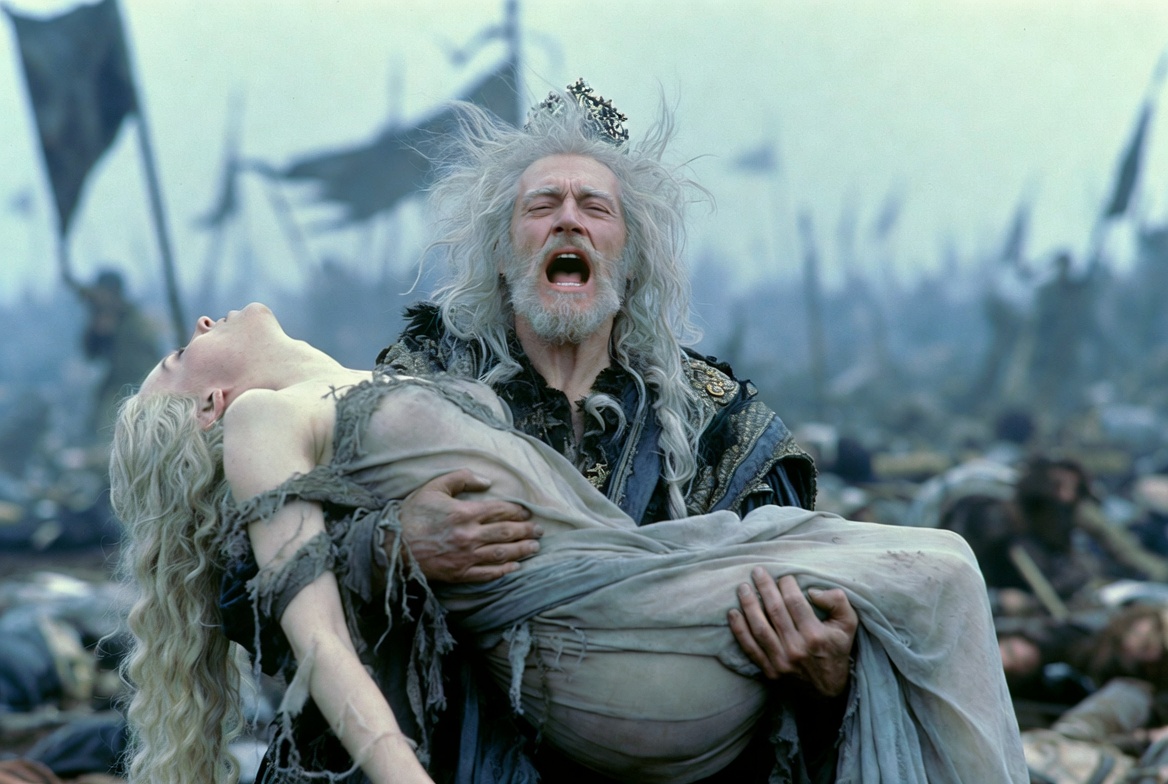
The final act delivers unrelenting tragedy.
The British forces (now led by Edmund, with Albany and Regan) defeat the French. Cordelia and Lear are captured. Edmund secretly orders their execution.
Before he can succeed, Edgar—finally revealing his true identity—challenges and mortally wounds Edmund in single combat. In his dying moments, Edmund attempts a last-minute reversal: he sends a messenger to stop the execution of Lear and Cordelia. The order comes too late.
In the play’s most shattering sequence, Lear enters carrying the dead body of Cordelia. His final, broken howls—“Howl, howl, howl!”—and desperate attempt to detect breath on her lips rank among the most painful scenes ever written for the stage. Lear dies moments later, his heart broken.
The stage is littered with bodies. Goneril has poisoned Regan and then killed herself. Edmund is dead. Gloucester has already died offstage, his heart “’twixt two extremes of passion, joy and grief” upon learning Edgar’s true identity.
The surviving characters—Kent, Edgar, and Albany—survey the ruin. Albany offers to share the kingdom, but Kent declines, saying he must follow his master. The final lines (slightly different in Quarto and Folio) leave the audience in stunned silence. Edgar’s closing words in most modern editions capture the mood:
“The weight of this sad time we must obey, Speak what we feel, not what we ought to say.”
The kingdom is saved, but at a cost so immense that survival itself feels like a kind of defeat.
Key Themes Illuminated by the Plot
The King Lear plot summary above reveals several profound themes that elevate the play beyond a simple family drama:
Filial Ingratitude and the Parent-Child Bond Lear’s demand for love as a transaction exposes how easily family ties can shatter when power dynamics shift. The parallel Gloucester-Edmund-Edgar story reinforces that betrayal by children is one of humanity’s deepest wounds.
Madness versus Sanity Lear’s descent is not mere eccentricity—it is a philosophical journey. By losing his reason, he gains insight into the human condition that his royal “sanity” had blinded him to.
Appearance versus Reality Disguises (Kent as Caius, Edgar as Poor Tom) and false speeches (Goneril and Regan’s flattery) drive home Shakespeare’s warning that what we see and hear is often dangerously deceptive.
Justice, the Gods, and Cosmic Indifference Characters repeatedly invoke the gods, yet divine justice seems absent. The play asks whether the universe is indifferent, cruel, or simply governed by human choices.
Symbolism, Imagery, and Literary Devices That Deepen the Tragedy
Shakespeare elevates King Lear from a tale of familial betrayal into a profound philosophical tragedy through masterful use of symbolism, imagery, and literary devices. These elements do not merely decorate the action; they mirror the play’s central concerns—human vulnerability, the collapse of order, and the terrifying clarity that emerges from suffering.
The Storm on the Heath
The most iconic symbol is the ferocious storm in Act 3. As Lear rages on the desolate heath, the “cataracts and hurricanoes” physically embody his psychological turmoil. The tempest is no mere backdrop; it reflects the chaos unleashed by Lear’s division of the kingdom and his daughters’ ingratitude. Nature itself seems to join the daughters in punishing the old king, yet Lear defiantly claims the elements as “servile ministers” allied against him. This pathetic fallacy transforms the weather into a dramatic mirror of inner and outer disintegration.
Blindness and Insight
Physical and metaphorical blindness dominates the Gloucester subplot and reverberates through the main plot. Gloucester’s literal blinding—“Out, vile jelly!”—is horrifyingly graphic, but it paradoxically grants him true vision: “I stumbled when I saw.” Lear, too, is “blind” to his daughters’ true natures until he loses his reason and power. The motif underscores a core irony: sight does not equal understanding, and suffering often brings the clearest insight.
Clothing, Nakedness, and the Crown
Clothing versus nakedness symbolizes the artificial trappings of civilization and status. Lear’s command to “Off, off, you lendings!” as he strips during the storm reveals his realization that humanity, stripped of robes and titles, is merely a “poor, bare, forked animal.” The crown, traditionally a symbol of unchallenged authority, becomes ironic in Lear’s hands—it sits uneasily on a head that has voluntarily surrendered power and later appears mockingly as a crown of weeds and flowers in his madness. These images strip away illusions of majesty, exposing raw human frailty.
Animal Imagery
Shakespeare saturates the play with animal imagery to emphasize humanity’s descent into primal savagery. Goneril and Regan are likened to “pelican daughters” (who supposedly feed on their parents’ blood), serpents, tigers, and monsters. Edmund calls himself a “dog” in service to his ambitions. Lear’s cry that “Man’s life’s as cheap as beast’s” culminates this motif, suggesting that when ceremony and hierarchy vanish, humans reveal themselves as no better than animals—or worse, because they possess the capacity for calculated cruelty.
Nothingness and the Void
The word “nothing” recurs with devastating force, beginning with Cordelia’s honest “Nothing” in the love test. It echoes through Lear’s descent (“Nothing can be made out of nothing”) and culminates in his nihilistic vision of humanity. This motif of nothingness and disintegration permeates the language, reinforcing the theme that power, love, and identity can dissolve into emptiness.
Other literary devices amplify these symbols:
- Dramatic irony abounds— the audience knows Kent and Edgar’s true identities while characters remain deceived.
- Foreshadowing appears in Gloucester’s early metaphors about eyes being plucked.
- Personification of the storm as a raging adversary.
- Paradox and riddles from the Fool, who speaks wisdom through apparent nonsense.
- Rich metaphors (humans as “flies to wanton boys” for the gods) and sensory imagery of disease, cracked hearts, and howling winds.
These devices create a dense poetic texture that makes the tragedy feel both visceral and universal. The storm, blindness, and nakedness do not simply illustrate events—they force the audience to confront the same existential questions tormenting Lear.
Expert Insights and Modern Relevance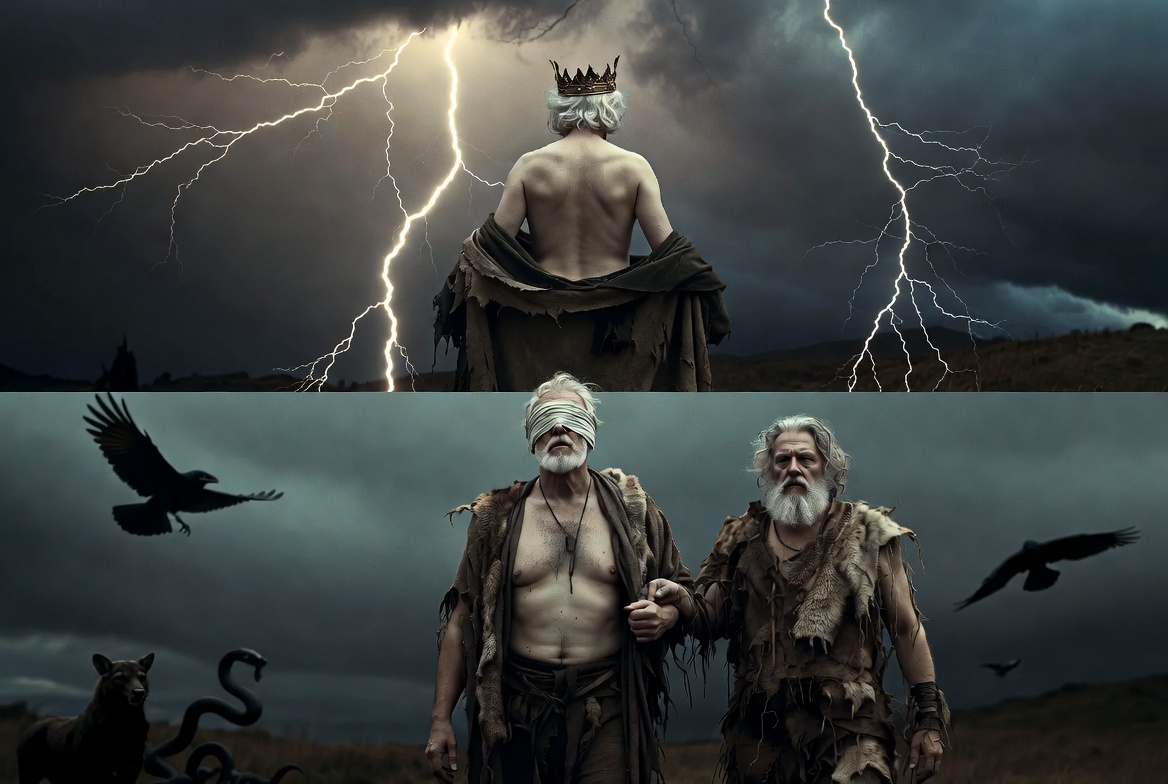
Critics have long debated King Lear’s bleakness. A.C. Bradley saw it as a play of redemption through suffering, where Lear gains profound self-knowledge. Later interpreters, influenced by Jan Kott’s Shakespeare Our Contemporary, emphasize its absurdist, nihilistic vision— a world of cosmic indifference where the gods are silent or cruel. Modern readings highlight ecocritical angles (nature’s revenge on human hubris) and disability studies perspectives on madness and blindness, viewing them not as metaphors alone but as explorations of altered perception and societal exclusion.
The play’s relevance today feels startlingly sharp. In an age of political division, generational conflict, and populist leaders demanding public declarations of loyalty, Lear’s love test resonates. Issues of elder care, inheritance disputes, and the fragility of democratic (or monarchical) order echo in contemporary headlines. The theme of filial ingratitude speaks to strained family dynamics in aging societies, while the storm scenes mirror climate anxiety and societal breakdown. Productions often update the setting to corporate boardrooms or dystopian futures, underscoring how power’s corruption and the illusion of control remain timeless.
Madness in King Lear is particularly potent for modern audiences. Lear’s breakdown is not mere plot device but a philosophical journey: only by losing his “reason” does he perceive social injustice, hypocrisy, and the hollowness of authority. As one scholar notes, madness here functions as moral awakening at terrible cost. The play warns that when leaders prioritize flattery over truth, civilization itself teeters toward the heath’s chaos.
Notable Adaptations
King Lear has inspired countless reinterpretations across media:
- Ran (1985) — Akira Kurosawa’s masterpiece transplants the story to feudal Japan. Lord Hidetora’s division of power among three sons leads to even more visually stunning warfare and tragedy. Widely regarded as one of the greatest Shakespeare adaptations ever made.
- King Lear (2018) — Anthony Hopkins delivers a raw, vulnerable Lear opposite Florence Pugh as Cordelia in this Amazon/BBC production, set in a modern militaristic Britain.
- Stage landmarks include Ian McKellen’s acclaimed performances and Peter Brook’s influential 1962 production, which emphasized the play’s bleak, existential quality.
- Other notable films range from early silent versions to television adaptations starring Laurence Olivier, James Earl Jones, and more. The play’s emotional extremity makes it challenging yet rewarding for directors seeking to test the limits of performance.
These adaptations prove King Lear’s flexibility: whether in samurai armor or business suits, its exploration of power, betrayal, and human endurance transcends time and culture.
Expanded FAQ
Why does Cordelia say “Nothing” when asked to profess her love? Cordelia refuses to flatter like her sisters. Her honest “Nothing” highlights the play’s theme that true love cannot be quantified or performed for gain. Her silence is an act of integrity, not coldness.
Is Lear’s madness real or feigned? It begins as genuine psychological collapse triggered by betrayal and exposure to the elements, evolving into a state where he gains painful wisdom. Unlike Edgar’s deliberate disguise as Poor Tom, Lear’s madness is authentic, though it contains lucid moments of insight.
What happens to the Fool? The Fool disappears after Act 3, Scene 6. Some interpretations suggest he dies offstage or that his role merges symbolically with Cordelia’s return. His absence marks the deepening tragedy as even bitter wisdom falls silent.
Does the play offer any hope or redemption? Flickers exist—Lear’s reconciliation with Cordelia, Gloucester’s growth through suffering, Edgar’s survival and moral maturity—but they are overwhelmed by loss. The ending affirms endurance (“Speak what we feel, not what we ought to say”) rather than triumphant restoration.
Why is the ending so devastating compared to other Shakespeare tragedies? Unlike Hamlet or Macbeth, where some order is restored, King Lear leaves near-total ruin. The good (Cordelia, Lear) perish alongside the evil, emphasizing the indiscriminate cost of broken natural and moral orders. Many 18th- and 19th-century productions altered the ending to save Cordelia, finding Shakespeare’s version too painful.
How do the two plots (Lear’s and Gloucester’s) reinforce each other? The parallel stories of flawed fathers betrayed by illegitimate or ungrateful “children” create structural symmetry. Gloucester’s physical blinding mirrors Lear’s metaphorical blindness, while Edgar’s loyalty contrasts with Edmund’s treachery, deepening the exploration of parent-child bonds and appearance versus reality.
King Lear stands as Shakespeare’s most harrowing and philosophically ambitious tragedy. Through a titanic central performance, interlocking subplots, and imagery of storm, blindness, and naked humanity, it strips civilization to its core and asks what remains when love is tested, power is lost, and the gods stay silent.
The play does not comfort; it confronts. It warns that flattery, division, and the denial of human vulnerability invite catastrophe. Yet in its very bleakness lies a strange affirmation: the capacity to feel deeply, to recognize truth amid madness, and to endure “the weight of this sad time” with honest speech. In an uncertain world, King Lear remains essential—not because it offers easy answers, but because it forces us to face the hardest questions about power, family, justice, and what it means to be human.