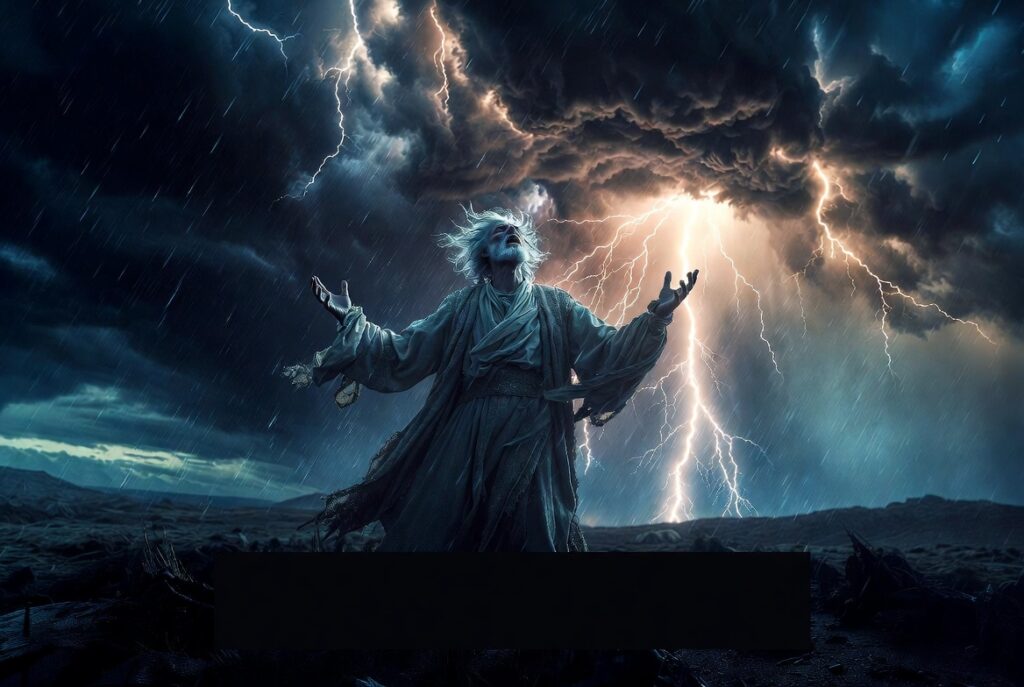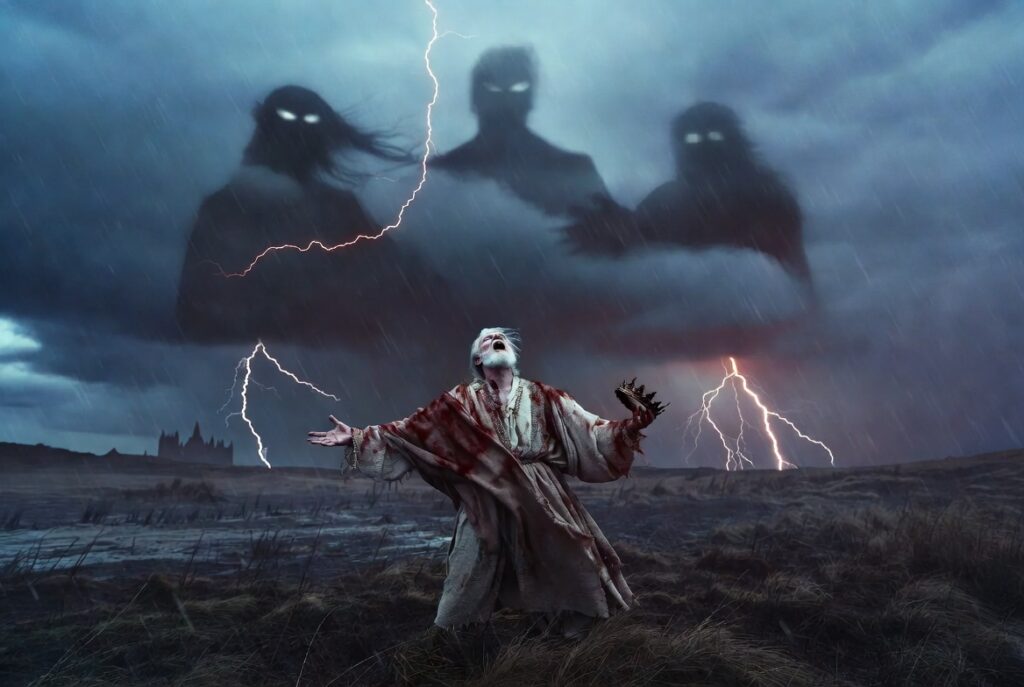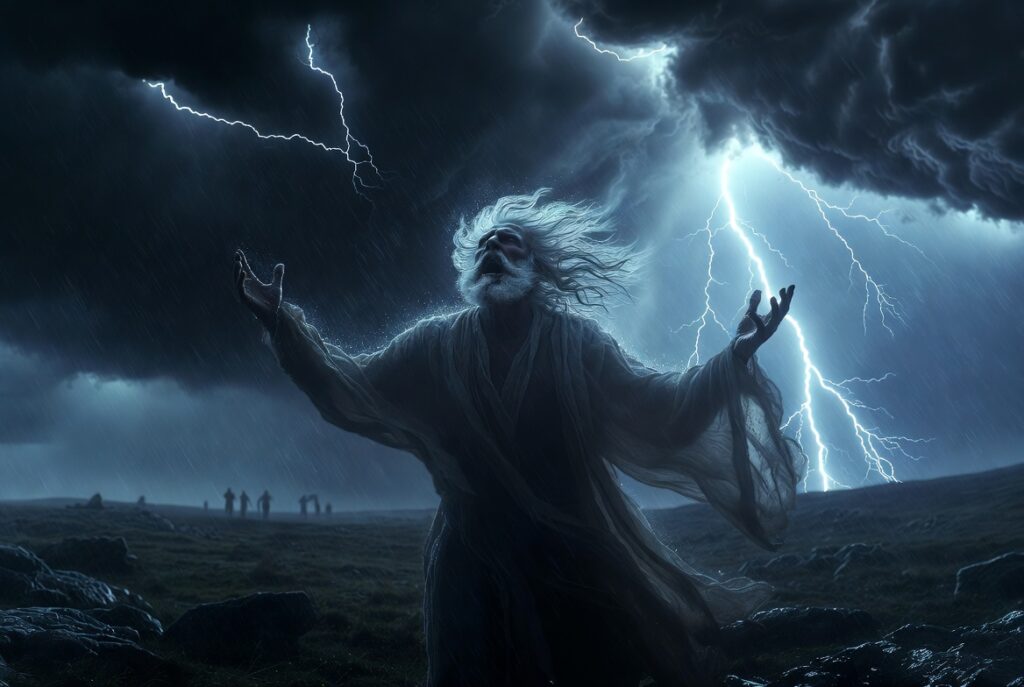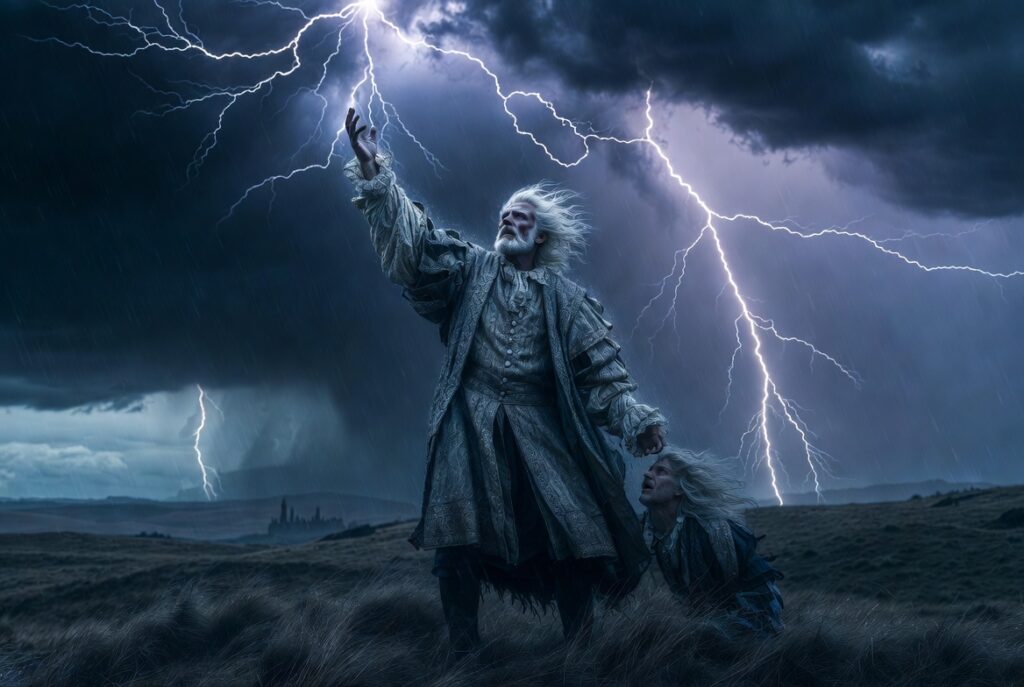
In the howling storm on the barren heath, a once-mighty king stands exposed to the elements, shouting defiantly at the raging skies: “Blow, winds, and crack your cheeks! Rage! Blow!” This visceral, heart-wrenching moment from William Shakespeare’s King Lear (Act 3, Scene 2) captures the raw emotional power that has made King Lear characterisation one of the most studied and debated aspects of Shakespearean tragedy for over four centuries.
King Lear characterisation reveals Shakespeare’s tragic hero at his most psychologically complex: a ruler whose journey from absolute power to broken vulnerability exposes universal truths about hubris, family betrayal, aging, and redemption. Whether you are a student preparing for A-Level or university essays, a teacher seeking classroom resources, or a theatre enthusiast craving deeper insight, this guide delivers the definitive, scene-by-scene analysis you need. Drawing on primary texts (the 1608 Quarto and 1623 Folio), landmark criticism, and 2020s scholarship, we explore how Lear’s character development transcends the page to resonate with modern concerns like ageism and dementia.
Unlike simpler tragic figures driven by ambition or jealousy, Lear’s arc forces us to confront our own potential for folly and the fragility of human bonds. By the end of this comprehensive article, you will have a complete toolkit: key quotes with line-by-line analysis, comparative tables, study tips, and fresh perspectives that go far beyond basic study guides.
Historical and Literary Context of King Lear’s Characterisation
Shakespeare composed King Lear around 1605–1606, during the early reign of James I. The play draws from Raphael Holinshed’s Chronicles (1587), the anonymous The True Chronicle Historie of King Leir (published 1605), and earlier legends of a British king who divides his realm. Crucially, the 1608 Quarto and 1623 Folio editions differ in dozens of lines, affecting our reading of Lear’s psychological depth—most modern editions, such as the Arden Shakespeare, blend both for maximum textual richness.
Politically, the drama subtly mirrors James I’s anxieties over succession and divine-right kingship. Lear’s catastrophic division of the kingdom warns against weak rule and filial ingratitude at a time when court flattery and inheritance disputes were rife. What sets King Lear apart from Hamlet, Othello, or Macbeth is its relentless focus on character disintegration through age and betrayal rather than youthful ambition. Shakespeare uses the double plot (Lear/Gloucester) to amplify these themes, creating a contrapuntal structure that modern critics hail as ahead of its time.
Initial Characterisation – The King at the Height of Power (Act 1)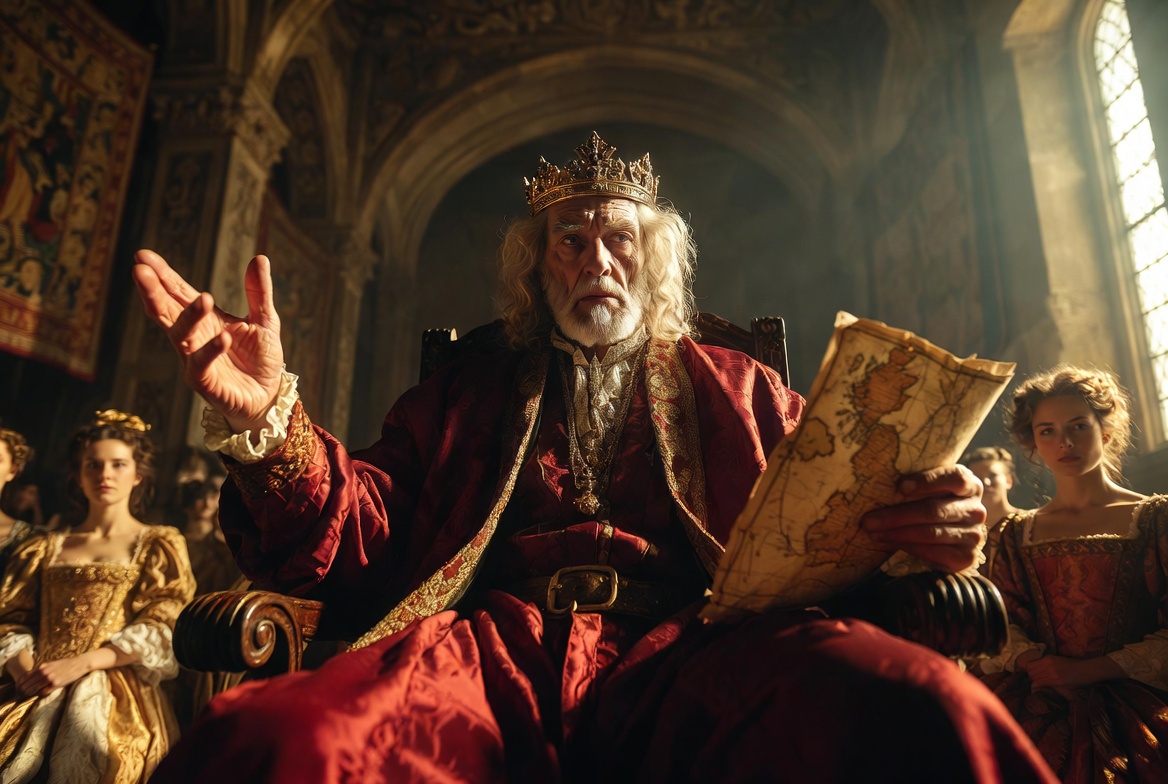
Lear as Absolute Monarch and Patriarch
At the play’s outset, Lear embodies hubris and patriarchal authority. He demands public declarations of love from his daughters to justify dividing the kingdom, revealing a king who values flattery over truth. His famous command—“Which of you shall we say doth love us most?” (1.1.49)—establishes the love-test as a ritual of control rather than affection.
Flaws Revealed in the First Scene
The tragic flaw emerges instantly. When Cordelia refuses to exaggerate—“Nothing, my lord” (1.1.87)—Lear’s response is swift and absolute: “Nothing will come of nothing” (1.1.90). His banishment of Cordelia and Kent exposes emotional blindness and rash judgement. Close reading reveals Lear’s language shifting from regal command to personal rage, foreshadowing the psychological collapse to come. These early traits—vanity, insecurity masked as authority, and an inability to discern genuine love—form the foundation of King Lear characterisation.
The Tragic Arc – King Lear’s Character Development Across the Play
The Descent into Rage and Exile (Acts 2–3)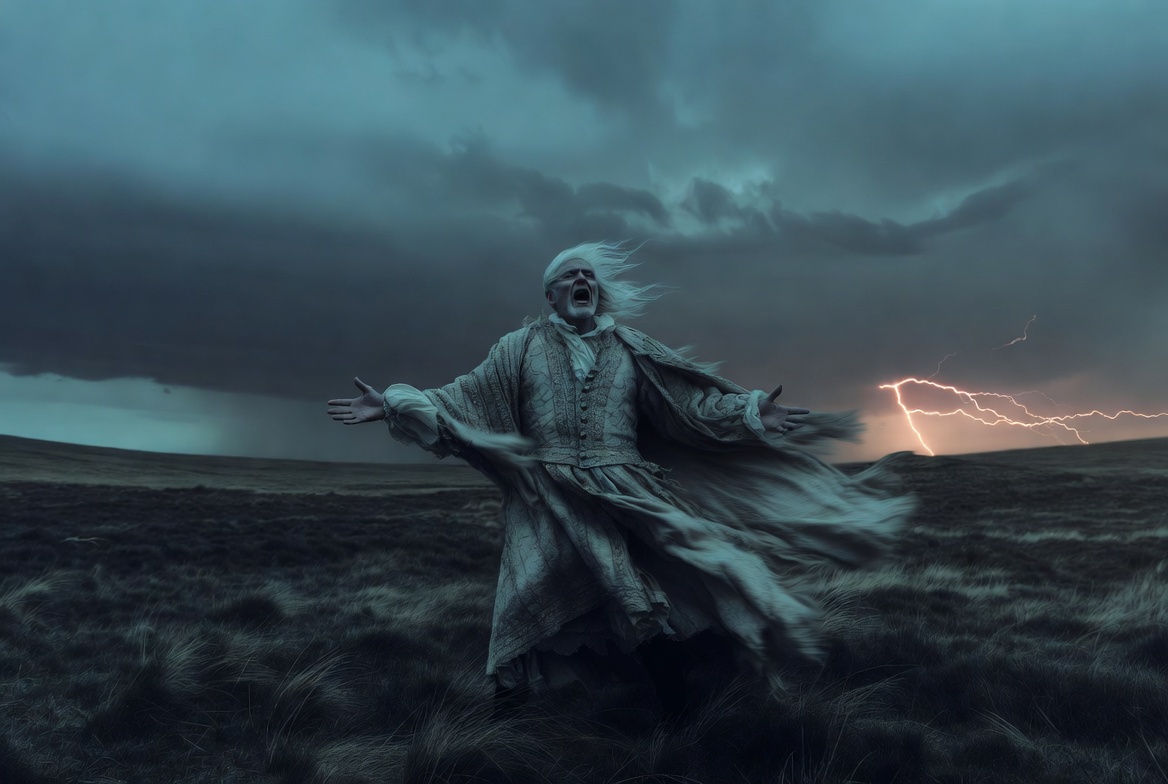
Expelled by Goneril and Regan, Lear confronts the consequences of his actions. By Act 2, his daughters’ calculated reductions of his retinue strip away the trappings of power. The storm in Act 3 becomes both literal and metaphorical: Shakespeare employs pathetic fallacy as the tempest mirrors Lear’s inner turmoil. His cry, “I am a man / More sinned against than sinning” (3.2.59–60), marks the pivot from denial to self-pity.
Madness and Self-Realisation (Act 3–4)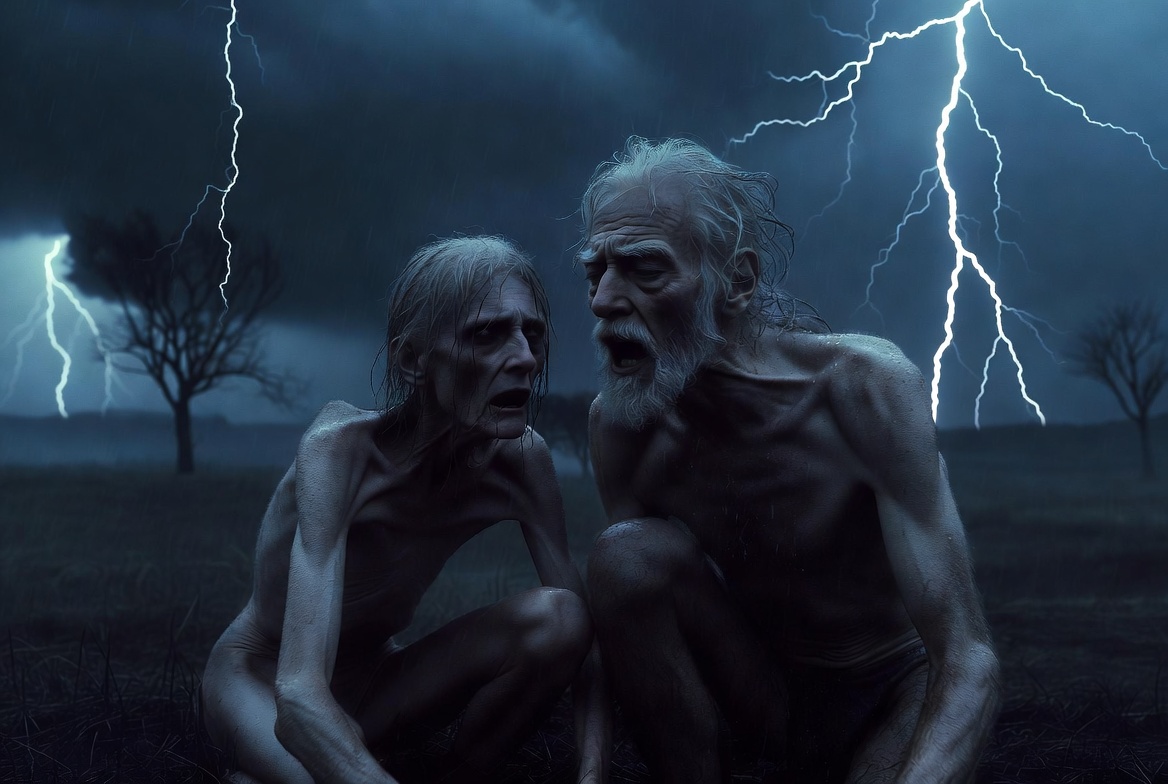
The heath scenes represent the psychological nadir. Stripped of authority, Lear encounters “unaccommodated man” in the disguised Edgar as Poor Tom: “Thou art the thing itself; unaccommodated man is no more but such a poor, bare, forked animal as thou art” (3.4.106–108). Here King Lear characterisation reaches its most profound level—madness becomes a vehicle for wisdom. Parallel to Gloucester’s blinding, Lear’s mental disintegration forces him to see the world’s injustice clearly for the first time.
Redemption and Final Clarity (Act 5)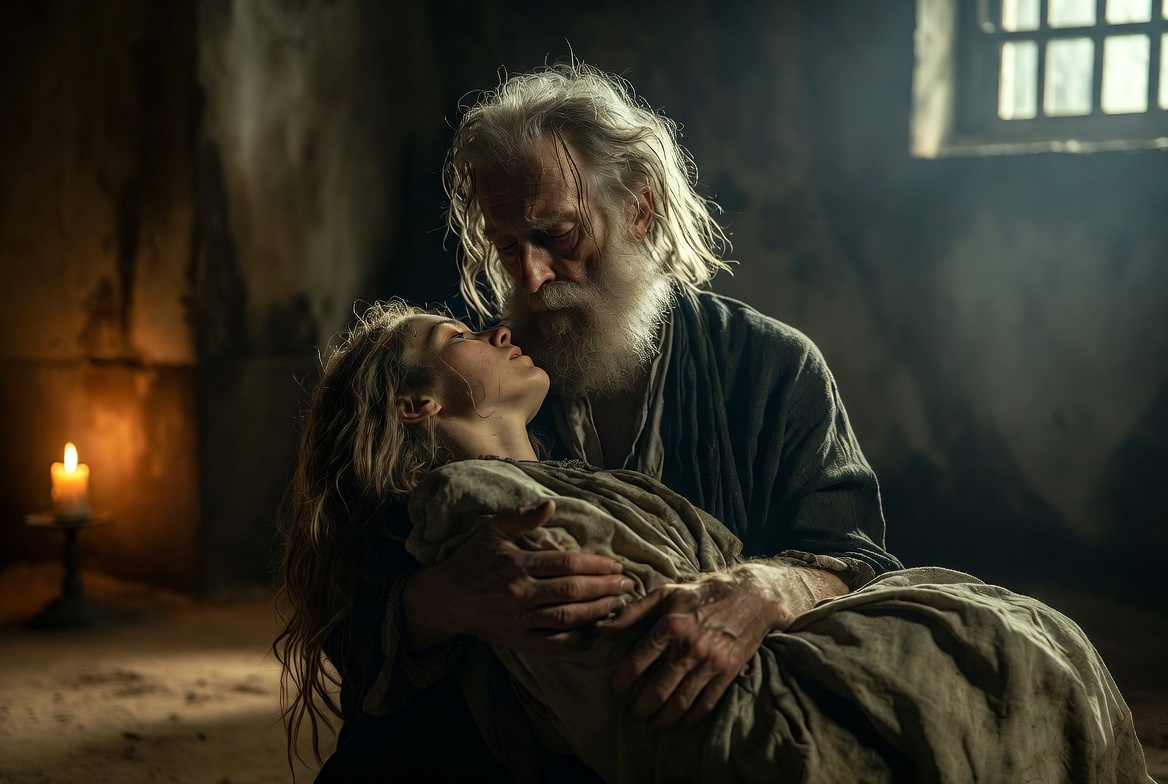
Reunited with Cordelia in Act 4, Lear experiences a fleeting redemption: “I am a very foolish fond old man” (4.7.60). The prison scene offers tender reconciliation, yet the play’s devastating close—Lear carrying Cordelia’s body and his final “Never, never, never, never, never!” (5.3.308)—completes the arc. He dies not as a king but as a grieving father, achieving tragic insight too late.
Core Traits That Define King Lear’s Characterisation
Hubris, Authority, and the Fragility of Power
Lear’s initial arrogance stems from lifelong rule without challenge. His belief that titles confer love proves fatally flawed.
Love, Ingratitude, and Familial Blindness
The play’s emotional core lies in Lear’s misreading of his daughters. Goneril and Regan’s hyperbolic flattery feeds his ego; Cordelia’s honesty wounds it. This blindness to authentic emotion drives the tragedy.
Rage, Madness, and the Search for Wisdom
Rage propels Lear into the storm; madness paradoxically grants clarity. Recent psychoanalytical readings link this to repressed paternal control and fear of vulnerability.
Humanity and Vulnerability
By the end, Lear becomes Shakespeare’s most relatable tragic hero—an “everyman” exposed to the elements, forcing audiences to confront mortality and meaninglessness.
Key Relationships That Shape Lear’s Character
The Daughters – Goneril, Regan, and Cordelia
| Daughter | Key Trait | Effect on Lear | Representative Quote |
|---|---|---|---|
| Goneril | Calculating ambition | Erodes his authority | “I have been worth the whistle” (4.2.29, implied) |
| Regan | Cruel mimicry | Amplifies betrayal | “I am glad to see your highness” (2.4.132) |
| Cordelia | Honest love | Enables redemption | “No cause, no cause” (4.7.75) |
This comparative view shows how each daughter mirrors and exposes Lear’s flaws.
The Fool – Comic Relief and Moral Compass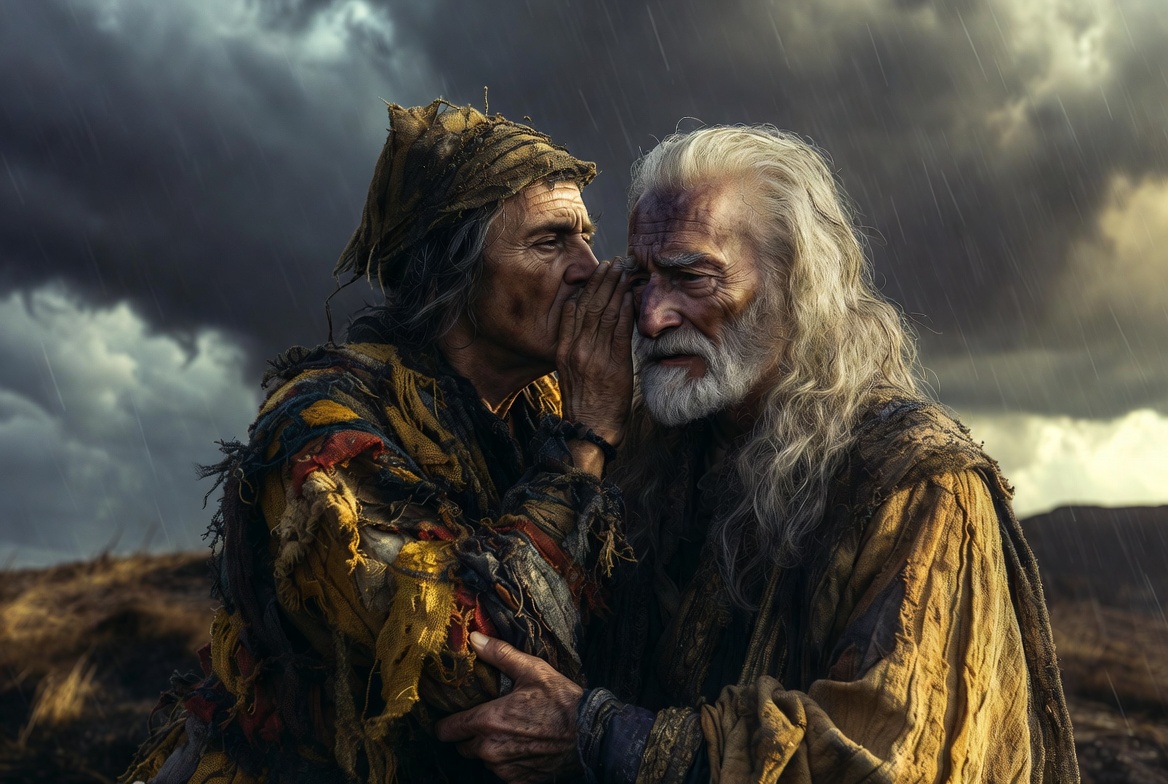
The Fool’s riddles and songs serve as Lear’s conscience: “Thou shouldst not have been old till thou hadst been wise” (1.5.41). His disappearance after Act 3 coincides with Lear’s full descent into madness.
Kent and Gloucester – Loyalty and Parallel Suffering
Kent’s disguised loyalty and Gloucester’s subplot reinforce themes of sight versus insight. Both suffer for fidelity, deepening Lear’s isolation and eventual growth.
Edgar and Edmund – Generational Conflict
Edmund’s Machiavellian ambition contrasts Edgar’s loyalty, highlighting inheritance and legitimacy issues that echo Lear’s own familial crisis.
Shakespeare’s Dramatic Techniques in Portraying Lear
Shakespeare masterfully employs soliloquies for psychological intimacy, animal imagery (“pelican daughters,” “bare, forked animal”), and verse-to-prose shifts that signal mental collapse. Staging history—from Nahum Tate’s 1681 happy ending to minimalist modern productions—demonstrates how directors continue to reinterpret Lear’s characterisation for new audiences. A 2025 Brooklyn production, for instance, emphasised “power, aging, family dynamics” through volatile emotional swings, proving the play’s enduring theatrical vitality.
Critical Perspectives and Scholarly Interpretations
Shakespeare’s portrayal of King Lear has inspired centuries of critical debate, making King Lear characterisation a cornerstone of Shakespearean studies. Traditional views, particularly A.C. Bradley’s influential Shakespearean Tragedy (1904), position Lear as the archetypal Aristotelian tragic hero whose hamartia (tragic flaw) — excessive pride combined with poor judgement — leads to a cathartic downfall. Bradley emphasises Lear’s grandeur and the play’s cosmic scale, where personal suffering reflects universal disorder.
Modern critical lenses have enriched our understanding. Psychoanalytic readings explore Lear’s repressed fears of vulnerability, ageing, and the father-daughter dynamic, with some critics linking his rage to Freudian concepts of authority and castration anxiety. Feminist interpretations highlight the play’s patriarchal structures and the marginalised voices of the daughters, questioning why Cordelia must die to affirm Lear’s redemption while Goneril and Regan are demonised for asserting power. Marxist critics focus on class and power dynamics, viewing the kingdom’s division as a critique of feudal hierarchy and the exploitation inherent in absolute monarchy.
More recent 2020s scholarship brings fresh relevance. Ecocritical approaches examine the storm scenes as commentary on humanity’s relationship with nature, while discussions around ageism and dementia frame Lear’s madness as a prescient depiction of cognitive decline and societal neglect of the elderly. Contemporary readings also address political division, filial ingratitude, and the fragility of leadership in polarised times. As one modern perspective notes, the play tests the limits of human endurance in the face of mortality and apparent meaninglessness, forcing audiences to grapple with whether Lear’s suffering yields genuine insight or merely ironic grotesquerie.
What makes Lear’s characterisation enduringly powerful is its deliberate ambiguity. No single lens — Bradleyan, psychoanalytic, feminist, or otherwise — fully contains him. Shakespeare crafts a hero who evolves from tyrannical patriarch to humbled everyman, yet whose final moments leave audiences debating redemption versus nihilism. This complexity elevates King Lear above simpler moral tales.
King Lear vs. Other Shakespearean Tragic Heroes
To fully appreciate King Lear characterisation, it helps to compare him with Shakespeare’s other great tragic protagonists: Hamlet, Othello, and Macbeth.
| Tragic Hero | Core Flaw | Driving Force | Nature of Suffering | Key Difference from Lear |
|---|---|---|---|---|
| Hamlet | Indecision / Overthinking | Revenge & moral paralysis | Intellectual & psychological torment | Internal conflict vs. Lear’s external stripping of power |
| Othello | Jealousy & gullibility | Manipulation & betrayed trust | Emotional & racial isolation | Personal betrayal vs. familial ingratitude |
| Macbeth | Ambition & guilt | Political usurpation | Moral descent into tyranny | Active pursuit of power vs. Lear’s passive loss |
| Lear | Hubris & emotional blindness | Demand for love & control | Physical, mental & cosmic exposure | Becomes “unaccommodated man”; suffering reveals universal human frailty |
Lear stands apart because his tragedy stems not from youthful ambition, revenge, or jealousy, but from the universal experiences of ageing, parenting, and the loss of authority. While Hamlet contemplates existence, Othello rages against perceived infidelity, and Macbeth spirals through murder, Lear is progressively stripped of everything — retinue, sanity, and finally his beloved daughter — until he confronts raw humanity on the heath. His arc moves from blindness to painful insight, making him Shakespeare’s most profoundly human tragic figure.
Modern Relevance and Adaptations of King Lear’s Character
In the 21st century, King Lear characterisation resonates more strongly than ever. With ageing populations, strained family relationships, and political leaders clinging to power, the play mirrors contemporary anxieties around dementia, elder abuse, inheritance disputes, and authoritarian fragility. Lear’s journey from absolute ruler to vulnerable old man speaks directly to issues of ageism and the societal tendency to discard those who no longer hold utility.
Major adaptations continue to reinterpret Lear for new audiences. Ian McKellen’s acclaimed performances (RSC 2007, revived 2017–2018) emphasised the king’s volatile emotional swings and physical frailty, bringing visceral intensity to the role. Anthony Hopkins delivered a powerful, modern-dress portrayal in the 2018 BBC film directed by Richard Eyre, set in a contemporary corporate Britain that heightened themes of power division and family estrangement. Earlier, Akira Kurosawa’s Ran (1985) transposed the story to feudal Japan, transforming Lear into Lord Hidetora and amplifying the visual spectacle of betrayal and chaos while preserving the emotional core of paternal regret.
These adaptations prove that Lear’s characterisation is not frozen in Elizabethan England but endlessly adaptable, offering fresh insights into leadership failures, generational conflict, and the redemptive (yet costly) power of love and forgiveness.
Study Tips and Essay Guidance for King Lear Characterisation
For students tackling King Lear characterisation in GCSE, A-Level, or university essays, focus on these practical strategies:
- Structure your essay effectively: Begin with a clear thesis (e.g., “Lear’s characterisation evolves from tyrannical hubris to humbled humanity through Shakespeare’s use of storm imagery and relational dynamics”). Use PEEL/PEA paragraphs (Point, Evidence, Analysis, Link) with embedded quotations.
- Essential quotes bank (with analysis prompts):
- “Nothing will come of nothing” (1.1.90) — Foreshadows the destructive consequences of Lear’s flawed love-test.
- “I am a man / More sinned against than sinning” (3.2.59–60) — Marks the shift from denial to self-awareness.
- “Thou art the thing itself; unaccommodated man…” (3.4.106–108) — Central to themes of stripped humanity and empathy.
- “I am a very foolish fond old man” (4.7.60) — Moment of vulnerable redemption.
- “Never, never, never, never, never!” (5.3.308) — Heartbreaking climax of grief and loss.
- Common pitfalls to avoid:
- Summarising plot instead of analysing characterisation techniques.
- Treating Lear as purely sympathetic or villainous — balance both aspects.
- Ignoring the Folio/Quarto differences or the Gloucester subplot’s reinforcing role.
- Advanced tips: Incorporate critical voices (Bradley, modern ecocritical readings) and discuss staging/performance choices. Compare Lear briefly with another tragic hero for higher marks. Always link back to the play’s exploration of power, family, and human vulnerability.
Recommended further reading includes the Arden Shakespeare edition, A.C. Bradley’s Shakespearean Tragedy, and recent articles on the Folger Shakespeare Library site for accessible modern perspectives.
King Lear’s characterisation stands as one of Shakespeare’s supreme artistic achievements: a complex, evolving portrait of a man whose flaws and suffering illuminate the deepest truths of the human condition. From the regal authority of Act 1 to the naked vulnerability on the heath and the devastating clarity of the final scene, Lear transforms before our eyes — forcing us to confront our own capacity for blindness, rage, and hard-won wisdom.
Shakespeare does not offer easy redemption or tidy moral lessons. Instead, he presents a tragic hero whose journey reveals the fragility of power, the pain of familial betrayal, and the redemptive potential of genuine love, even when it arrives too late. In an age still grappling with division, ageing, and authority, Lear’s story remains urgently relevant.
Whether preparing for exams, teaching the play, or simply seeking richer appreciation of Shakespeare’s genius, understanding King Lear characterisation equips you with profound insights into literature and life itself. Explore more Shakespeare character studies on this site, or share your own interpretations in the comments below — how has Lear’s tragic arc resonated with you?
FAQ: King Lear Characterisation
What makes King Lear a tragic hero? Lear fits the tragic hero archetype through his high status, fatal flaw (hubris and emotional blindness), and ultimate suffering that yields painful self-knowledge, though too late to prevent catastrophe.
How does Lear’s characterisation change in the storm scene? The storm externalises his inner turmoil. He shifts from demanding obedience to recognising his own vulnerability and the suffering of others, marking a pivotal move toward empathy and self-awareness.
Why is Cordelia’s role crucial to understanding Lear? Cordelia represents honest love and moral integrity. Her banishment exposes Lear’s initial blindness, while their reconciliation highlights his capacity for growth and the redemptive power of forgiveness.
Is King Lear based on a real historical figure? The character draws from legendary British history recorded in Holinshed’s Chronicles and earlier tales of a king named Leir, but Shakespeare significantly reimagines him for dramatic and thematic depth.
How do different editions (Quarto vs. Folio) affect our reading of Lear’s character? The Quarto offers a more chaotic, emotionally raw text with additional lines, while the Folio is tighter. Modern editions often combine both, enriching our sense of Lear’s psychological complexity.