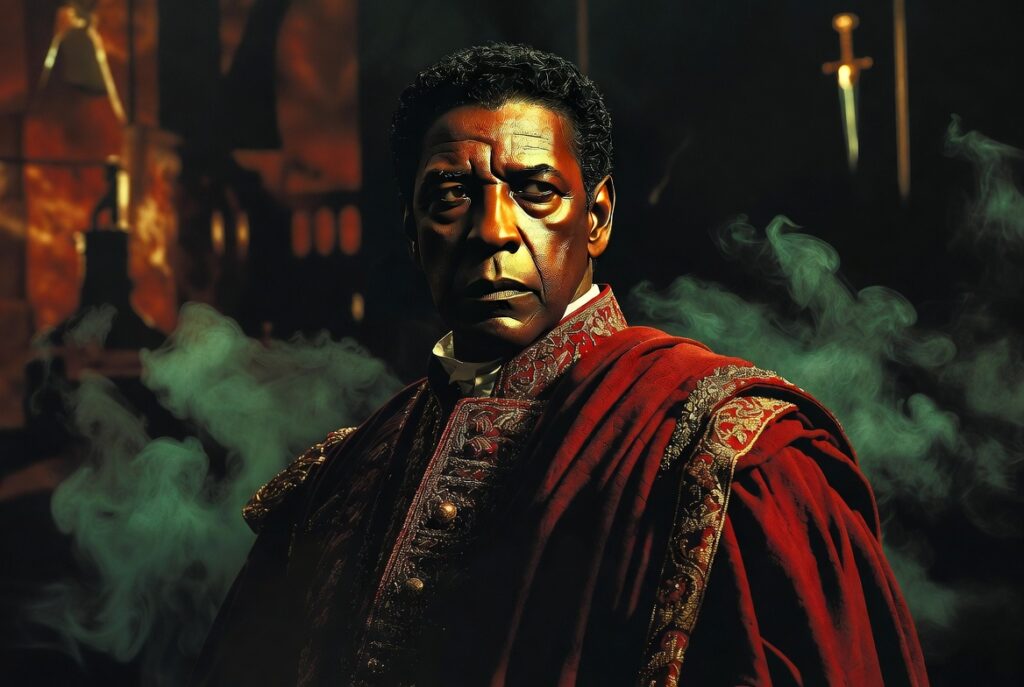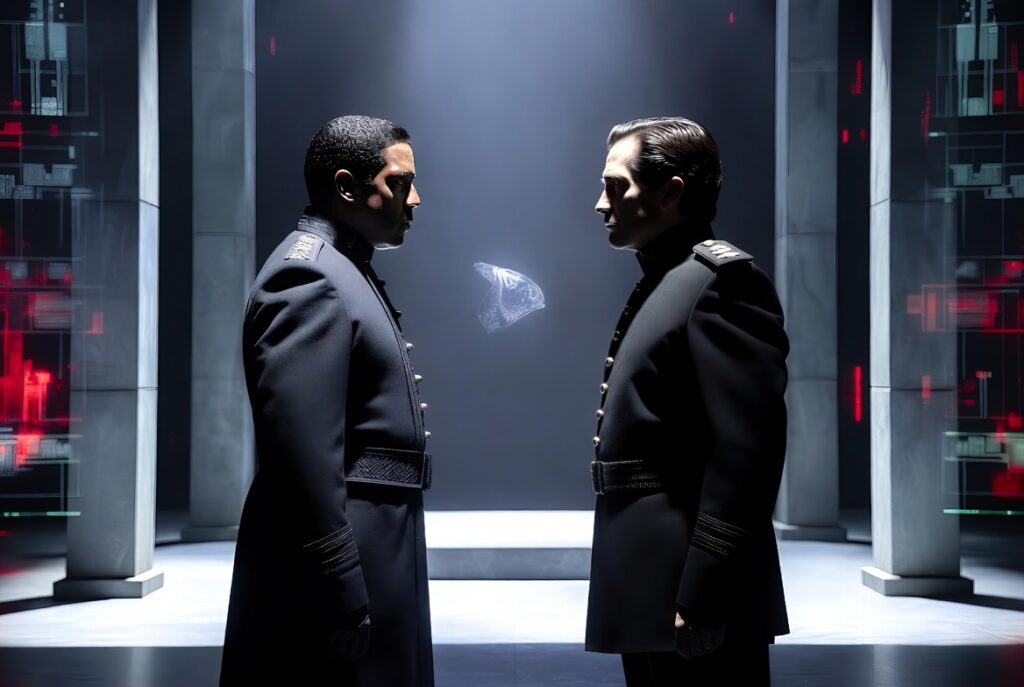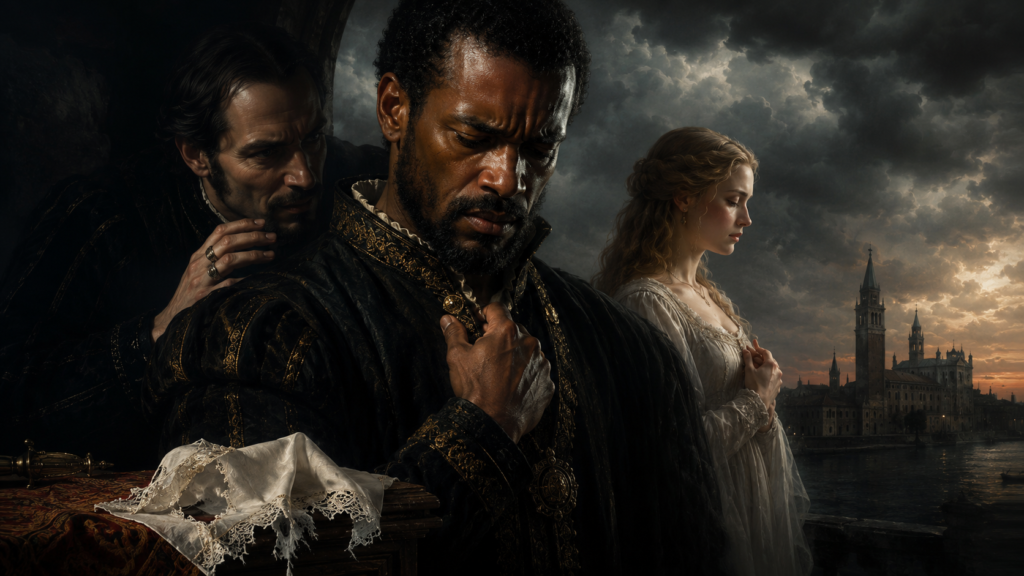
Imagine a valiant general, respected across Venice for his military brilliance, undone not by an enemy on the battlefield but by a single, insidious whisper of doubt planted in his ear. This is the heart of William Shakespeare’s Othello, a tragedy that has captivated audiences for over four centuries with its raw exploration of jealousy, betrayal, and human frailty. If you’re searching for a clear Othello plot summary, you’ve come to the right place. This comprehensive guide delivers a detailed, act-by-act breakdown of the play’s events, enriched with character analysis, thematic depth, historical context, and modern relevance—everything you need to fully appreciate one of Shakespeare’s most powerful works.
Whether you’re a student preparing for an exam, a theater enthusiast gearing up for a performance, or simply a lover of classic literature seeking deeper insight, this guide transforms a potentially complex Elizabethan drama into an accessible, illuminating read. Shakespeare wrote Othello around 1603–1604, during the transition from the Elizabethan to the Jacobean era. It stands among his great tragedies—Hamlet, King Lear, and Macbeth—as a tightly constructed masterpiece of psychological manipulation and tragic inevitability.
Historical and Literary Context of Othello
Understanding the Othello plot requires grasping the world in which it was created. Shakespeare drew primary inspiration from Giraldi Cinthio’s 1565 Italian novella Un Capitano Moro (“A Moorish Captain”) in his collection Hecatommithi. While Cinthio’s tale is a straightforward story of jealousy and revenge, Shakespeare elevated it into a profound tragedy by adding psychological complexity, poetic language, and social commentary.
Shakespeare’s Sources and Influences The playwright relocated the action from an unnamed Mediterranean setting to Venice and Cyprus, leveraging contemporary geopolitical tensions. Venice represented a cosmopolitan hub of trade and diplomacy, while Cyprus was a strategic outpost vulnerable to Ottoman threats. Shakespeare also incorporated elements from other sources, including accounts of Moorish soldiers in European armies and contemporary travel narratives that shaped perceptions of race and otherness.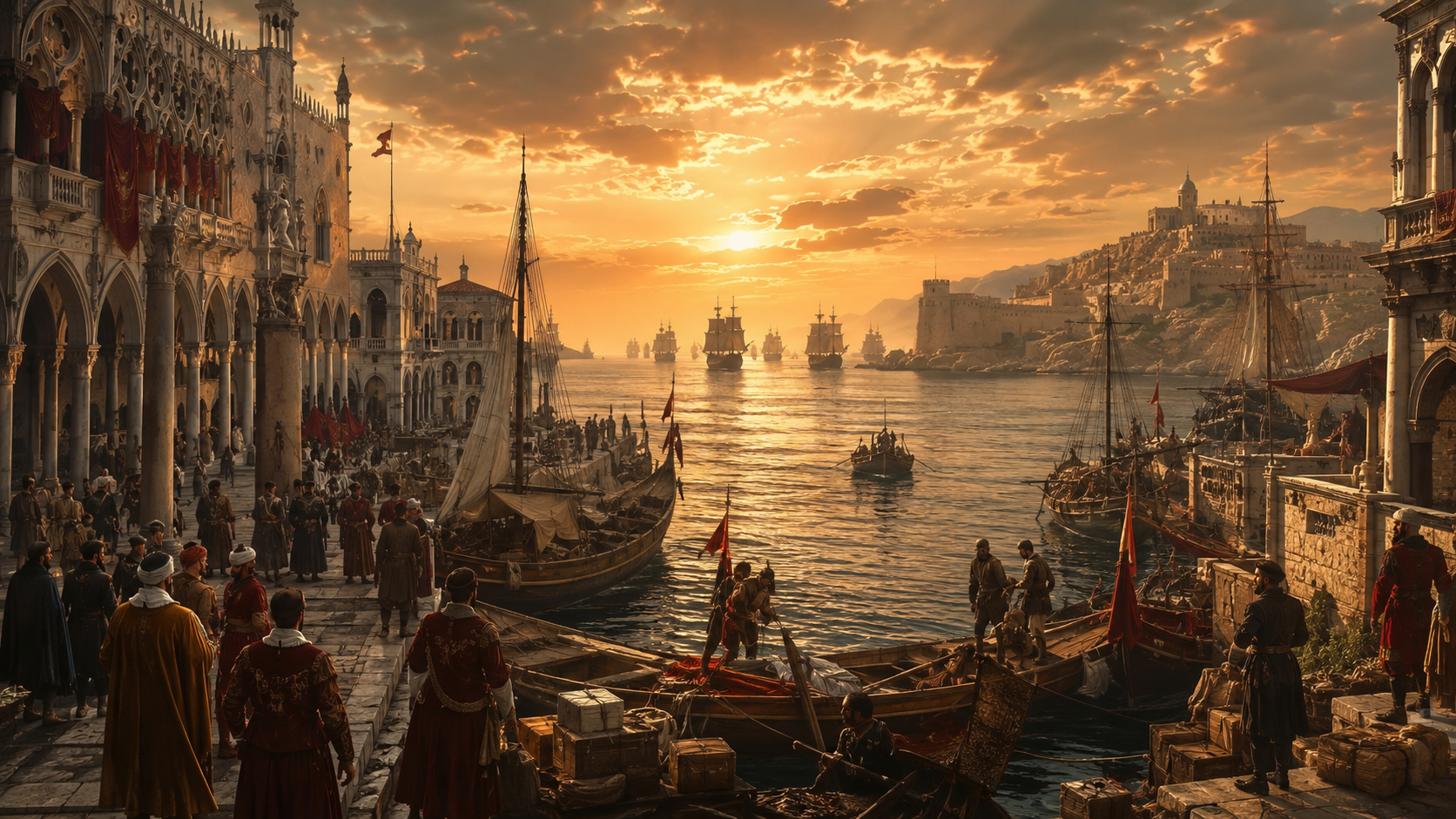
The Elizabethan/Jacobean Era – Race, Gender, and Power Dynamics In early 17th-century England, a Black Moor in a position of high command was both plausible (due to real historical figures) and exotic to audiences. The play engages directly with issues of race, religion, and outsider status. Othello, a Christian convert of North African descent, marries the white Venetian noblewoman Desdemona, defying social norms. Gender roles are equally central: women like Desdemona and Emilia navigate a patriarchal society where their virtue and obedience are constantly scrutinized.
Othello’s Place in Shakespeare’s Canon Unlike the introspective Hamlet or the cosmic despair of King Lear, Othello is Shakespeare’s most domestic tragedy. Its action unfolds over just a few days, creating intense dramatic pressure. The play showcases Shakespeare’s mastery of dramatic irony—Iago’s soliloquies reveal his schemes to the audience while characters remain oblivious—building unbearable tension as the plot hurtles toward catastrophe.
Main Characters in Othello – Profiles and Motivations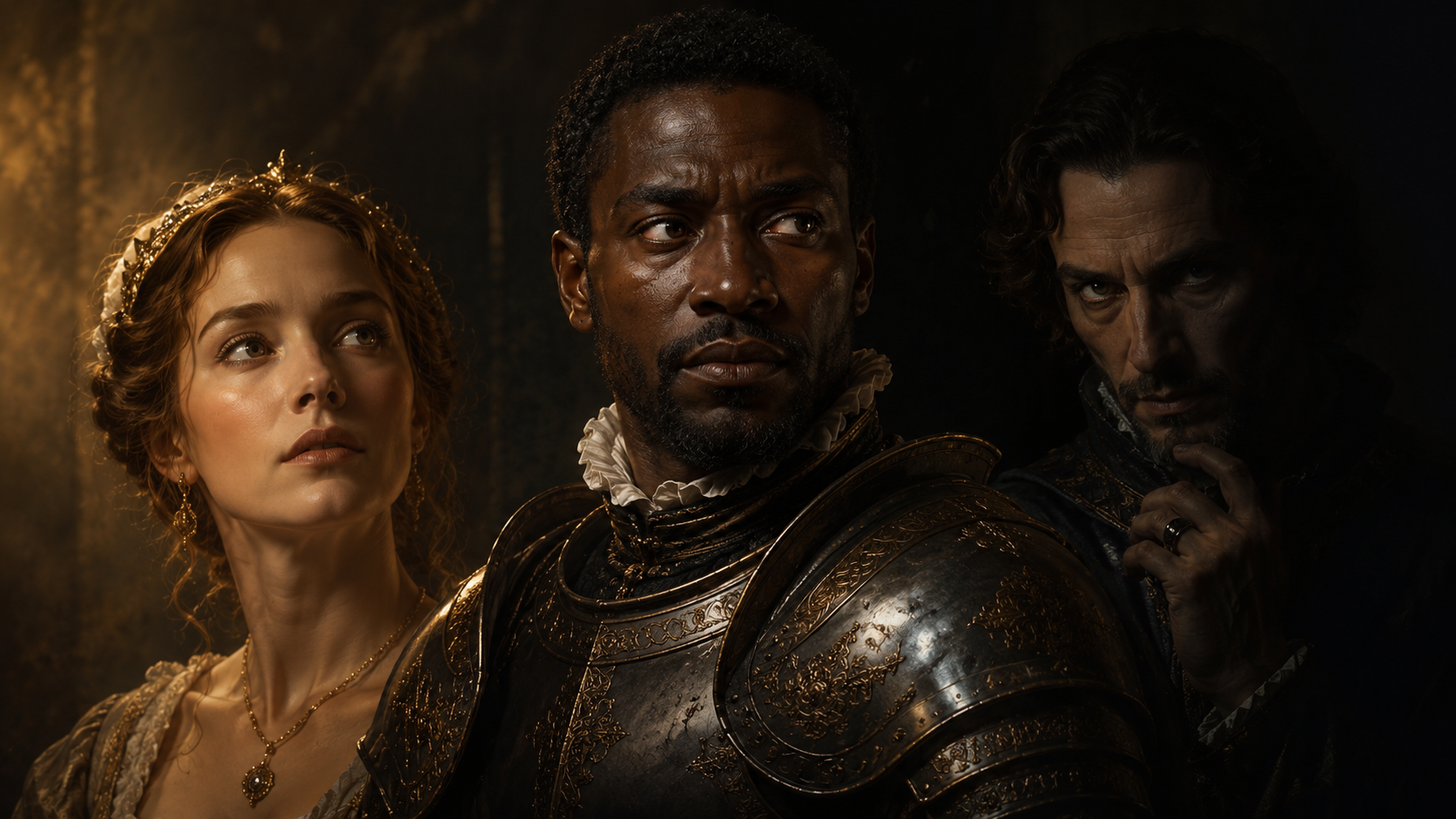
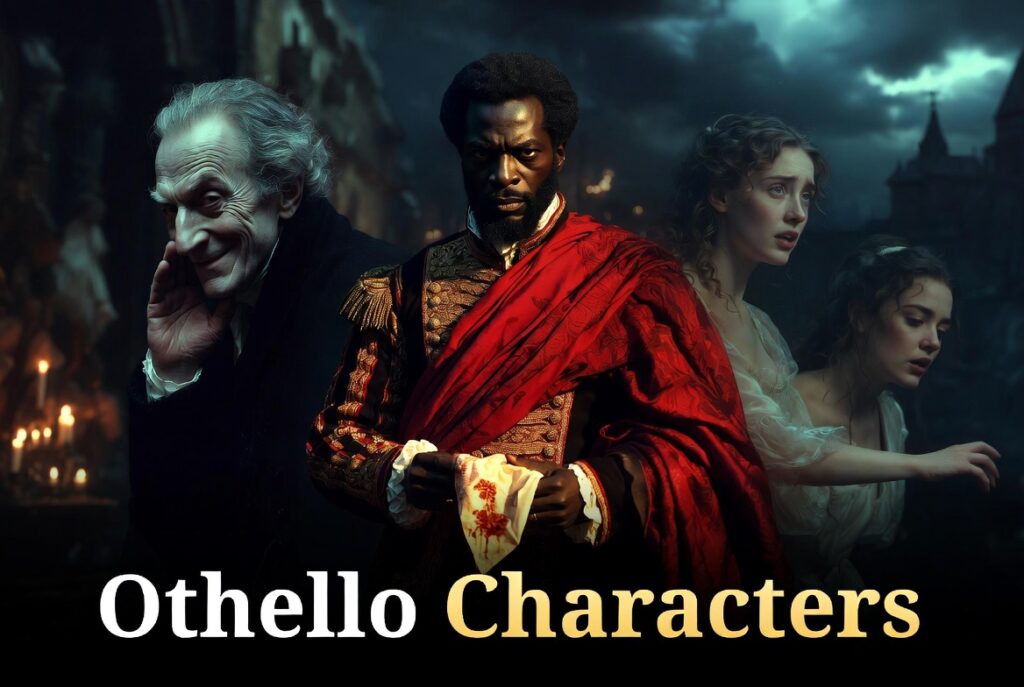
A masterful Othello plot hinges on its richly drawn characters. Shakespeare populates the play with individuals who feel startlingly modern in their contradictions and desires.
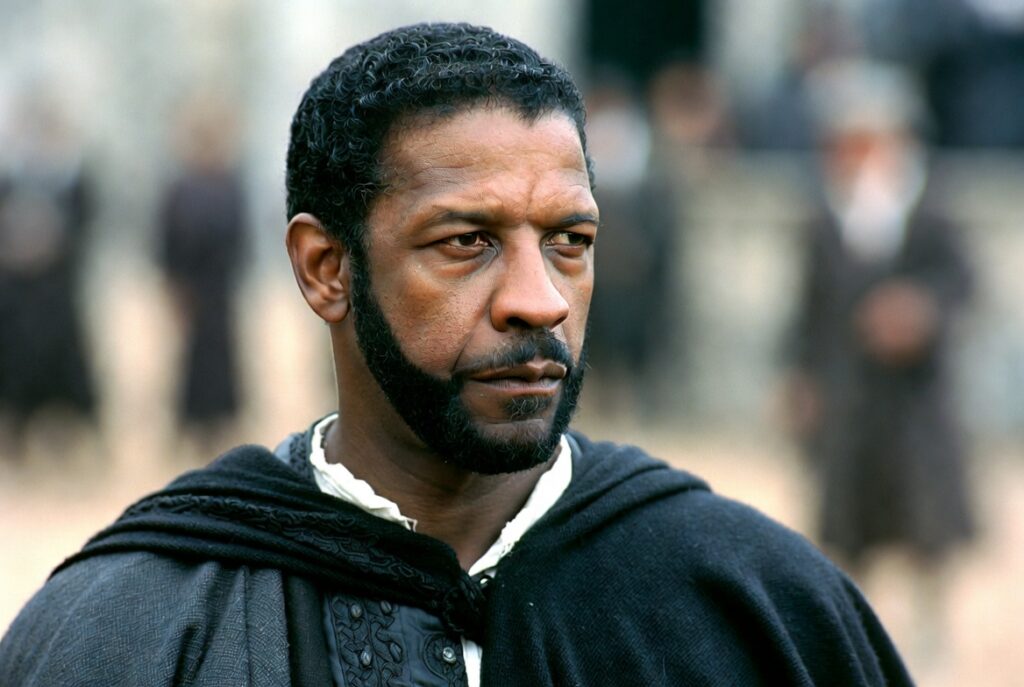
Othello – The Noble Moor Othello is a celebrated general whose military prowess earns him respect in Venice despite his outsider status. Proud, eloquent, and trusting, his greatest strength—his love for Desdemona—becomes his fatal flaw. As the plot progresses, we witness his transformation from composed leader to a man consumed by jealousy. His famous line, “Keep up your bright swords, for the dew will rust them” (Act 1), establishes his commanding presence early on.
Desdemona – Innocence and Defiance Desdemona is no passive victim. She defies her father to marry Othello, demonstrating courage and agency. Her purity and unwavering loyalty contrast sharply with the suspicions cast upon her, making her tragic fate all the more heartbreaking.
Iago – The Ultimate Villain Often called Shakespeare’s most diabolical creation, Iago is a master manipulator motivated by envy, resentment, and a desire for power. Passed over for promotion in favor of Cassio, he orchestrates the entire downfall with chilling calculation. His soliloquies offer chilling glimpses into his nihilistic worldview: “I am not what I am.”
Supporting Characters
- Cassio: The honorable but somewhat naive lieutenant whose demotion triggers much of the conflict.
- Emilia: Iago’s wife and Desdemona’s attendant, whose loyalty evolves dramatically.
- Roderigo: A gullible Venetian suitor whom Iago exploits for his own ends.
- Brabantio: Desdemona’s father, whose racist objections foreshadow societal prejudice.
- Bianca: Cassio’s mistress, whose minor role adds layers to themes of class and fidelity.
These characters are not archetypes but complex humans whose interactions drive the inexorable Othello plot.
Detailed Othello Plot Summary – Act by Act and Scene by Scene
This section provides the most thorough Othello plot summary available, balancing clarity for first-time readers with depth for those seeking analysis. Key quotes and turning points are highlighted.
Act 1 – The Setup in Venice The play opens in the midst of action. Iago complains to Roderigo about being overlooked for lieutenant in favor of Michael Cassio. Together, they wake Brabantio to inform him that his daughter Desdemona has eloped with Othello. Brabantio is outraged, accusing Othello of using witchcraft. The matter reaches the Duke of Venice, who needs Othello to lead forces against the Turkish fleet threatening Cyprus. Othello defends his honorable courtship, and Desdemona affirms her love. The act ends with the group preparing to sail to Cyprus, while Iago reveals in soliloquy his plan to destroy Othello.
This opening establishes social tensions, introduces the central marriage, and plants Iago’s villainy—all within a compact, fast-paced act.
Act 2 – Arrival in Cyprus and the Brawl A violent storm destroys the Turkish fleet, allowing the Venetians to celebrate. Cassio greets Desdemona warmly upon her arrival. Iago exploits the revelry: he gets Cassio drunk, engineers a fight, and ensures Cassio is stripped of his rank. Iago then advises Cassio to seek Desdemona’s help in regaining favor, setting the trap for later manipulation. The act closes with Iago’s second major soliloquy outlining his scheme.
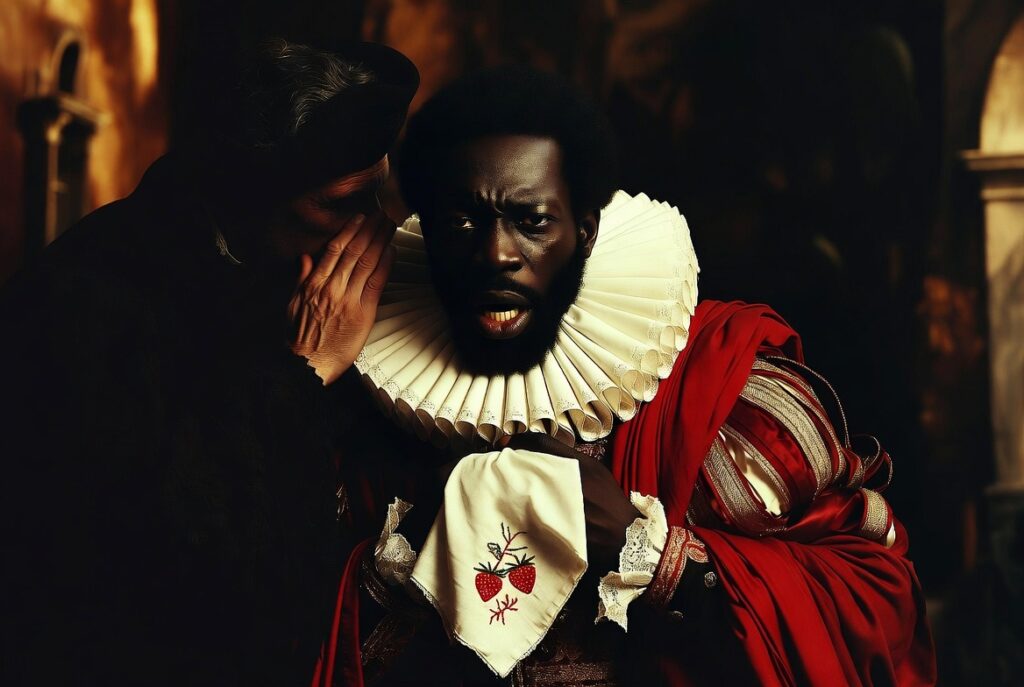
Act 3 – The Seeds of Jealousy This is the pivotal “temptation scene,” widely regarded as one of Shakespeare’s greatest achievements. Desdemona promises to advocate for Cassio. Iago begins dropping subtle hints about Cassio and Desdemona’s relationship. He reminds Othello of the handkerchief—a gift from Othello to Desdemona—that he claims to have seen in Cassio’s possession. Through masterful psychological tactics, Iago transforms Othello’s trust into raging doubt. By the end of the act, Othello vows revenge, kneeling with Iago in a chilling parody of marriage.
Act 4 – Descent into Madness Othello demands proof and eavesdrops as Iago manipulates Cassio. He falls into a trance after Iago’s lies intensify. Confrontations with Desdemona grow increasingly cruel. Othello strikes her publicly, and his mental state deteriorates. Meanwhile, Emilia begins to suspect her husband’s involvement. The act builds unbearable dramatic irony as the audience knows the truth while Othello spirals.
Act 5 – The Tragic Climax and Resolution In a night of violence, Roderigo attempts to murder Cassio on Iago’s orders but fails. Othello smothers Desdemona in their bedchamber, convinced of her infidelity. Emilia’s revelation of Iago’s deception comes too late. Othello, realizing his grave error, kills himself with a final speech of dignity: “I kissed thee ere I killed thee. No way but this, Killing myself, to die upon a kiss.” Iago is arrested, Cassio assumes command, and the tragedy closes on a note of profound loss.
Key Themes in Othello – Timeless Lessons
The Othello plot is far more than a simple revenge story; it is a profound meditation on human nature.
Jealousy as the “Green-Eyed Monster” Iago famously warns, “O, beware, my lord, of jealousy; It is the green-eyed monster which doth mock the meat it feeds on.” The play dissects how unfounded suspicion destroys love and reason.
Racism and Otherness Othello’s race is repeatedly referenced in derogatory terms (“the Moor,” “thick-lips”). The tragedy critiques prejudice while showing how internalized otherness contributes to Othello’s insecurity.
Manipulation, Deception, and Appearance vs. Reality Iago’s genius lies in exploiting perceptions. The handkerchief, a trivial object, becomes “proof” of betrayal.
Gender Roles, Female Agency, and Patriarchy Desdemona and Emilia challenge and ultimately suffer under male authority, offering powerful commentary on women’s limited power in Renaissance society.
Honor, Reputation, and Revenge Characters repeatedly prioritize reputation over truth, driving the fatal chain of events.
These themes intersect masterfully within the plot, creating a work that feels strikingly relevant in our era of misinformation, toxic relationships, and identity politics.
Symbolism and Literary Devices in Othello
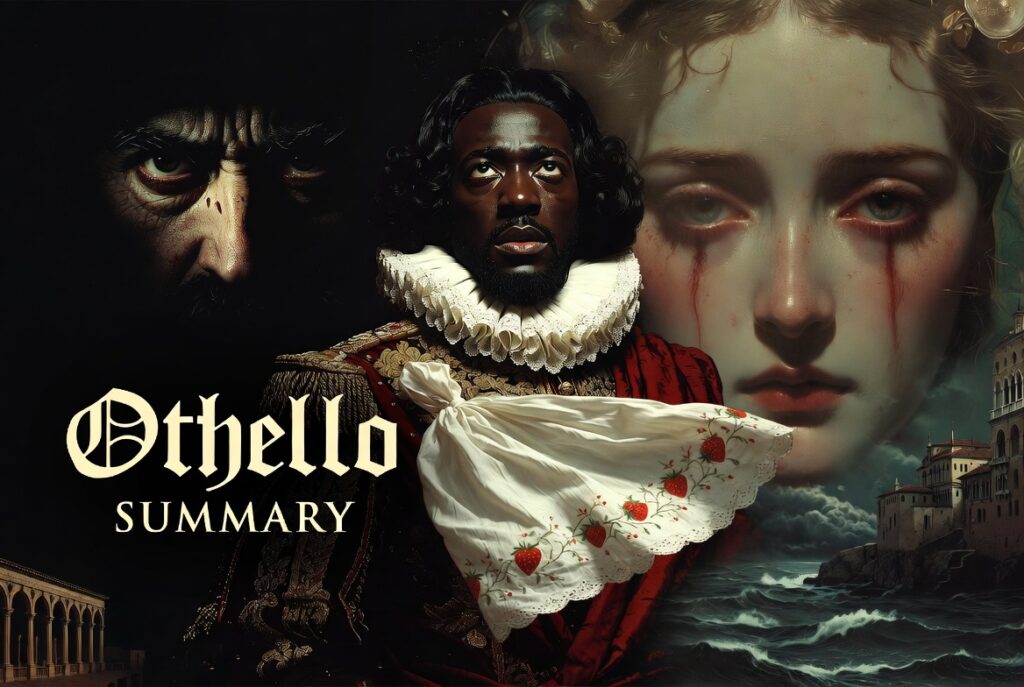
The Handkerchief – Central Prop and Symbol Originally a token of Othello’s mother’s magic, it represents fidelity, heritage, and proof. Its loss triggers the catastrophe.
Animal Imagery, Poison, and the Sea/Storm Motifs Iago frequently uses beastly metaphors to dehumanize. The opening storm foreshadows emotional turmoil.
Dramatic Irony and Soliloquies The audience’s privileged knowledge of Iago’s schemes heightens every scene.
Language and Othello’s Poetic Decline Othello’s majestic verse disintegrates into fragmented prose as jealousy overtakes him, showcasing Shakespeare’s linguistic brilliance.
Why Othello’s Tragedy Resonates Today
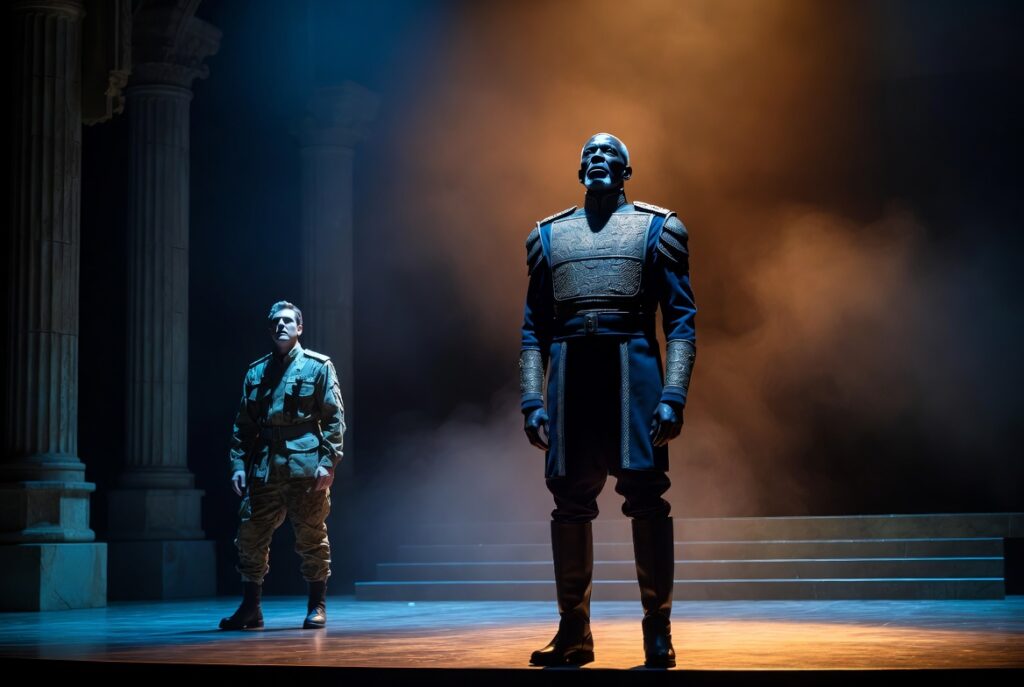
Modern adaptations—from Orson Welles’ 1951 film to recent stage productions—demonstrate the play’s enduring power. The Othello plot speaks to contemporary concerns: psychological gaslighting, racial microaggressions, the destructive force of rumors on social media, and the fragility of trust in relationships. For students, it offers rich material for essays on identity, power, and morality. Theater companies continue to reinterpret it through diverse casting and innovative staging, keeping the story alive.
Study Tips:
- Read alongside a good annotated edition (Folger or Arden recommended).
- Watch multiple productions to see interpretive choices.
- Track Iago’s lies step-by-step to appreciate the craftsmanship.
Common Questions and Misconceptions About the Othello Plot
What is the main conflict in Othello? The central conflict is internal and external: Othello’s struggle with manipulated jealousy versus Iago’s calculated villainy.
Is Othello a racist play or a critique of racism? Shakespeare critiques racism by showing its destructive consequences and giving Othello nobility and eloquence.
Why does Othello trust Iago so completely? Iago’s reputation as “honest Iago,” combined with Othello’s outsider insecurity and Iago’s masterful rhetoric, makes the deception believable.
What happens to the characters at the end? (Full spoilers here) Desdemona is murdered by Othello, who then suicides. Iago is exposed and taken for torture. Cassio survives to restore order.
Expert Insights and Study Tips
As a scholar of Shakespeare’s works, I emphasize that Othello rewards repeated readings. Compare Othello to other tragic heroes: his hamartia is credulity rather than hubris. Iago stands apart from villains like Richard III because his motives remain partially enigmatic, enhancing his terror. Use comparison tables in your notes:
| Character | Strength | Fatal Flaw | Outcome |
|---|---|---|---|
| Othello | Military leadership, love | Trust in Iago | Suicide |
| Iago | Manipulation | Envy | Arrest/Torture |
| Desdemona | Loyalty, courage | Naivety | Murdered |
Recommended further reading includes works by critics like A.C. Bradley, Stephen Greenblatt, and modern analyses focusing on race and gender.
The Othello plot remains one of literature’s most devastating journeys—a story of love destroyed by lies, trust betrayed, and a noble soul brought low. Shakespeare offers no easy answers, only a mirror to our own capacity for both greatness and self-destruction. By understanding this tragedy in its full context, we gain not only academic insight but wisdom about human relationships that transcends time.
I encourage you to read or watch Othello for yourself. What aspects of the plot or characters resonate most with you? Share your thoughts in the comments below, and explore our other guides to Shakespeare’s works on this site. The Bard’s insights endure because they speak to the unchanging truths of the human heart.