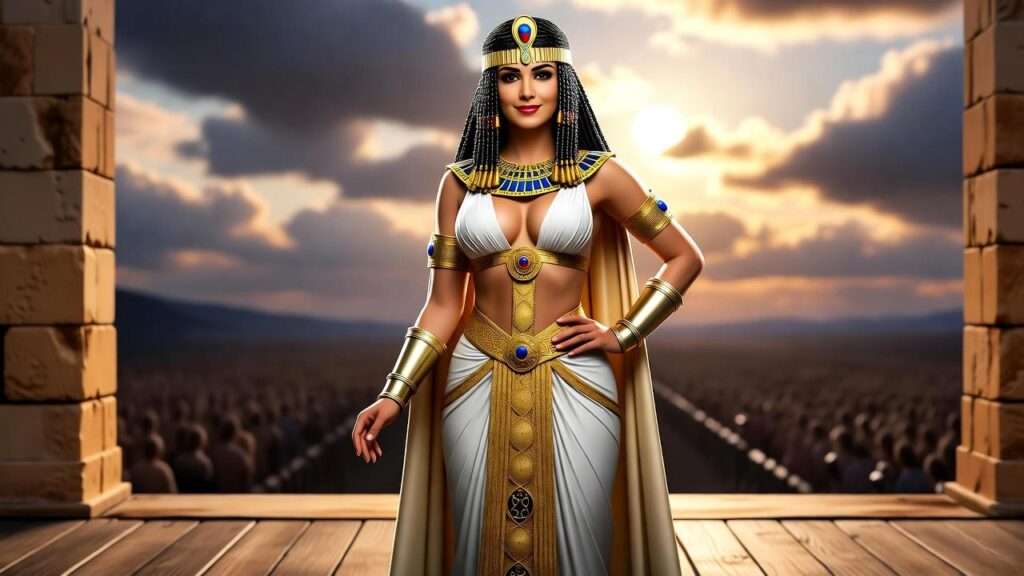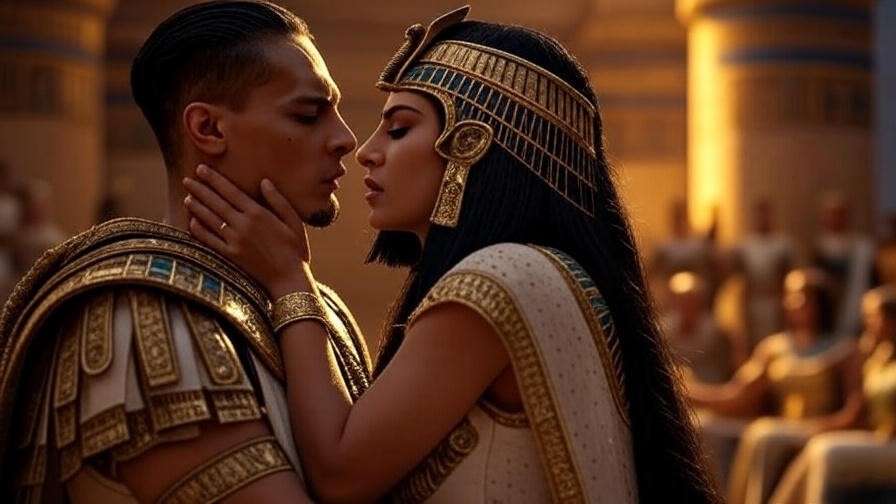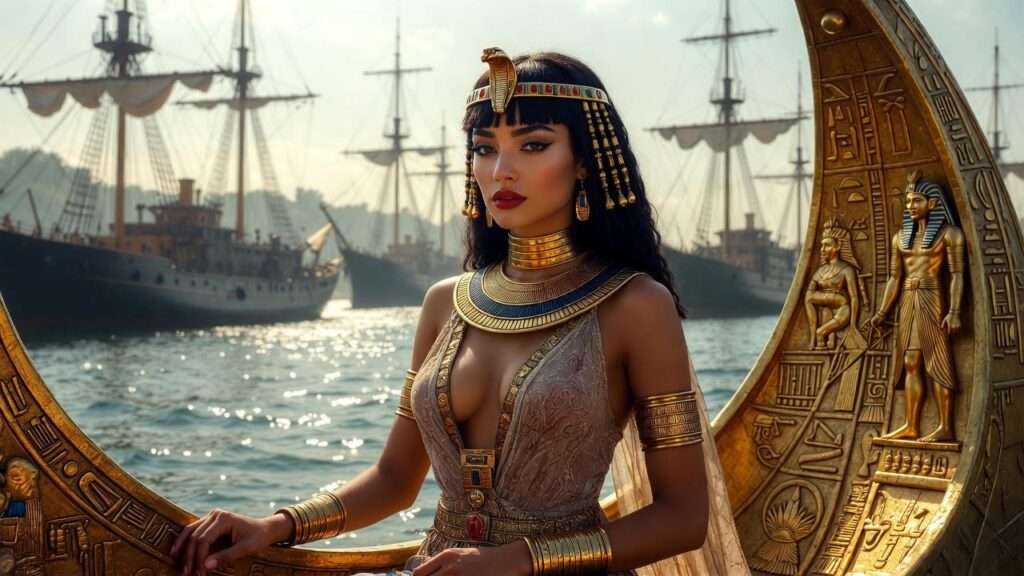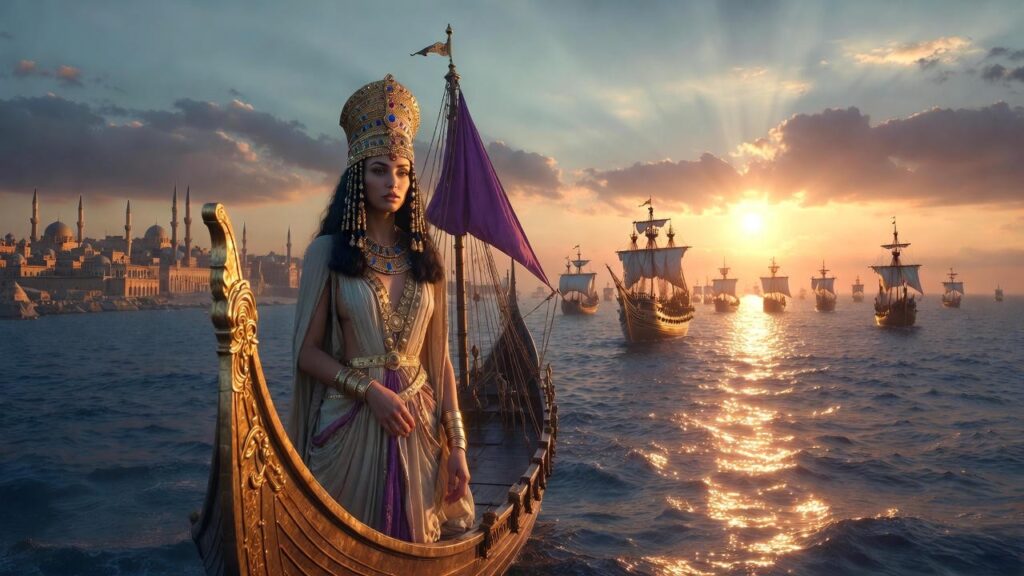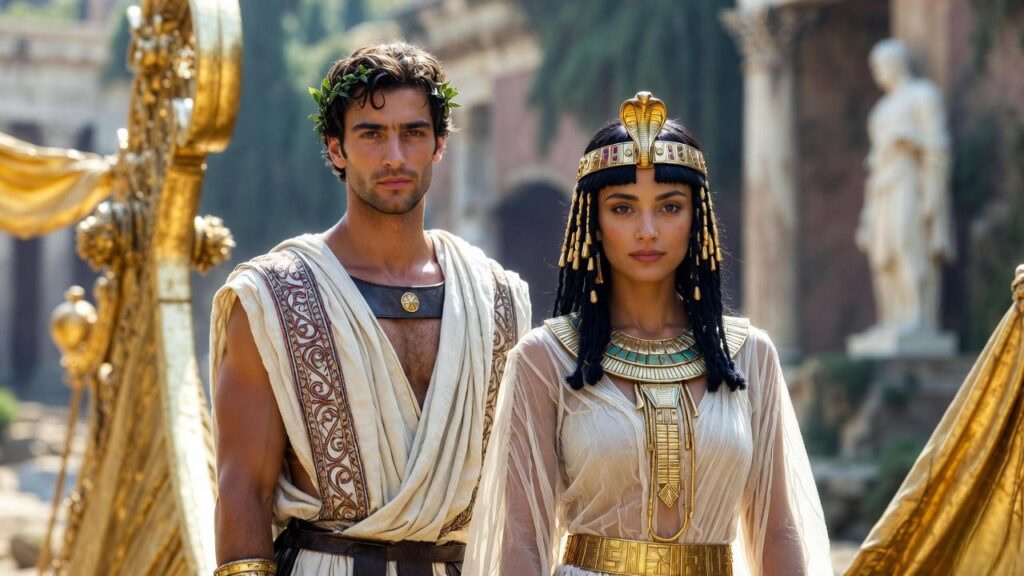
“The barge she sat in, like a burnish’d throne, / Burn’d on the water: the poop was beaten gold; / Purple the sails, and so perfumed that / The winds were love-sick with them…”
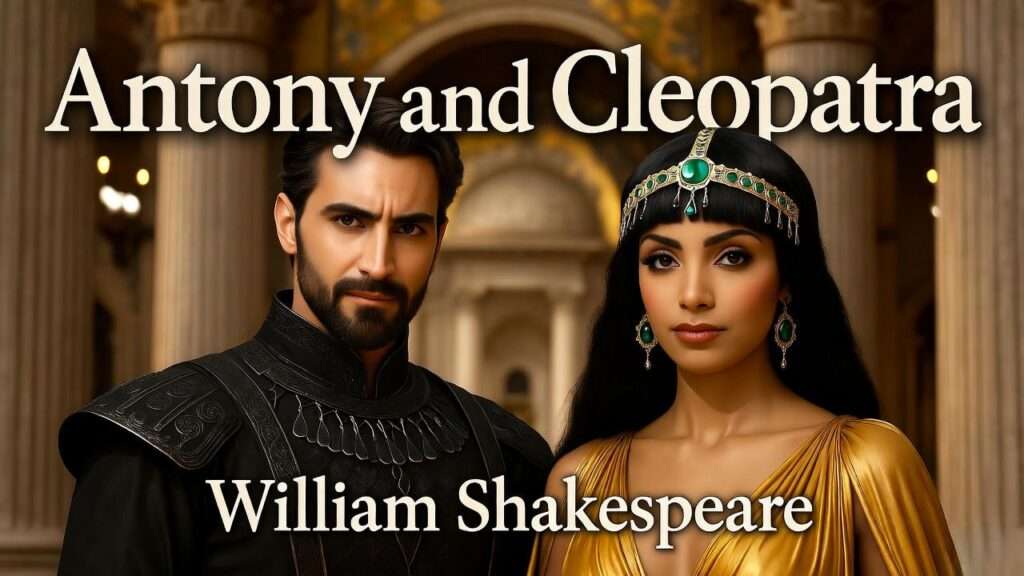
These immortal lines, spoken by Enobarbus in Act 2, Scene 2, capture the essence of Shakespeare’s Antony and Cleopatra—a play where grandeur, passion, and tragedy collide. Few descriptions in literature rival this vivid evocation of Cleopatra’s allure, turning a historical queen into an almost mythical figure. If you’ve ever wondered about the Antony & Cleopatra characters—who they truly are beneath the myths, what drives their fateful decisions, and how Shakespeare transforms historical figures into timeless psychological portraits—this comprehensive guide is for you.
Written for students preparing essays, theater lovers seeking deeper appreciation, educators planning lessons, or general readers rediscovering Shakespeare, this article dives deep into every major and notable minor character. Drawing on the text itself, Plutarch’s Lives (Shakespeare’s primary source), scholarly criticism, and performance history, we’ll explore their motivations, contradictions, relationships, and thematic significance. By the end, you’ll have a richer understanding of why Antony and Cleopatra remains one of Shakespeare’s most mature and challenging tragedies.
Historical and Literary Context: Understanding the Real Antony and Cleopatra
To fully grasp Shakespeare’s characters, we must start with their roots in history. Shakespeare drew heavily from Sir Thomas North’s 1579 translation of Plutarch’s Parallel Lives of the Noble Grecians and Romans, particularly the lives of Mark Antony and Octavius Caesar. Plutarch portrayed Antony as a brave but flawed soldier undone by luxury and love, while Cleopatra emerged as a cunning, charismatic ruler who wielded seduction as a political tool.
Yet Shakespeare dramatically reimagines these figures. In history, Cleopatra VII was a brilliant polyglot diplomat who ruled Egypt for over two decades, forging alliances with Julius Caesar and then Antony to protect her kingdom from Roman domination. The real Antony was a seasoned general, part of the Second Triumvirate with Octavius and Lepidus, whose defeat at Actium in 31 BC paved the way for Octavius to become Augustus, Rome’s first emperor.
Shakespeare amplifies the romance, infusing it with poetic intensity absent in Plutarch. He contrasts Roman values—discipline, honor, public duty—with Egyptian sensuality, excess, and private emotion. This East vs. West dichotomy shapes character motivations: Romans view Egypt as decadent and emasculating, while Egyptians embrace life’s pleasures. Understanding this context reveals why characters like Antony are torn between worlds, and why Cleopatra defies simple stereotypes as a mere “seductress.”
The play, likely written around 1606–1607, reflects Jacobean interests in empire, gender roles, and political intrigue. Shakespeare’s departures from history—such as inventing scenes or heightening emotional stakes—serve dramatic purposes, making his characters more psychologically complex than their historical counterparts.
The Central Trio – Power, Passion, and Politics
At the heart of the play are three towering figures whose interactions drive the tragedy: Mark Antony, Cleopatra, and Octavius Caesar.
Mark Antony – The Tragic Hero Divided
Mark Antony is Shakespeare’s quintessential divided hero—a colossus straddling two worlds, ultimately crushed by the conflict within himself. Described early on as “the triple pillar of the world transform’d / Into a strumpet’s fool” (Act 1, Scene 1), Antony embodies the tension between martial prowess and overwhelming passion.
His core traits shine in his military past: the Herculean soldier who once drank horse urine and ate strange flesh during campaigns (as recounted by Caesar in Act 1, Scene 4). Yet in Egypt, he indulges in revelry, declaring, “Let Rome in Tiber melt and the wide arch / Of the ranged empire fall! Here is my space” (Act 1, Scene 1). This line reveals his primary motivation: a desire for personal fulfillment over public duty.
Antony’s internal conflict peaks during battles like Actium, where his flight after Cleopatra’s retreating ships marks his tragic fall. His suicide—botched yet noble—stems from misplaced reports of Cleopatra’s death, underscoring his impulsiveness. As he says on his deathbed, “I am dying, Egypt, dying” (Act 4, Scene 15), prioritizing love over legacy.
Compared to other Shakespearean tragic heroes, Antony shares Othello’s jealousy and susceptibility to manipulation, Hamlet’s procrastination in action, and Macbeth’s ambition tainted by excess. But unlike them, his flaw is not moral corruption but a grandeur that defies Roman restraint.
In performance, Antony demands an actor of immense range. Richard Burton’s 1950s portrayal emphasized charisma and decline, while Ralph Fiennes (in the 2000 Almeida production) captured intellectual torment. Modern interpretations often highlight postcolonial angles, viewing Antony’s “Egyptian” side as liberation from imperial rigidity.
Cleopatra – Queen, Lover, Enigma
Cleopatra is arguably Shakespeare’s most complex female character—”infinite variety” personified (Act 2, Scene 2). Far from a one-dimensional temptress, she is a masterful politician, performer, and lover whose motivations blend genuine passion, strategic calculation, and fierce independence.
Her language shifts effortlessly: playful and bawdy with Antony (“O happy horse, to bear the weight of Antony!” Act 1, Scene 5), imperious with subordinates, and profoundly poetic in crisis. The barge scene, narrated by the cynical Enobarbus, immortalizes her theatricality—she stages herself as Venus to ensnare Antony.
Cleopatra’s fear of humiliation drives her suicide: “Shall they hoist me up / And show me to the shouting varletry / Of censuring Rome?” (Act 5, Scene 2). Her death—applying the asp with ritual dignity—transforms defeat into triumph, immortalizing her as “a lass unparalleled.”
Modern scholarship, influenced by feminist and postcolonial critics like Janet Adelman and Ania Loomba, reframes Cleopatra as a subversive force against Roman patriarchy and imperialism. She wields sexuality as power in a male-dominated world, yet her love for Antony feels authentic, transcending politics.
On stage, Cleopatra has challenged and crowned great actresses. Vivien Leigh’s 1951 performance with Laurence Olivier was sensual and volatile; Judi Dench (1987 RSC) brought intellectual sharpness; Sophie Okonedo (2018 National Theatre, opposite Ralph Fiennes) emphasized her African heritage and regal authority. The role requires conveying age (Cleopatra is in her late 30s), motherhood (she has children), and unyielding charisma.
Octavius Caesar – The Cold Architect of Empire
Octavius Caesar (later Augustus) serves as the play’s chilling foil: young, disciplined, and politically astute where Antony is indulgent and impulsive. He is not a villain in the traditional sense but the embodiment of Roman order—efficient, unsentimental, victorious.
His motivations are purely imperial: consolidating power after Caesar’s assassination. He criticizes Antony’s excesses (“he fishes, drinks, and wastes / The lamps of night in revel,” Act 1, Scene 4) not from moral outrage but strategic concern. Even his grief over Antony’s death feels calculated: “The breaking of so great a thing should make / A greater crack” (Act 5, Scene 1).
Octavius’s coldness makes him dramatically less engaging than the lovers, yet his success underscores the play’s tragedy—passion loses to pragmatism. Shakespeare humanizes him slightly in moments like offering mercy or admiring Antony’s nobility, but he remains distant.
In productions, directors often costume him in stark whites or military precision to contrast Egypt’s opulence.
Major Supporting Characters and Their Dramatic Roles
While the central trio dominates, supporting characters provide crucial commentary, contrast, and emotional depth.
Enobarbus – The Voice of Reason and Tragedy
Domitius Enobarbus stands out as the play’s most relatable figure: a blunt, loyal Roman soldier who narrates key events and embodies the audience’s perspective. His famous barge speech not only glorifies Cleopatra but reveals his own enchantment despite cynicism.
Enobarbus’s defection to Caesar—driven by despair over Antony’s mismanagement—leads to his heartbreaking death from grief: “Throw my heart / Against the flint and hardness of my fault” (Act 4, Scene 9). His demise is the play’s purest tragedy, highlighting loyalty’s cost in a fractured world.
He represents the soldier’s dilemma: admiration for Antony’s grandeur versus recognition of his folly.
Charmian and Iras – Loyalty and Sisterhood
Cleopatra’s attendants, Charmian and Iras, offer intimate glimpses into her court. Their banter with the Soothsayer and voluntary deaths alongside their queen (“If knife, drugs, serpents have / Edge, sting, or operation, I am safe,” says Charmian) echo Roman stoicism while affirming Egyptian devotion.
They humanize Cleopatra, showing her as affectionate mistress rather than distant ruler.
Pompey (Sextus Pompeius) – The Forgotten Third Power
Pompey appears early as a naval threat to the Triumvirate, highlighting fragile alliances during the galley feast (Act 2, Scene 7). His rejection of assassination plots underscores honor, but his quick defeat diminishes his role—serving mainly to expose political hypocrisy.
Octavia – Innocence Caught in the Crossfire
Octavia, Caesar’s sister married to Antony for peace, is quiet dignity incarnate. Described as having “holy, cold, and still conversation” (Act 2, Scene 6), she briefly reconciles the rivals but is abandoned when Antony returns to Cleopatra. Her pathos lies in being a political pawn, her heartbreak unspoken yet palpable.
Minor Characters Worth Knowing
Shakespeare populates the play with vivid minor figures who illuminate larger themes:
- Lepidus: The weakest Triumvir, drunk and sidelined, he satirizes power imbalances. His arrest by Caesar exposes the alliance’s fragility.
- Agrippa and Maecenas: Caesar’s advisors provide Roman commentary, contrasting Enobarbus’s independence.
- Eros: Antony’s freedman refuses to kill his master (“My sword is drawn for your own service”), choosing suicide—a poignant act of loyalty.
- Mardian the Eunuch, Alexas, Seleucus: Cleopatra’s courtiers reveal her temper (she beats the messenger) and cunning (Seleucus exposes her withheld treasures, perhaps deliberately to prove devotion).
These characters, though brief, reinforce motifs of betrayal, fidelity, and cultural clash.
Key Themes Revealed Through the Characters
Shakespeare weaves profound themes into the fabric of his characters, making Antony and Cleopatra a meditation on human nature.
- Love vs. Duty: Antony’s fatal choice epitomizes this conflict, while Cleopatra transcends it by merging personal passion with political legacy.
- Public Image vs. Private Self: Both lovers are consummate performers—Cleopatra on her barge, Antony in battle—blurring reality and theater.
- East vs. West / Egypt vs. Rome: Romans decry Egyptian “lasciviousness,” yet envy its vitality; the play questions which worldview is superior.
- Gender and Power: Cleopatra subverts patriarchal norms, wielding authority through intellect and allure in a world that seeks to diminish her.
- Mortality and Legacy: Death scenes dominate the final act, with characters staging their ends to control how history remembers them—Antony nobly, Cleopatra immortally.
These themes emerge organically from character interactions, proving Shakespeare’s genius in psychological realism.
Expert Insights: Modern Interpretations and Adaptations
Antony and Cleopatra continues to captivate directors and scholars. Notable productions include the 1978 BBC version with Jane Lapotaire’s fiery Cleopatra; the 2014 Globe Theatre staging emphasizing comedy amid tragedy; and Simon Godwin’s 2018 National Theatre production, which foregrounded diversity and postcolonial readings.
Contemporary criticism explores queer theory (the fluid gender dynamics in Cleopatra’s “I have no power upon you” to Antony), feminist reclamation of Cleopatra’s agency, and eco-critical views of the Nile as a symbol of fertile chaos against Roman sterility.
The play’s challenges—its sprawling structure, rapid scene changes, and demanding leads—make it less frequently staged than Romeo and Juliet or Hamlet, but when done well, it rewards with unparalleled depth.
Frequently Asked Questions (FAQ)
Who is the protagonist of Antony and Cleopatra? The play is uniquely dual-focused, with Antony and Cleopatra sharing protagonist status—neither fully dominates.
Is Cleopatra based on a real person? Yes, Cleopatra VII Philopator (69–30 BC), the last Ptolemaic ruler of Egypt.
Why does Enobarbus die? Overwhelmed by guilt after defecting from Antony, he dies of a broken heart.
What is the significance of the barge speech? It mythologizes Cleopatra’s power and reveals Enobarbus’s (and the audience’s) fascination.
How does Shakespeare portray Roman values vs. Egyptian values? Rome: restraint, duty, empire. Egypt: pleasure, emotion, individuality—neither is wholly endorsed.
Who kills Antony? Antony attempts suicide with his sword but botches it; his guards assist in the end.
Why is Octavius Caesar often seen as the villain? His cold victory over passion makes him unsympathetic, though he’s politically triumphant.
Best film adaptations to watch the characters in action? Charlton Heston’s 1972 version; the 1974 RSC with Janet Suzman and Richard Johnson.
How many characters die in the play? At least eight on stage or reported, including the central lovers and attendants.
Tips for students analyzing characters in exams/essays? Focus on key quotes, contradictions in behavior, and how they embody themes; compare to Plutarch for Shakespeare’s innovations.
Shakespeare’s Antony and Cleopatra endures because its characters are profoundly human—flawed, magnificent, contradictory. Antony’s grandeur, Cleopatra’s infinite variety, Caesar’s icy resolve, and the supporting cast’s poignant loyalties create a tapestry of passion and power unmatched in drama.
Whether you’re studying the play, preparing a production, or simply reveling in its poetry, these figures invite endless exploration. Revisit the text, watch a performance, or share your favorite moment below—what draws you most to these complex souls?