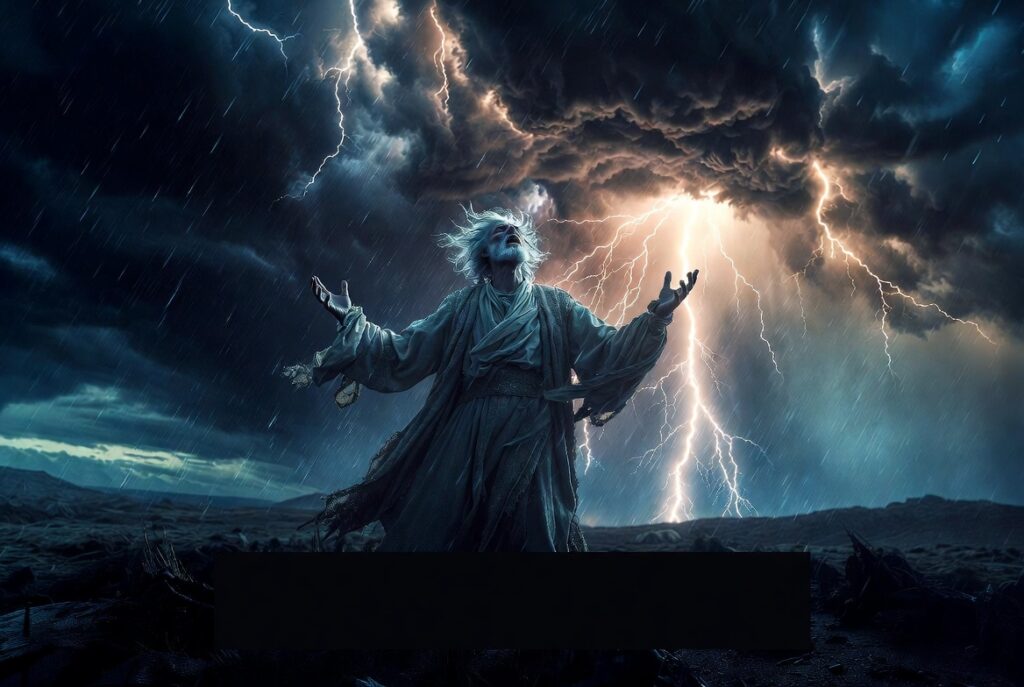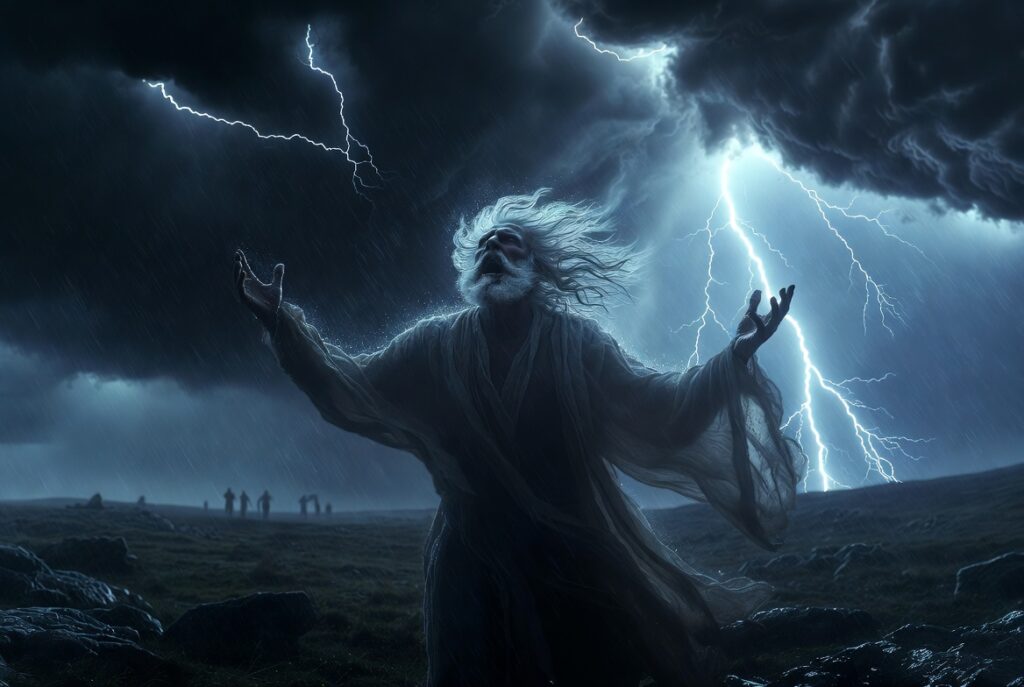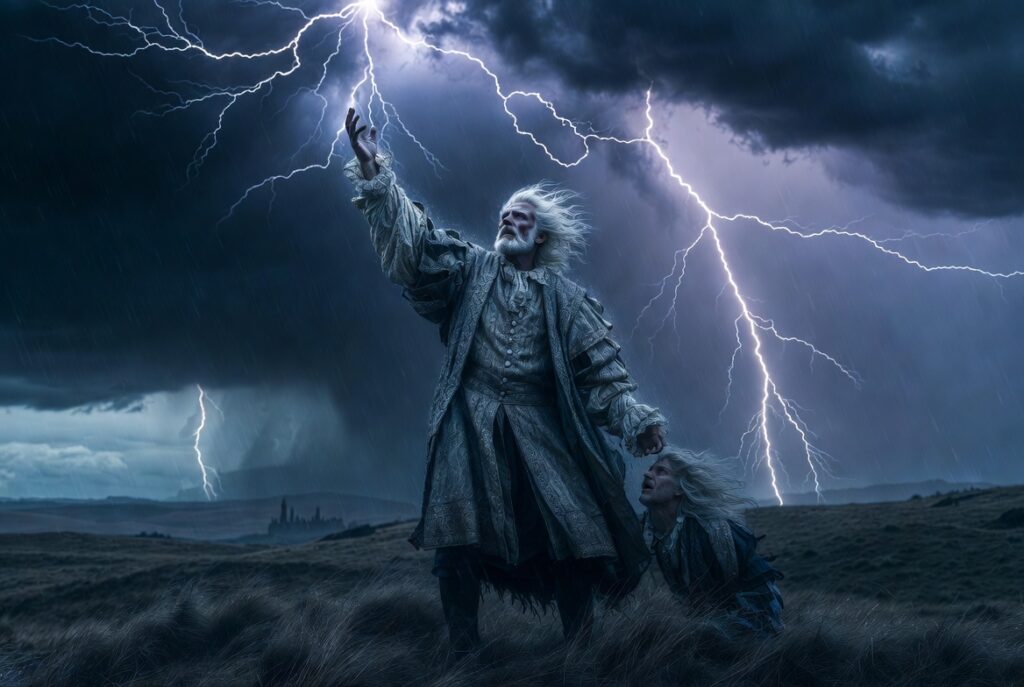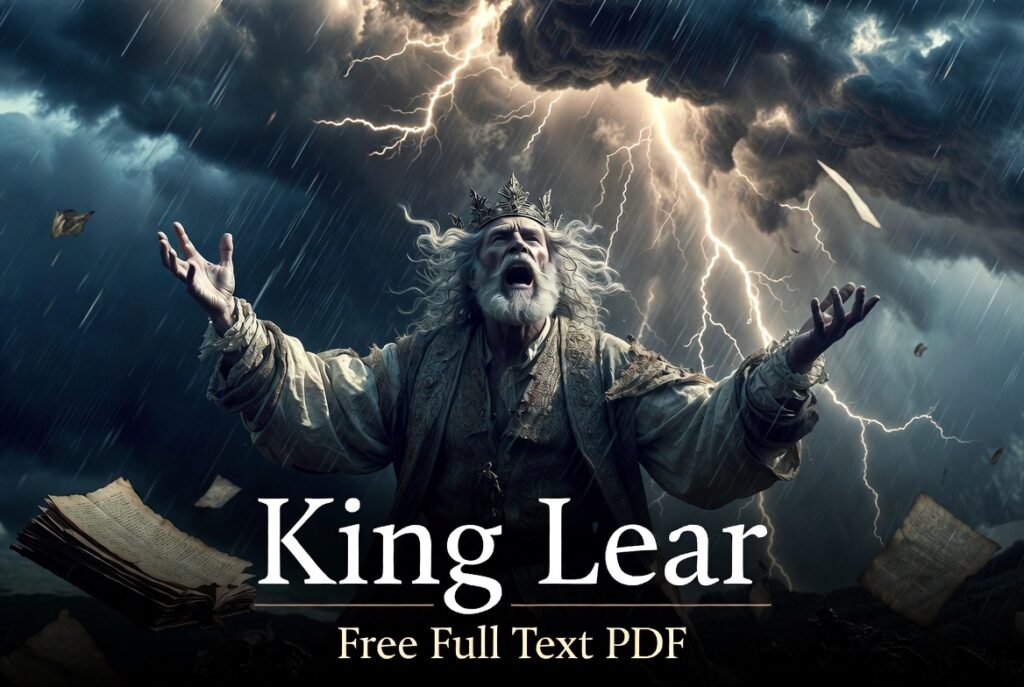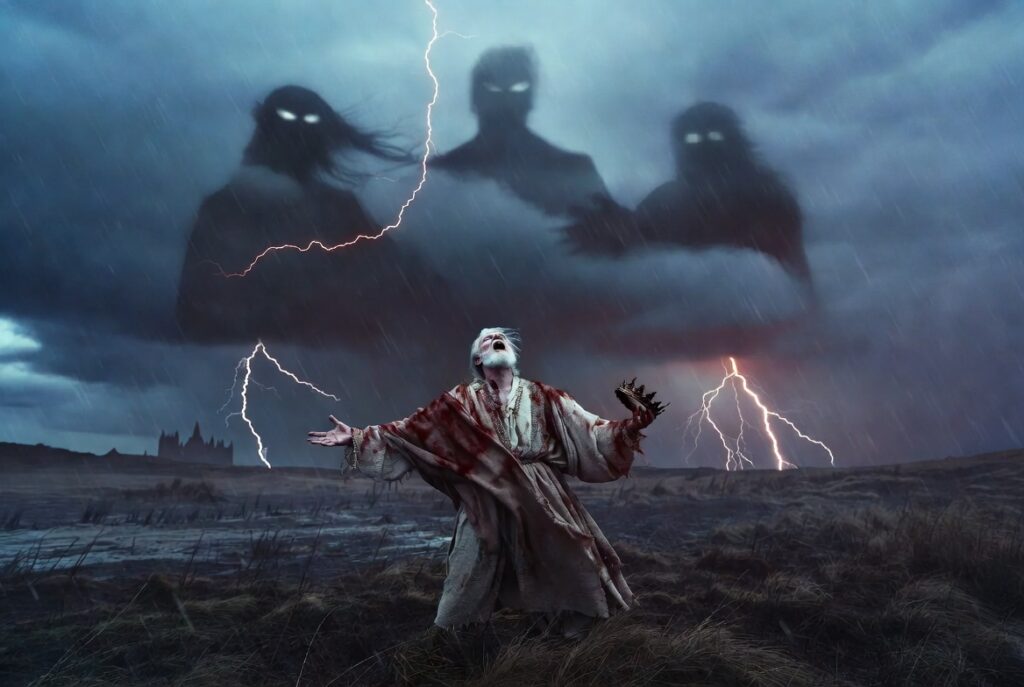
Imagine a once-mighty king standing alone on a windswept heath, drenched by a raging storm, screaming at the heavens as his mind unravels. He has divided his kingdom, banished his only loyal daughter, and been betrayed by the two he trusted most. In that single, shattering moment, Shakespeare forces us to confront the terrifying question at the heart of King Lear: what remains of a man when power, family, and sanity are stripped away?
This in-depth King Lear summary delivers exactly what students, theater enthusiasts, literature lovers, and Shakespeare newcomers need: a complete, spoiler-inclusive plot breakdown, nuanced character analysis, exploration of the play’s major themes, and a clear-eyed explanation of its devastating ending. Whether you’re preparing for an exam, writing an essay, directing a scene, or simply want to understand why critics hail King Lear as Shakespeare’s greatest tragedy, this guide equips you with everything required to engage with the play confidently and deeply.
Written from years of teaching and studying Shakespeare’s canon, this article goes far beyond basic plot retellings. It examines the historical context, textual variants, symbolism, and modern relevance that make King Lear resonate powerfully in the 21st century. By the end, you’ll grasp not only what happens but why it still shocks audiences more than four centuries later.
Historical and Literary Context of King Lear
William Shakespeare composed King Lear between 1605 and 1606, during the early reign of King James I. The play was first performed before the king at Whitehall in December 1606, a time of intense political anxiety. James had recently unified the crowns of England and Scotland, and fears of succession crises, courtly flattery, and the limits of royal authority echoed through the text.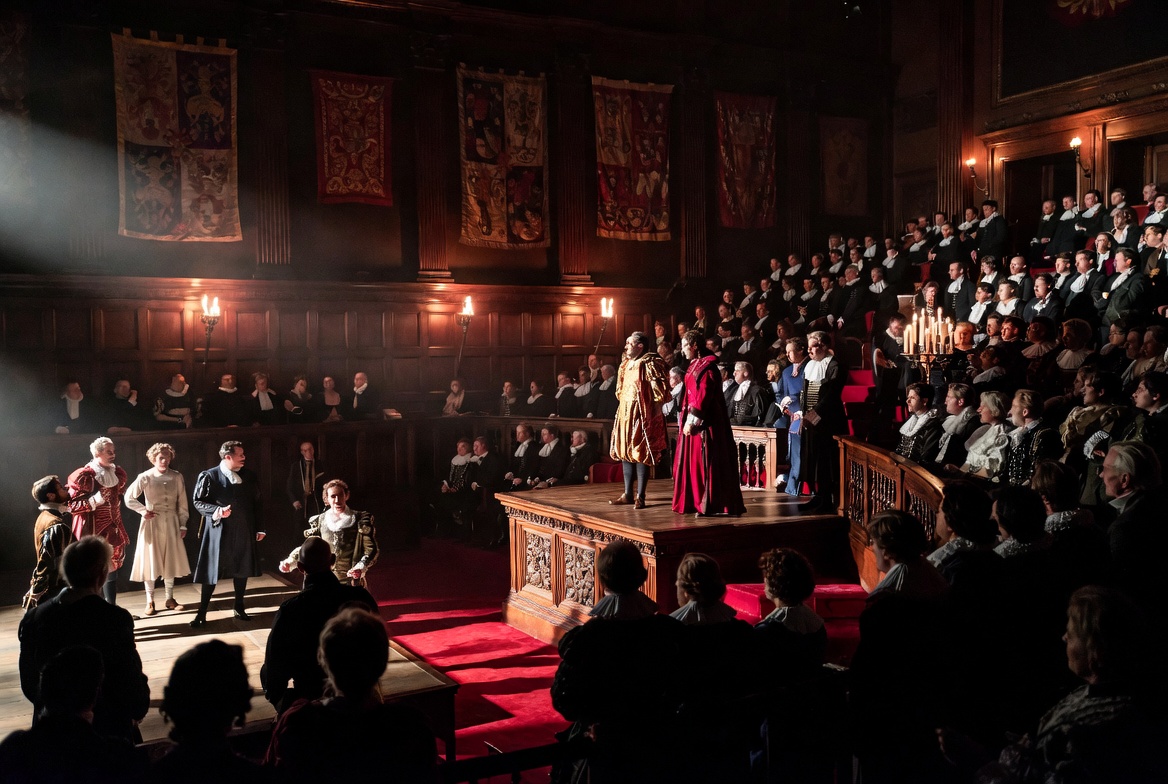
Shakespeare drew from several sources rather than inventing the story outright. The main narrative comes from the anonymous play The True Chronicle Historie of King Leir (published 1605), Raphael Holinshed’s Chronicles of England, Scotland, and Ireland (1587), and Sir Philip Sidney’s prose romance Arcadia (1590). Unlike many of his other works, the legend of Lear had circulated in British folklore for centuries—Geoffrey of Monmouth recorded a version in the 12th century—but Shakespeare transformed it into a profound psychological and philosophical tragedy.
Two early texts survive: the 1608 Quarto (History of King Lear) and the 1623 First Folio (The Tragedy of King Lear). Scholars note hundreds of differences between them, including the complete removal of the Fool’s lines in some scenes in the Folio and a more nihilistic tone overall. Modern editions, such as the Arden Shakespeare or Folger Library versions, often combine both to give readers the fullest experience.
Politically, the play resonated dangerously with its first audiences. Elizabeth I’s death in 1603 left England without a direct heir, and James’s belief in the divine right of kings clashed with the play’s unflinching portrayal of royal frailty. King Lear was considered too politically charged to stage safely during Elizabeth’s final years; Shakespeare waited until the new reign to release its full subversive power.
Complete Plot Summary – Act by Act and Scene by Scene
Act 1 – The Division of the Kingdom
The play opens in King Lear’s palace. Aged and weary, Lear announces he will divide his kingdom among his three daughters—Goneril, Regan, and Cordelia—based on how eloquently each professes her love. Goneril and Regan deliver extravagant speeches of devotion. Cordelia, the youngest and most honest, refuses to flatter: “I love your Majesty according to my bond; no more nor less.” Enraged, Lear disinherits her, banishing her and his loyal earl, Kent, who dares to defend her.
The kingdom is split between Goneril and Regan and their husbands, the Duke of Albany and the Duke of Cornwall. Meanwhile, in a parallel subplot, the Earl of Gloucester introduces his legitimate son Edgar and his bastard son Edmund. Edmund, resentful of his status, forges a letter to frame Edgar as a traitor. Gloucester believes the forgery and declares Edgar an outlaw.
Act 2 – Betrayal and Exile
Tensions escalate rapidly. Goneril and Regan begin reducing Lear’s retinue of 100 knights, stripping him of dignity and power. Kent, disguised, returns to serve Lear. Edmund’s scheme advances: he stages a fake fight with Edgar, who flees into the wilderness disguised as the mad beggar “Poor Tom.” Gloucester is drawn deeper into the conspiracy.
Lear, now unwelcome in both daughters’ homes, departs into the night with his Fool and Kent, foreshadowing the coming storm.
Act 3 – The Storm and Descent into Madness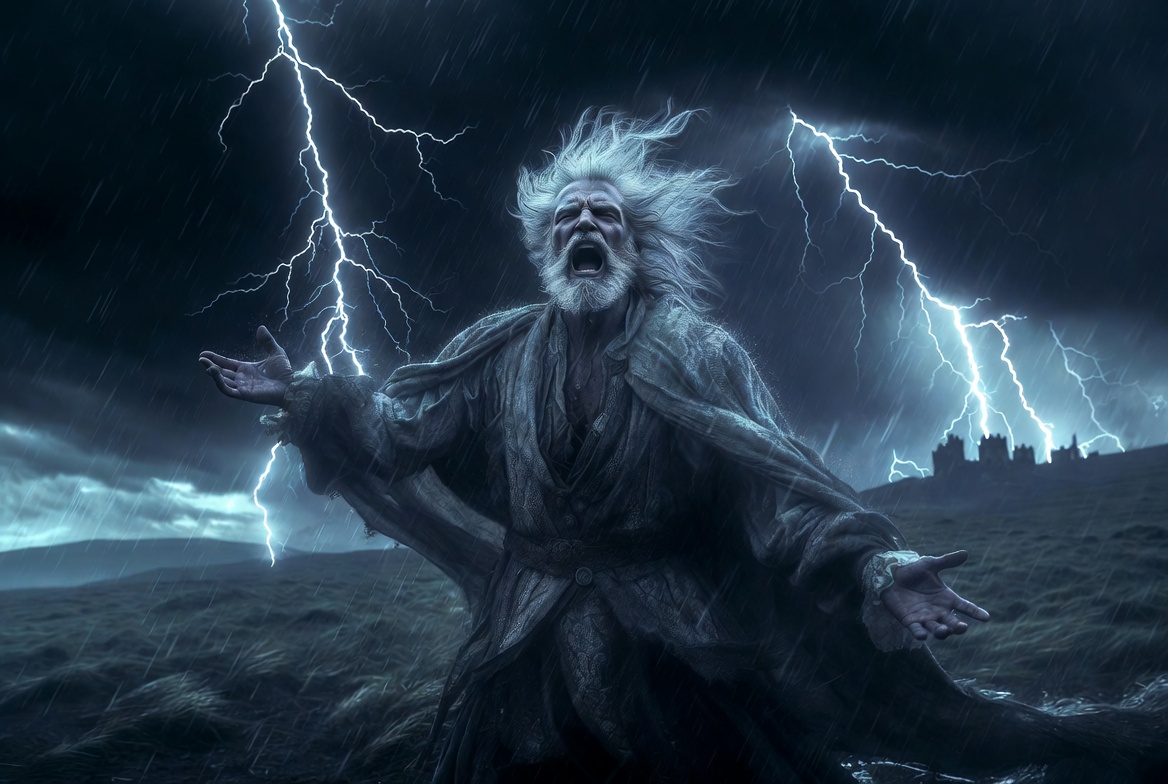
The iconic heath scenes unfold amid a violent tempest that mirrors Lear’s psychological collapse. He rails against his daughters and the elements, questioning the nature of authority and justice. The Fool’s riddles and songs provide bitter commentary. Kent leads them to a hovel where they encounter Poor Tom (Edgar in disguise).
In a parallel horror, Gloucester is captured by Cornwall and Regan. They accuse him of treason for aiding Lear, tie him to a chair, and gouge out his eyes. The brutal blinding scene—often cited as one of the most shocking in Shakespeare—marks the play’s darkest physical violence. A servant tries to intervene and is killed, but Gloucester survives, now blind and led by his disguised son Edgar.
Act 4 – Recognition, Disguise, and Revenge
Lear, now fully mad, is reunited briefly with a disguised Kent and later with Cordelia, who has returned from France with an invading army to rescue her father. Gloucester, blinded and despairing, attempts suicide by jumping from what he believes is Dover cliff; Edgar tricks him into surviving and reveals his identity later.
Goneril and Regan, both lusting after the ambitious Edmund, turn on each other. Albany begins to question his wife’s cruelty. Edgar, still in disguise, kills the treacherous Oswald and takes a letter proving Goneril’s plot against Albany.
Act 5 – Catastrophe and Resolution
The French forces clash with the British army led by Edmund. Cordelia’s army is defeated; she and Lear are captured. Edmund orders their execution. In the final scene, Edgar reveals himself and mortally wounds Edmund in single combat. Goneril poisons Regan and then stabs herself upon learning of Edmund’s death. Edmund, dying, tries to countermand the execution order but is too late.
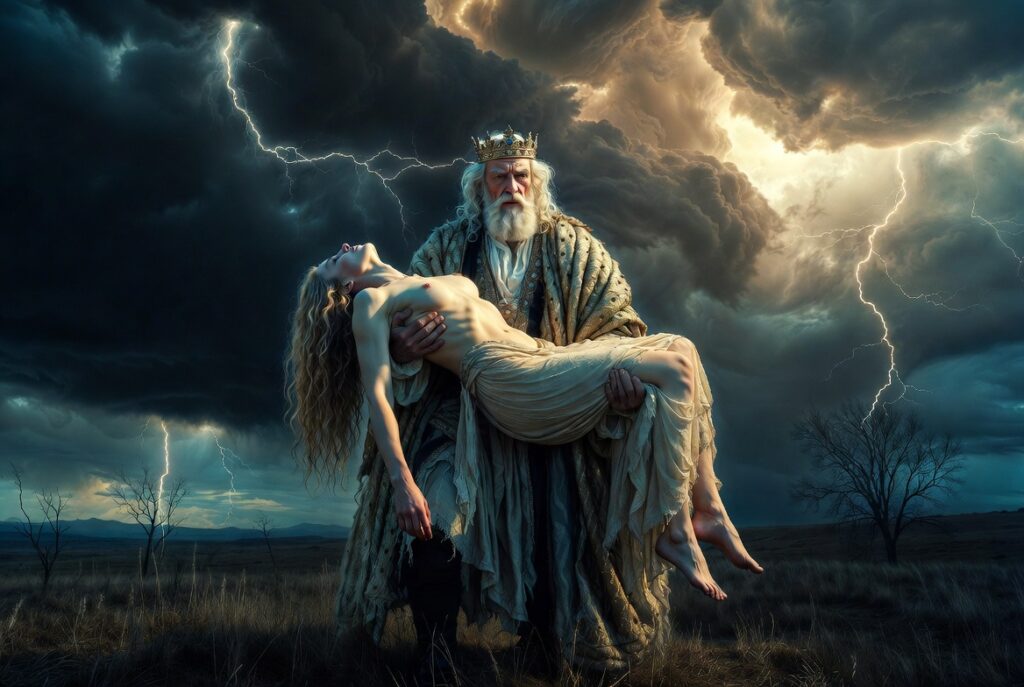
Lear enters carrying Cordelia’s lifeless body. In one of literature’s most heartbreaking moments, the king dies of grief beside her. Albany offers to share rule with Kent and Edgar, but Kent refuses, and the play ends in stunned silence as Edgar delivers the final, bleak lines.
In-Depth Character Analysis
King Lear – The Tragic Hero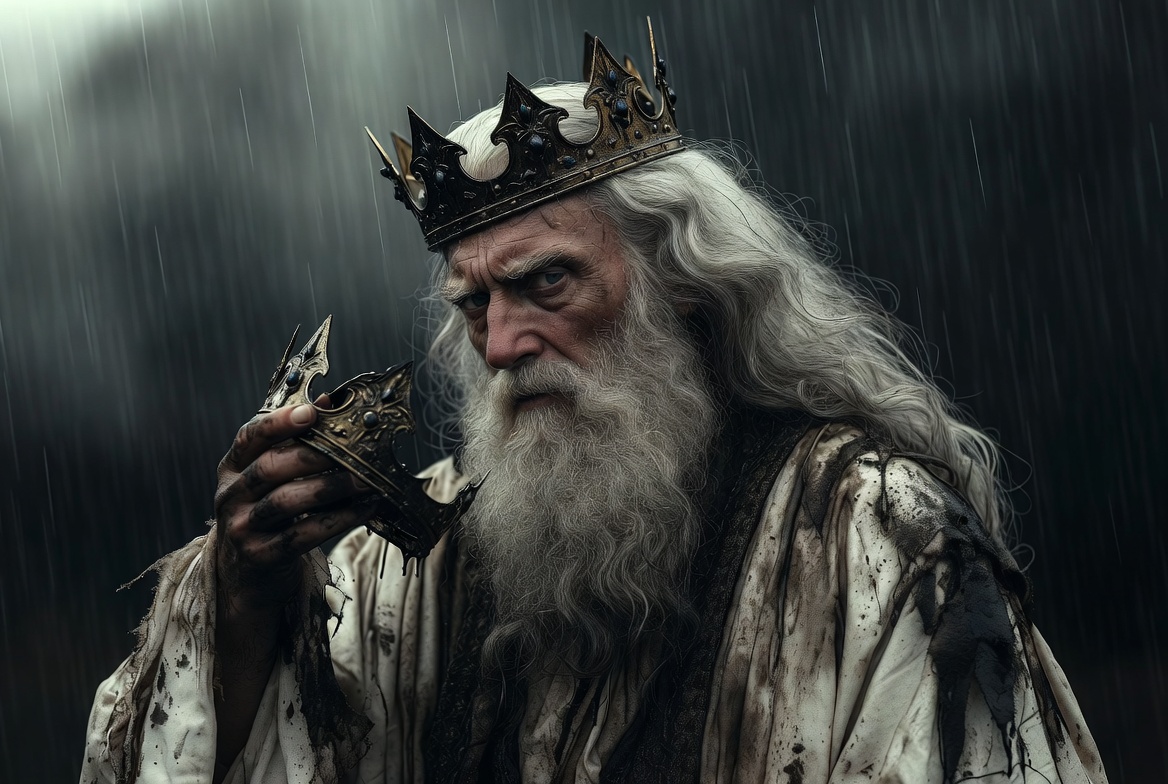
Lear begins as an imperious ruler who mistakes flattery for love and confuses authority with worth. His tragic flaw—hubris combined with emotional blindness—drives the catastrophe. Shakespeare traces his arc with extraordinary psychological realism: from tyrannical rage to childlike vulnerability, then to hard-won self-knowledge. By the end, stripped of everything, Lear finally sees clearly. Many critics, following A.C. Bradley, rank him among Shakespeare’s most profound tragic figures because his suffering feels both personal and universal.
Cordelia – Truth, Silence, and Love
Often described as the moral center, Cordelia’s refusal to exaggerate her love (“Nothing, my lord”) costs her the kingdom but reveals her integrity. Her quiet strength and forgiveness in Act 4 contrast sharply with her sisters’ venom. Her death is not punishment but the play’s ultimate indictment of a world that destroys goodness.
Goneril and Regan – The Poisonous Daughters
These elder sisters embody filial ingratitude. Shakespeare gives them distinct voices—Goneril more calculating and politically astute, Regan more sadistic—yet both are driven by lust for power and sexual dominance over Edmund. Their rivalry and eventual mutual destruction underscore the theme of unchecked ambition.
The Bastard Edmund – Machiavellian Villain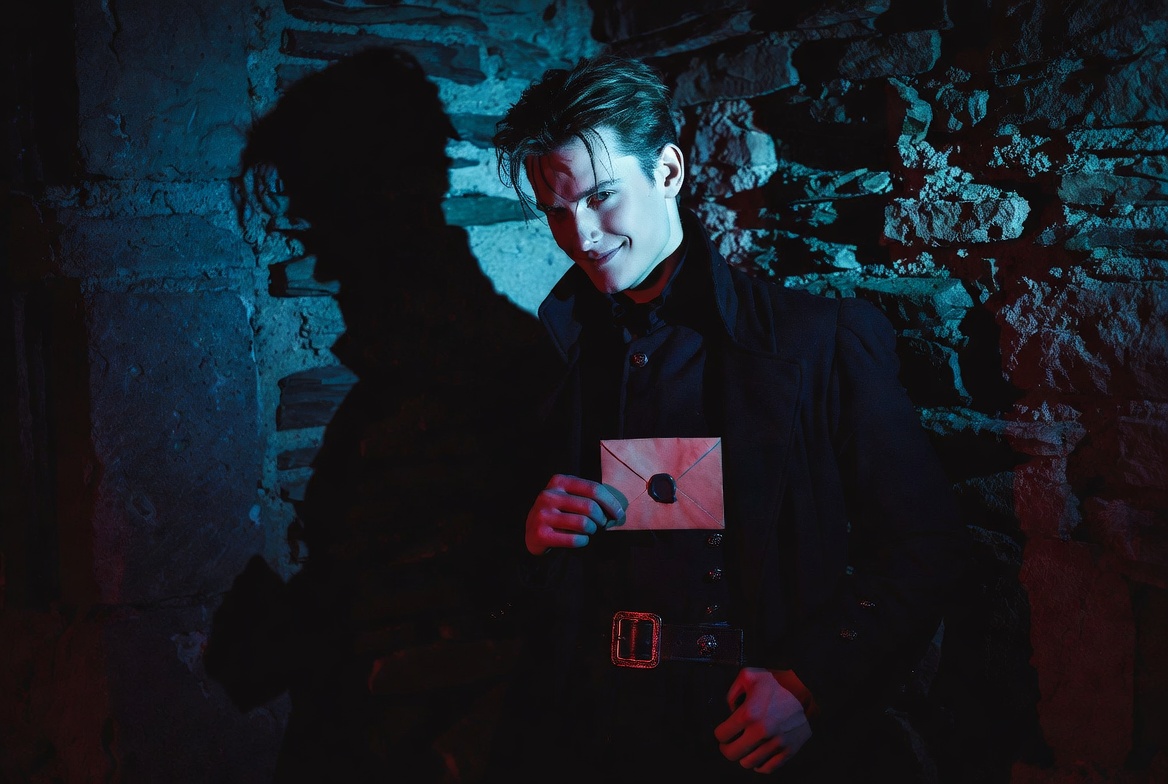
Edmund’s opening soliloquy (“Thou, Nature, art my goddess”) reveals a charismatic, intelligent villain who rejects societal legitimacy in favor of raw ambition. Often compared to Iago, he manipulates events with chilling efficiency until his final, partial repentance proves too late.
Edgar and Gloucester – Parallel Suffering
The Gloucester subplot mirrors Lear’s tragedy in miniature. Gloucester’s literal blindness leads to figurative insight, just as Lear’s madness brings wisdom. Edgar’s journey from naive son to disguised avenger and moral guide provides the play’s clearest arc of redemption.
The Fool – Wisdom in Folly
The Fool appears only in the first three acts yet delivers some of the play’s most piercing truths through riddles and songs. He vanishes after Lear’s descent into madness, his role as conscience fulfilled. Scholars debate whether he is a literal fool or a symbolic extension of Lear’s conscience.
Kent and Albany – Loyal Voices in Chaos
Kent’s disguised loyalty and Albany’s gradual moral awakening offer rare glimmers of decency amid betrayal. Their steadfastness highlights the play’s exploration of true versus false service.
Major Themes in King Lear – Timeless Lessons for Today
King Lear explores profound ideas that transcend its Jacobean origins, making it one of Shakespeare’s most philosophically rich tragedies. Here are the central themes examined with specific textual support and contemporary resonance.
Appearance vs. Reality and the Limits of Flattery
From the very first scene, Shakespeare exposes how easily language can deceive. Goneril and Regan’s hyperbolic declarations of love contrast sharply with Cordelia’s plain truth. Lear’s inability to distinguish flattery from genuine affection sets the tragedy in motion. The play repeatedly asks: how do we know what is real when words and appearances dominate? This theme echoes in today’s world of social media personas and political spin, where surface-level praise often masks self-interest.
Family Betrayal and Filial Ingratitude
The core emotional wound of the play is the “thankless child” motif. Lear’s cry, “How sharper than a serpent’s tooth it is / To have a thankless child,” captures the universal pain of parental rejection by offspring. Shakespeare doesn’t sentimentalize family; he shows how power and inheritance can corrupt natural bonds. The parallel Gloucester-Edmund-Edgar subplot reinforces this, reminding readers that betrayal can come from blood or chosen loyalty. In the 21st century, this theme speaks directly to issues of elder abandonment, inheritance disputes, and generational conflict.
Madness, Reason, and Self-Knowledge
Lear’s journey into the storm represents a descent into literal and metaphorical madness that paradoxically leads to greater insight. Stripped of his royal trappings, he begins to understand the suffering of the poor and the fragility of human life: “I am a man / More sinn’d against than sinning.” Shakespeare suggests that true wisdom often emerges only after reason collapses. Modern readers frequently connect this arc to mental health discussions, dementia, and the idea that crisis can force personal growth.
Power, Authority, and the Nature of Kingship
What makes a king? Shakespeare dismantles the notion of divine right by showing Lear reduced to “unaccommodated man” — a “bare, forked animal.” The play questions whether authority derives from birth, wealth, or moral character. Kent’s loyalty to the man rather than the crown and Albany’s hesitant rise to power add layers to this inquiry. These questions remain urgent in discussions of political legitimacy, leadership failures, and authoritarian decline.
Justice, Injustice, and the Gods
One of the most debated aspects of King Lear is its apparent absence of cosmic justice. Good characters suffer terribly, and evil ones often prosper until the final moments. Lear’s desperate question — “Is there any cause in nature that makes these hard hearts?” — hangs over the entire play. Unlike Hamlet, which offers some moral resolution, King Lear feels bleaker, prompting interpretations ranging from pagan nihilism to subtle Christian redemption. The gods are invoked but remain silent, forcing characters (and audiences) to confront a universe that may be indifferent.
Aging, Mortality, and the Human Condition
Written when Shakespeare himself was approaching 40 and facing his own father’s death, the play meditates deeply on old age. Lear’s vulnerability — his fear of losing control and being infantilized — mirrors contemporary conversations about elder care, retirement, and legacy. The storm scenes strip away illusions of permanence, emphasizing human fragility: “As flies to wanton boys are we to th’ gods; / They kill us for their sport.”
Nature vs. Civilization
The savage storm on the heath symbolizes both external chaos and internal turmoil. Characters repeatedly invoke “Nature” — Edmund as his goddess, Lear cursing his daughters as “unnatural hags.” Shakespeare contrasts the artificial hierarchies of court with the raw, animalistic reality of the storm, suggesting that civilization is a thin veneer over primal instincts.
Each of these themes is reinforced through recurring imagery and the double plot structure, which allows Shakespeare to explore ideas on both grand royal and intimate domestic scales.
Symbolism, Motifs, and Shakespeare’s Language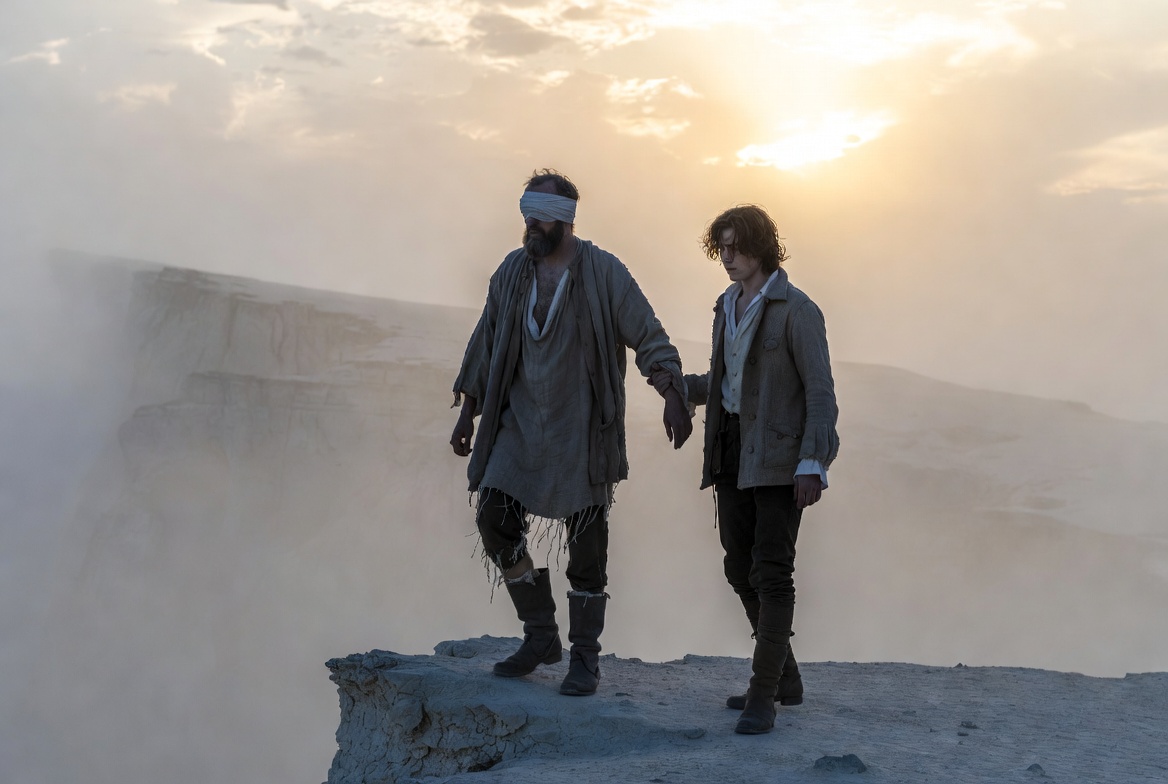
Shakespeare’s dramatic genius shines in the dense web of symbols and motifs that unify King Lear.
The Storm
The tempest in Act 3 is the play’s most famous visual and metaphorical device. It externalizes Lear’s mental chaos while representing the breakdown of natural and social order. As Lear rages against the elements, the storm becomes a catalyst for his transformation, washing away his illusions of grandeur.
Eyes, Sight, and Blindness
Literal and figurative blindness dominate the text. Gloucester loses his physical eyes yet gains moral insight: “I stumbled when I saw.” Lear, who could “see” politically but not emotionally, achieves clarity only in madness. The motif culminates in the poignant image of Lear holding the dead Cordelia and begging, “Look there, look there!”
Clothing and Disguise
Identity in King Lear is fluid and performative. Kent and Edgar adopt disguises to serve loyally, while Lear’s royal robes are symbolically stripped. When Lear tears off his clothes in the storm, he rejects the trappings of civilization, exposing the vulnerable human beneath.
Animal Imagery
Shakespeare repeatedly compares humans to beasts — “pelican daughters,” “serpent’s tooth,” “bare, forked animal.” These images underscore the play’s exploration of how thin the line is between civilized behavior and savagery when power and survival are at stake.
Key Quotes with Modern Explanations
Here are some of the most powerful lines that reward close attention:
- “Nothing will come of nothing” (Lear to Cordelia) — Emphasizes that honesty without flattery yields no reward in a corrupt world.
- “I am a man / More sinn’d against than sinning” — Lear’s emerging self-awareness and plea for empathy.
- “As flies to wanton boys are we to th’ gods” (Gloucester) — Captures the play’s bleak view of cosmic indifference.
- “The wheel is come full circle” (Edmund) — Acknowledges the inexorable turning of fortune.
- “Never, never, never, never, never” (Lear over Cordelia’s body) — Five repetitions that convey inconsolable grief more powerfully than any elaborate speech.
These lines, rich in rhetorical force, demonstrate Shakespeare’s mastery of blank verse, prose (for the Fool and mad scenes), and song.
The Ending Explained – Why King Lear’s Finale Still Shocks Audiences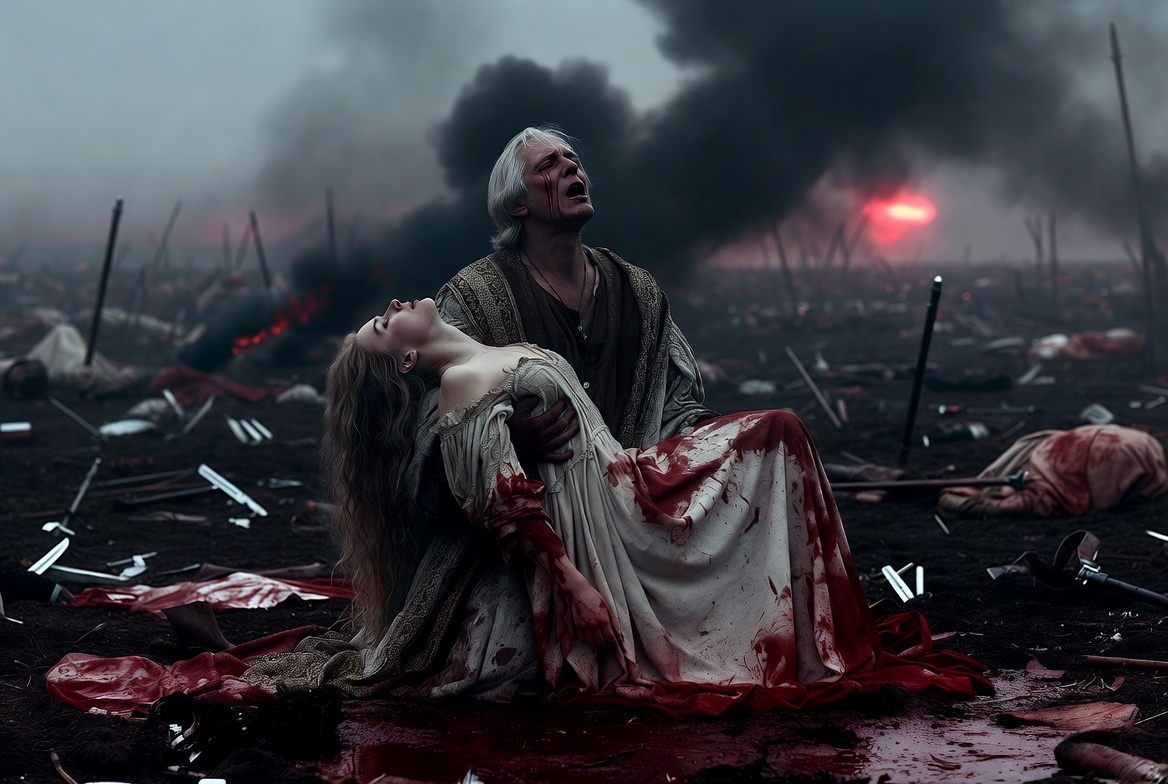
The final scene of King Lear (Act 5, Scene 3) delivers one of the most devastating conclusions in dramatic literature. After the battle, Edmund is defeated by his brother Edgar. As he lies dying, he attempts a last-minute act of mercy by trying to save Cordelia and Lear, but the order comes too late.
Lear enters carrying Cordelia’s corpse in his arms, uttering the heart-wrenching repeated “Howl, howl, howl!” He desperately searches for signs of life in his daughter, then dies himself, apparently of a broken heart. The stage is littered with bodies: Cordelia, Lear, Goneril, Regan, Edmund, and Gloucester (who died offstage earlier).
Two textual variants exist. The 1608 Quarto ends with Albany offering rule to Kent and Edgar, while the 1623 Folio gives Edgar the final speech and removes some redemptive lines, creating a darker tone. Most modern productions follow the Folio for its greater emotional bleakness.
Critics offer varied interpretations:
- Nihilistic tragedy: The play suggests a godless universe where virtue offers no protection.
- Redemptive reading: Lear’s final moments show genuine love and self-knowledge, providing catharsis.
- Political warning: The catastrophe illustrates the dangers of divided rule and flattery-driven leadership.
What makes the ending uniquely painful is its refusal of easy consolation. Unlike Hamlet (which restores order) or Othello (which offers moral clarity), King Lear leaves audiences in stunned silence, confronting the raw cost of human folly.
Why King Lear Still Matters in the 21st Century
More than 400 years after its first performance, King Lear continues to speak urgently to modern concerns. Political divisions, aging populations, family estrangements, and crises of leadership all find echoes in the text.
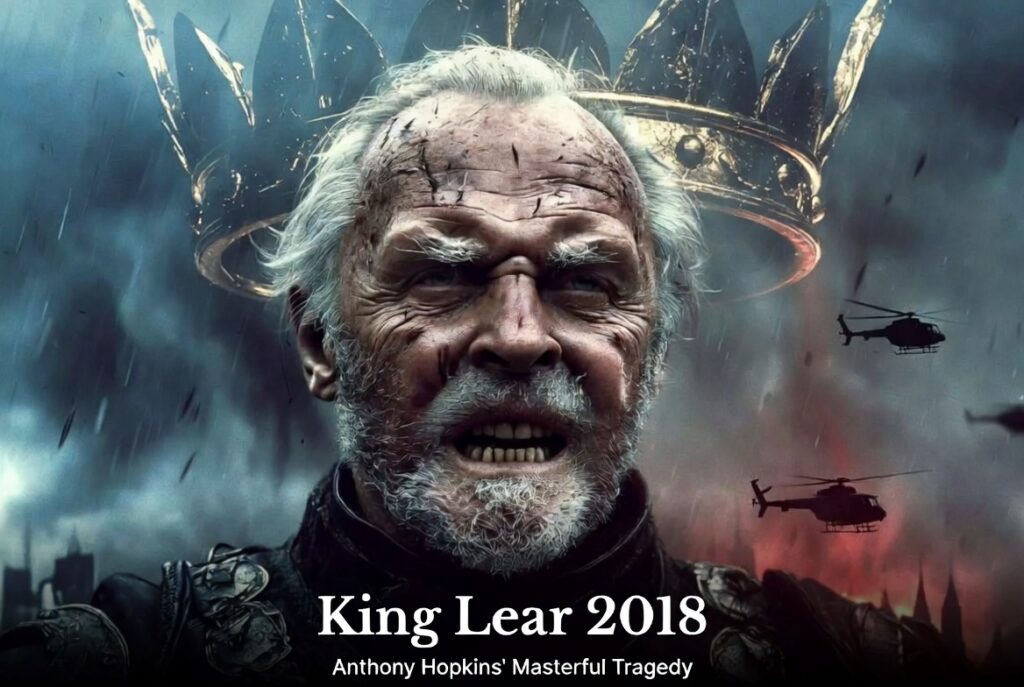
Directors frequently stage the play as commentary on contemporary issues — from climate chaos (the storm) to authoritarian decline. Notable productions include Ian McKellen’s powerful 2007 and 2018 interpretations, Anthony Hopkins in the 2018 BBC film, and innovative adaptations that reset the action in modern or dystopian settings.
Psychologically, the play offers insight into dementia, narcissistic injury, and the trauma of parental rejection. Its exploration of “unaccommodated man” challenges us to consider what defines human dignity when status is removed.
For students and general readers alike, King Lear provides a mirror for examining personal and societal values: How do we treat the vulnerable? What is the true cost of ambition? When does loyalty demand disobedience?
Study Tips, Essay Guidance, and Exam Preparation
To write a strong essay on King Lear, focus on a clear thesis supported by precise textual evidence. Example thesis: “Shakespeare uses the parallel plots of Lear and Gloucester to demonstrate that suffering, rather than status, leads to genuine self-knowledge.”
Common pitfalls to avoid:
- Treating Cordelia as a simple saint without acknowledging her stubbornness.
- Ignoring the Folio/Quarto differences when discussing tone.
- Overlooking the Fool’s structural importance.
Useful comparison prompts:
- Compare Lear’s madness with Hamlet’s feigned insanity.
- How does King Lear challenge the concept of divine justice compared to Macbeth?
For exams, memorize 6–8 key quotations and be ready to discuss at least three major themes with specific scene references.
Frequently Asked Questions (FAQ)
Is King Lear based on a true story? No, but it draws from ancient British legends recorded by Geoffrey of Monmouth and later chroniclers. Shakespeare significantly darkened the original tale, which had a happier ending.
Why does Cordelia die? Her death underscores the play’s tragic vision: goodness and honesty offer no guaranteed protection in a flawed world. It intensifies the sense of cosmic injustice.
What is the role of the Fool? The Fool serves as Lear’s conscience, using wit and song to highlight truths the king refuses to see. He disappears once Lear fully descends into madness.
Does King Lear have a happy ending? No. It is one of Shakespeare’s bleakest tragedies, ending in multiple deaths and profound loss rather than restoration.
How long is a typical performance? Uncut productions run approximately 3 to 3.5 hours. Most modern stagings trim the text to around 2.5–3 hours.
Which is the best modern film version for beginners? The 2018 BBC adaptation starring Anthony Hopkins is accessible and well-acted. For a more traditional approach, the 2008 Ian McKellen version or Grigori Kozintsev’s 1971 Russian film (with subtitles) are highly regarded.
Why is the play considered Shakespeare’s greatest tragedy? Its unparalleled emotional depth, psychological realism, philosophical ambition, and refusal of easy answers set it apart.
King Lear stands as Shakespeare’s most unflinching examination of human vulnerability, familial bonds, and the illusions of power. Through Lear’s harrowing journey from arrogance to naked humanity, Shakespeare reveals both the nobility and the fragility of our condition.
This King Lear summary has walked you through the complete plot, offered detailed character studies, unpacked the major themes, and explained why the ending continues to devastate audiences. Yet no summary can replace the experience of reading the full text or witnessing a live performance, where the storm truly roars and the final howls echo in the theater.
Whether you are a student facing an upcoming exam, a theatergoer preparing for a production, or simply a curious reader drawn to one of literature’s towering achievements, I encourage you to engage directly with the play. Its lessons about love, loyalty, justice, and the human heart remain as vital today as they were in 1606.