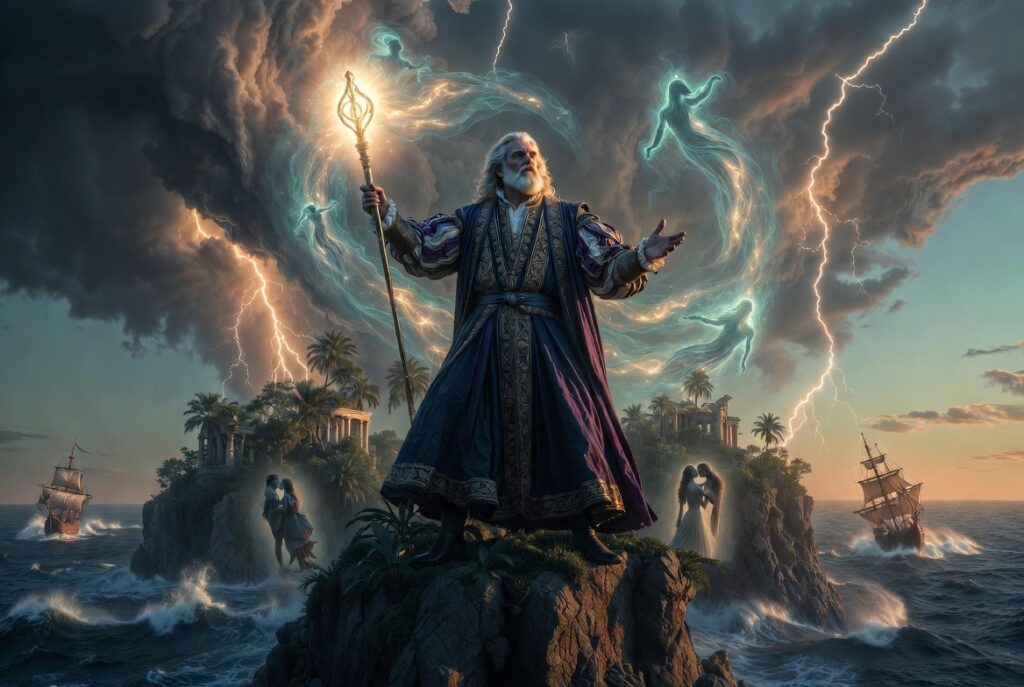
“Our revels now are ended.”
With these haunting words, Prospero brings the magical masque to a close in William Shakespeare’s The Tempest—a line that feels like the playwright’s own farewell to the stage after more than two decades of astonishing theatrical invention. Written around 1611 and first performed at court for King James I, The Tempest is Shakespeare’s final solo-authored play, a luminous romance that weaves magic, betrayal, forgiveness, and redemption into one of his most tightly constructed and forward-looking works.
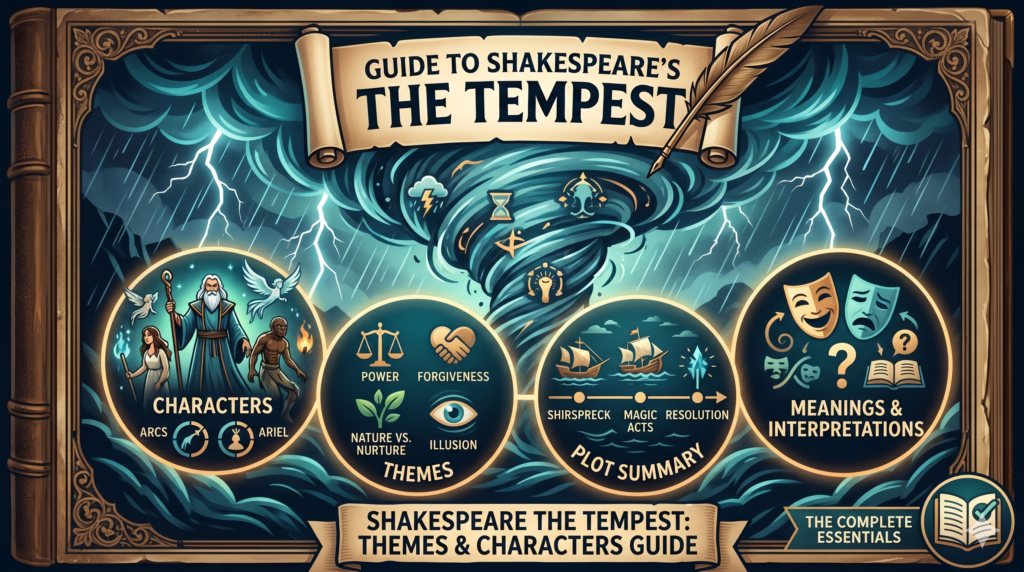
If you’re looking for the tempest outline that actually delivers—complete with a detailed scene-by-scene plot summary, rich character studies, thematic depth, symbols, literary devices, historical context, and practical study tools—this is it. Whether you are a student preparing for exams, a teacher building lesson plans, an actor rehearsing a role, or a lifelong reader seeking deeper appreciation, this comprehensive guide solves the real problem most people face: existing summaries are either too shallow or too scattered. Here you will find everything in one authoritative, student-friendly, skyscraper-level resource.
By the end of this The Tempest outline you will understand the play’s plot inside out, grasp why its characters continue to spark debate four centuries later, and see how its themes speak directly to 2026—climate anxiety, power and control, colonialism’s legacy, artificial intelligence, and the possibility of forgiveness in a divided world.
1. Historical and Literary Context of The Tempest
1.1 When and Why Shakespeare Wrote The Tempest
Shakespeare composed The Tempest late in his career, most likely in 1610–1611. It was performed at Whitehall Palace on 1 November 1611 and again in 1612–13 as part of the celebrations for the marriage of Princess Elizabeth. Many scholars regard it as the playwright’s deliberate “farewell to the stage.” Unlike the blood-soaked tragedies that preceded it, The Tempest belongs to the late romances (or tragicomedies), a genre that blends shipwreck, magic, and miraculous reconciliation. The play observes the classical unities of time and place more strictly than almost any other Shakespeare work: the entire action unfolds on a single island over the course of a few hours.
1.2 Sources and Inspirations
The most immediate real-life spark was the 1609 wreck of the Sea Venture, flagship of the Virginia Company’s fleet, which ran aground in Bermuda during a hurricane. Survivors’ accounts—especially Sylvester Jourdain’s A Discovery of the Barmudas (1610) and William Strachey’s letter—described a “tempest” that scattered the fleet, miraculous survival on a supposedly enchanted island, and encounters with indigenous peoples. Shakespeare also drew on Michel de Montaigne’s essay “Of the Cannibals” (translated 1603), which questions European assumptions of superiority, and on classical sources such as Ovid’s Metamorphoses and Virgil’s Aeneid. The commedia dell’arte tradition supplied the comic subplot of the drunken servants.
1.3 Original Text vs. Modern Editions
The Tempest appeared for the first time in the 1623 First Folio. Modern editors rely on that text, which is remarkably clean. Reliable student editions (Folger, Arden, Norton, Oxford) include excellent glosses, notes on performance history, and discussions of textual variants. Understanding the difference between the Folio and modern spelling helps readers appreciate Shakespeare’s original rhythmic choices.
2. Complete Scene-by-Scene Plot Summary
This The Tempest outline presents every scene with setting, key events, important quotations (with modern paraphrases), and dramatic significance. The play’s action is unusually compressed: everything happens in real time across one afternoon and evening.
2.1 Act 1, Scene 1 – The Storm and Shipwreck
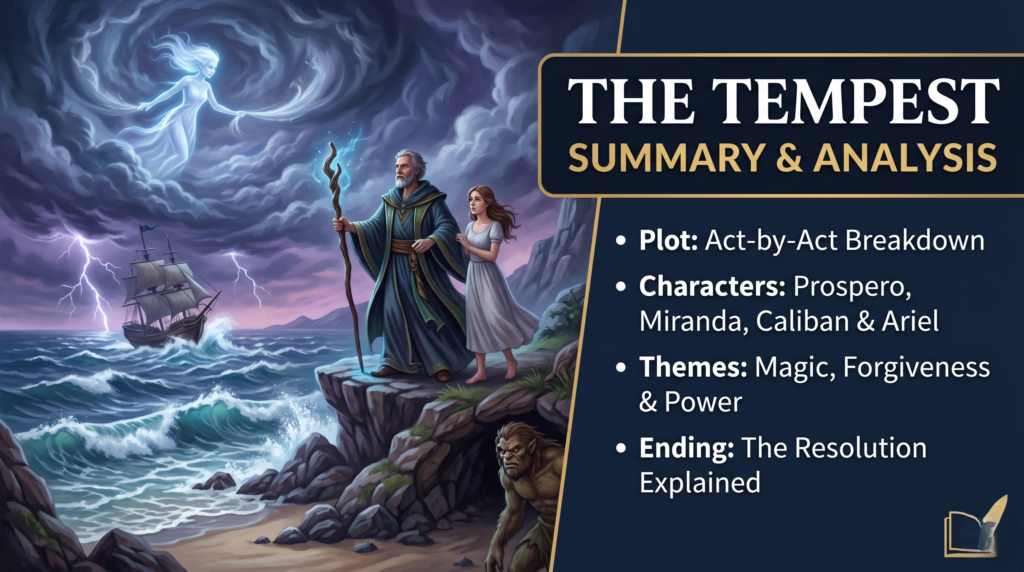
The play opens violently at sea. A ship carrying King Alonso of Naples, his brother Sebastian, his son Ferdinand, the Duke of Milan’s treacherous brother Antonio, and the honest old counselor Gonzalo is caught in a “tempest.” The Boatswain shouts orders while the nobles interfere, creating comic tension. The scene ends with the ship apparently splitting and everyone presumed drowned.
Key quote: Boatswain: “What cares these roarers for the name of king?” (1.1.16–17) Modern sense: Nature does not respect titles; power is an illusion when the storm strikes.
Dramatic significance: Shakespeare immediately establishes the theme of authority versus chaos and introduces dramatic irony—readers soon learn the storm is magical and controlled.
2.2 Act 1, Scene 2 – Prospero’s Island and Backstory
The longest scene in Shakespeare (over 500 lines) shifts to the island. Prospero, the rightful Duke of Milan, reveals to his daughter Miranda that he has deliberately raised the storm to bring his enemies to the island. He recounts how his brother Antonio, with King Alonso’s help, usurped the dukedom twelve years earlier and set Prospero and infant Miranda adrift in a rotten boat. They survived thanks to Gonzalo’s secret provisions and Prospero’s books of magic.
Prospero then commands his servant-spirit Ariel, who reports that the ship is safe and the passengers are dispersed in groups on the island. Ariel reminds Prospero that his promised freedom is near. Prospero next calls the “savage and deformed slave” Caliban, who curses his master bitterly. Finally, Ferdinand, separated from his father, meets Miranda; the two fall instantly in love. Prospero pretends to be harsh toward Ferdinand to test the young man’s worth.
Key quotes: Miranda: “O, wonder! How many goodly creatures are there here! How beauteous mankind is! O brave new world, That has such people in’t!” (5.1.181–184 – spoken later, but the sentiment begins here). Caliban: “You taught me language, and my profit on’t / Is I know how to curse.” (1.2.363–364)
Dramatic significance: This scene supplies all necessary exposition while establishing the central power relationships: Prospero the magician-father, Ariel the obedient spirit, Caliban the resistant native, and the budding romance between Ferdinand and Miranda. It also reveals Prospero’s dual nature—benevolent father yet controlling sorcerer.
2.3 Act 2, Scene 1 – The King’s Party on the Island
King Alonso and his courtiers awaken on the island. Gonzalo tries to comfort the grieving king by imagining an ideal commonwealth (“no sovereignty”), while Sebastian and Antonio mock him. Ariel’s invisible music lulls everyone except Sebastian and Antonio to sleep. The two plot to murder Alonso and seize the crown. Ariel awakens Gonzalo just in time.
Dramatic significance: The scene mirrors the original Milanese usurpation, showing that treachery is universal. It also deepens the theme of illusion versus reality.
2.4 Act 2, Scene 2 – Caliban, Stephano, and Trinculo (The Comic Subplot)
Caliban, carrying wood and cursing Prospero, encounters the jester Trinculo and the drunken butler Stephano (who has salvaged wine from the wreck). Caliban mistakes Stephano for a god and swears loyalty, promising to show him the island’s secrets if he will help kill Prospero. The three form a ridiculous conspiracy.
Key quote: Caliban: “Ban, ’Ban, Ca-caliban / Has a new master: get a new man!” (2.2.178–179)
Dramatic significance: This low-comedy subplot parodies the serious political plotting of Act 2 Scene 1 and introduces the theme of colonialism: the “civilized” Europeans quickly corrupt the “savage” Caliban with alcohol and false promises.
2.5 Act 3, Scene 1 – Ferdinand’s Labor of Love
Ferdinand, now Prospero’s prisoner, carries logs as punishment. Miranda visits him secretly, defying her father’s orders. The two declare their love for each other in one of Shakespeare’s most tender courtship scenes. Miranda proposes marriage to Ferdinand, and he accepts joyfully. Prospero, watching invisibly, approves but continues his test of the young prince’s character.
Key quote: Ferdinand: “The very instant that I saw you did / My heart fly to your service; there resides / To make me slave to it.” (3.1.64–66) Modern sense: Love at first sight turns Ferdinand willingly into a servant.
Dramatic significance: This scene contrasts the pure, innocent love of the young couple with the treachery and drunken plotting elsewhere. It advances Prospero’s plan for a dynastic marriage that will reconcile Milan and Naples.
2.6 Act 3, Scene 2 – The Drunken Conspiracy Advances
Caliban, Stephano, and Trinculo continue their comic rebellion. Caliban urges Stephano to kill Prospero while he sleeps, describing the magician’s power and promising Miranda as a prize. Ariel, invisible, intervenes by mimicking voices and sowing discord among the three fools, causing them to argue and delay their plot. They are eventually led away by mysterious music.
Key quote: Caliban: “Be not afeard. The isle is full of noises, / Sounds and sweet airs that give delight and hurt not.” (3.2.130–131) Modern sense: Even in oppression, the island holds beauty and wonder.
Dramatic significance: The subplot parodies the main political intrigue while highlighting Caliban’s eloquence and deep connection to the island. Ariel’s interference shows Prospero’s constant surveillance.
2.7 Act 3, Scene 3 – The Banquet and the Harpy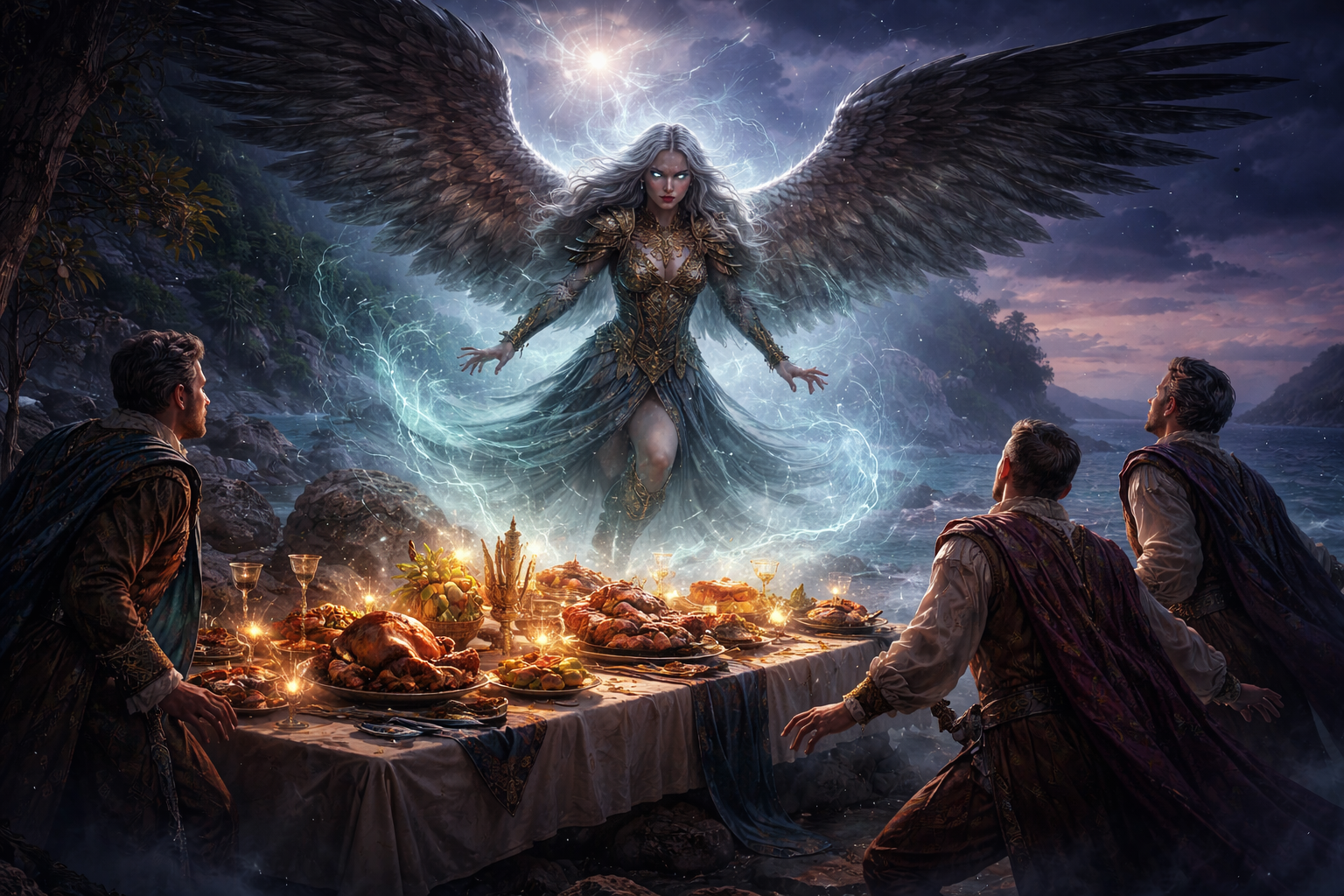
Alonso’s group, weary and hungry, encounters a magical banquet laid by spirits. As they approach to eat, Ariel appears as a harpy and accuses Alonso, Sebastian, and Antonio of their past crimes against Prospero. The banquet vanishes amid thunder and lightning. Alonso, overcome with guilt for his role in Prospero’s exile and believing his son drowned, despairs. Gonzalo urges the others to follow the “afflicted” king.
Key quote: Ariel (as Harpy): “You are three men of sin, whom destiny… / Hath caus’d to belch up you…” (3.3.53–55, paraphrased) Modern sense: Supernatural judgment confronts the guilty with their sins.
Dramatic significance: This spectacular scene marks the turning point toward remorse. It blends masque-like spectacle with moral reckoning, pushing the courtiers toward repentance.
2.8 Act 4, Scene 1 – The Masque and the Disruption
Prospero, satisfied with Ferdinand’s worthiness, stages a celebratory masque for the betrothed couple. Goddesses Iris, Ceres, and Juno appear with spirits in a pastoral vision of fertility and harmony. Prospero suddenly halts the show when he remembers Caliban’s conspiracy. He sends the spirits away and warns the lovers against pre-marital intimacy. Ferdinand and Miranda exit, and Prospero reflects on the fleeting nature of all things.
Key quote: Prospero: “Our revels now are ended. These our actors, / As I foretold you, were all spirits and / Are melted into air, into thin air…” (4.1.148–150) Modern sense: Life, like theater and magic, is illusory and transient—“We are such stuff / As dreams are made on.”
Dramatic significance: The masque celebrates renewal and marriage but is interrupted to remind us of ongoing threats. Prospero’s famous speech is often read as Shakespeare’s farewell to his art.
2.9 Act 5, Scene 1 – Resolution, Forgiveness, and Release
Prospero, in his magic robes, has Ariel bring the courtiers before him. He confronts Antonio and Alonso but chooses forgiveness over vengeance. Prospero reveals himself, restores Ferdinand to his father (uniting the families through the young couple’s love), and renounces his magic: he breaks his staff and drowns his book. Caliban’s plotters are brought in, humiliated and forgiven. Prospero frees Ariel and even grants Caliban pardon, planning to return to Milan as duke. The play ends with Prospero’s epilogue, asking the audience for applause to “set me free.”
Key quote: Prospero: “The rarer action is / In virtue than in vengeance.” (5.1.27–28) Modern sense: True nobility lies in forgiveness rather than revenge.
Dramatic significance: The final scene ties up all threads—political restoration, romantic union, and personal redemption—while blurring the line between stage magic and theatrical illusion. Prospero’s epilogue directly addresses the audience, inviting participation in the play’s “release.”
3. In-Depth Character Analysis
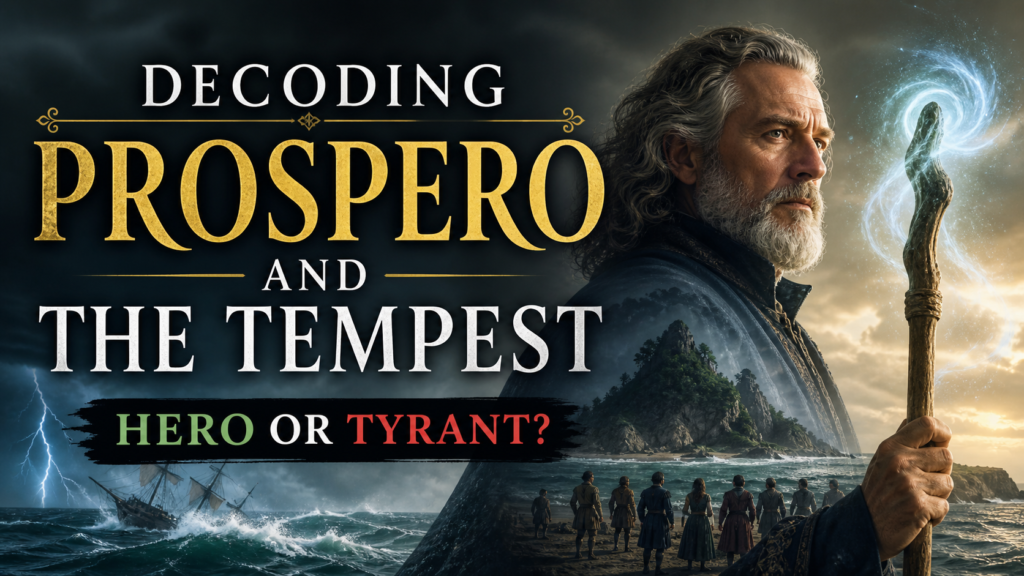
Prospero
The rightful Duke of Milan and the play’s central figure, Prospero is a complex sorcerer-father who wields absolute control on the island. Once absorbed in scholarly magic, he lost his dukedom to his brother Antonio’s betrayal. On the island, he enslaves Ariel and Caliban while raising Miranda in isolation. His character arc moves from vengeful manipulator to merciful forgiver. Scholars often see him as a stand-in for Shakespeare himself, relinquishing his “magic” (art) at career’s end. Prospero embodies the tension between benevolence and tyranny—protective yet domineering.
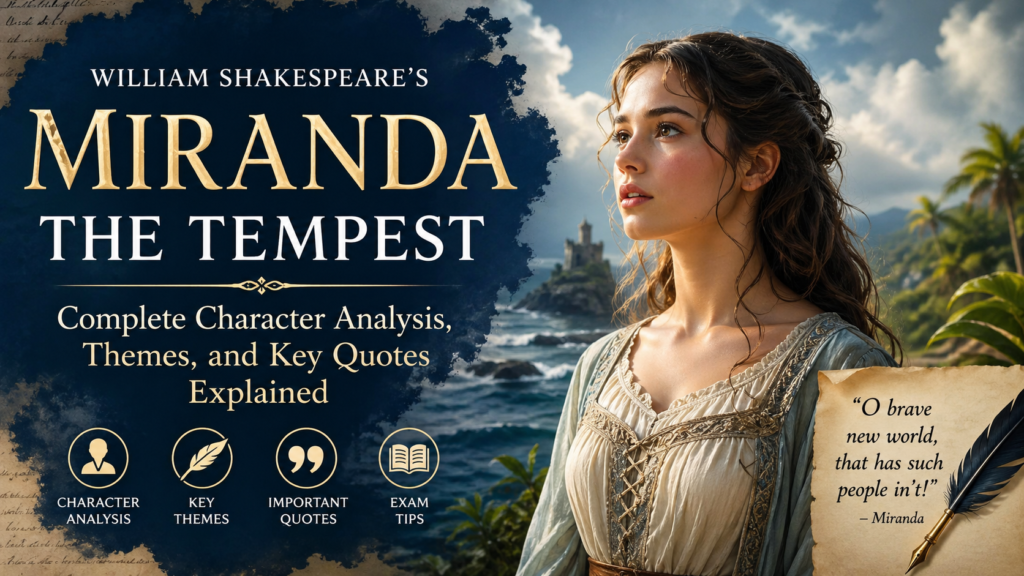
Miranda
Prospero’s innocent daughter, raised on the island since infancy. Naïve yet compassionate, she pities the shipwreck victims and falls instantly in love with Ferdinand. Her famous “brave new world” line (spoken upon seeing the courtiers) reveals both wonder and the play’s ironic view of “civilized” humanity. Miranda represents purity, empathy, and the next generation’s hope for reconciliation.
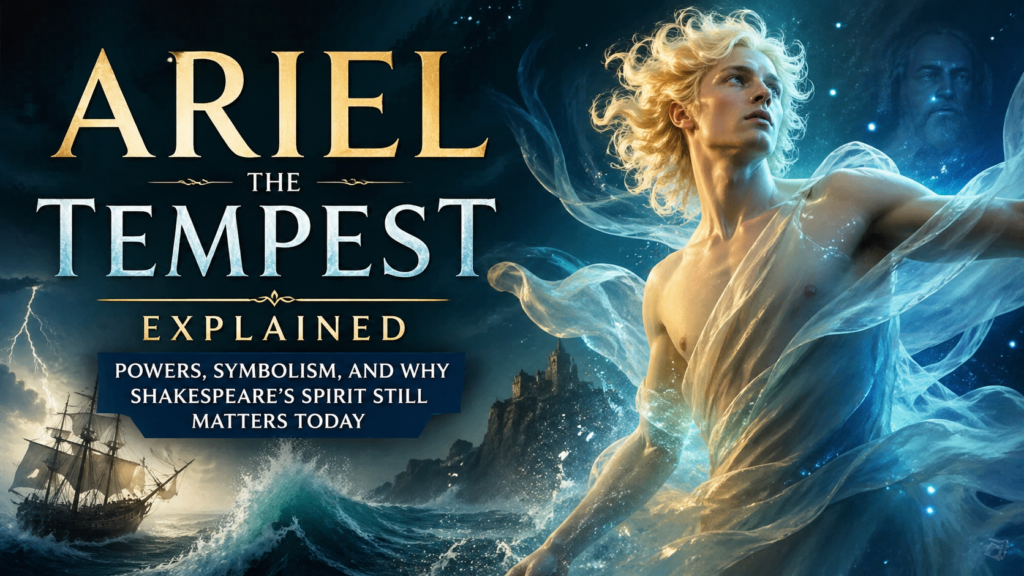
Ariel
An airy spirit freed by Prospero from the witch Sycorax’s imprisonment. Ariel serves loyally but repeatedly reminds his master of the promise of freedom. Fluid, musical, and invisible when needed, Ariel executes Prospero’s commands with creativity. The character blurs gender and form, symbolizing imagination, art, and the supernatural elements of theater itself.
Caliban
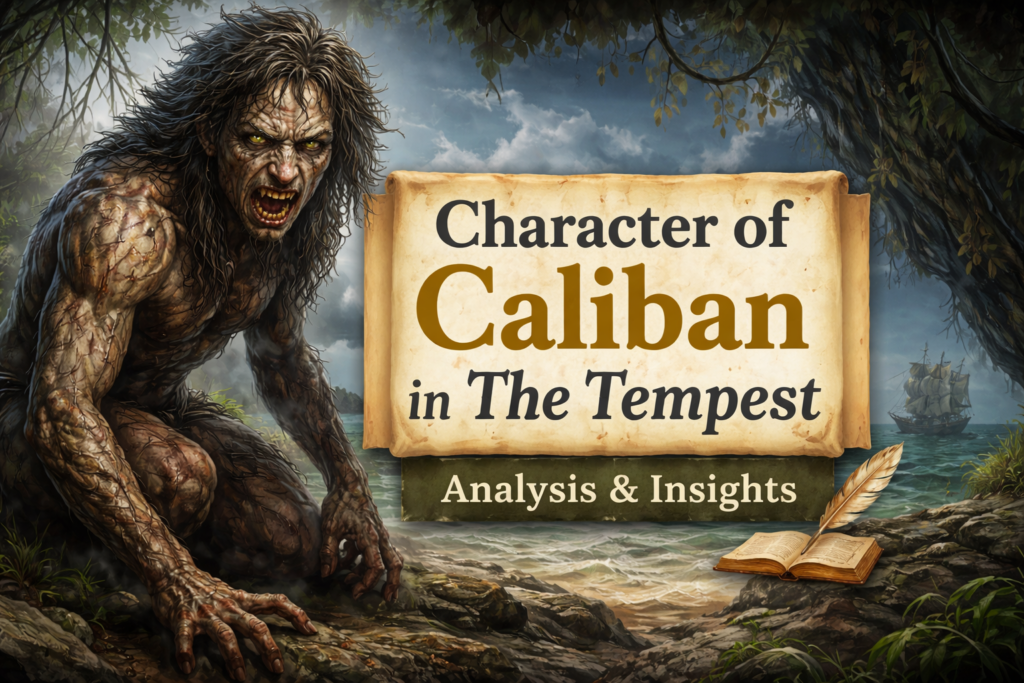
Son of the witch Sycorax, the island’s original inhabitant. Labeled “savage and deformed,” Caliban taught Prospero about the island but later attempted to violate Miranda, leading to his enslavement. He speaks some of the play’s most poetic lines about the isle’s beauty yet plots murder and curses his master. Caliban has been interpreted as a victim of colonialism, a figure of raw nature, or a cautionary emblem of unchecked desire. His final line—“I’ll be wise hereafter”—hints at possible growth.
Ferdinand
Prince of Naples, honest and dutiful. Separated from his father, he endures Prospero’s tests (log-carrying) with patience, proving his love for Miranda. He represents ideal youth and the hope of a renewed political order through marriage.
Antonio and Sebastian
Prospero’s treacherous brother and Alonso’s ambitious sibling. They embody unrepentant political opportunism, quickly plotting murder when opportunity arises. Antonio never shows remorse, making Prospero’s forgiveness of him especially magnanimous.
Gonzalo
The honest counselor who aided Prospero’s exile with provisions. Optimistic and utopian, he imagines an ideal commonwealth. His kindness contrasts the court’s cynicism and earns Prospero’s gratitude.
Stephano and Trinculo
The drunken butler and jester provide low comedy. Their exploitation of Caliban parodies colonial encounters and highlights themes of false leadership and intoxication (literal and metaphorical).
4. Major Themes
Power and Control: The play examines political power (usurpation in Milan), magical power (Prospero’s art), and colonial power (rule over the island). Prospero’s journey shows that true power includes the wisdom to relinquish it.
Forgiveness and Reconciliation: Central to the romances, the play moves from revenge to mercy. Prospero’s choice—“virtue than in vengeance”—offers hope for healing old wounds, relevant to divided societies.
Colonization and Otherness: Caliban’s subjugation, the Europeans’ arrival, and debates over “civilization” vs. “savagery” echo the 1609 Bermuda/Virginia context and Montaigne’s ideas. The play critiques (and sometimes complicates) European superiority.
Magic, Illusion, and Art: Prospero’s spells mirror theatrical illusion. The masque and epilogue blur reality and performance, suggesting life itself is dream-like. Shakespeare reflects on his own craft.
Nature vs. Nurture: Caliban’s “You taught me language, and my profit on’t / Is I know how to curse” raises questions about whether character is innate or shaped by education and environment.
Freedom and Servitude: Ariel’s yearning for liberty, Caliban’s resistance, Ferdinand’s willing “slavery” to love, and Prospero’s final release of all underscore multiple kinds of bondage and freedom.
5. Key Symbols and Literary Devices
- The Tempest/Storm: Chaos, Prospero’s controlled power, and emotional turmoil.
- Prospero’s Books: Knowledge, magic, and the danger/power of learning.
- The Island: A liminal space for transformation, utopia/dystopia, and self-discovery.
- Music and Noises: Enchantment, harmony, and the supernatural; Caliban’s “isle is full of noises.”
- The Masque: Celebration of order/fertility; its interruption reminds us of impermanence.
- Chess Game (implied in some readings): Strategic power plays and courtship.
- Drowning and Shipwreck: Baptismal renewal and the stripping away of old identities.
Shakespeare employs dramatic irony, masque elements, and poetic contrast (high courtly language vs. Caliban’s earthy verse) for rich texture.
6. Critical Interpretations and Relevance to 2026
Post-colonial readings emphasize Caliban as a resistant indigenous voice. Feminist views explore Miranda’s limited agency and Prospero’s patriarchal control. Eco-critical lenses link the play to climate anxiety and humanity’s relationship with nature. In an age of AI and virtual realities, Prospero’s illusions resonate with questions of created worlds and ethical control. The theme of forgiveness speaks to polarized politics and the possibility of redemption.
Historically tied to the Sea Venture wreck and early colonial ventures, The Tempest feels strikingly modern.
7. Practical Study Tools & FAQs
Study Tips:
- Track Prospero’s “tempest” as both literal storm and internal journey.
- Compare the three plots (court, lovers, clowns) for parallels and parody.
- Memorize key speeches (Prospero’s “Our revels,” Caliban’s “Be not afeard”).
- Watch performances (e.g., RSC or film adaptations with Helen Mirren or Julie Taymor) to see staging choices.
Common FAQs:
- Is Prospero Shakespeare? Many think so, but it’s interpretive.
- Is Caliban a villain or victim? Both—Shakespeare leaves ambiguity.
- Why does Prospero forgive Antonio? To break the cycle of revenge and model virtue.