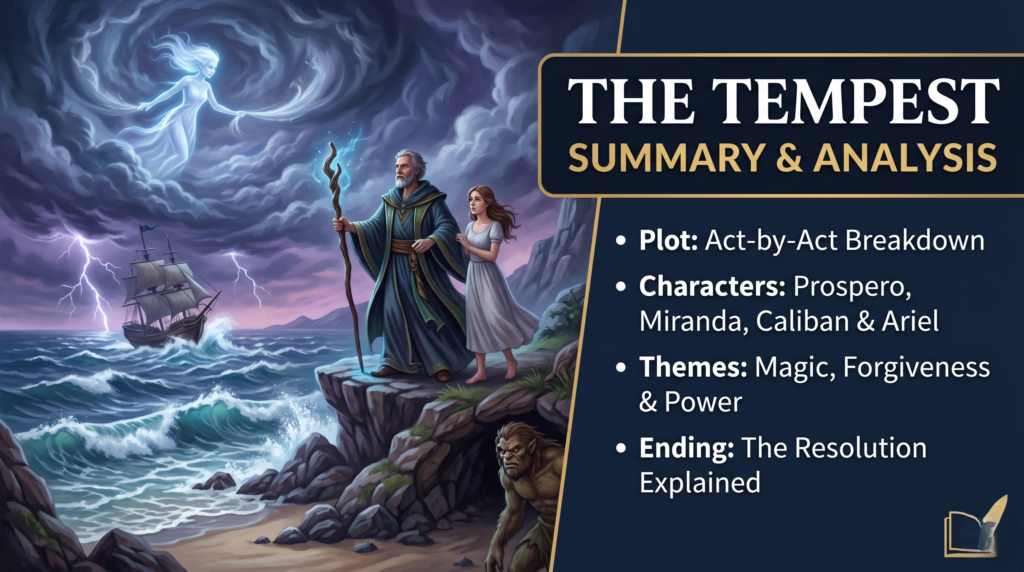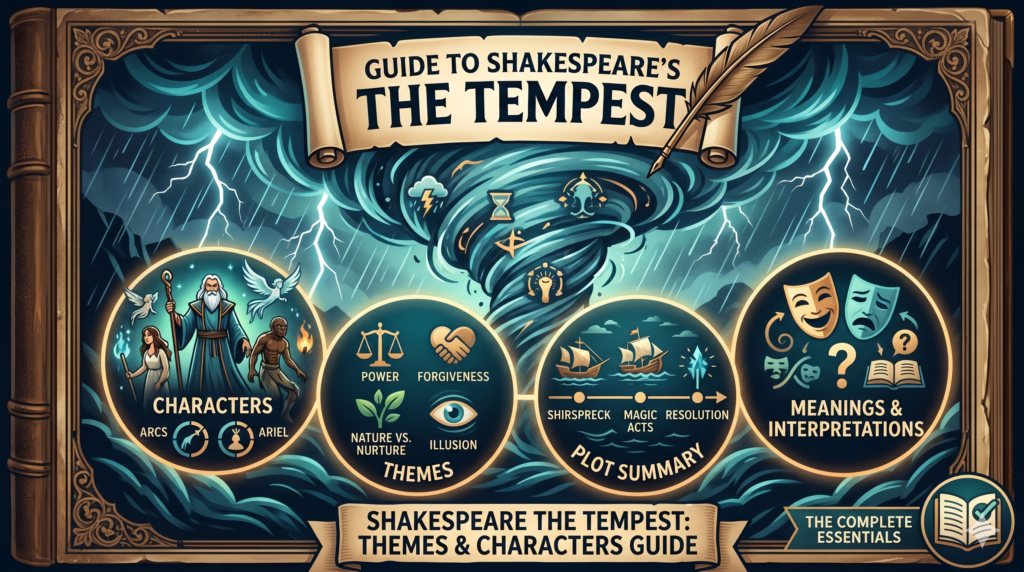
Thunder, lightning, and the terrifying crack of a ship’s mast splintering in the wind. It is a bold, chaotic way to open a play, yet a work that begins in sheer terror ultimately resolves into one of literature’s most profound meditations on forgiveness, letting go, and the nature of humanity itself.
When exploring the final solo work of the Bard, understanding the tempest william shakespeare penned around 1611 requires far more than just reading the lines. It requires navigating a complex labyrinth of post-colonial themes, Renaissance magic, and bitter political betrayal. Here at William Shakespeare Insights, we know that tackling this particular masterpiece can feel like weathering a storm of your own. While it is frequently studied in classrooms and staged globally, its blend of illusion and reality leaves many readers searching for deeper clarity.
This comprehensive guide is designed to demystify the text. By breaking down the historical context, examining the psychological depths of the characters, and unpacking the play’s enduring themes, we will unlock the hidden meanings of Shakespeare’s ultimate farewell to the stage.
Why “The Tempest” is Shakespeare’s Ultimate Farewell
To truly grasp the significance of the play, one must look at the world in which it was born. Written during the Jacobean era, The Tempest reflects a society obsessed with exploration, the expansion of empires, and the mysteries of the “New World.”
The Context of 1611 and The Sea Venture
Unlike many of Shakespeare’s tragedies and histories, which drew heavily on Holinshed’s Chronicles or Plutarch’s Lives, The Tempest has no single primary source. However, it was deeply influenced by contemporary events—most notably, the 1609 wreck of the Sea Venture. This English ship, bound for the Jamestown settlement in Virginia, was caught in a hurricane and marooned on the uncharted islands of Bermuda.
The survivors’ accounts of a miraculous rescue and an island that was surprisingly habitable rather than filled with devils sparked the imagination of the English public. Shakespeare utilized this real-world maritime survival story to craft his mystical island, creating a setting where European political corruption collides with untamed, natural frontiers.
Prospero as the Playwright
Perhaps the most enduring and widely accepted scholarly theory regarding the play is its autobiographical nature. Many literary critics view The Tempest as Shakespeare’s conscious farewell to the theater.
In this allegorical reading, Prospero, the master of magic who orchestrates every event on the island, represents Shakespeare himself. Prospero’s “magic” is the magic of theatrical illusion, stagecraft, and storytelling. When Prospero eventually renounces his art in Act V, stating:
“But this rough magic I here abjure… I’ll break my staff, Bury it certain fathoms in the earth, And deeper than did ever plummet sound I’ll drown my book.”
…it is deeply moving to read this as Shakespeare putting down his quill, retiring from the Globe Theatre, and returning to a quiet life in Stratford-upon-Avon. He is relinquishing his control over the audience’s imagination, marking the end of an unparalleled creative era.
Core Character Breakdown: Archetypes and Hidden Motives
A play isolated on a single island relies entirely on the psychological friction between its characters. To understand the narrative engine of the story, we must perform a deep analysis of the play’s central figures, moving beyond surface-level summaries to uncover their hidden motives.
Prospero: Benevolent Ruler or Master Manipulator?
Prospero is one of the most complex figures in the entire Shakespearean canon. On the surface, he is the wronged Duke of Milan, a victim of political treachery orchestrated by his own brother, Antonio. His primary goal appears to be justice and the restoration of his daughter, Miranda, to her rightful royal status.
However, a closer reading reveals a deeply Machiavellian streak. Prospero is a tyrannical sorcerer who rules the island with an iron fist. He demands absolute obedience, uses fear and physical pain to control Caliban, and manipulates the romantic feelings of his own daughter. The tension in Prospero’s character lies in this duality: can we sympathize with the wronged victim while condemning the authoritarian ruler? His journey is not just about regaining his dukedom; it is about learning the limits of power and the necessity of mercy.
Caliban vs. Ariel: The Duality of Servitude
The dynamic between Prospero’s two magical servants forms the thematic core of the play, representing contrasting realms of existence and the brutal realities of servitude.
-
Caliban: The Earthy Realm and the Colonized Subject. Caliban is the island’s indigenous inhabitant, the son of the witch Sycorax. Prospero views him as a “salvage and deformed slave,” reducing him to mere physical labor. Yet, Shakespeare gives Caliban some of the most beautiful, poetic blank verse in the play, revealing a soul deeply connected to the natural rhythms of his home: “Be not afeard; the isle is full of noises, Sounds and sweet airs, that give delight and hurt not.” Modern interpretations heavily focus on Caliban through a post-colonial lens, viewing him not as a monster, but as a tragic victim of European imperialism whose land, language, and autonomy were stolen.
-
Ariel: The Ethereal Realm and the Desire for Freedom. In stark contrast to the earthbound Caliban, Ariel is a spirit of the air and fire, representing the intellectual and ethereal. Ariel serves Prospero out of gratitude for being rescued from a pine cloven by Sycorax, but his servitude is fundamentally transactional. Ariel’s constant refrain is a plea for liberty. If Caliban represents the physical toll of subjugation, Ariel represents the psychological yearning for boundless, unconstrained freedom.
Miranda and Ferdinand: Innocence in a World of Deceit
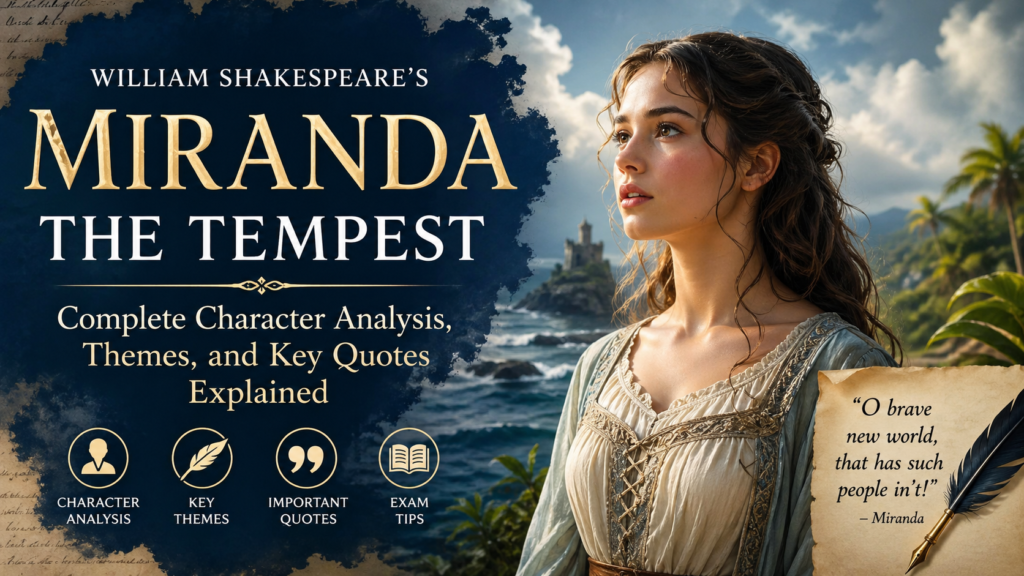
Amidst the betrayal, vengeance, and political maneuvering, Miranda and Ferdinand serve as the emotional anchor of the play. Miranda, raised in total isolation with only her father and his books, represents untainted innocence. Her famous exclamation—“O brave new world, That has such people in’t!”—is heavily laden with dramatic irony, as the audience knows the “people” she marvels at are actually treacherous usurpers.
Ferdinand, the Prince of Naples, proves his nobility not through his title, but through his willingness to endure physical labor (carrying logs) for Miranda’s sake. Their romance is genuine, yet it is impossible to ignore that their union is also a highly strategic political tool engineered by Prospero to solidify his return to power in Italy. They are the hope for a better future, untainted by the sins of the older generation.
Scene-by-Scene Thematic Analysis: Navigating the Island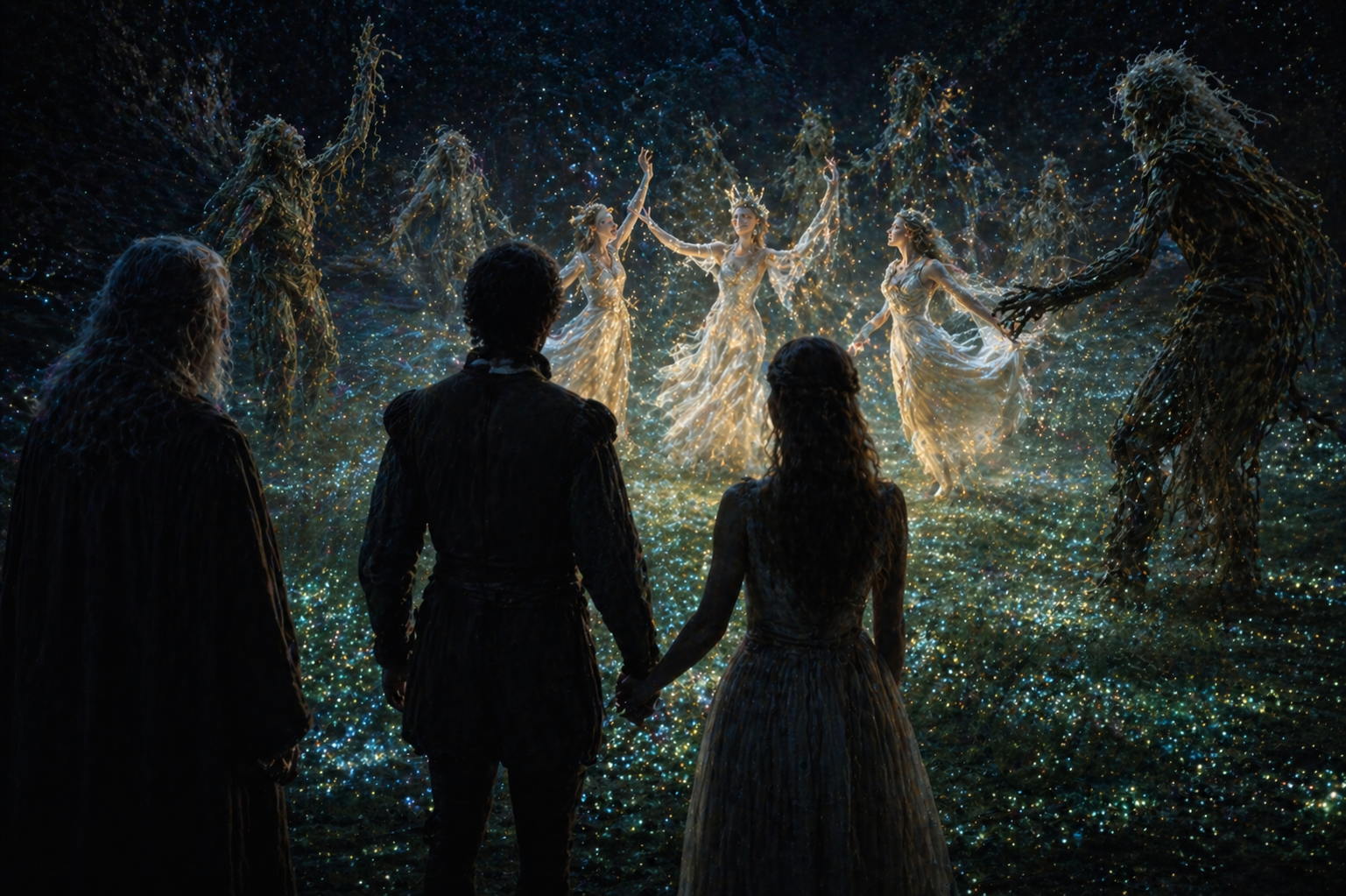
For students preparing for exams or actors breaking down their roles, analyzing the play structurally illuminates Prospero’s grand design. Every tempest, both literal and metaphorical, is meticulously staged.
Act I: The Illusion of Chaos
The play opens with a spectacular storm that seems to upend the natural order of the world. Kings and counselors are reduced to weeping, while a lowly Boatswain commands the nobility to get out of the way. This immediate subversion of social hierarchy establishes a core question: does a crown matter when you are drowning?
However, Scene 2 reveals that this chaos is entirely manufactured. Prospero’s lengthy exposition to Miranda serves a dual purpose: it informs the audience of the political betrayal in Milan twelve years prior, and it demonstrates his absolute, god-like control over the elements through his agent, Ariel.
Acts II & III: Power, Betrayal, and the Illusion of Justice
Once the shipwreck survivors are scattered across the island, Shakespeare splits the narrative into distinct, echoing storylines.
First, we witness the royal party. Antonio (Prospero’s usurping brother) and Sebastian plot to murder King Alonso as he sleeps. This dark political maneuvering perfectly mirrors the original betrayal of Prospero. If you have studied the mechanics of royal succession and treason in plays like Hamlet or Henry V, Antonio’s chilling lack of remorse will feel familiar.
Simultaneously, a dark parody of this treason plays out in the subplot. Caliban encounters the drunken butler Stephano and the jester Trinculo. Mistaking them for gods due to their “celestial liquor,” Caliban plots to overthrow Prospero and install the fools as kings of the island. It is comedic relief, but deeply tragic; Caliban only trades one master for a far more incompetent one, highlighting the illusion of sudden freedom.
Acts IV & V: Forgiveness, Magic, and Relinquishing Control
Act IV is dominated by the masque—a stunning, magical play-within-a-play orchestrated by Prospero to celebrate the betrothal of Ferdinand and Miranda. It is a vision of fertility, order, and harmony. But Prospero abruptly ends the illusion when he remembers Caliban’s impending plot, leading to the famous, melancholic realization that “We are such stuff / As dreams are made on, and our little life / Is rounded with a sleep.”
The climax in Act V hinges on a profound moment of empathy. Ariel, a non-human spirit, describes the suffering of the imprisoned royals and remarks that his affections would become tender if he were human. Prospero is struck by this. He chooses “virtue rather than vengeance,” realizing that true power lies in mercy. He releases his enemies, frees Ariel, and even takes responsibility for the corrupted Caliban (“This thing of darkness I acknowledge mine”).
Unlocking the Hidden Themes in [the tempest william shakespeare]
When analyzing the deeper layers of [the tempest william shakespeare], three major thematic pillars emerge. These are the concepts that elevate the play from a simple fairy tale to a masterpiece of literary philosophy.
The Ethics of Colonialism and the New World
It is impossible to read the text today without engaging with its colonial implications. Prospero arrives on an island that is not his, seizes control from its native inhabitant (Caliban), imposes his own language and culture upon him, and ultimately enslaves him. Caliban’s heartbreaking claim, “This island’s mine, by Sycorax my mother, Which thou takest from me,” frames the narrative as an early critique of European imperialism and the moral cost of “civilizing” the so-called New World.
The Nature of Art, Theater, and Illusion
The island itself acts as a metaphorical stage, and Prospero is the ultimate stage director. The “magic” deployed—invisible spirits, sudden banquets, disappearing harpy figures—mirrors the stagecraft of the Jacobean theater. Through Prospero’s ultimate renunciation of his magic, Shakespeare acknowledges the fleeting, temporary nature of theatrical illusion. Art can hold a mirror up to nature and provoke emotional change, but eventually, the curtain must fall.
Imprisonment vs. Freedom
Every character on the island is trapped in some capacity. The royal party is physically marooned and psychologically trapped by grief and guilt. Ferdinand is imprisoned by Prospero’s labor. Ariel and Caliban are bound by magical servitude. Most importantly, Prospero is imprisoned by his own bitterness, obsession with control, and desire for revenge. The play posits that true freedom cannot be achieved through magic or rebellion, but only through the difficult acts of forgiveness, acceptance, and letting go.
Expert Insights: Modern Interpretations of the Play
The beauty of Shakespeare lies in his malleability. How we stage the play today tells us as much about our modern society as it does about the 17th century.
-
Elevating Caliban: While early productions often portrayed Caliban as a literal, comedic monster in an animal suit, modern theater almost universally frames him as a tragic, dignified figure representing oppressed indigenous populations. His rebellion is played not for laughs, but for empathy.
-
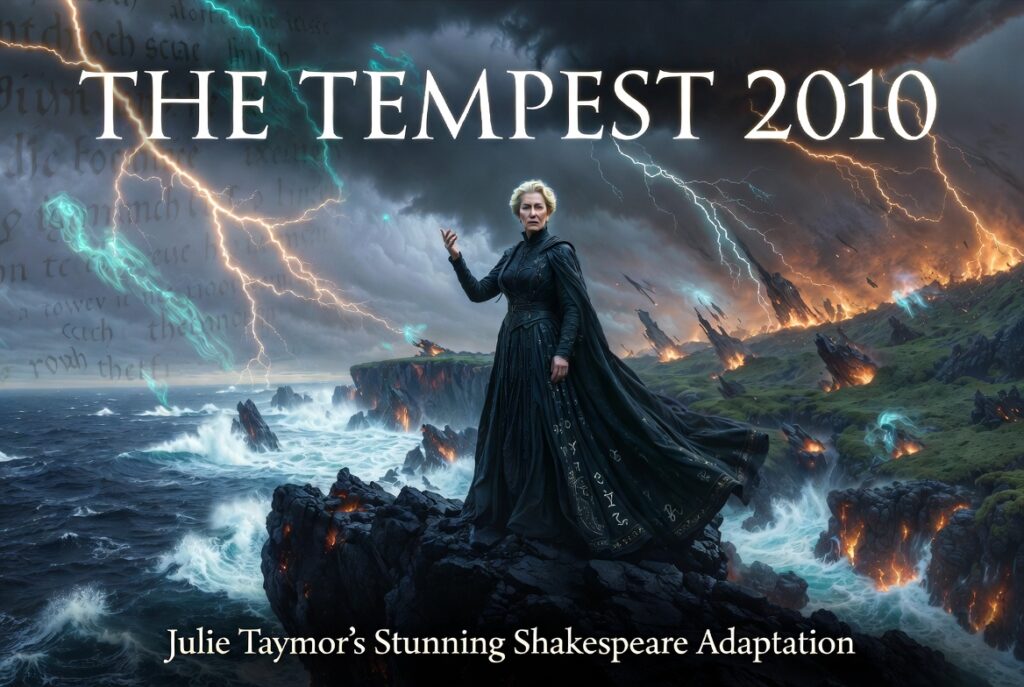
Gender-Swapping Prospero: Because the themes of power, parenthood, and aging are universal, many esteemed directors have cast female leads as “Prospera” (most notably Helen Mirren in the 2010 film adaptation). This shift fundamentally alters the dynamic of the play, exploring maternal protection and female authority in a patriarchal world.
Reading the Text vs. Experiencing the Magic
While reading the blank verse on the page allows for deep analysis of the metaphors, seeing the play performed live is crucial. The text is uniquely sparse in stage directions. A director’s choice of how to visualize Ariel (as a projection, an acrobat, or a chorus of voices) and how to design the terrifying “harpy” scene completely dictates the tone of the narrative. It is a play that demands visual spectacle.
Frequently Asked Questions (FAQs)
What is the main message of The Tempest?
The core message revolves around the limits of power, the destructive nature of revenge, and the ultimate necessity of forgiveness. Prospero learns that true nobility comes from showing mercy to his enemies rather than destroying them, breaking the cycle of betrayal.
Why is Caliban so important to the story?
Caliban grounds the ethereal, magical elements of the island in harsh, earthly reality. He acts as a moral counterweight to Prospero, challenging the legitimacy of Prospero’s rule and forcing the audience to confront the dark realities of subjugation and colonialism.
Is The Tempest a comedy or a tragedy?
It is officially categorized as a “Romance” or a tragicomedy. It contains elements of tragedy (betrayal, usurpation, potential murder) but resolves like a comedy (with a marriage, reconciliation, and the restoration of order). However, its lingering dark undertones set it apart from standard comedies.
What are Prospero’s final words and what do they mean?
In his closing epilogue, Prospero speaks directly to the audience: “As you from crimes would pardon’d be, / Let your indulgence set me free.” Having given up his magic, he is now just an actor asking for the audience’s applause. Their clapping will break the theatrical illusion and allow him to finally leave the stage.
The Enduring Legacy of the Island
The Tempest is a play that refuses to offer easy answers. Is Prospero a hero or a tyrant? Is Caliban a monster or a victim? Is the island a prison or a paradise? By refusing to tie its narrative into neat, morally absolute bows, Shakespeare crafted a work that has remained vibrantly relevant for over four centuries.
Understanding the historical context, dissecting the hidden psychological motives of the characters, and unpacking themes of illusion and colonialism are the keys to unlocking this final masterpiece. It is a haunting, beautiful reminder that while the storms of life are inevitable, the choice to forgive remains entirely in our own hands.
What are your thoughts on Prospero’s morality? Did he truly earn his redemption, or is he simply a tyrant who got his way?
Share your perspectives in the comments below! If you are eager to explore more of Shakespeare’s most complex characters and political betrayals, dive into our comprehensive scene-by-scene analyses of Antony and Cleopatra and Othello right here on the site.