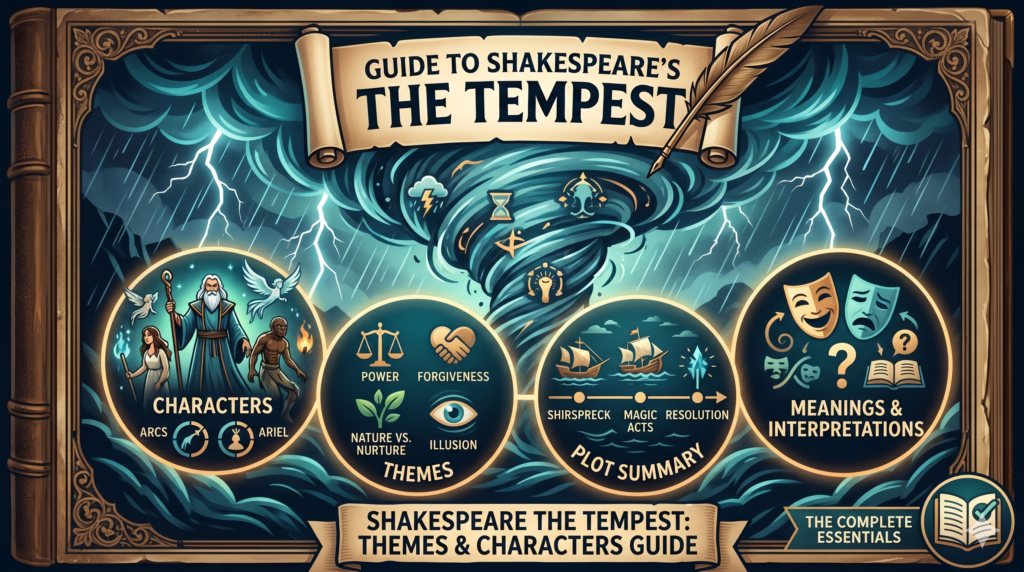
What if a storm could reveal the truth about power, betrayal, and forgiveness—all at once? That’s exactly what happens in The Tempest, one of the most fascinating plays by William Shakespeare. Even centuries after its creation, the play continues to challenge readers with its rich symbolism and complex characters.
If you’ve ever struggled to fully understand shakespeare the tempest, you’re not alone. Many students find the language difficult, the themes layered, and the characters morally ambiguous. This guide is designed to solve that problem.
In this comprehensive, student-friendly article, you’ll discover:
- A clear and concise summary of the play
- Easy explanations of major characters
- Deep insights into key themes like power, colonialism, and forgiveness
- Practical tips to help you succeed in exams and essays
By the end, you won’t just know The Tempest—you’ll truly understand it.
Quick Summary of Shakespeare The Tempest (For Busy Readers)
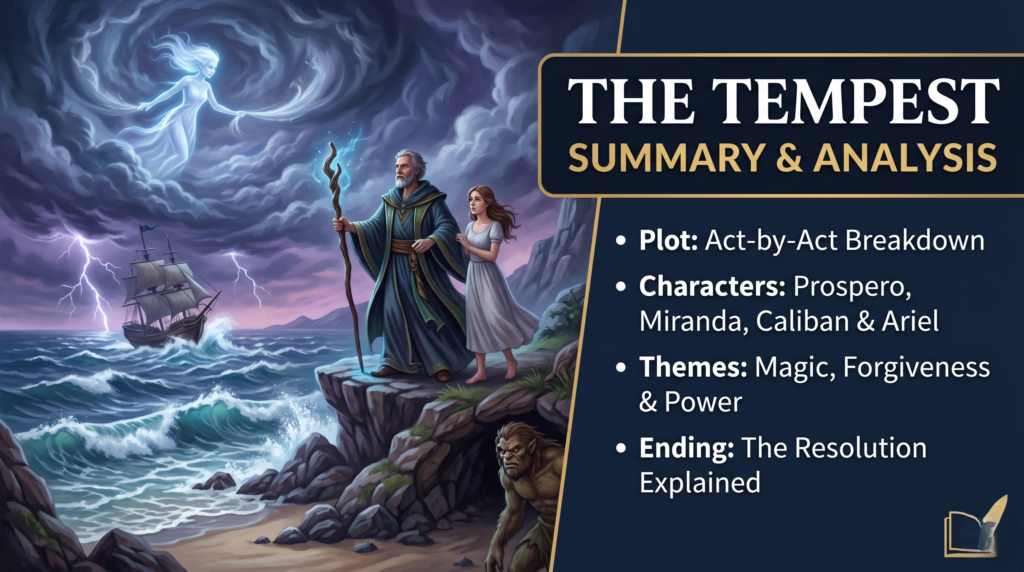
The Plot in 5 Key Stages
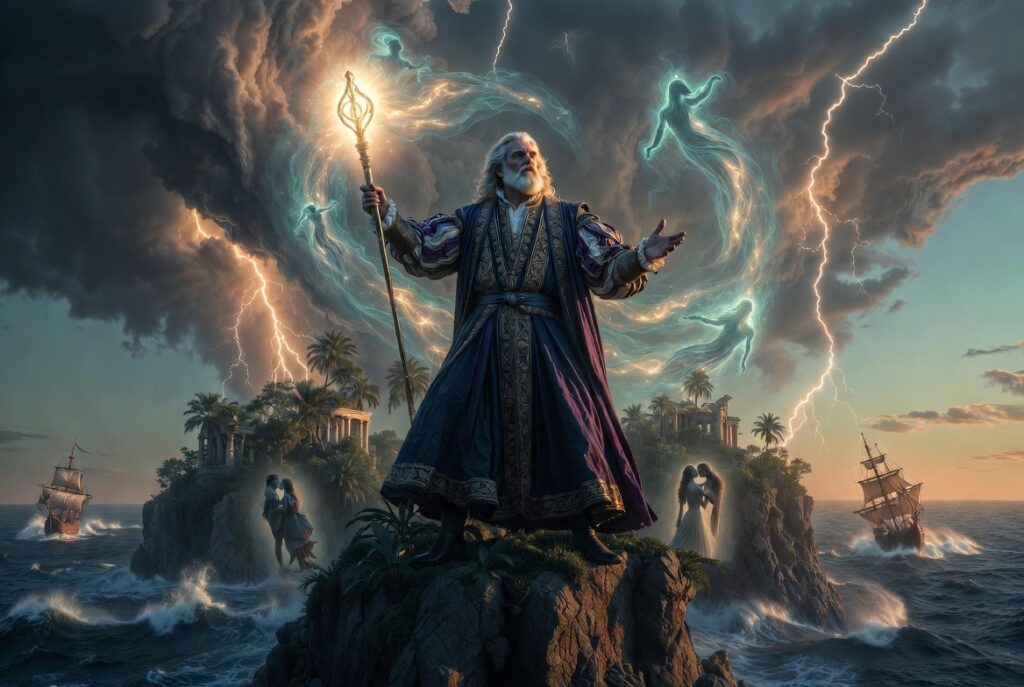
- The Storm (The Tempest)
Prospero, a powerful magician, creates a storm to shipwreck his enemies on a mysterious island. - Control of the Island
Prospero rules the island using magic, controlling spirits like Ariel and dominating Caliban. - Love Story Begins
Ferdinand, the prince, falls in love with Prospero’s daughter Miranda. - Plots and Betrayals
Antonio and Sebastian plan murder, while Caliban plots rebellion. - Resolution and Forgiveness
Prospero forgives his enemies, frees Ariel, and prepares to return to Milan.
One-Paragraph Summary
The Tempest tells the story of Prospero, a rightful duke who uses magic to bring his enemies to justice after being exiled. Through manipulation, illusion, and ultimately forgiveness, Prospero restores order, reconciles with his enemies, and gives up his magical powers, emphasizing the importance of mercy over revenge.
Historical and Literary Context
When and Why Shakespeare Wrote The Tempest
Written around 1610–1611, The Tempest is widely considered one of Shakespeare’s final plays. Many scholars believe it represents a culmination of his artistic vision, blending tragedy, comedy, and romance into a single work.
The Age of Exploration and Colonial Influence
During Shakespeare’s time, European nations were exploring and colonizing new lands. These historical events influenced The Tempest, especially in the portrayal of Caliban.
- Caliban represents the “native inhabitant”
- Prospero symbolizes the colonizer who takes control
This perspective makes the play highly relevant to discussions of colonialism and power dynamics, even today.
Is The Tempest Shakespeare’s Farewell Play?
Many critics interpret Prospero as a symbolic version of Shakespeare himself.
- Prospero controls events like a playwright controls a story
- At the end, he gives up magic—just as Shakespeare may have retired from writing
This interpretation adds emotional depth to the play, making it feel like a final goodbye.
Detailed Plot Breakdown (Act-by-Act Guide)
Act 1 – The Storm and the Setup
The play opens with a violent storm at sea. This dramatic beginning immediately captures attention. The storm is not natural—it is created by Prospero using magic.
We learn:
- Prospero was once the Duke of Milan
- His brother Antonio betrayed him
- He was exiled with his daughter Miranda
Now, years later, he seeks justice.
Act 2 – Power Struggles Begin
On the island:
- Antonio convinces Sebastian to murder his brother (the king)
- Meanwhile, comic characters like Trinculo and Stephano meet Caliban
This act highlights both political ambition and comic relief.
Act 3 – Love and Trials
Ferdinand proves his love for Miranda by performing hard labor. Their relationship represents:
- Innocence
- Hope
- A new beginning
At the same time, Caliban begins plotting revenge against Prospero.
Act 4 – Illusions and Revelations
Prospero creates a magical masque (a symbolic performance) to celebrate the love between Ferdinand and Miranda.
This scene emphasizes:
- The beauty of harmony
- The illusionary nature of life
Act 5 – Resolution and Forgiveness
In the final act:
- Prospero confronts his enemies
- Instead of revenge, he chooses forgiveness
- He frees Ariel and promises to abandon magic
This ending reinforces the play’s central message: forgiveness is more powerful than revenge.
Major Characters Explained Clearly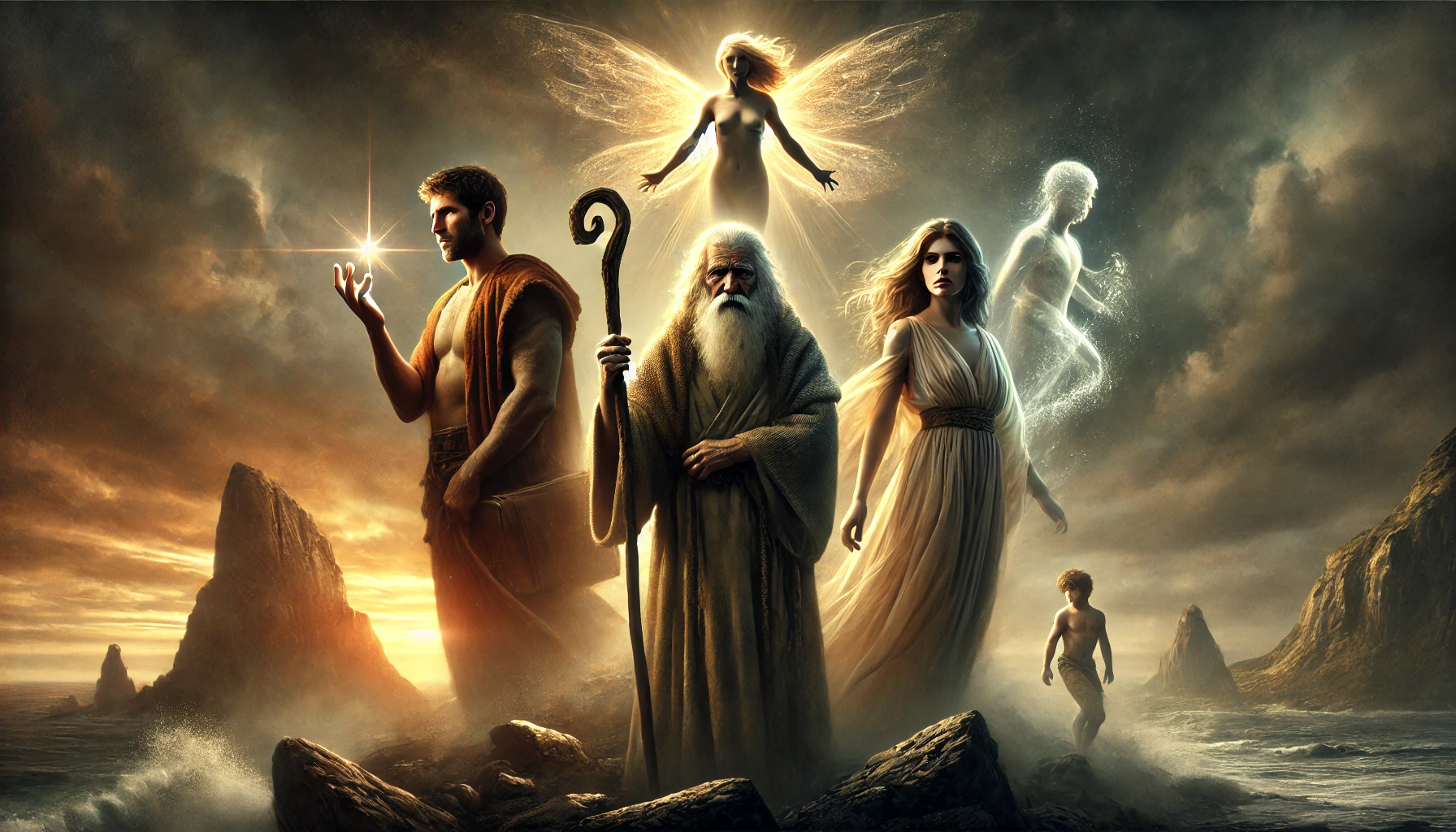
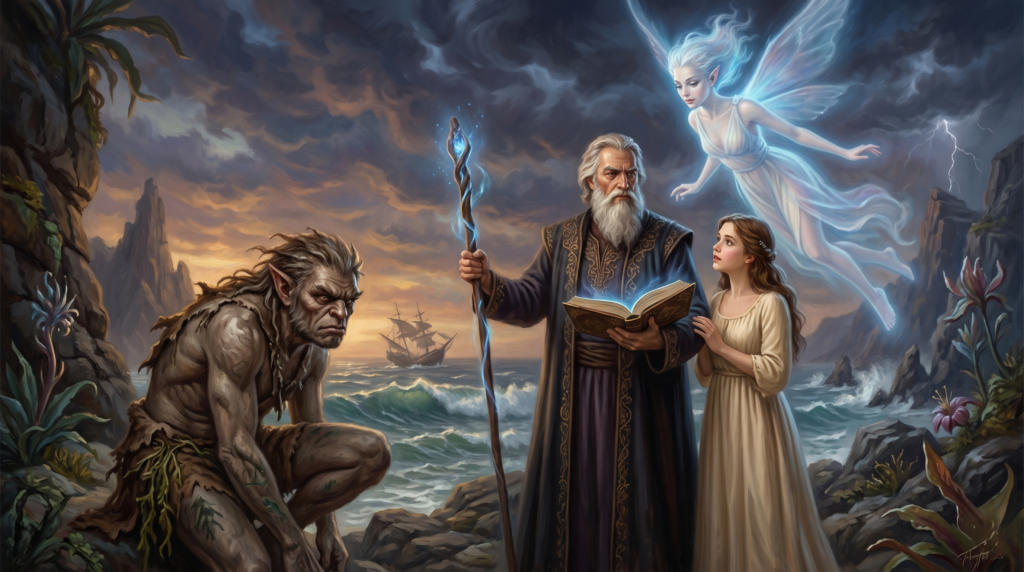
Prospero – The Powerful Magician
Prospero is the heart of the play.
- Former Duke of Milan
- Master of magic
- Controls nearly every event
But he is not purely good. His desire for control raises questions:
- Is he just—or tyrannical?
- Does he use power responsibly?
His journey from revenge to forgiveness defines the play.
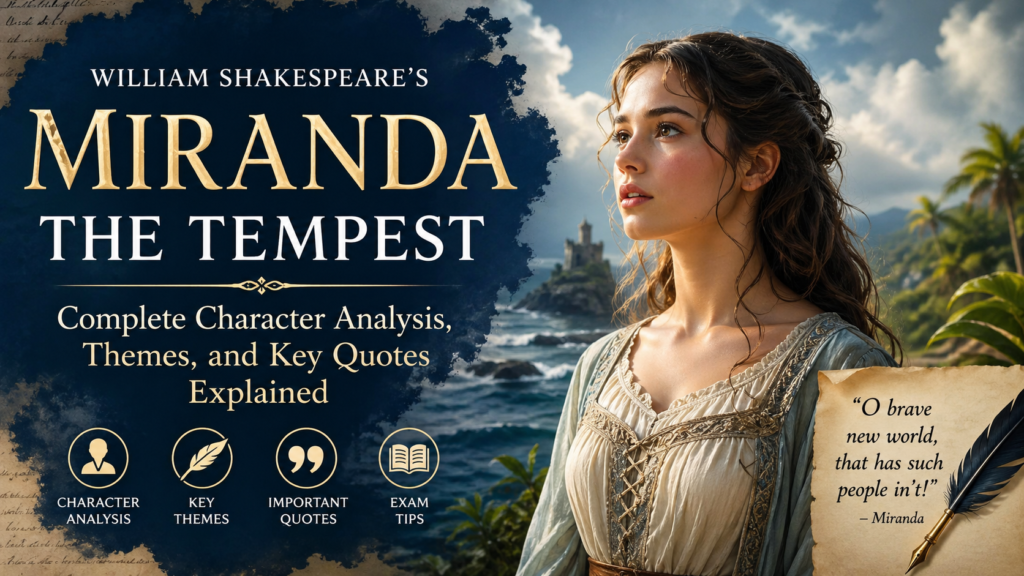
Miranda – Innocence and Compassion
Miranda represents purity and kindness.
- She has grown up isolated from society
- She sees the world with fresh eyes
Her famous reaction to humanity reflects hope:
“O brave new world…”
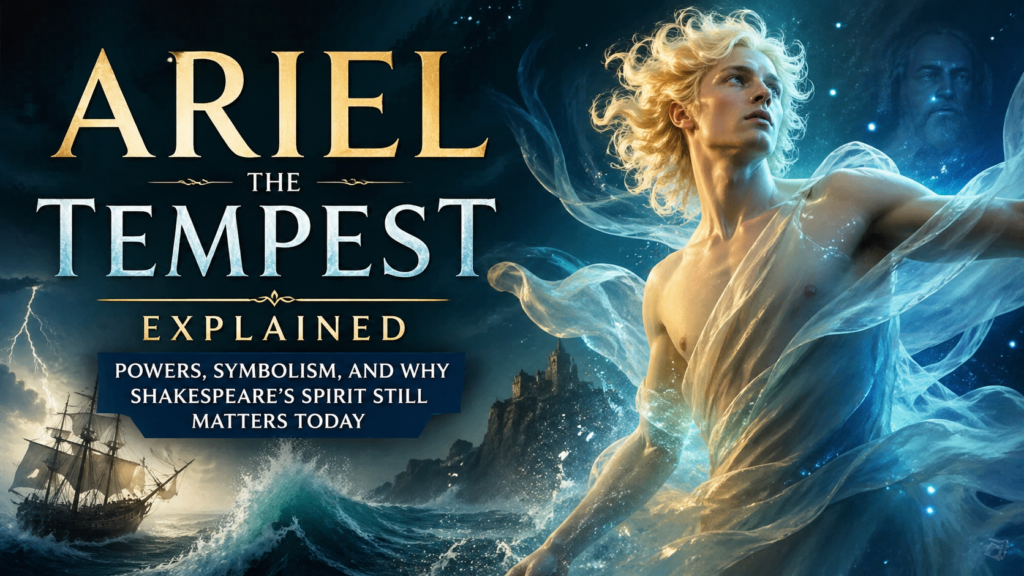
Ariel – Freedom and Loyalty
Ariel is a spirit who serves Prospero.
- Represents freedom and lightness
- Desires independence
Unlike Caliban, Ariel obeys willingly—but still longs to be free.
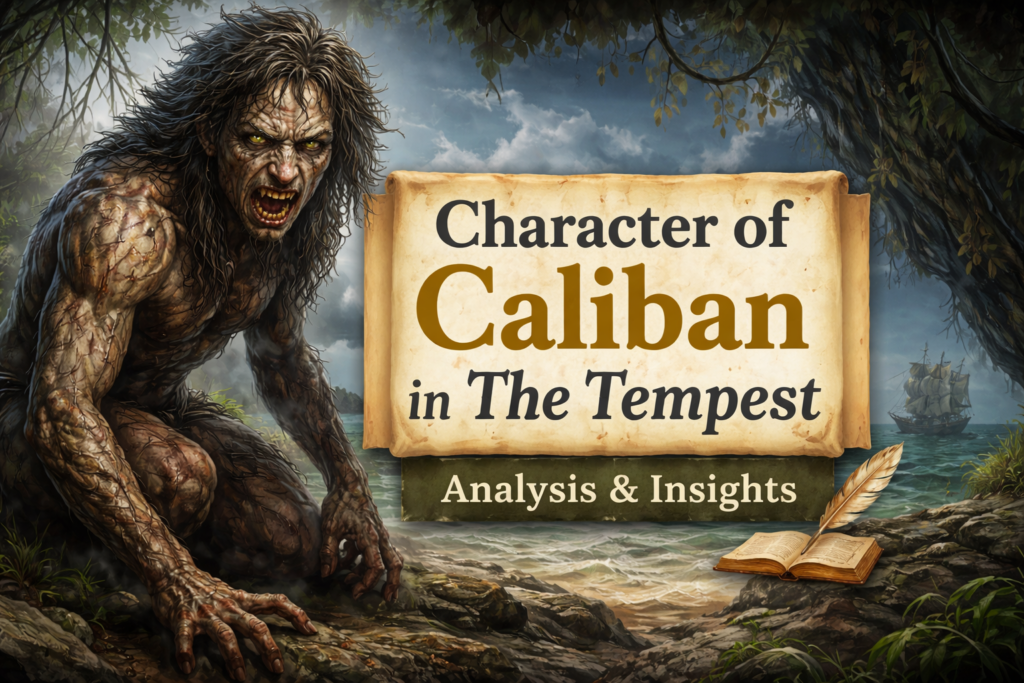
Caliban – Victim or Villain?
Caliban is one of the most debated characters.
- Native inhabitant of the island
- Enslaved by Prospero
Some see him as:
- A monster
- A victim of colonization
His complexity makes him central to modern interpretations.
Ferdinand – Love and Growth
Ferdinand symbolizes:
- True love
- Moral integrity
His relationship with Miranda brings hope for the future.
Antonio and Sebastian – Ambition and Betrayal
These characters represent corruption and power hunger.
- Antonio betrayed his own brother
- Sebastian plots murder
They show the darker side of human ambition.
Key Themes in Shakespeare The Tempest (Deep Analysis)
Power and Control
Power is everywhere in the play.
- Prospero controls people through magic
- Political leaders seek control through violence
The key question:
👉 Is power justified when used for good purposes?
Colonialism and Cultural Conflict
The relationship between Prospero and Caliban reflects colonial dynamics:
- Control vs. resistance
- Civilization vs. “otherness”
Modern readers often interpret the play as a critique of colonialism.
Freedom vs. Servitude
Two characters highlight this theme:
- Ariel seeks freedom through obedience
- Caliban resists oppression
Their contrast deepens the moral complexity of the play.
Forgiveness and Redemption
Unlike many revenge stories, The Tempest ends with forgiveness.
Prospero realizes:
- Revenge does not bring peace
- Mercy leads to true resolution
This theme gives the play its lasting emotional impact.
Illusion vs. Reality
Magic in the play symbolizes illusion.
- Events are controlled and manipulated
- Reality becomes uncertain
This reflects theatre itself—where illusion creates meaning.
Symbols and Motifs You Must Understand
The Storm (Tempest)
Represents chaos, transformation, and the beginning of change
Magic and Books
Symbolize knowledge and authority
The Island
Acts as a controlled environment where human nature is revealed
Masque and Music
Represent harmony, order, and illusion
Important Quotes with Simple Explanations
1. “We are such stuff as dreams are made on”
- Meaning: Life is temporary and illusionary
2. “O brave new world”
- Miranda’s optimism about humanity
3. “This thing of darkness I acknowledge mine”
- Prospero accepting responsibility for Caliban
4. “The rarer action is in virtue than in vengeance”
- Forgiveness is greater than revenge
Why Students Find The Tempest Difficult (And How to Overcome It)
Common Challenges
- Archaic language
- Complex symbolism
- Multiple interpretations
Practical Tips to Understand the Play Faster
- Read modern translations alongside the original
- Focus on themes rather than memorizing lines
- Watch stage or film adaptations
Modern Interpretations and Relevance
Postcolonial Readings
Caliban is often seen as a symbol of oppressed cultures resisting control.
Feminist Perspectives
Miranda’s limited role raises questions about gender representation.
Why The Tempest Still Resonates Today
The play explores:
- Abuse of power
- Justice vs. mercy
- Human relationships
These issues remain relevant in modern society.
Expert Study Tips for Exams and Essays
How to Write a Strong Answer
- Always connect characters to themes
- Use short, relevant quotes
- Provide clear analysis—not just summary
Sample Essay Ideas
- Is Prospero a hero or a tyrant?
- Discuss the role of forgiveness
- Analyze Caliban as a postcolonial figure
Mistakes to Avoid
- Retelling the story without analysis
- Ignoring historical context
- Overcomplicating simple ideas
Frequently Asked Questions (FAQs)
What is the main message of Shakespeare The Tempest?
The play teaches that forgiveness is more powerful than revenge.
Is Caliban a villain or a victim?
He can be interpreted as both, depending on perspective.
Why does Prospero give up his magic?
To return to humanity and embrace forgiveness.
What does the island symbolize?
A space where human nature is revealed and tested.
Is The Tempest based on a real story?
It may have been inspired by shipwreck accounts but is largely fictional.
The True Meaning of Shakespeare The Tempest
At its core, The Tempest is a story about transformation—not just of circumstances, but of the human heart.
Through Prospero’s journey, William Shakespeare shows us that:
- Power must be used responsibly
- Forgiveness leads to peace
- True strength lies in letting go
Whether you’re preparing for exams or exploring literature deeply, understanding The Tempest gives you insight into timeless human struggles.