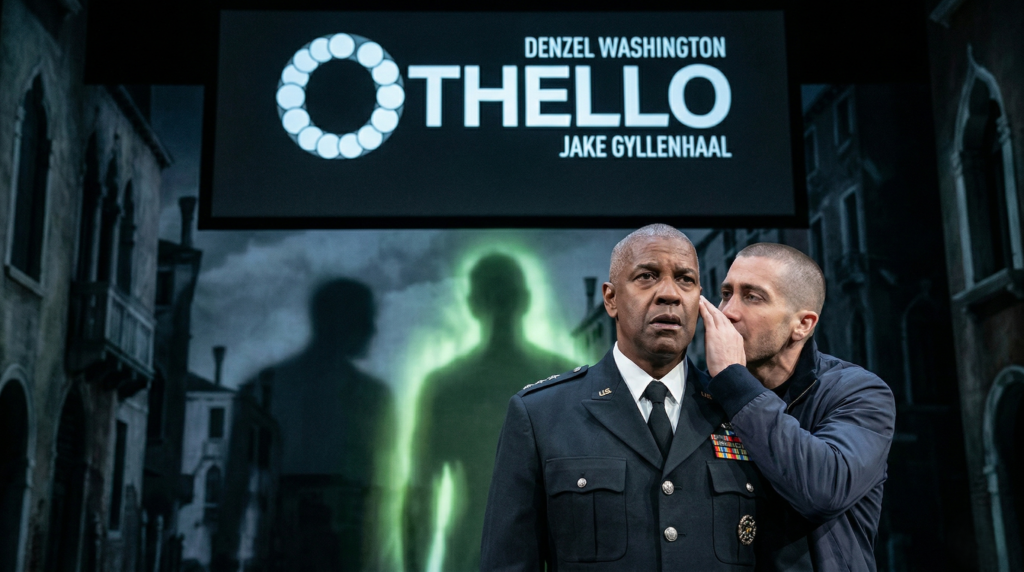
In the dim glow of the Ethel Barrymore Theatre, Jake Gyllenhaal prowls the stage as Iago, his eyes locking with the audience as he unleashes one of Shakespeare’s most chilling soliloquies. Moments later, Denzel Washington’s commanding Othello enters, exuding the gravitas of a battle-hardened general whose world will soon unravel through manipulation and deceit. This star-studded 2025 Broadway revival of Othello wasn’t just another Shakespeare production—it became a box-office phenomenon and a cultural event.
Othello Broadway Jake Gyllenhaal delivered a masterclass in live theater, pitting two Oscar-winning titans against each other in one of literature’s greatest tragedies. For Shakespeare enthusiasts, theater lovers, and curious newcomers alike, this production offered fresh insights into jealousy, betrayal, and human frailty while showcasing why the Bard’s works remain electrifying more than 400 years later.
As a longtime scholar and enthusiast of Shakespearean drama, I’ve followed countless interpretations of Othello. This revival stands out for its high-profile casting, modern directorial choices, and especially Gyllenhaal’s dynamic, scene-stealing performance as Iago. In this comprehensive guide, you’ll discover the production’s background, in-depth performance analysis, thematic relevance today, critical reception, and practical ways to engage with the play—whether you saw it on Broadway or are exploring it for the first time.
The Enduring Power of Shakespeare’s Othello
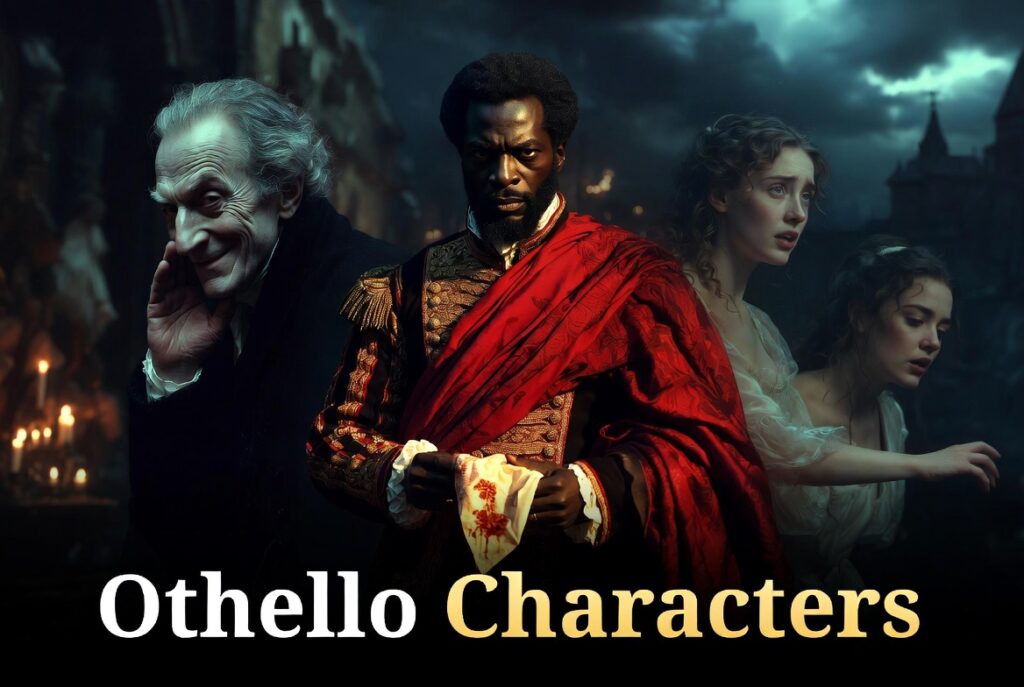
William Shakespeare wrote Othello around 1603–1604, during the height of his tragic period. The play follows Othello, a Moorish general in the Venetian army, who secretly marries Desdemona. His trusted ensign Iago, passed over for promotion in favor of the younger Cassio, orchestrates a devastating campaign of lies that exploits Othello’s insecurities about race, age, and fidelity.
At its core, Othello explores the destructive force of jealousy—the “green-eyed monster” that Iago famously names. It delves into racism and otherness in Elizabethan society, the fragility of trust, toxic masculinity, and the power of language as a weapon. Unlike grand-scale tragedies like Hamlet or King Lear, Othello feels intimate and psychological, driven by intimate conversations and whispered deceptions that spiral into murder and suicide.
Why does Othello resonate so powerfully in the 21st century? In an era of misinformation, social media-fueled paranoia, and polarized leadership, the play feels eerily contemporary. Iago’s tactics—gaslighting, selective truth-telling, and exploiting personal vulnerabilities—mirror modern online manipulation and workplace betrayals. Military culture, questions of belonging, and interracial relationships add additional layers that directors and audiences continue to mine for relevance.
Previous landmark productions, from Orson Welles’ 1952 film to stage versions starring James Earl Jones, Laurence Fishburne, and Chiwetel Ejiofor, have each brought unique cultural lenses. The 2025 Broadway revival joined this prestigious lineage by emphasizing psychological realism and star power.
A Star-Studded Broadway Revival: Production Background
Announced with tremendous excitement, the 2025 Othello marked a major Broadway event. Directed by two-time Tony Award winner Kenny Leon (A Raisin in the Sun, Driving Miss Daisy), the production began previews on February 24, 2025, at the Ethel Barrymore Theatre and officially opened on March 23, 2025. It concluded its limited run on June 8, 2025.
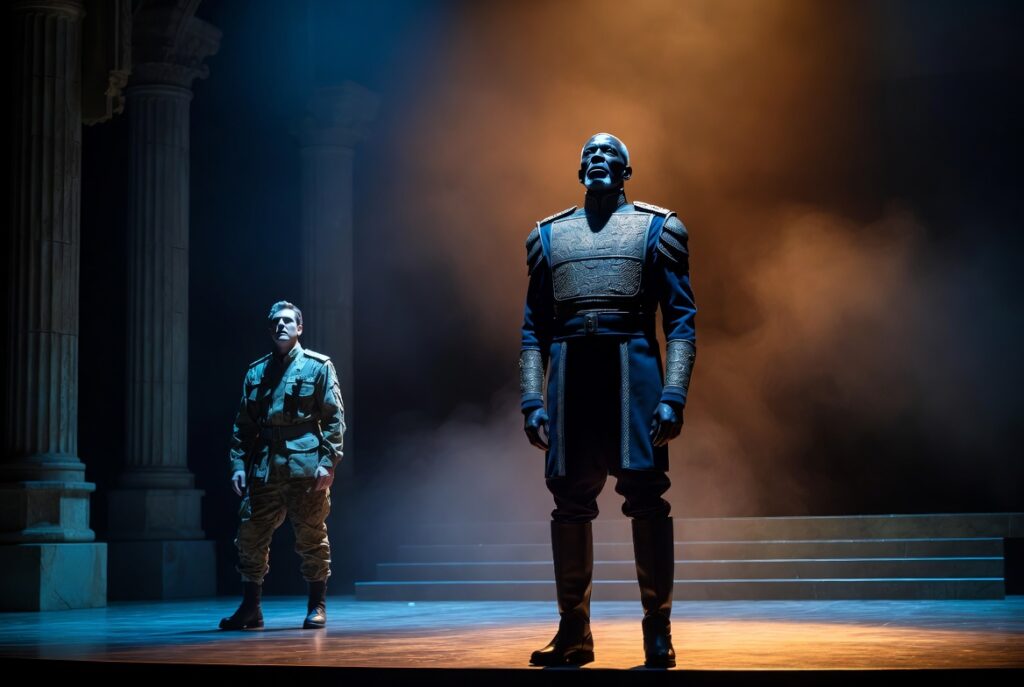
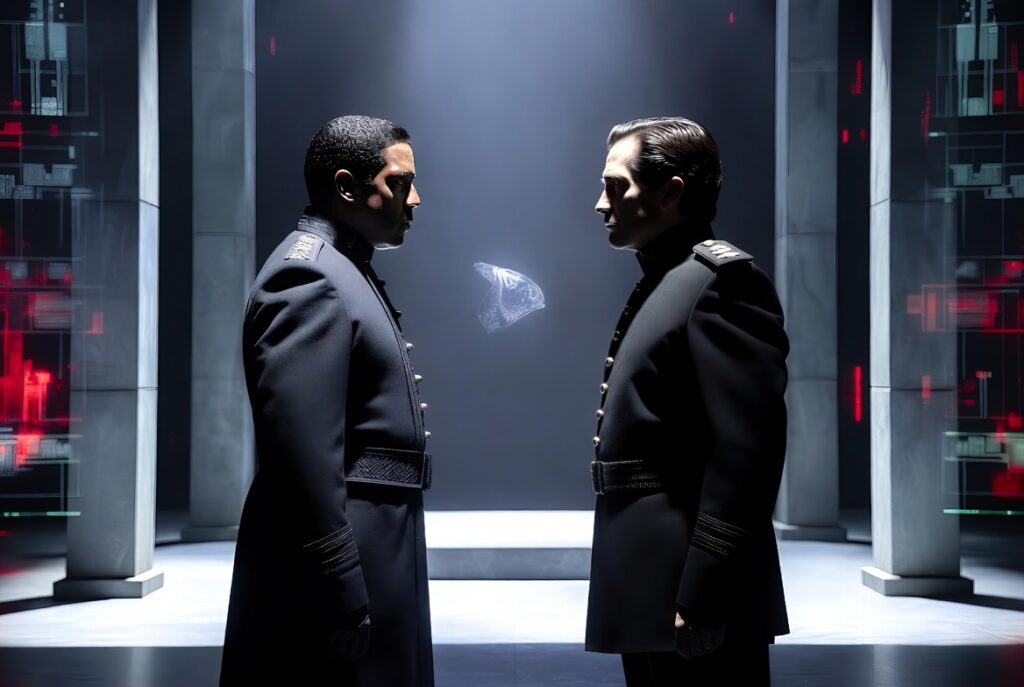
Leon set the play in a “near future” military context, using sleek, minimalist designs with towering gray columns and contemporary military-inspired costumes. This choice aimed to highlight timeless power dynamics without heavy-handed futurism. The creative team included set designer Derek McLane, with lighting and sound elements that amplified the psychological tension.
The star power was undeniable: Denzel Washington as Othello and Jake Gyllenhaal as Iago. Supporting roles featured Molly Osborne as Desdemona and Andrew Burnap as Cassio. From the outset, demand was unprecedented. In its first week of previews, the production shattered box office records for a play at the Barrymore Theatre, grossing over $2.6–2.8 million. It went on to become one of Broadway’s highest-grossing plays of all time, with top tickets exceeding $900 and average prices far above typical play rates. Total gross exceeded $46 million across the run.
This success proved that classic theater, when paired with compelling modern storytelling and A-list talent, can still captivate broad audiences in the streaming era.
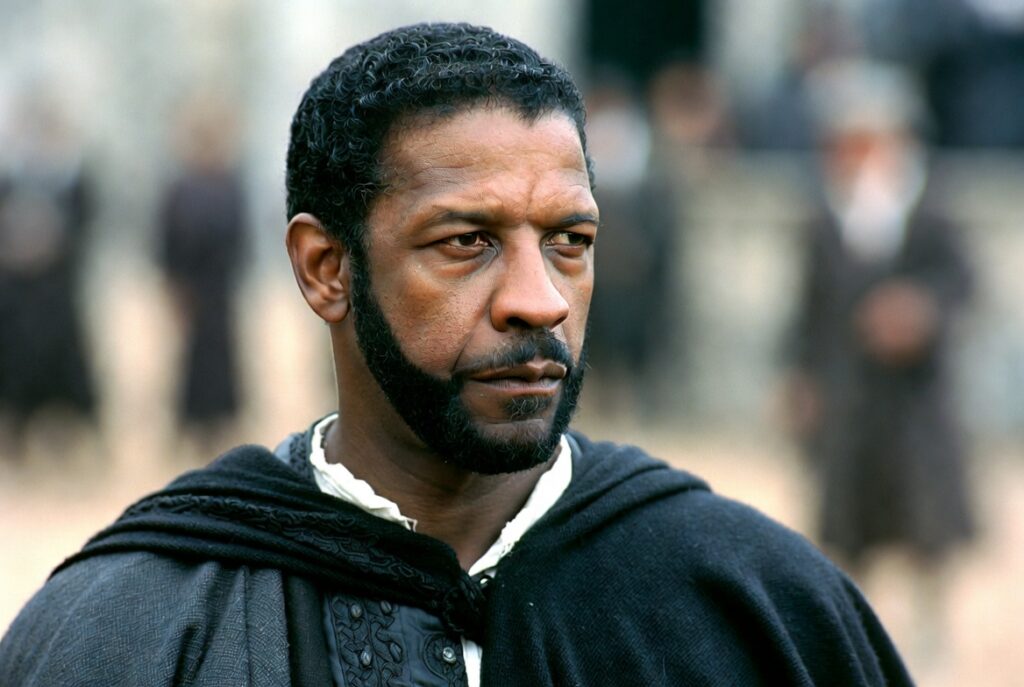
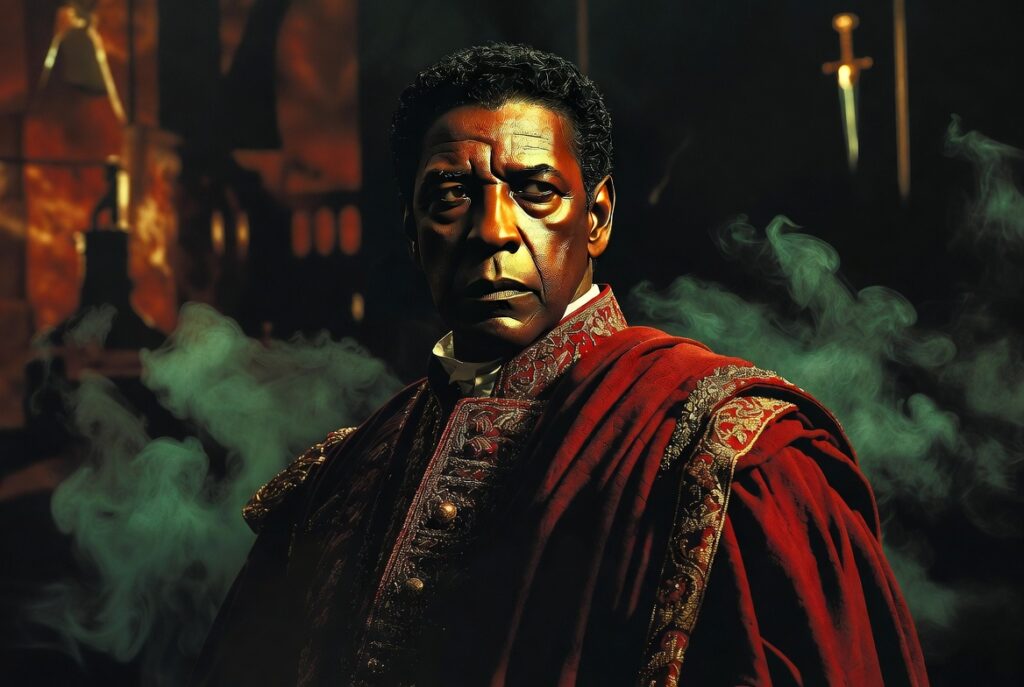
Denzel Washington as Othello – The Noble General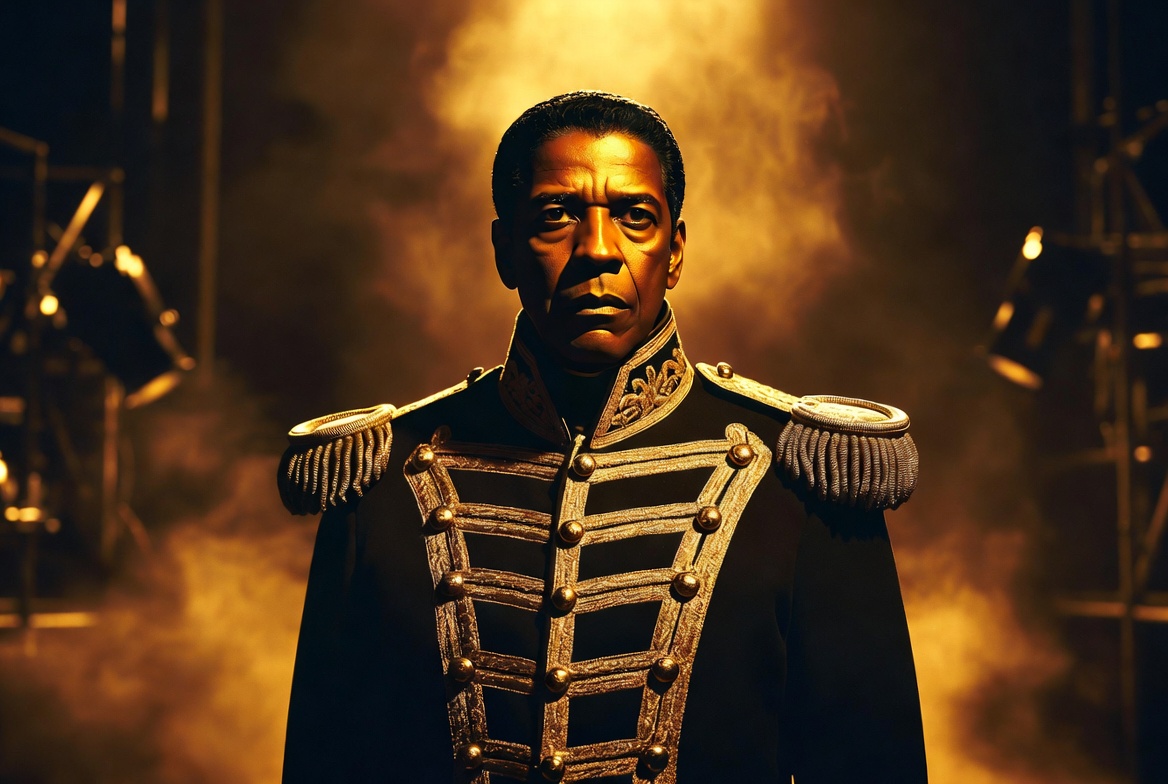
Denzel Washington brought decades of stage and screen authority to the title role. A Tony and multiple Oscar winner, Washington has a storied history with Shakespeare, including earlier performances of Othello in college and acclaimed turns in Julius Caesar and Much Ado About Nothing on film and stage.
His Othello emphasized quiet command and simmering vulnerability. Washington’s rich, measured delivery highlighted the character’s eloquence and leadership while revealing cracks caused by self-doubt and societal prejudice. Critics noted his silky command of the verse, though some felt the production’s pacing occasionally limited deeper emotional peaks in the later acts.
Washington’s portrayal resonated particularly on themes of otherness. As a Black actor playing the Moor in a high-visibility production, he brought lived gravitas to lines about his “sooty bosom” and outsider status in Venetian society. His chemistry with Molly Osborne’s Desdemona conveyed genuine tenderness before Iago’s poison took hold, making the tragedy’s descent all the more heartbreaking.
Jake Gyllenhaal’s Riveting Iago – The Standout Performance
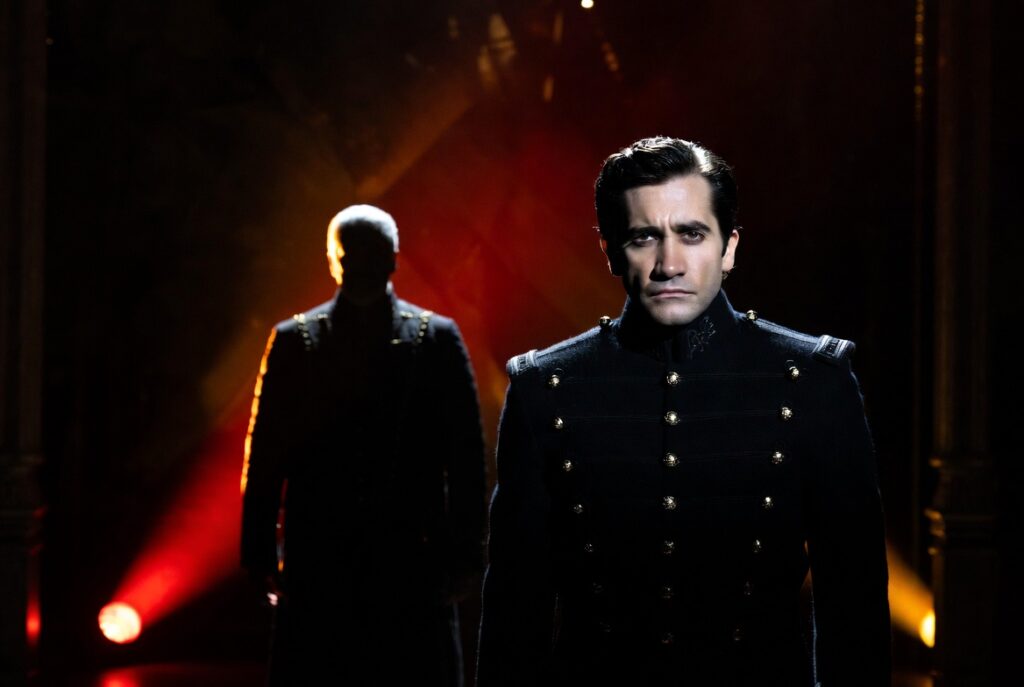
If Denzel Washington provided noble gravitas, Jake Gyllenhaal delivered explosive, magnetic villainy that many critics and audiences hailed as the production’s highlight. Gyllenhaal, making his Shakespearean debut on stage, transformed Iago into a contemporary, dangerously relatable figure—charismatic, bro-like, physically agile, and psychologically unhinged.
Iago ranks among Shakespeare’s most demanding roles: he speaks more lines than Othello and must sustain audience complicity through direct-address soliloquies while hiding his malice from other characters. Gyllenhaal excelled here. He bounded across the stage with loose-limbed energy, confiding in the audience like a mischievous friend sharing secrets. His delivery blended modern conversational cadence with razor-sharp verse, making the language accessible without losing poetic force.
Reviewers repeatedly praised Gyllenhaal for “stealing the show.” His Iago felt like a malignant narcissist or modern influencer—funny at times, menacing at others, and utterly convincing in his manipulations. Physicality stood out: mocking gestures, intense eye contact, and a shaved-head, military-buffed appearance that conveyed both discipline and volatility. Many compared it favorably to past great Iagos, noting its fresh, energetic take.
Gyllenhaal’s preparation reportedly spanned a full year of intense study. His performance underscored Iago’s mystery: Is he motivated purely by resentment over the promotion, or deeper envy and sociopathy? By leaving some questions unanswered while making the character viscerally real, Gyllenhaal captured the role’s enduring fascination.
Supporting Cast and Ensemble Excellence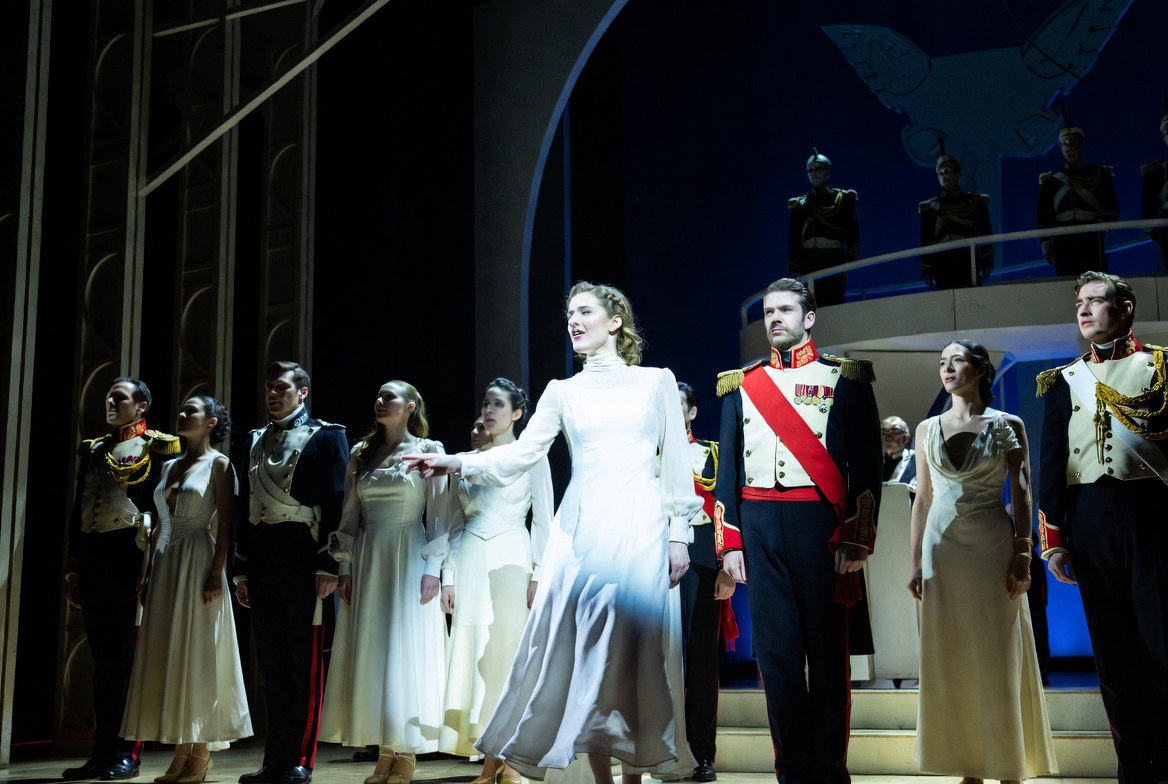
While the spotlight naturally fell on the two leads, the supporting ensemble provided crucial depth and balance to Kenny Leon’s production. Molly Osborne’s Desdemona stood out as a fresh, modern interpretation—warm, intelligent, and resilient rather than purely innocent or passive. Her chemistry with Washington conveyed authentic affection and mutual respect, making Othello’s later descent into jealous rage more devastating. Osborne brought clarity and emotional honesty to the role, particularly in the willow song scene and her final moments.
Andrew Burnap portrayed Cassio with youthful ambition and likability, making Iago’s framing of him believable. Kimber Elayne Sprawl as Emilia delivered a powerful, grounded performance, culminating in her explosive confrontation with Iago in the final act—one of the production’s most cathartic moments. Other notable contributions came from Anthony Michael Lopez as Roderigo, Neal Bledsoe as the Duke, and Ezra Knight as Montano, all helping flesh out the military and Venetian world.
The ensemble’s tight coordination, especially in the Cyprus scenes and battle transitions, reinforced the play’s themes of hierarchy, loyalty, and fragile alliances. Their work grounded the star turns in a believable world, preventing the production from becoming merely a celebrity showcase.
Modern Twists and Directorial Choices in Kenny Leon’s Production
Kenny Leon placed the action in a sleek “near future” military setting, signaled by a simple projection at the start. Derek McLane’s set featured imposing gray columns and minimalist architecture that evoked both classical authority and futuristic austerity. Costumes by Dede Ayite blended contemporary military uniforms with elegant civilian attire, while Natasha Katz’s lighting created sharp contrasts that mirrored the play’s themes of light versus darkness, truth versus deception.
This approach avoided heavy sci-fi elements, focusing instead on timeless power structures. Leon emphasized the military culture—ranks, promotions, and masculine bonding—which made Iago’s resentment over being passed over for lieutenant feel immediate and relatable. The staging allowed for dynamic movement, with Gyllenhaal frequently breaking the fourth wall to confide in the audience, heightening the sense of complicity in the tragedy.
Critics offered mixed assessments of these choices. Many praised the accessibility and energy, but some felt the production lacked a deeper unifying concept or emotional cohesion in the later acts. The fast-paced direction kept the 2-hour-35-minute runtime (including intermission) engaging, though it occasionally sacrificed poetic nuance for momentum.
Why This Othello Matters: Themes in Today’s World
This revival arrived at a moment when questions of trust, misinformation, racial dynamics, and leadership failures dominate public discourse. Iago’s manipulation tactics—planting “evidence,” exploiting insecurities, and gaslighting—mirror how false narratives spread on social media and in polarized environments. Othello’s tragic flaw, his willingness to trust Iago over his own wife, serves as a cautionary tale about confirmation bias and the fragility of relationships under pressure.
The production highlighted issues of otherness and belonging. Washington’s Othello embodied the accomplished outsider who still faces subtle (and overt) prejudice, resonating in discussions around diversity in leadership and institutions. Gyllenhaal’s Iago represented a dangerous, charming insider who weaponizes systems for personal gain—echoing toxic workplace politics and populist resentment.
By bringing Shakespeare to mainstream audiences through star power, the production fulfilled an important cultural role: making classical theater accessible without diluting its complexity. It sparked conversations about jealousy in the digital age, the psychology of betrayal, and the enduring relevance of Elizabethan drama.
Audience and Critical Reception
Commercially, Othello Broadway Jake Gyllenhaal and Washington was an unqualified triumph. It shattered records with a $2.8 million preview week—the highest ever for a non-musical on Broadway—and ultimately grossed over $46 million across its limited run. Tickets routinely sold at premium prices, with orchestra seats reaching nearly $900–$1,000.
Critical reception was more divided. While Gyllenhaal’s Iago earned near-universal praise as magnetic, dangerous, and scene-stealing, some reviewers found Washington’s Othello less fiery than expected or felt the production as a whole lacked a bold interpretive stamp. Publications like The New York Times noted the reversal of expectations, with Gyllenhaal’s villain more legible and compelling. Others, including Variety and The Guardian, appreciated the star turns but critiqued the overall directorial vision.
Audience feedback was overwhelmingly positive, particularly from first-time Shakespeare viewers who cited Gyllenhaal’s energetic delivery and the production’s pace as key factors in their enjoyment. Celebrity attendance on opening night added to the buzz, cementing the show as a major 2025 cultural moment.
How to Experience Othello Today – Beyond Broadway
Although the Broadway run closed on June 8, 2025, the play’s impact continues. Official clips and behind-the-scenes footage remain available on platforms like YouTube and the production’s social channels. No full professional recording has been released yet, but theater enthusiasts often share high-quality audience videos of key scenes.
For deeper engagement, I recommend reading the play alongside the experience. Excellent editions include the Folger Shakespeare Library version (with facing-page notes) or the Arden Shakespeare for scholarly depth. Listen to audio productions featuring notable casts while following the text.
Other standout adaptations include:
- Orson Welles’ 1952 film (expressionistic and haunting)
- The 1995 film with Laurence Fishburne and Kenneth Branagh
- Recent stage versions with Chiwetel Ejiofor or David Oyelowo
Local theaters worldwide frequently mount Othello. Universities and community groups offer fresh perspectives, often with diverse casting that enriches the racial themes.
Expert Insights and Analysis
As someone who has studied and taught Shakespeare for years, I find Iago one of the most fascinating characters in the canon precisely because his motives remain partially opaque. Coleridge’s famous description of “the motive-hunting of motiveless malignity” still holds. Gyllenhaal captured this ambiguity brilliantly—hinting at class resentment, sexual jealousy, and sheer sociopathic pleasure without over-explaining.
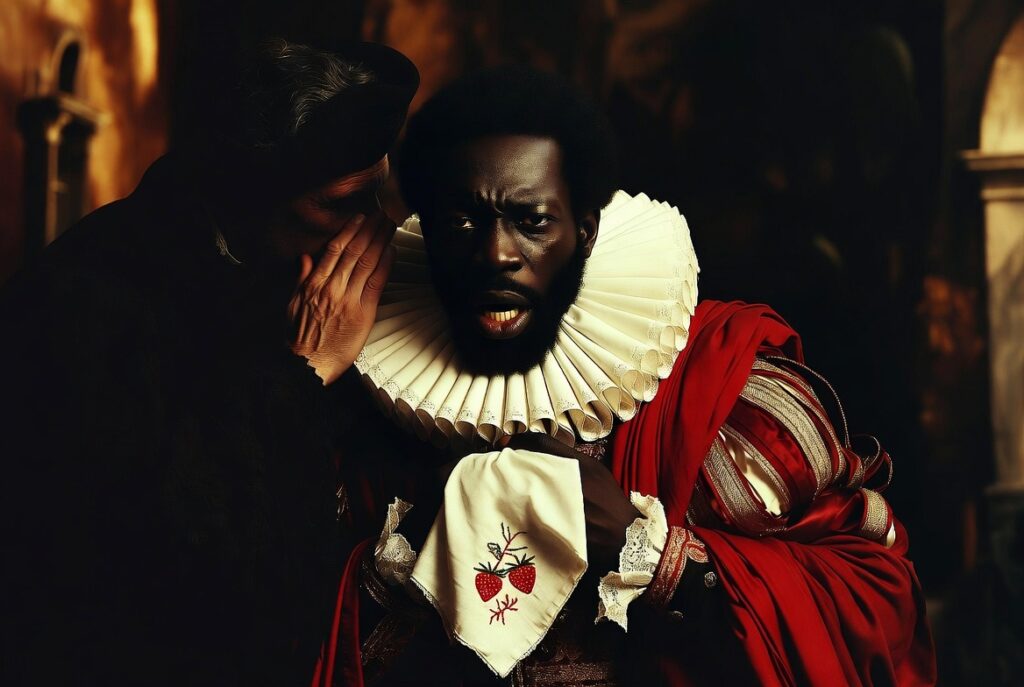
Washington’s performance highlighted Othello’s rhetorical power and internal conflict. The handkerchief scene, a pivotal moment, showcased how seemingly trivial objects can become catalysts for tragedy when fueled by doubt.
Historically, the character of the Moor reflected Elizabethan anxieties about race, empire, and conversion. Modern productions like this one use that context to interrogate contemporary identity politics without reducing the play to a single message.
Practical Tips for Theater Lovers
- Prepare strategically: Read Acts 1–2 beforehand to understand relationships. Watch a 5–10 minute summary video if new to the play.
- Focus on key moments: Pay special attention to Iago’s soliloquies (“I hate the Moor”), the temptation scene (Act 3, Scene 3), and Emilia’s final speech.
- Appreciate verse: Notice shifts from verse to prose—Gyllenhaal used these for intimacy with the audience.
- Budget access: Look for lottery/rush tickets for future revivals, or consider regional productions which often cost far less while delivering strong interpretations.
- Discuss afterward: Join or form a post-show discussion group—Othello sparks rich conversations on trust and manipulation.
The 2025 Broadway revival of Othello, headlined by Othello Broadway Jake Gyllenhaal and Denzel Washington, delivered a high-voltage theatrical experience that blended star power with Shakespeare’s profound exploration of human darkness. Gyllenhaal’s riveting, charismatic Iago emerged as the production’s standout achievement, reminding us why this villain continues to captivate audiences centuries later.
While the run has ended, its legacy endures through renewed interest in the play and the power of live theater to illuminate timeless truths. Whether you’re a seasoned Shakespeare scholar or a curious newcomer drawn by the names on the marquee, Othello offers essential lessons about the dangers of unchecked jealousy and the importance of clear-eyed trust.
I encourage you to pick up the text, watch available clips, or seek out a local production. Shakespeare’s works thrive when actively engaged with—and this star-studded revival proved they can still fill theaters and spark conversation in the 21st century.
FAQs
Who played Iago in the 2025 Broadway Othello? Jake Gyllenhaal delivered a critically acclaimed performance as Iago.
Is Denzel Washington’s Othello worth seeing? Yes, especially for the chance to see two major stars in a classic tragedy. While reviews were mixed on the overall production, Washington’s commanding presence and Gyllenhaal’s dynamic Iago made it a memorable event.
What is the runtime of the production? Approximately 2 hours and 35 minutes, including one intermission.
How does Jake Gyllenhaal’s Iago compare to previous performances? Many critics called it one of the most energetic and accessible recent interpretations, praising its physicality and direct audience engagement.
When did the Broadway Othello with Gyllenhaal close? June 8, 2025, at the Ethel Barrymore Theatre.
Where can I watch the 2025 Othello production? No full recording is currently available, but clips and highlights can be found online.
What makes this Othello production different? Its “near future” military setting, star casting, and emphasis on psychological manipulation in a modern context.
Is Othello suitable for first-time Shakespeare viewers? Absolutely. The clear storytelling, strong performances, and universal themes make it one of the most accessible Shakespeare tragedies.