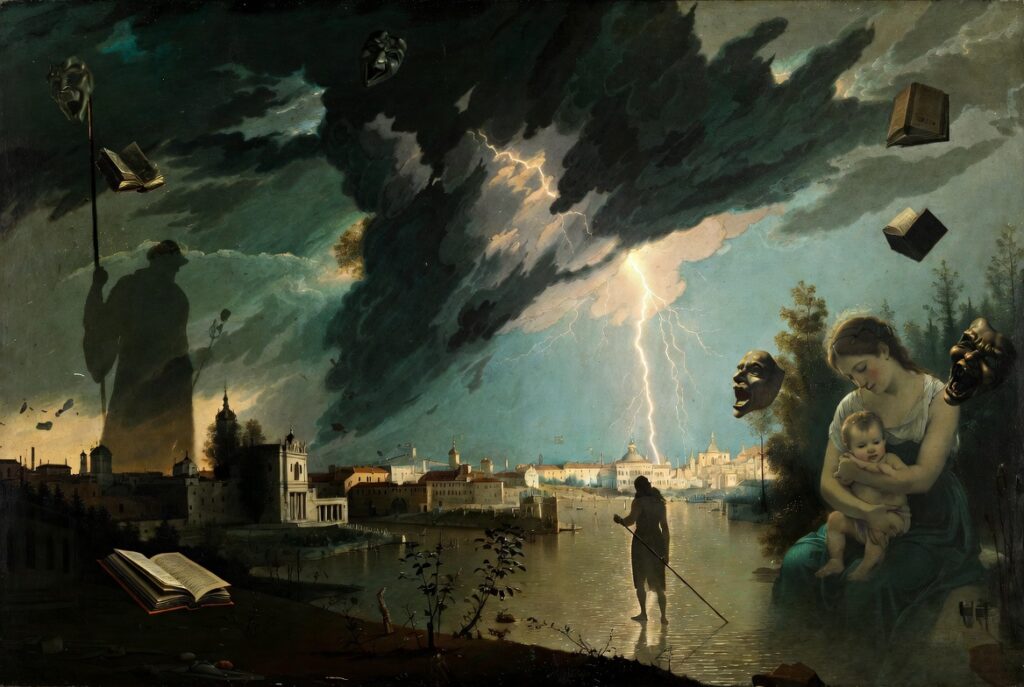
Imagine standing before a painting where the sky cracks open with a jagged bolt of lightning, illuminating a world suspended between calm and chaos. In the foreground, a mysterious man leans on a staff, gazing across a river at a nearly nude woman nursing her child. Ruined columns stand sentinel, a distant city glows under stormy clouds, and an eerie silence pervades despite the tempest. This is Giorgione’s La Tempesta (The Tempest), one of the most enigmatic masterpieces of the Italian Renaissance.
The Tempest Giorgione continues to captivate art lovers and literary enthusiasts alike more than five centuries later. Painted around 1506–1508, this oil-on-canvas work (now housed in Venice’s Gallerie dell’Accademia) shares its evocative title with William Shakespeare’s final solo play, written around 1611. While no direct historical connection links the two, their shared imagery of storms, human vulnerability, transformation, and renewal invites a profound cross-disciplinary exploration.
For readers seeking to understand Giorgione’s mysterious painting while enriching their appreciation of Shakespeare’s The Tempest, this article delves deep. It examines the painting’s history, symbolism, competing interpretations, and resonant themes with Shakespeare’s late romance. By the end, you’ll gain fresh insights that enhance your experience of both Renaissance masterpieces—whether you’re a literature student, art history buff, or simply curious about enduring cultural mysteries.
Who Was Giorgione? The Enigmatic Genius of Venetian Renaissance
Giorgione, born Giorgio Barbarelli da Castelfranco around 1477–1478 in Castelfranco Veneto, remains one of the most elusive figures in art history. He died young, possibly of the plague in 1510, leaving behind only a handful of definitively attributed works. Yet his influence on the Venetian School—and on later masters like Titian—was immense.
Trained likely in the workshop of Giovanni Bellini, Giorgione revolutionized Venetian painting. He moved away from the precise, linear style of Florentine artists toward a softer, more atmospheric approach using oil glazes to create luminous landscapes and emotional depth. His works often prioritize mood, color (colore), and poetic ambiguity over clear narrative—qualities that define The Tempest.
Giorgione’s patrons included wealthy Venetian nobles. The Tempest was likely commissioned by Gabriele Vendramin, a collector whose family inventory first documented it in 1530 via Marcantonio Michiel. Michiel described it poetically as “el paesetto in tela cum la tempesta, cum la cingana et soldato” (“a small landscape on canvas with a storm, with a gypsy and a soldier”). This early description already highlights the painting’s interpretive challenges.
His short life and limited output only amplify his mystique. With so few works surviving, each piece like The Tempest carries the weight of an entire artistic philosophy: one that values suggestion over explicit meaning.
A Detailed Visual Analysis of Giorgione’s The Tempest
Composition and Technique
Measuring approximately 83 cm × 73 cm, The Tempest is an intimate yet monumental work. Giorgione painted it on canvas using oil, allowing for rich layering and subtle transitions. The composition divides naturally: the stormy sky and lightning dominate the upper half, while the foreground figures and river anchor the lower portion.
A key innovation is the painting’s emphasis on landscape. Often cited as one of the first true landscape paintings in Western art, the natural setting is not mere backdrop but a central character. The distant city with towers, the winding river, and lush greenery create a poetic, almost dreamlike space. The lightning bolt—frozen in time—splits the sky dramatically but does not seem to disturb the figures below, adding to the scene’s surreal tension.
Key Symbolic Elements
- The Storm and Lightning: The defining feature, evoking divine wrath, sudden change, or nature’s uncontrollable power.
- The Male Figure: Often called a soldier or shepherd, he stands relaxed yet watchful, holding a long staff. X-rays reveal he was painted over an earlier female nude figure (a pentimento), suggesting Giorgione evolved the composition.
- The Nursing Woman: Partially nude, she sits serenely breastfeeding an infant. Her calm demeanor contrasts sharply with the storm.
- Architectural Ruins and Bridge: Broken columns in the foreground may symbolize classical antiquity, fragility of civilization, or moral fortitude.
- The Distant City: Possibly representing Venice, Paradise, or an idealized pastoral world.
Technical Insights from Conservation
Modern analysis, including X-rays and infrared reflectography, confirms changes during creation. These pentimenti underscore Giorgione’s experimental process, prioritizing artistic intuition over a fixed plan.
Decoding the Mysteries – Major Interpretations of The Tempest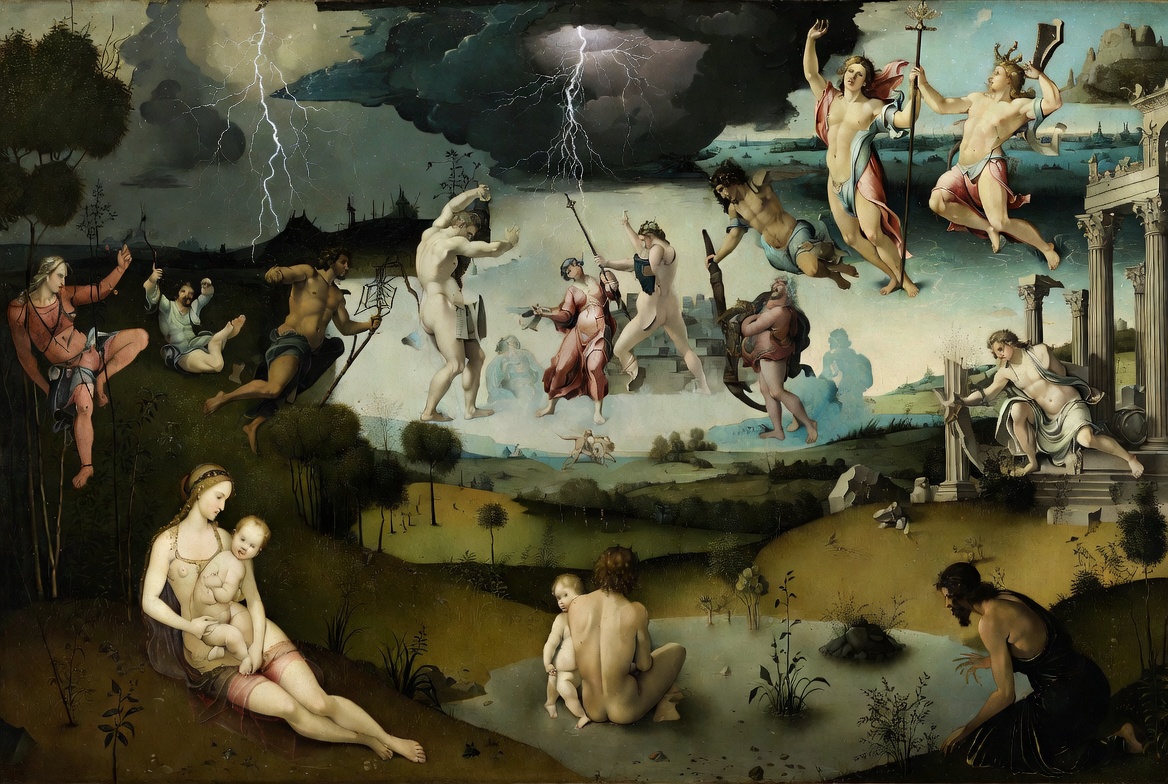
The Tempest has no contemporary explanation, leading to centuries of debate. Its intentional ambiguity may be its greatest strength.
Religious and Biblical Readings
One prominent theory, advanced by scholar Salvatore Settis, sees the painting as the Expulsion from Eden. The male and female figures represent Adam and Eve with their son Cain. The lightning symbolizes God’s judgment, and the ruined city stands for lost Paradise. Other religious views link it to the Rest on the Flight into Egypt.
Mythological and Classical Theories
Classical interpretations abound. Some see Paris and Oenone from Greek myth. Others propose Demeter and Iasion, with the lightning as Zeus’s thunderbolt. Rudolf Schier offered a Vergilian pastoral reading, connecting it to themes in Virgil’s Eclogues.
Allegorical and Political Interpretations
The painting may comment on Venetian politics during the turbulent League of Cambrai wars. The broken columns could represent Fortitude, the woman Charity, and the storm the vagaries of fortune. Family-specific readings tie it to the Vendramin lineage, possibly referencing Aeneas legends.
Modern Views: Intentional Ambiguity
Many contemporary scholars argue Giorgione deliberately created a “poetic” image without a single narrative. It functions like a visual impresa—evoking mood and multiple associations rather than telling one story. This aligns with Renaissance humanism’s celebration of complexity and individual interpretation.
Shakespeare’s The Tempest – Plot, Themes, and Historical Context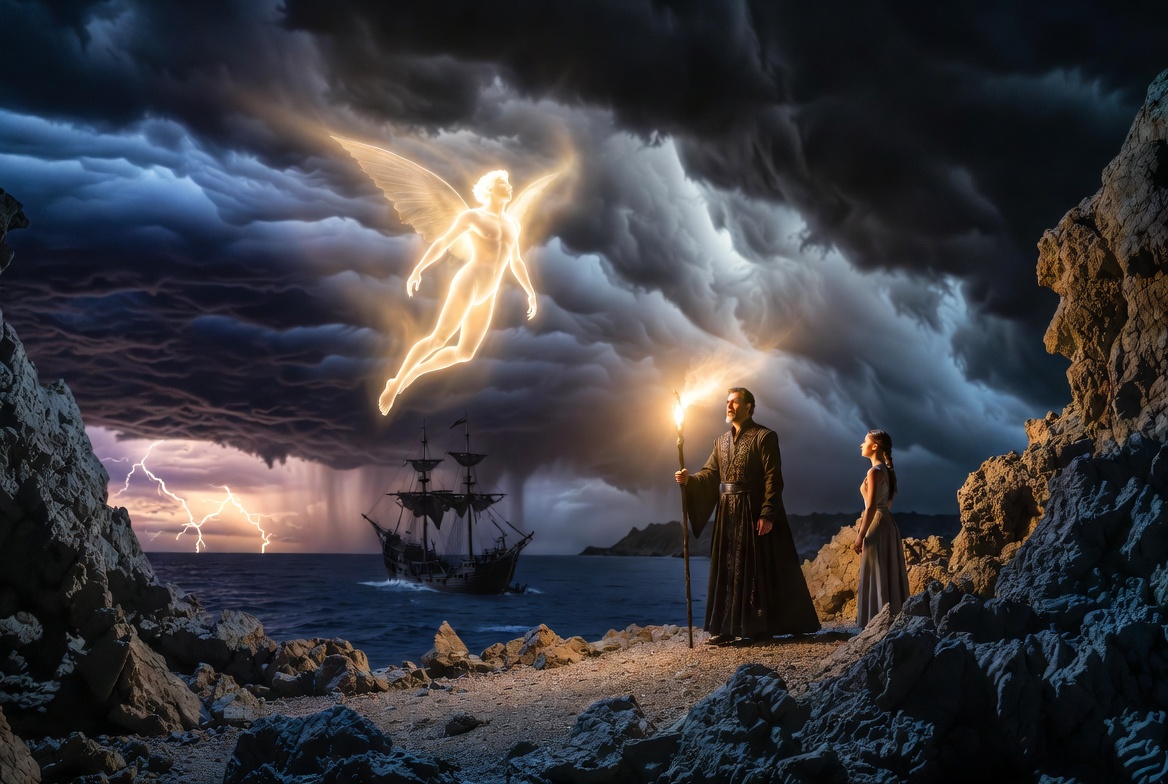
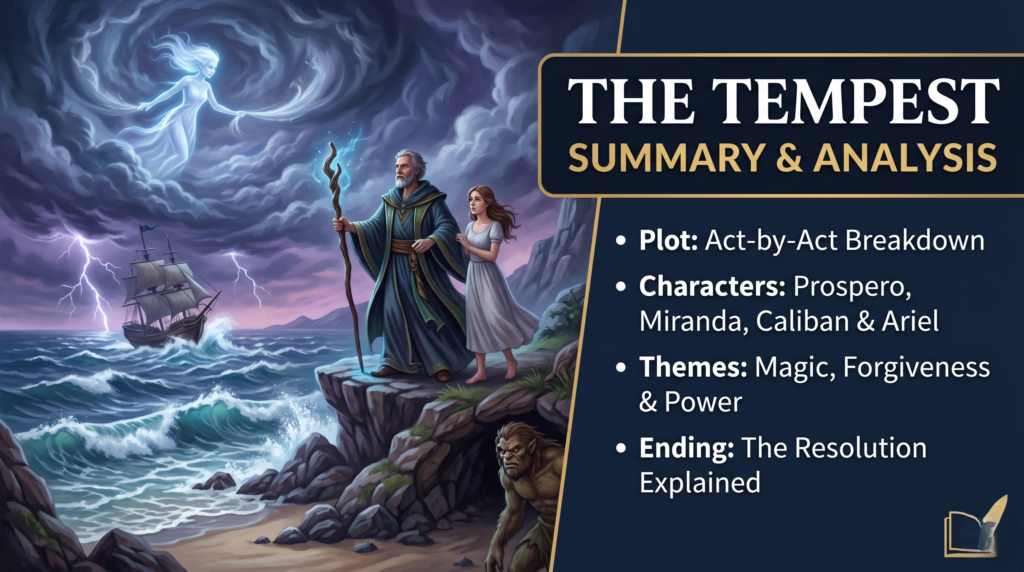
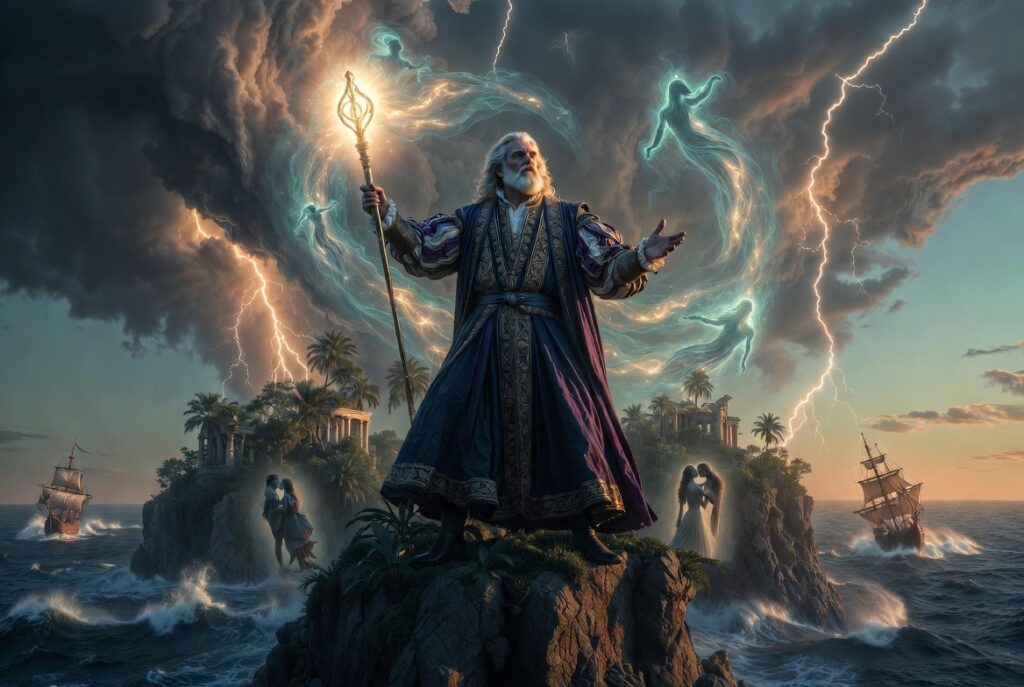
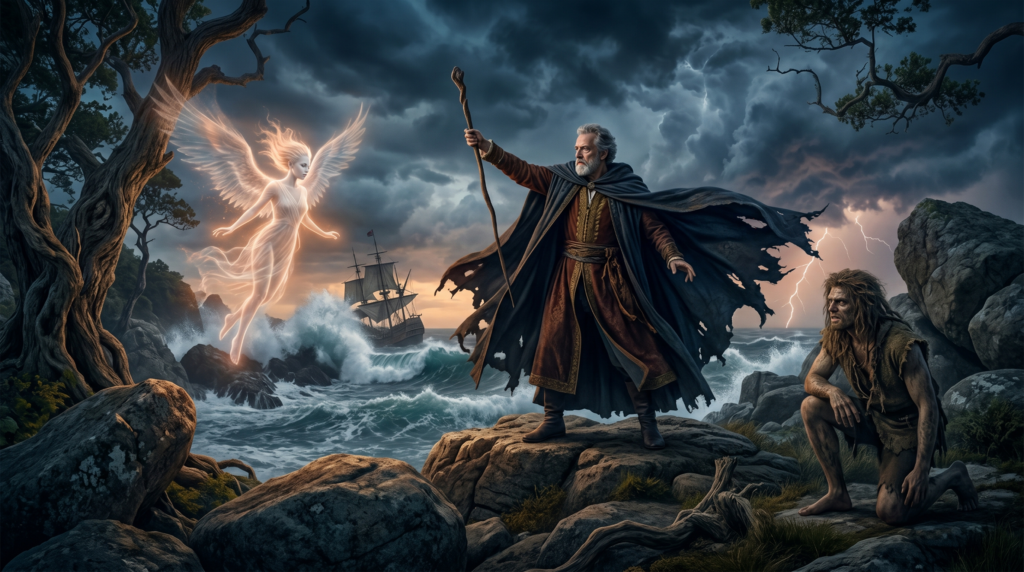
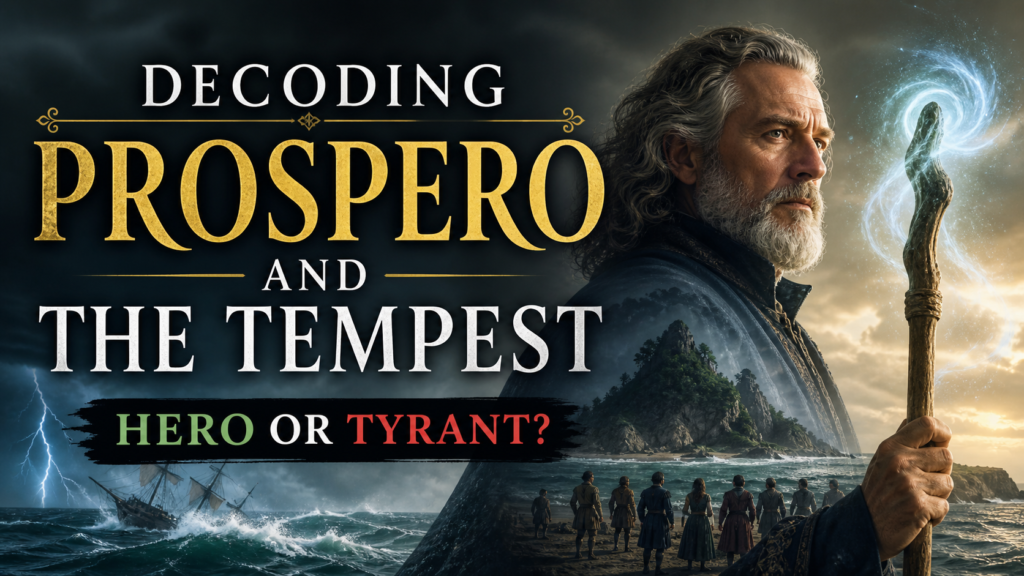
William Shakespeare’s The Tempest, believed to have been written in 1610–1611, stands as one of his most poetic and introspective works. Often regarded as the playwright’s farewell to the theater, it belongs to his late “romance” period, blending elements of comedy, tragedy, and fantasy. The play opens with a violent storm conjured by the magician Prospero, who uses his art to shipwreck his enemies on a remote Mediterranean island.
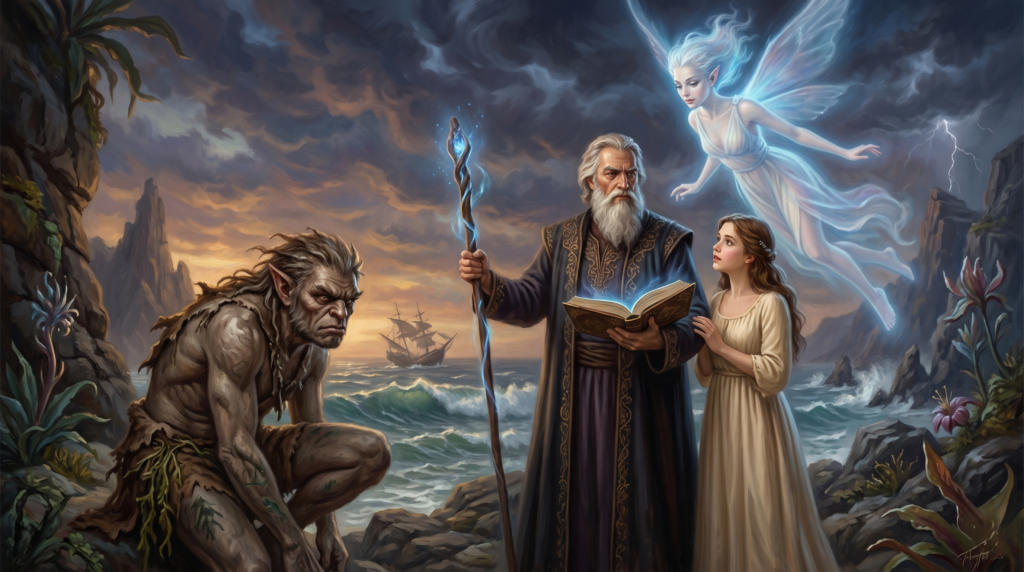
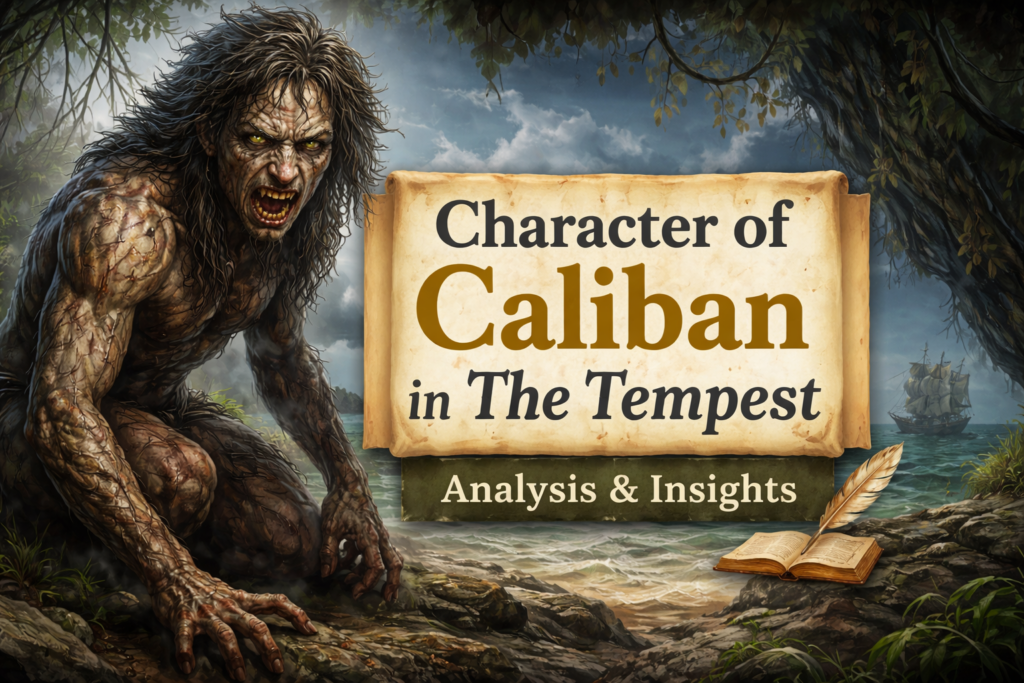
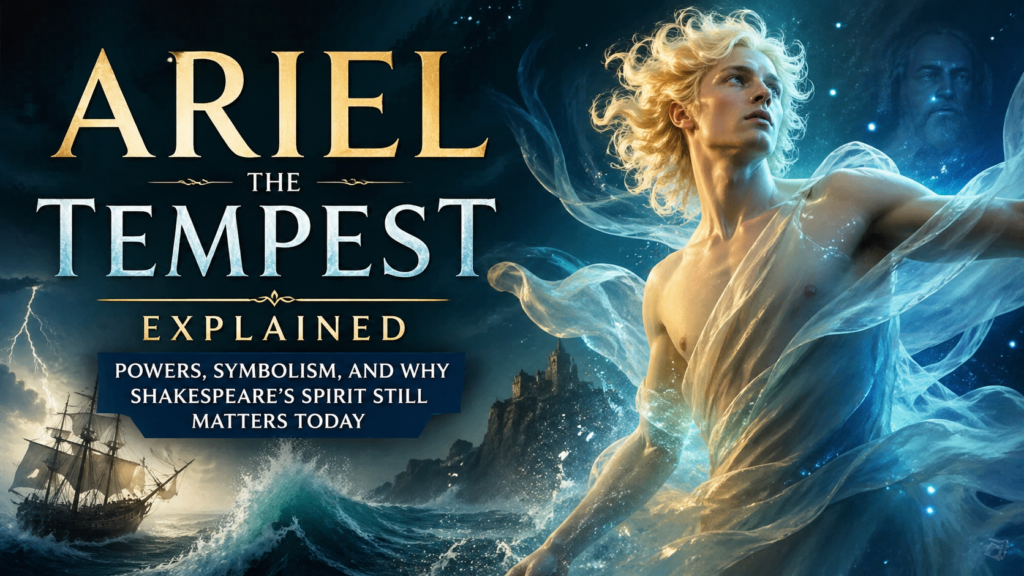
The central figure, Prospero—former Duke of Milan—has spent twelve years in exile with his daughter Miranda. With the help of the airy spirit Ariel and the enslaved Caliban, he orchestrates events leading to reconciliation, forgiveness, and restoration. The tempest serves not merely as a meteorological event but as a catalyst for transformation, exposing human ambition, power dynamics, and the possibility of redemption.
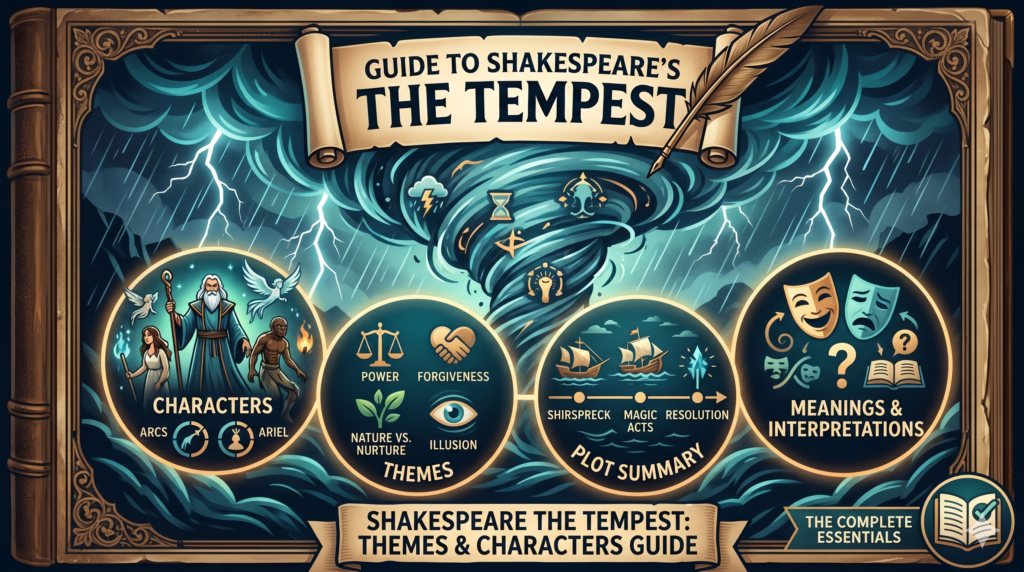
Key Themes in Shakespeare’s The Tempest
- The Power of Art and Magic: Prospero’s “rough magic” mirrors the creative act itself. Many scholars interpret him as a stand-in for Shakespeare, with the play reflecting on the illusion of theater and the artist’s role in shaping reality.
- Nature vs. Civilization: The island becomes a laboratory for exploring what it means to be human. Caliban represents the “natural” man, while Prospero embodies civilized (and colonizing) authority.
- Forgiveness and Reconciliation: Unlike earlier tragedies, The Tempest ends with mercy rather than vengeance, suggesting a mature reflection on aging and legacy.
- Colonialism and Power: Modern readings frequently examine the dynamics between Prospero and Caliban through the lens of European expansion and indigenous rights.
Written during the reign of King James I, amid growing English interest in exploration and the New World, the play draws from contemporary travel accounts such as those of the Sea Venture shipwreck in Bermuda. Its sophisticated blend of classical sources (Ovid, Virgil), court masques, and innovative stagecraft made it a landmark in English literature.
Parallels and Resonances Between Giorgione’s Painting and Shakespeare’s Play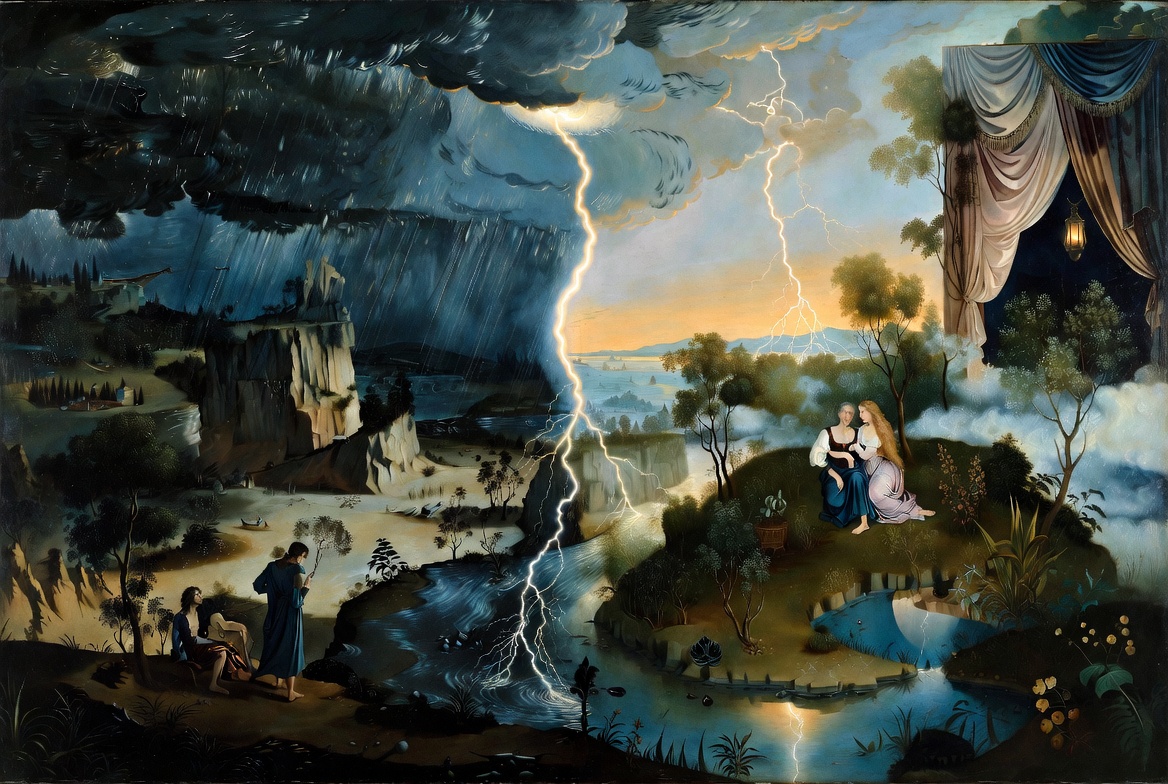
Though separated by roughly a century and created in different media and countries, Giorgione’s The Tempest and Shakespeare’s The Tempest share a remarkable spiritual kinship that transcends direct influence. Both works use the motif of the storm as a central dramatic force, inviting audiences to contemplate humanity’s relationship with nature, fate, and renewal.
The Power of the Storm
In Giorgione’s painting, the lightning bolt freezes a moment of atmospheric drama without destroying the serene foreground. Similarly, Shakespeare’s tempest is an orchestrated illusion—powerful yet ultimately controlled by Prospero’s benevolent intent. In both, the storm represents disruption that leads to clarity rather than mere destruction. It symbolizes the Renaissance fascination with nature’s sublime power and humanity’s vulnerability before it.
Enigmatic Human Figures in Nature
Giorgione’s mysterious male and female figures exist in ambiguous relationship, isolated yet connected within a lush landscape. This resonates with Shakespeare’s island inhabitants: Prospero and Miranda’s tender yet complex bond, the wild Caliban, and the ethereal Ariel. Both artworks place human characters within a dominant natural setting, questioning identity, belonging, and interpersonal dynamics amid uncertainty.
Themes of Renewal and Transformation
The calm after Giorgione’s storm suggests potential rebirth—the nursing child embodies hope and continuity. Shakespeare’s play similarly moves from chaos to harmony, culminating in betrothal, forgiveness, and Prospero’s return to Milan. Both works explore post-tempest regeneration, fertility, and the possibility of a better world emerging from turmoil.
Artistic Innovation and Ambiguity
Giorgione pioneered a poetic, mood-driven style that resists straightforward interpretation. Shakespeare’s The Tempest likewise breaks dramatic conventions, mixing genres and embracing meta-theatrical elements. This shared embrace of ambiguity reflects core Renaissance values: the celebration of individual interpretation, the limits of knowledge, and the beauty of mystery.
Renaissance Humanism and the Natural World
Both masterpieces embody humanistic ideals—blending classical learning, observation of nature, and spiritual inquiry. Giorgione’s atmospheric colore technique and Shakespeare’s lyrical verse both create immersive worlds where emotion and intellect intertwine.
Broader Renaissance Context – Art, Literature, and Cultural Shifts
The early 16th century in Venice and the early 17th century in England were periods of profound transition. Giorgione worked during Venice’s golden age of painting, characterized by a shift toward sensual color, light, and landscape over Florentine disegno (drawing). This Venetian emphasis on atmosphere and emotion finds literary echoes in Shakespeare’s rich imagery and psychological depth.
Political instability also links the two eras. Giorgione painted The Tempest amid the League of Cambrai wars threatening Venetian independence. Shakespeare composed his play during a time of Jacobean court intrigue, colonial ambition, and religious tension. In both contexts, the tempest motif captured societal anxieties while offering hope for harmony.
Giorgione profoundly influenced Titian, who completed some of his unfinished works and carried forward his poetic style. Shakespeare, an avid reader and theater practitioner, absorbed Renaissance visual culture indirectly through masques, pageants, and descriptions of Italian art circulating in England. The cross-pollination of ideas across Europe created a shared cultural language of wonder, magic, and human potential.
Why The Tempest Continues to Captivate Audiences Today
More than 500 years after Giorgione’s brushstrokes and 400 years after Shakespeare’s quill, these works remain powerfully relevant. In an era of climate anxiety, political turbulence, and rapid technological change, the storm metaphor feels strikingly contemporary.
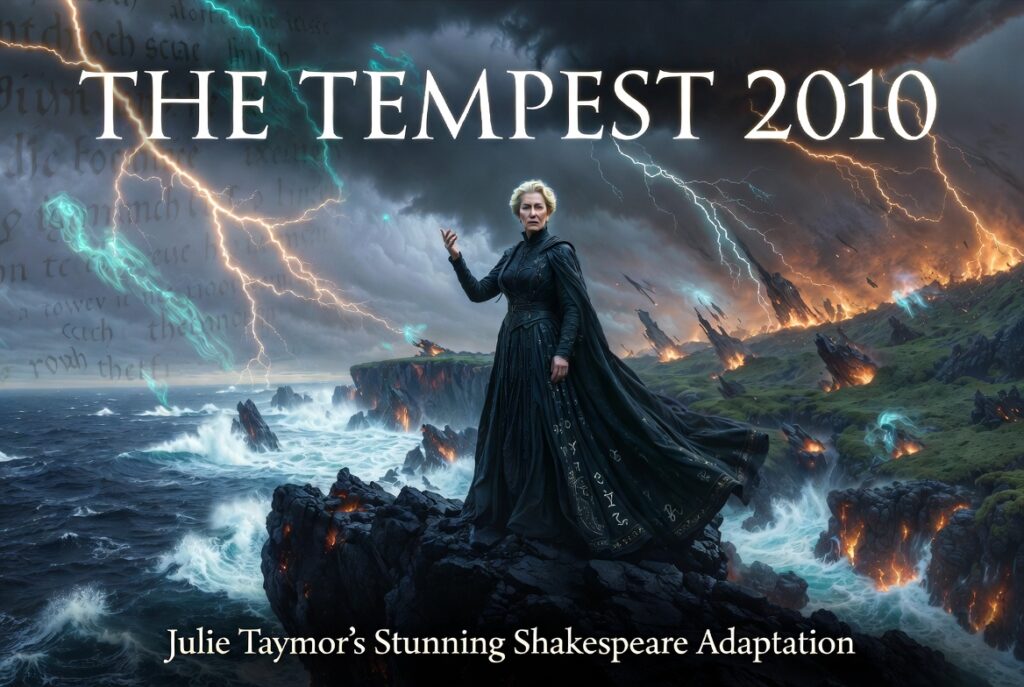
Modern adaptations—Julie Taymor’s film The Tempest, countless theater productions, psychological readings of Prospero’s journey, and art historical debates—demonstrate their enduring vitality. They invite us to confront ambiguity, practice forgiveness, and recognize art’s power to transform chaos into meaning.
For literature students, these parallels offer fresh analytical angles. For art enthusiasts, they deepen appreciation of Giorgione’s innovation. For general readers, they reveal how Renaissance masterpieces continue speaking to universal human experiences.
Expert Insights and Further Reading
Art historian Salvatore Settis argues compellingly for a biblical framework, while others emphasize poetic openness. Literary scholars like Stephen Greenblatt highlight The Tempest’s engagement with emerging colonial discourses. These diverse expert perspectives enrich rather than resolve the mysteries, mirroring the works themselves.
Recommended Resources:
- Visit Giorgione’s La Tempesta at the Gallerie dell’Accademia in Venice.
- Read Frank Kermode’s Arden edition of The Tempest.
- Explore David Rosand’s writings on Venetian painting.
- View high-resolution digital images from major museum collections.
Giorgione’s The Tempest and Shakespeare’s The Tempest stand as twin peaks of Renaissance creativity—visually and dramatically evoking the power of nature, the mystery of human relationships, and the redemptive potential of art. While we may never unlock every secret of the painting or every intention behind the play, their resonance across time and medium offers profound satisfaction.
By exploring The Tempest Giorgione alongside Shakespeare’s masterpiece, we gain not only historical and artistic insight but also a deeper understanding of our own place within cycles of storm and calm. Both works ultimately affirm the transformative power of creativity and the enduring human capacity for wonder, forgiveness, and renewal.
What are your interpretations of these enigmatic masterpieces? Share your thoughts in the comments below, and explore more articles on Shakespeare’s plays and Renaissance art here on the site.
FAQs
What does Giorgione’s The Tempest mean? There is no single agreed meaning. Leading theories include biblical scenes (Adam and Eve), mythological allegories, or deliberate poetic ambiguity meant to evoke emotion rather than tell a specific story.
Is there a direct connection between Giorgione and Shakespeare? No documented direct link exists. The connection lies in thematic and atmospheric parallels rather than historical influence.
Where can I see the original painting? Giorgione’s La Tempesta resides in the Gallerie dell’Accademia in Venice, Italy.
What are the main themes in Shakespeare’s The Tempest? Key themes include forgiveness, the nature of art and illusion, power and colonialism, and reconciliation with nature and family.
Why is Giorgione’s painting so mysterious? Its lack of contemporary explanation, innovative composition, and ambiguous figures have puzzled viewers for over five centuries, making it a landmark of Renaissance innovation.