When modern film historians and theater students look back at the 1965 cinematic transfer of the National Theatre’s Othello, they are immediately confronted by a towering, deeply polarizing titan: Laurence Olivier. Olivier’s larger-than-life, culturally fraught performance as the Moor dominates nearly every retrospective essay and academic critique. Yet, look past the booming theatricality and controversial makeup, and you will find the production’s true emotional anchor. The enduring triumph of Maggie Smith in Othello lies in her extraordinarily quiet, devastatingly intelligent portrayal of Desdemona.
Directed by Stuart Burge as a near-direct visual capture of John Dexter’s legendary stage production, the 1965 film stands as a fascinating time capsule of mid-century British theater. For modern viewers, actors, and Shakespearean scholars, navigating this adaptation can feel like walking a tonal tightrope. How do we extract valuable lessons in stagecraft and character interpretation from a production laden with the historical baggage of its era?
The answer lies in studying Dame Maggie Smith. Earning her first Academy Award nomination for Best Supporting Actress, Smith achieved something revolutionary: she rescued Desdemona from centuries of theatrical tradition that painted her as a fragile, passive victim. By injecting the Venetian noblewoman with aristocratic grit, sharp intuition, and a profound mastery of blank verse, Smith established a definitive blueprint for the modern Shakespearean heroine. This is the anatomical breakdown of how she turned a notoriously difficult, tragic role into an absolute masterclass in subtle subversion.
The Historical Context: The National Theatre’s 1965 Production
To fully appreciate the mechanics of Maggie Smith’s performance, we must first understand the intense ecosystem out of which this production was born. In the early 1960s, the newly formed National Theatre Company at the Old Vic was the undisputed epicenter of global English-speaking theater. Under the formidable directorship of Laurence Olivier, the company assembled a generational roster of talent—a pressure cooker of ambition, classical rigor, and shifting acting methodologies.
From Stage to Screen: A Minimalist Vision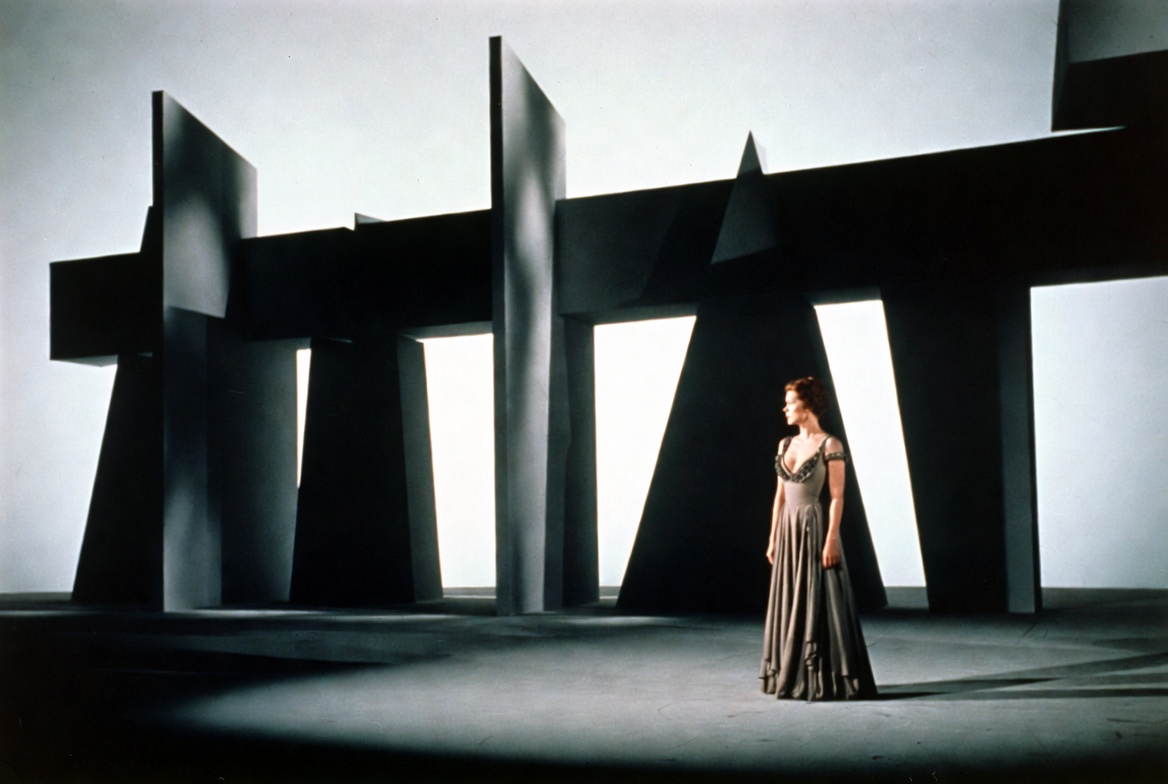
When Stuart Burge was tasked with bringing John Dexter’s 1964 stage triumph to the silver screen a year later, the decision was made to eschew traditional cinematic realism. There were no sweeping location shots of Venice or grand, wave-battered fortresses in Cyprus. Instead, the production utilized enlarged, slightly modified duplicates of Jocelyn Herbert’s original, minimalist stage sets inside the Panavision studios at Shepperton.
This hybrid “filmed theater” format created a unique challenge for the cast. The camera was placed squarely in the position of an ideal theatergoer sitting in the front rows of the Old Vic stalls. For a cinema audience, this stark lack of visual distraction meant there was nowhere for an actor to hide. Every micro-expression, every shift in physical posture, and every breath taken before a line of iambic pentameter was subjected to the microscopic scrutiny of the celluloid lens.
While some cast members struggled to scale down their booming, back-of-the-house stage projections for the microphones, Smith understood the intimacy of the medium instinctively. She operated within a hybrid technique—retaining the pristine vocal architecture required to fill a West End auditorium, while grounding her facial expressions in a naturalistic, cinematic reality.
The Fierce Professional Rivalry with Laurence Olivier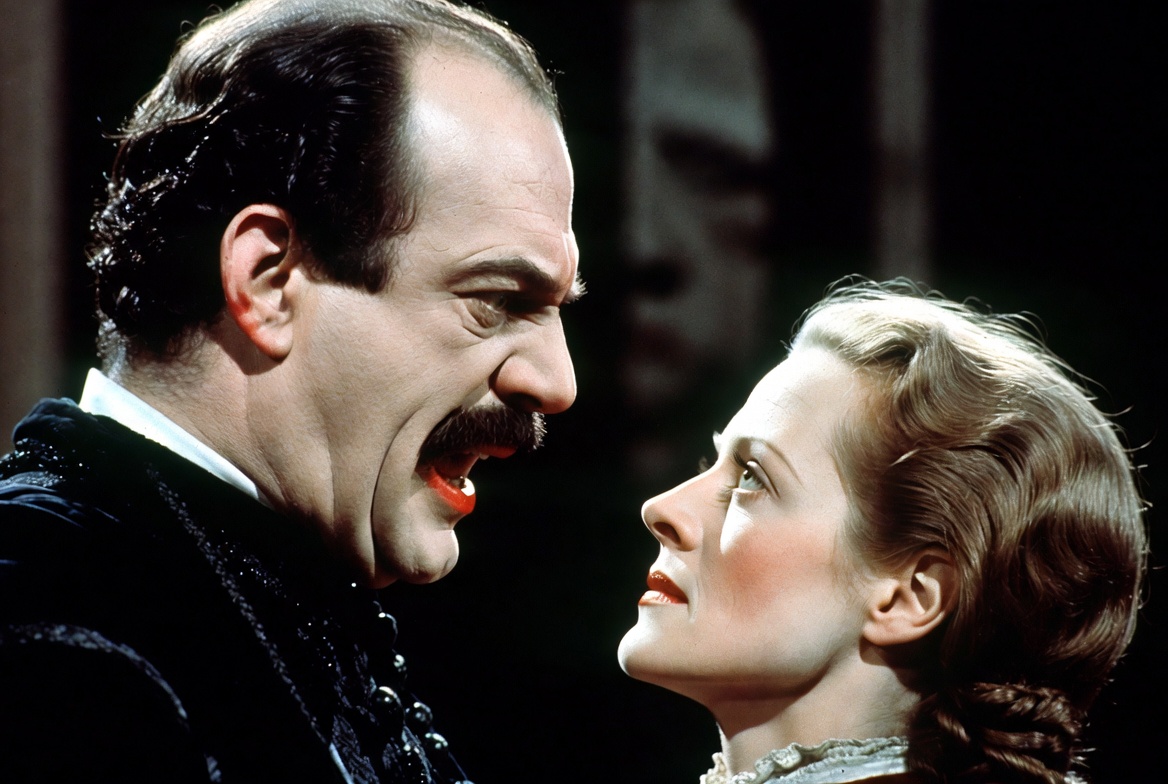
The crackling, high-stakes chemistry between Othello and Desdemona on screen was not merely the result of good acting; it was fueled by one of the most legendary backstage rivalries in British theatrical history.
Olivier had specifically recruited the young Maggie Smith to the National Theatre in 1962. At the time, she was primarily celebrated as a brilliant comedic actress and a star of West End revues. Olivier, possessing a shrewd directorial eye, recognized that the precise rhythmic timing required for high comedy is entirely transferable to the razor-sharp execution of Shakespearean tragedy. However, Olivier was also notorious for needing to completely dominate his stage partners. He anticipated a Desdemona who would play the delicate, yielding foil to his thunderous Moor.
He was sorely mistaken.
“Maggie had a formidable, steel-trap intelligence,” noted contemporary critics of the era. “She refused to be blown off the stage by Olivier’s hurricane.”
This dynamic came to a head during the stage run and spilled over into the film shoot. Olivier’s Othello was immensely physical, prone to sudden vocal eruptions and sweeping, predatory gestures. Rather than cowering or attempting to match his decibel level—a trap that would have made the domestic tragedy feel shrill—Smith dropped her energy down to a cool, crystalline center. The more Olivier roared, the more still Smith became. This real-life clash of acting philosophies transformed Othello and Desdemona’s marital dynamic from a simple tale of jealousy into a riveting chess match between two fiercely proud, unyielding intellects.
Analyzing Maggie Smith’s Desdemona: A Departure from Tradition
For centuries, theatrical orthodoxy dictated a remarkably uniform approach to Desdemona. From the Victorian era through the early 20th century, she was overwhelmingly portrayed as a delicate, porcelain saint—an angelic, naive waif whose primary dramatic function was to look extraordinarily pathetic while being wrongfully murdered. Smith dismantled this Victorian relic piece by piece.
Rejecting the “Passive Victim” Trope
Smith’s Desdemona is, first and foremost, a high-born Venetian aristocrat who knows her own mind. When we consider the text of Othello, this interpretation is not merely a modern feminist revisionism; it is deeply supported by Shakespeare’s actual writing. This is, after all, a young woman who deliberately defied her powerful father, Brabantio, rejected the standard arranged marriages of the Venetian elite, and eloped with a foreign military general. A shrinking violet does not execute that level of social rebellion.
Smith plays this inherent boldness with absolute conviction. Her Desdemona does not apologize for her love, nor does she tiptoe around the political realities of her marriage. Look at her physical carriage throughout the early acts: her spine is rigidly straight, her chin is held high, and she moves through the male-dominated military encampments of Cyprus with an effortless, commanding entitlement. She does not ask for space; she occupies it. When she advocates for the demoted Cassio (played by Derek Jacobi), she does not wheedle or beg like a submissive child. She debates Othello with the sharp, persuasive logic of a seasoned lawyer’s daughter, fully expecting her intellectual agency to be respected.
The Power of Subtlety Against Olivier’s Bombast
To watch the 1965 adaptation is to witness two entirely different centuries of acting theory colliding in real-time. Laurence Olivier represents the absolute pinnacle of the externalized, mid-century classical tradition—building a character from the outside in, utilizing elaborate vocal gymnastics, extreme prosthetic choices, and broad, demonstrative physicalization.
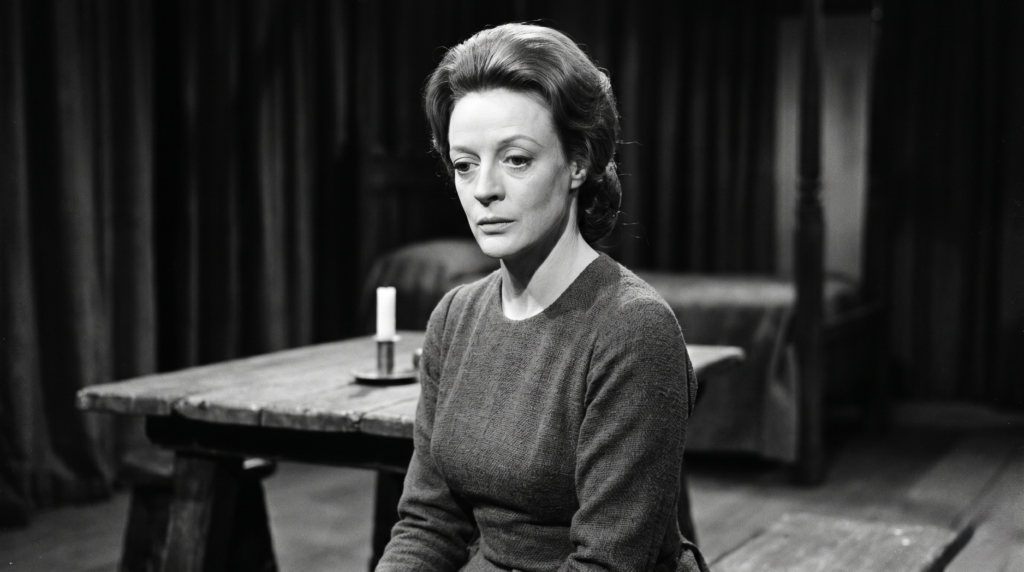
Smith, conversely, delivers a performance that feels shockingly modern. She relies heavily on internalized subtext. In scenes where Frank Finlay’s scheming Iago is quietly pouring poison into Othello’s ear, the camera frequently cuts to Smith in the periphery. Her silent reactions are an absolute masterclass in active listening. We see the exact moment a flicker of confusion registers in her large, expressive eyes, followed instantly by a calculated internal effort to rationalize her husband’s erratic behavior.
By internalizing her panic, Smith forces the audience to lean in. We are not watching a cardboard victim weeping over her bad luck; we are watching a profoundly rational woman desperately trying to solve a psychological puzzle that has no logical solution. Her restraint creates a powerful vacuum that draws all the genuine empathy in the room directly to her.
Mastering Shakespearean Verse
One of the greatest technical hurdles for any modern actor tackling Shakespeare is navigating the rigid structure of iambic pentameter without sounding like a metronome. Many contemporary performers over-correct by entirely ignoring the line endings, running the verse together to make it sound like gritty street slang.
Maggie Smith’s delivery strikes the ultimate, elusive balance: she respects the poetic architecture of the verse while imbuing it with entirely spontaneous, conversational thought. Her signature vocal timbre—a rich, slightly nasal contralto capable of turning on a dime from dry wit to aching vulnerability—was uniquely suited to the text.
Listen closely to her phrasing during her defense in the Senate scene. She utilizes Shakespeare’s caesuras (natural pauses within a line of verse) not as breathing breaks, but as active moments of intellectual processing. When she says, “My noble father, / I do perceive here a divided duty,” there is a minuscule, highly deliberate hesitation right before “divided duty.” In that fraction of a second, Smith shows the audience the character weighing the exact political and emotional weight of the words she is about to deploy. It is verse-speaking of the highest order: structurally flawless, entirely unpretentious, and aggressively alive.
Key Scenes That Define Smith’s Performance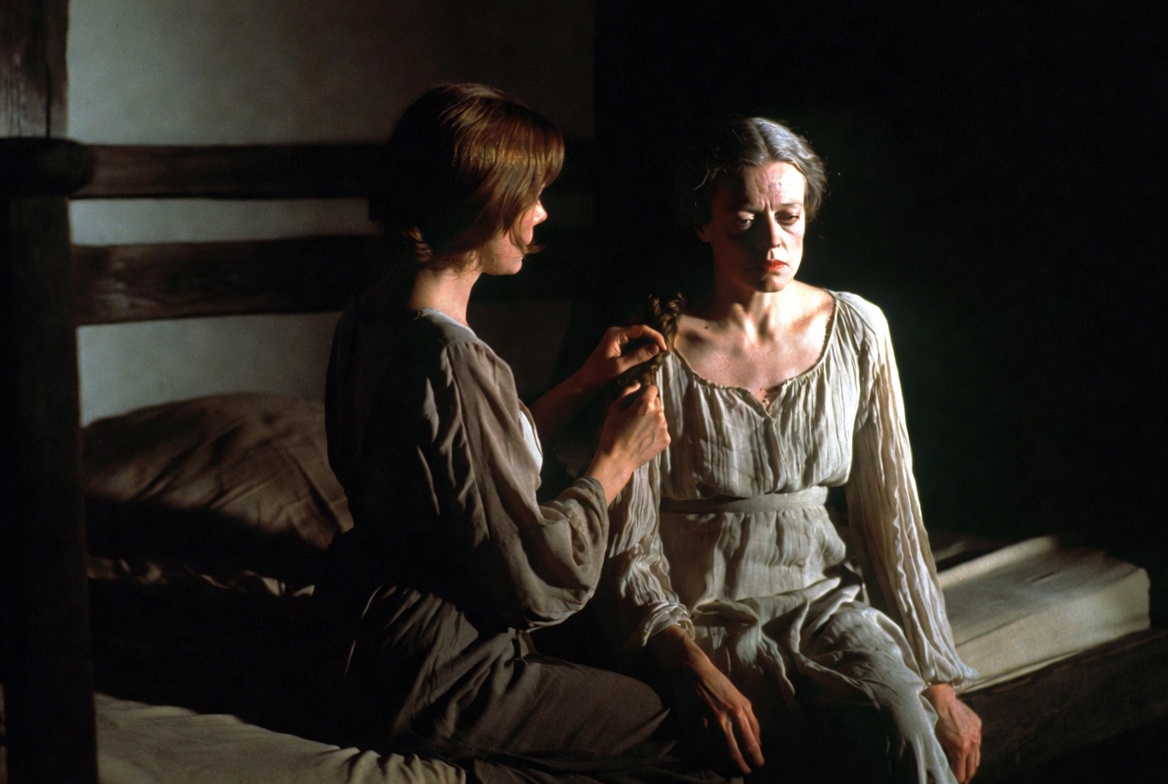
To truly grasp the magnitude of this interpretation, one must examine the specific textual moments where Maggie Smith elevated the character from the page to the screen. For literature and film students alike, a granular analysis of these scenes reveals the architectural brilliance of her acting choices.
The Senate Scene: Quiet Defiance (Act 1, Scene 3)
The audience’s first real introduction to Desdemona’s internal fortitude occurs in the Venetian Senate. She is summoned to testify regarding her elopement with Othello, standing before the Duke and her furious father, Brabantio. Traditionally, actresses have played this scene with trembling apprehension, seeking forgiveness for their disobedience.
Maggie Smith’s entrance, however, instantly commands the room. She balances a respectful tone toward her father with an unwavering, unbreakable loyalty to her new husband. Much like the transformative arc of Miranda in The Tempest—who evolves from a seemingly dutiful daughter into a figure of radical, independent agency—Smith’s Desdemona sheds the historical baggage of the wilting victim. When she delivers the line, “I do perceive here a divided duty,” she does not plead; she states a factual, mature realization of her new place in the world. She looks directly at the men of power surrounding her, demonstrating an intellectual equality that makes her subsequent fall all the more harrowing.
The Willow Song: Foreshadowing and Pathos (Act 4, Scene 3)
As Othello’s jealousy, expertly manipulated by Frank Finlay’s sinister, deeply understated Iago, reaches its boiling point, the tone of the play shifts into profound claustrophobia. Act 4, Scene 3—the famous “Willow Scene”—is the emotional fulcrum for Desdemona. Preparing for bed, she speaks with her maid, Emilia (played with earthy brilliance by Joyce Redman).
This scene is a masterclass in pacing and pathos. Smith infuses the haunting melancholy of the Willow Song with a chilling sense of foreshadowing, yet she never succumbs to hysterics. She portrays a woman actively trying to make sense of her husband’s sudden cruelty, coming to terms with an impending doom without sacrificing her dignity. Unlike Ophelia in Hamlet, who descends into isolated madness under the crushing weight of patriarchal control, Desdemona anchors her final hours in the shared, grounded solidarity of another woman. The intimate, hushed dynamic between Smith and Redman creates a fleeting sanctuary of female understanding in a play dominated by toxic masculinity and military aggression.
The Death Scene: A Fight for Life (Act 5, Scene 2)
If there is one scene that definitively separates Maggie Smith’s Desdemona from her predecessors, it is the climax in the bedchamber. When Othello arrives to execute his twisted vision of justice, Desdemona’s realization of his intent is devastating.
Historically, this murder was often staged as a ritualistic sacrifice, with Desdemona offering little resistance, dying as a pure, silent martyr. Smith completely rejects this passive martyrdom. When she realizes Othello intends to kill her, her Desdemona fights back with visceral, terrifying desperation. She struggles, she claws, and she uses every ounce of breath to plead for her life, her voice cracking with sheer terror. By making her fight fiercely for her survival, Smith removes the romanticized veneer of the tragedy. It is ugly, brutal, and deeply human, ensuring the audience feels the full, horrific weight of Othello’s crime.
The Elephant in the Room: Acting Alongside a Controversial Othello
No contemporary analysis of the 1965 Othello can, or should, avoid the undeniable elephant in the room: Laurence Olivier’s use of blackface to portray the Moor. For modern audiences, this deeply offensive and archaic theatrical tradition presents a massive, often insurmountable barrier to viewing the film. The exaggerated makeup, deepened voice, and adopted mannerisms read today as a painful caricature rather than a character study.
However, viewing the film through an academic lens requires acknowledging this troubling element while recognizing how the surrounding performances function. In many ways, Maggie Smith’s grounded, deeply human performance acts as the necessary tether for the audience. Without her absolute commitment to the emotional reality of the text, Olivier’s eccentricities would completely capsize the production. She is the anchor that prevents the film from floating away into pure theatrical camp. For those studying the evolution of Shakespearean performance, Smith’s work makes the film a watchable, emotionally resonant document despite its severely dated and controversial core.
Maggie Smith’s Legacy in Shakespearean Cinema
The impact of Maggie Smith’s work in Othello extended far beyond the stage run and the initial theatrical release of the film. It cemented her reputation not just as a gifted comedienne, but as one of the premier dramatic actresses of her generation.
The 1966 Academy Award Nominations
The sheer powerhouse nature of the acting in this adaptation is immortalized in Academy Award history. The 1965 Othello holds a unique, historic distinction: it is the only Shakespearean film adaptation where all four principal actors—Laurence Olivier (Best Actor), Maggie Smith (Best Supporting Actress), Frank Finlay (Best Supporting Actor), and Joyce Redman (Best Supporting Actress)—were nominated for Oscars in the same year. While Smith ultimately lost the award to Shelley Winters (A Patch of Blue), the nomination served as international validation of her groundbreaking classical work.
Setting the Blueprint for Modern Desdemonas
Smith permanently altered how subsequent directors and actresses viewed Desdemona’s agency. Just as modern interpretations of Antony and Cleopatra have successfully shifted the focus from Cleopatra’s mere vanity to her formidable political intellect, Smith’s performance permanently shifted the critical lens on the heroine of Venice. Actresses like Irène Jacob (in the 1995 film adaptation starring Laurence Fishburne) and countless modern stage performers owe a direct debt to the intellectual rigor Smith brought to the role. She proved that goodness in a Shakespearean heroine does not equate to weakness, and that true tragedy requires the destruction of a strong, vibrant spirit.
Expert Tips for Studying This Adaptation
For students, educators, and literary enthusiasts analyzing this film, here are a few expert methods to unpack the layers of this production:
-
Focus on the Eyes (Active Listening): The true genius of screen acting often lies in listening. Watch Smith’s silent reactions while Othello or Iago commands the dialogue. Her eyes constantly process information, revealing the internal mechanics of her thought process. It is a masterclass in remaining present in a scene even without spoken lines.
-
Compare the Pacing: Pay strict attention to the contrasting rhythms of the cast. Note the frantic, calculated speed of Finlay’s Iago, the sweeping, elongated vowels of Olivier’s Othello, and the precise, conversational naturalism of Smith’s Desdemona. These rhythmic choices define their psychological states.
-
Read Along with the Text: Keep a copy of the play open, particularly during Act 4, Scene 3 (the Willow Scene). By reading the text as she speaks it, you can observe exactly where she chooses to breathe, how she handles the enjambment (line breaks), and how she utilizes punctuation to drive the emotional truth of the moment.
Frequently Asked Questions (FAQs)
Did Maggie Smith win an Oscar for Othello? No, while she delivered a performance worthy of the prize, she did not win. She was nominated for Best Supporting Actress at the 1966 Academy Awards but lost to Shelley Winters. Smith would go on to win her first Academy Award a few years later for The Prime of Miss Jean Brodie (1969).
How old was Maggie Smith in Othello? Maggie Smith was born in December 1934. During the original National Theatre stage run in 1964 and the subsequent filming in 1965, she was around 30 years old, bringing a perfect blend of youthful vitality and mature poise to the role.
Why is the 1965 Othello controversial today? The controversy stems entirely from Laurence Olivier’s decision to perform the role of Othello in blackface. Even in the 1960s, the choice drew some criticism, but by modern standards, it is widely condemned as an offensive relic of a racially insensitive theatrical era, making the film difficult for contemporary audiences to watch.
The 1965 cinematic capture of the National Theatre’s Othello remains a deeply complex artifact of its time. It forces us to confront uncomfortable theatrical histories while simultaneously preserving moments of unalloyed acting genius. While the production around her swirls with controversy and stylized excess, Maggie Smith’s Desdemona remains absolutely flawless. She dismantled centuries of theatrical tradition that demanded female passivity, offering instead a heroine of immense intellect, courage, and devastating vulnerability.
Her performance continues to serve as an essential textbook for any actor braving the demands of Shakespearean verse and remains a profound reminder of why these 400-year-old texts still possess the power to break our hearts.