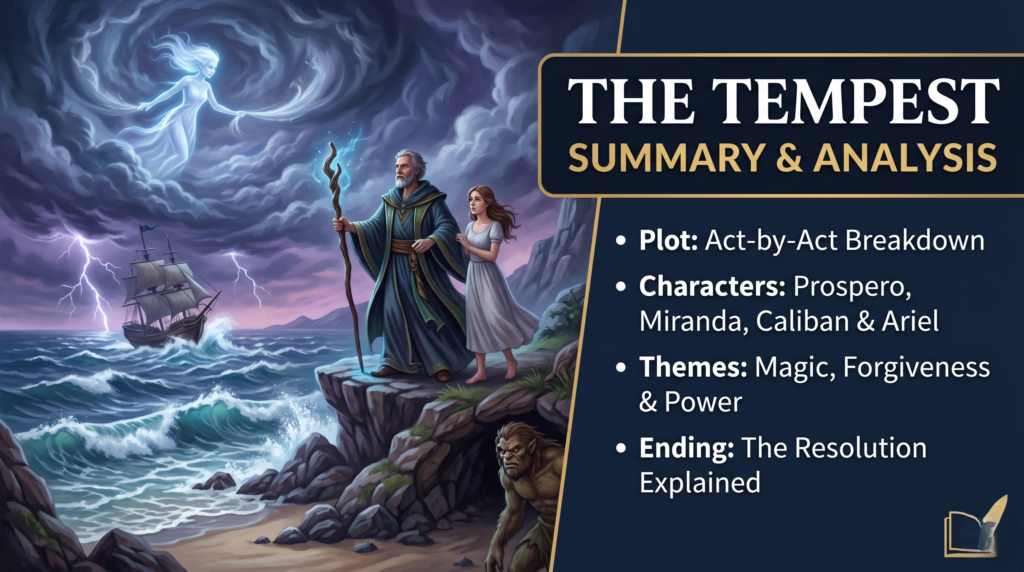
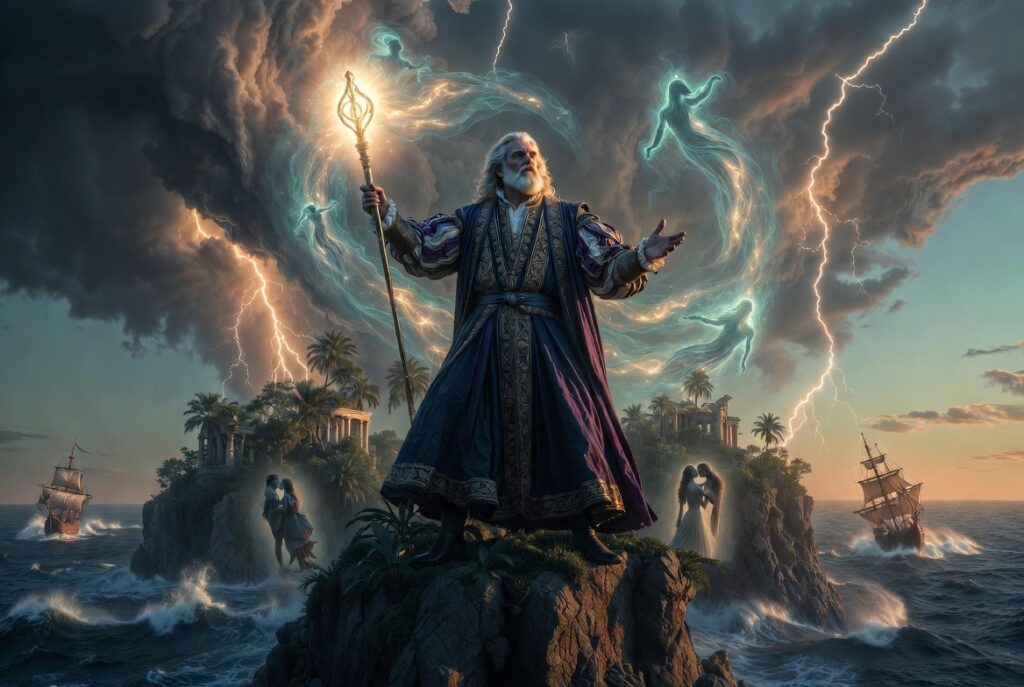
What if the true power of a ruler wasn’t political authority—but the ability to control reality itself? That question lies at the heart of Prospero the tempest, one of the most intellectually rich and morally complex character studies in literature. From the very first storm he conjures, Prospero establishes himself not just as a magician, but as a master of fate, illusion, and human behavior.
In The Tempest, William Shakespeare crafts a protagonist who defies easy classification. Is Prospero a wise and just leader reclaiming his rightful place—or a manipulative figure who uses supernatural power to dominate others? This question continues to challenge students, critics, and readers alike.
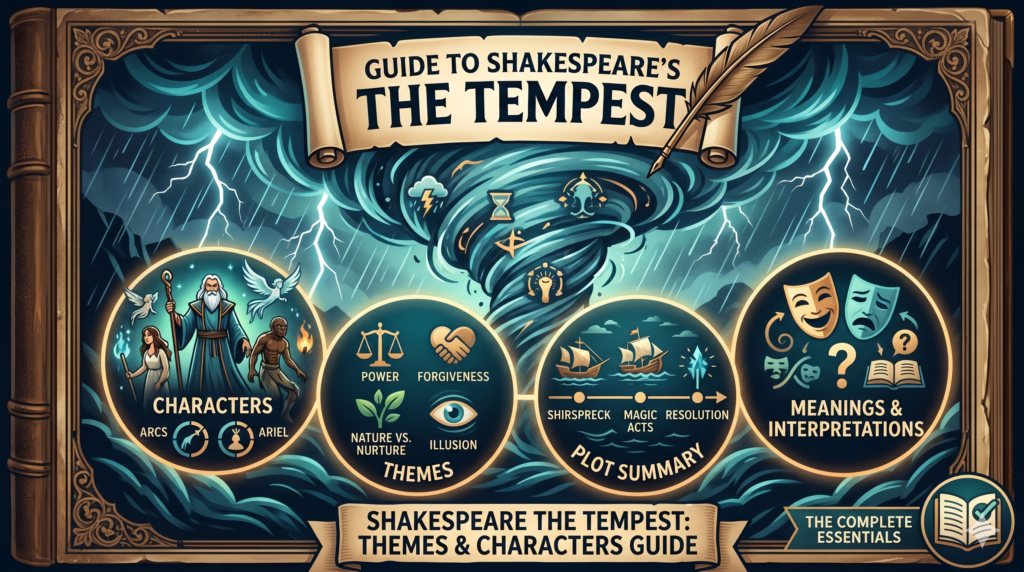
If you’ve ever struggled to fully understand Prospero’s role, motivations, or symbolic meaning, this in-depth guide will give you clarity. You’ll gain:
- A complete character analysis grounded in textual evidence
- A deep understanding of key themes like power, revenge, and forgiveness
- Insight into Prospero’s magic and its symbolic significance
- Expert-level interpretation suitable for exams, essays, and advanced study
By the end, you won’t just “know” Prospero—you’ll understand why he remains one of Shakespeare’s most enduring and debated creations.
Who Is Prospero in The Tempest? (Quick Overview)
Prospero’s Role in the Story
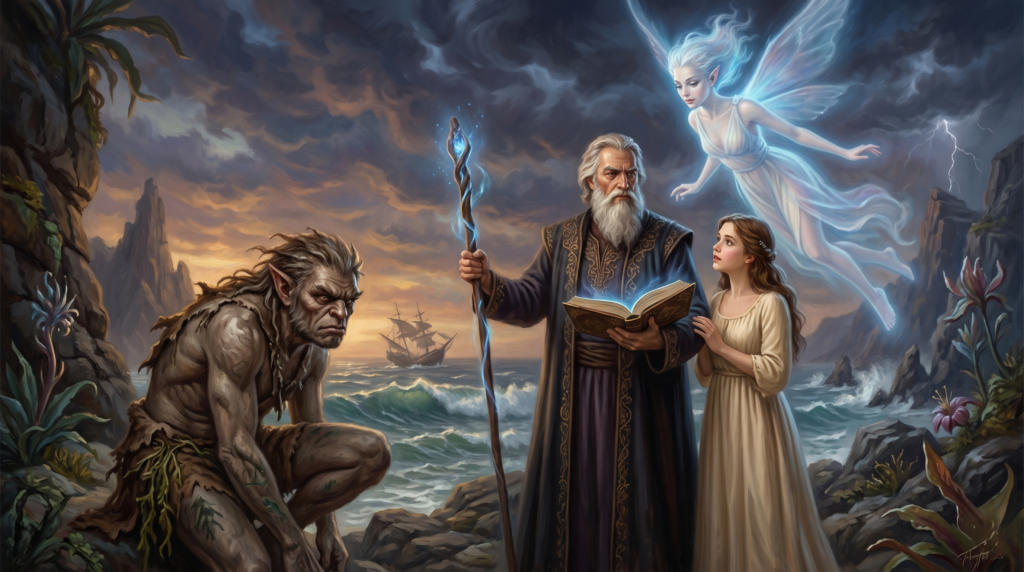
Prospero is the rightful Duke of Milan, unjustly overthrown by his brother Antonio and left to die at sea with his young daughter, Miranda. Instead of perishing, they find refuge on a mysterious island. Over time, Prospero transforms from a powerless exile into a figure of immense authority through his mastery of magic.
At the start of the play, he conjures a violent storm—the titular tempest—that shipwrecks his enemies on the island. From that moment, it becomes clear: Prospero is not merely a participant in the story—he is its architect.
Why Prospero Is Central to the Play
Every major event in The Tempest is orchestrated by Prospero:
- He controls the environment (storms, illusions)
- He manipulates other characters’ actions
- He stages encounters that test morality and loyalty
In many ways, Prospero functions like a playwright within the play—designing scenes, directing outcomes, and ultimately deciding how the story ends.
Prospero’s Background and Backstory Explained
The Betrayal by Antonio
Prospero’s downfall begins with political betrayal. As Duke of Milan, he becomes deeply absorbed in his studies, neglecting his duties. His brother Antonio exploits this weakness, seizing power and banishing Prospero and Miranda.
This betrayal is crucial because it shapes Prospero’s motivations:
- A desire for justice (or revenge)
- Distrust of political power
- A shift from worldly authority to intellectual and magical dominance
Life on the Island
The island becomes both a prison and a place of transformation. Here, Prospero:
- Studies magic intensively
- Gains control over spirits like Ariel
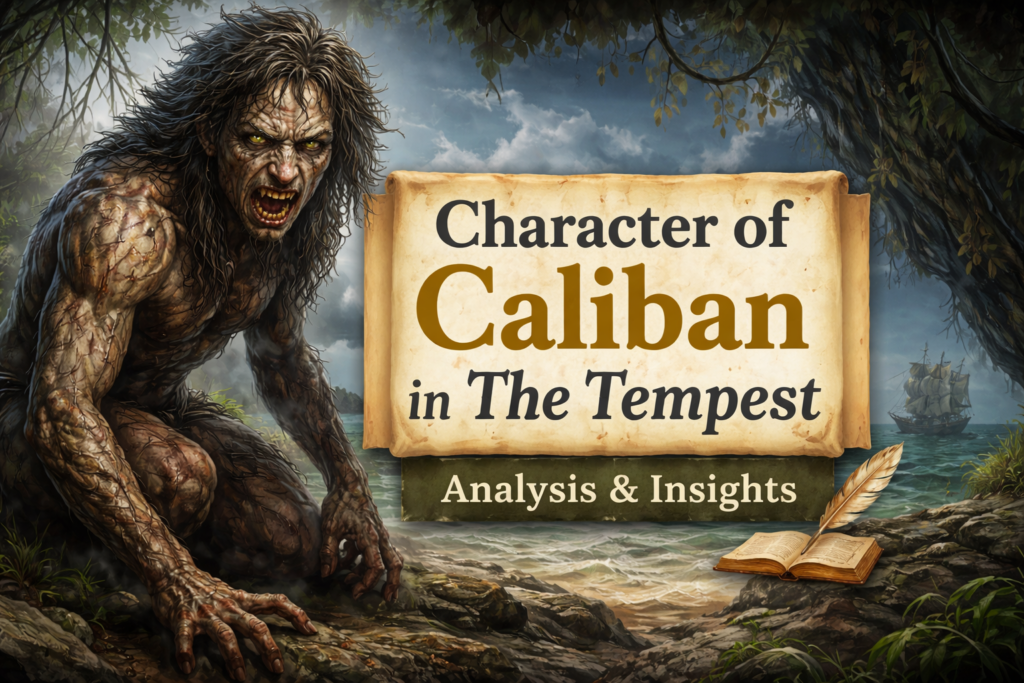
- Subjugates the island’s original inhabitant, Caliban
This environment allows him to rebuild power—but in a different form. No longer a political leader, he becomes a near-omniscient figure, capable of shaping reality itself.
The Role of Books and Knowledge
Prospero’s books are perhaps his most important possessions. They symbolize:
- Knowledge as power
- The contrast between intellectual and political authority
- The Renaissance ideal of the learned man
Without his books, Prospero would be powerless. With them, he becomes almost godlike.
Prospero’s Personality Traits: A Deep Character Analysis
The Wise Scholar
At his core, Prospero embodies the Renaissance ideal of intellectual pursuit. His deep engagement with knowledge sets him apart from other characters.
However, Shakespeare complicates this trait:
- His obsession with learning led to his political downfall
- His intelligence sometimes isolates him from others
This raises an important question: Can knowledge become a form of weakness?
The Controlling Manipulator
Prospero’s use of magic often crosses ethical boundaries. He:
- Controls Ariel’s freedom
- Enslaves Caliban
- Orchestrates emotional experiences for others
Rather than allowing events to unfold naturally, he manipulates outcomes to achieve his goals. This makes him both powerful and morally ambiguous.
The Protective Father
Prospero’s relationship with Miranda reveals a softer side:
- He educates and protects her
- He carefully controls her exposure to the world
- He arranges her relationship with Ferdinand
Yet even here, control is evident. His love is genuine—but it is also possessive.
The Flawed Human Being
What makes Prospero compelling is his imperfection:
- He is driven by anger and a desire for revenge
- He struggles with forgiveness
- He must confront his own limitations
These flaws make him deeply human, despite his supernatural abilities.
Prospero’s Magical Powers and Their Symbolism
Nature of His Magic
Prospero’s magic is not random—it is precise and intellectual. He uses it to:
- Control natural elements (like the storm)
- Create illusions
- Influence thoughts and emotions
This form of magic reflects discipline and knowledge rather than chaos.
Ariel as an Extension of Prospero’s Power
Ariel, the airy spirit, serves as Prospero’s primary instrument. Through Ariel:
- Prospero executes his plans
- Observes distant events
- Maintains control over the island
However, Ariel constantly reminds Prospero of his promise of freedom, introducing a moral tension.
Magic as a Symbol of Authority and Control
Prospero’s magic represents:
- Absolute power
- The ability to shape reality
- The dangers of unchecked authority
It raises ethical questions: Just because one can control others, does that mean one should?
Why Prospero Renounces Magic
One of the most powerful moments in the play is Prospero’s decision to give up magic. This act symbolizes:
- Letting go of control
- Embracing humanity over dominance
- Choosing forgiveness over revenge
It marks the turning point of his character arc.
Key Relationships That Define Prospero
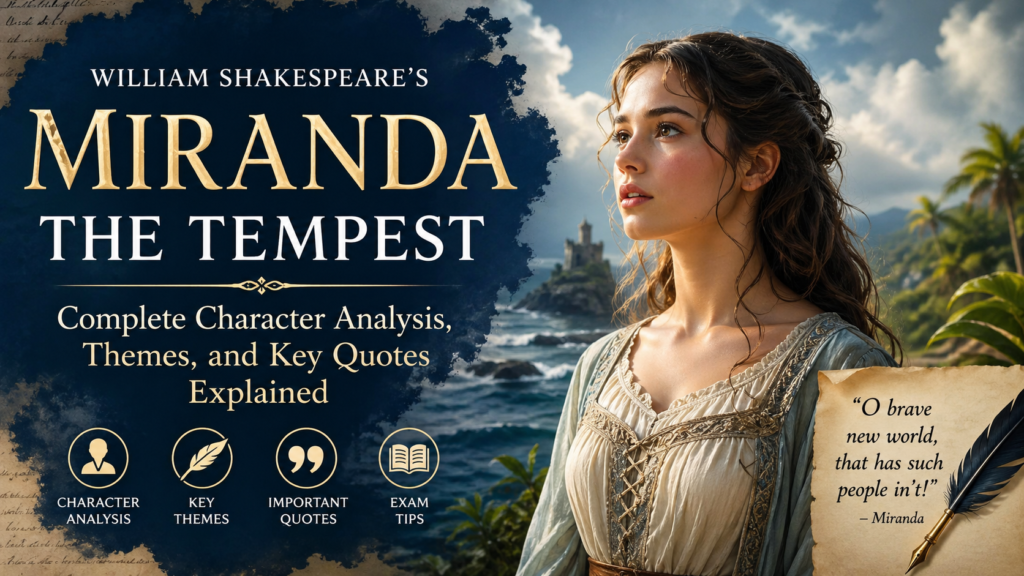
Prospero and Miranda
This relationship is built on love, education, and control. Prospero:
- Shapes Miranda’s worldview
- Protects her innocence
- Guides her future
Yet he also limits her independence, raising questions about authority and autonomy.
Prospero and Ariel
Their relationship reflects themes of servitude and freedom:
- Ariel obeys Prospero but desires liberation
- Prospero depends on Ariel but delays granting freedom
This dynamic mirrors broader themes of power and ethical responsibility.
Prospero and Caliban
Perhaps the most controversial relationship in the play:
- Prospero enslaves Caliban
- Caliban resents and rebels against him
This dynamic is often interpreted through the lens of colonialism:
- Prospero as colonizer
- Caliban as the oppressed native
It challenges readers to reconsider who holds moral authority.
Prospero and Antonio
Antonio represents betrayal and political corruption. Prospero’s interactions with him:
- Reflect unresolved anger
- Drive the desire for revenge
- Ultimately lead to forgiveness
Major Themes Represented Through Prospero
Power and Control
Prospero’s journey explores different forms of power:
- Political (lost dukedom)
- Intellectual (knowledge and magic)
- Emotional (control over others)
The play questions which form is most legitimate.
Revenge vs. Forgiveness
At the heart of Prospero’s story is a moral choice:
- Continue seeking revenge
- Or choose forgiveness and reconciliation
His final decision defines his character.
Colonialism and Domination
Through Caliban, Shakespeare explores:
- Cultural conflict
- Exploitation
- Justification of control
Prospero’s role becomes deeply controversial in modern readings.
Illusion vs. Reality
Prospero’s magic blurs the line between what is real and what is not. This reflects:
- The nature of theatre itself
- The instability of perception
Redemption and Transformation
Ultimately, Prospero’s story is one of growth:
- From anger to forgiveness
- From control to release
- From isolation to reconciliation
Is Prospero a Hero, Villain, or Something In Between?
Arguments for Prospero as a Hero
- Seeks justice for betrayal
- Protects Miranda
- Restores order
Arguments for Prospero as a Villain
- Manipulates others
- Enslaves Caliban
- Exercises excessive control
The Modern Critical Perspective
Most modern scholars view Prospero as a morally complex figure—neither purely good nor evil, but profoundly human.
Prospero as Shakespeare’s Alter Ego (A Deeper Interpretation)
One of the most fascinating interpretations of Prospero is that he represents William Shakespeare himself. This reading adds a powerful meta-theatrical dimension to The Tempest.
Prospero as the Playwright Within the Play
Just as Shakespeare controls characters, dialogue, and action, Prospero:
- Directs events on the island
- Stages illusions like theatrical performances
- Manipulates characters as if they are actors
The island itself becomes a stage, and Prospero becomes its director.
The Renunciation of Magic = Shakespeare’s Farewell to Theatre
Many scholars believe The Tempest was one of Shakespeare’s final plays. Prospero’s famous renunciation of magic can be interpreted as:
- Shakespeare stepping away from writing
- A symbolic farewell to the art of theatre
When Prospero breaks his staff and drowns his book, it echoes the idea of an artist laying down his craft.
Why This Interpretation Matters
Understanding Prospero as Shakespeare’s alter ego helps readers:
- Appreciate the emotional depth of the ending
- Recognize the play as a reflection on creativity and control
- See The Tempest as more than a story—it becomes a meditation on art itself
Important Quotes by Prospero (With Analysis)
Analyzing Prospero’s key lines is essential for exams, essays, and deeper understanding.
“We are such stuff as dreams are made on…”
This line captures the essence of illusion and human existence.
Analysis:
- Suggests life is temporary and fragile
- Connects to the theme of illusion vs. reality
- Reflects Prospero’s growing awareness of human limitations
It’s one of the most philosophical statements in Shakespeare’s works.
“This swift business I must uneasy make…”
This line reveals Prospero’s calculated manipulation.
Analysis:
- Shows his willingness to create discomfort to achieve goals
- Highlights his controlling nature
- Raises ethical questions about leadership and authority
“The rarer action is in virtue than in vengeance”
This is the turning point of Prospero’s moral journey.
Analysis:
- Emphasizes forgiveness over revenge
- Marks his transformation
- Reinforces the play’s central moral message
Prospero’s Character Arc: From Revenge to Forgiveness
Understanding Prospero’s development is key to mastering prospero the tempest analysis.
Beginning: Driven by Revenge
At the start:
- Prospero carefully plans to punish his enemies
- The storm is an act of controlled aggression
- His mindset is rooted in justice mixed with resentment
Middle: Control and Manipulation
As the play progresses:
- He tests characters like Ferdinand
- Manipulates emotions and situations
- Maintains strict control over events
This phase reveals both his intelligence and his moral ambiguity.
End: Letting Go and Forgiving
In the final act:
- Prospero forgives his enemies
- Releases Ariel
- Renounces magic
This transformation shows true growth. He realizes:
Power without compassion is incomplete.
Why Prospero Still Matters Today
Prospero is not just a literary figure—he reflects modern issues that remain deeply relevant.
Leadership and Power
Prospero raises timeless questions:
- Should leaders control or guide?
- Is authority justified by knowledge?
These questions apply to politics, business, and personal leadership today.
Ethics of Control and Technology
Prospero’s magic can be compared to modern power structures:
- Technology
- Artificial intelligence
- Political influence
The same ethical dilemma exists:
Just because we can control something, should we?
Lessons in Forgiveness and Growth
Prospero’s final decision teaches:
- Letting go of anger leads to peace
- Forgiveness is a strength, not a weakness
- Personal growth requires self-awareness
Expert Insights: How to Analyze Prospero Effectively (For Students)
If you’re preparing for exams or writing essays, here’s how to stand out:
1. Focus on Themes, Not Just Plot
Don’t just describe what Prospero does—analyze what it means:
- Link actions to themes like power, illusion, and forgiveness
2. Use Quotes Strategically
- Choose 2–3 strong quotes
- Analyze language and meaning
- Connect them to the bigger argument
3. Consider Multiple Interpretations
- Hero vs. villain debate
- Colonial perspective
- Shakespeare’s alter ego
Examiners reward depth and critical thinking.
4. Connect to Context
- Renaissance ideas about knowledge and power
- Colonial expansion and cultural conflict
This adds authority to your analysis.
Common Mistakes to Avoid When Studying Prospero
Oversimplifying His Character
Prospero is not purely good or evil. Avoid one-sided arguments.
Ignoring Colonial Themes
Modern analysis often focuses on Caliban and power dynamics—don’t skip this.
Forgetting Symbolism
Magic, books, and the island all carry deeper meaning.
FAQs About Prospero in The Tempest
Why does Prospero give up his magic?
He realizes that forgiveness and humanity are more valuable than control and power.
Is Prospero a good ruler?
He is intelligent and just in some ways, but also controlling and flawed—making him a complex leader.
What does Prospero symbolize?
He represents power, knowledge, artistic control, and ultimately, human transformation.
How does Prospero change throughout the play?
He evolves from a revenge-driven figure to one who embraces forgiveness and lets go of control.
The True Meaning of Prospero’s Journey
Prospero is not just a character—he is a mirror reflecting human ambition, control, and redemption. Through prospero the tempest, Shakespeare gives us a figure who begins as a master of power but ends as a student of humanity.
His journey teaches us that:
- Knowledge without wisdom can be dangerous
- Control without empathy leads to isolation
- True strength lies in forgiveness
In the end, Prospero’s greatest act is not creating the storm—it is choosing to calm it.