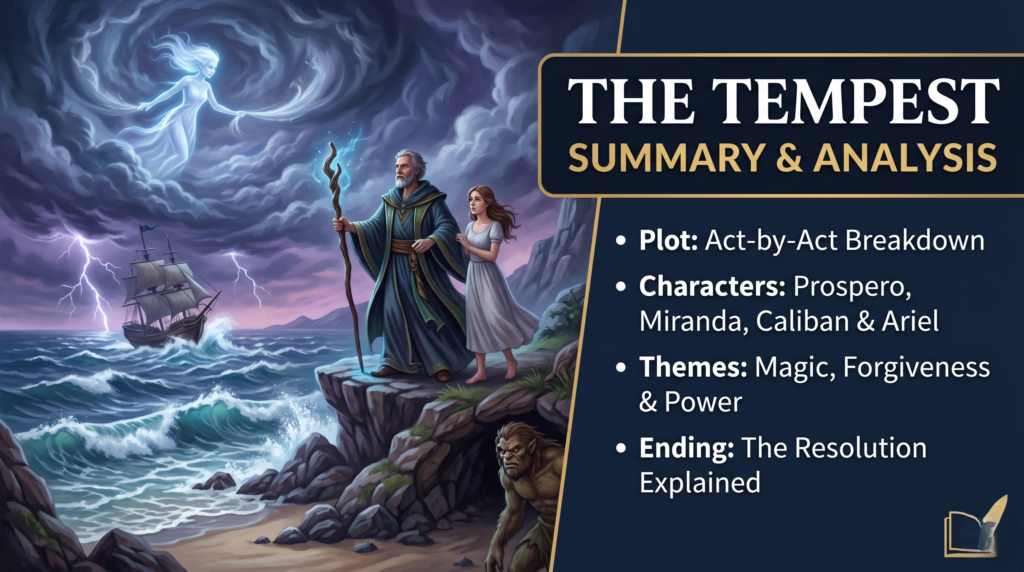
Imagine a violent storm conjured by magic, a shipwreck that strands nobles on a mysterious island, and a powerful sorcerer orchestrating revenge, romance, and redemption. In one of William Shakespeare’s most lyrical and introspective works, these elements weave together a profound meditation on power, forgiveness, and the human condition. This summary of The Tempest offers readers a comprehensive guide to Shakespeare’s final solo play—one that continues to captivate audiences more than 400 years after its first performance.
Whether you are a student preparing for an exam, a theater enthusiast, or simply a lover of classic literature seeking deeper insight, this detailed analysis delivers exactly what you need: a full act-by-act plot breakdown, nuanced character studies, exploration of central themes, rich symbolism, and discussions of the play’s enduring relevance. Far more than a basic recap, this resource draws on centuries of scholarship to provide context, textual analysis, and modern interpretations that will enrich your understanding and appreciation of The Tempest.
Historical and Literary Context of The Tempest
The Tempest was likely written between 1610 and 1611, during the reign of King James I, and first performed in 1611 at the Blackfriars Theatre, with a notable court performance that same year. Many scholars regard it as Shakespeare’s farewell to the stage, with the character of Prospero often interpreted as a stand-in for the playwright himself as he prepares to lay down his pen.
Shakespeare drew from multiple sources to craft this romance (a genre blending tragic and comic elements with magic and reconciliation). A major influence was contemporary accounts of the 1609 Sea Venture shipwreck, part of an English colonial expedition to Virginia. Survivors’ reports, including William Strachey’s A True Reportory, described a tempest off the Bermudas that stranded passengers who later built new ships and continued their journey. Shakespeare echoes this in Ariel’s reference to the “still-vexed Bermudas.”
Other influences include Michel de Montaigne’s essay “Of Cannibals,” which explores utopian societies and the nature of “civilized” versus “savage” peoples—an idea reflected in Caliban’s character. Classical echoes appear from Virgil’s Aeneid, Ovid’s Metamorphoses, and elements of Italian commedia dell’arte. These sources highlight Shakespeare’s genius in synthesizing travel literature, philosophy, and mythology into a timeless theatrical experience.
The play’s original staging at the intimate Blackfriars Theatre allowed for sophisticated special effects—music, lighting, and machinery—that enhanced its magical atmosphere, making it particularly suited to the indoor venue favored by King James I’s court.
Complete Plot Summary of The Tempest (Act-by-Act Breakdown)
The Tempest unfolds over a single day on a remote Mediterranean island, blending high drama, low comedy, and lyrical beauty. Here is a detailed, scene-by-scene summary that captures both the action and its emotional undercurrents.
Act 1 – The Storm and the Island
The play opens amid chaos: a ship carrying King Alonso of Naples, his son Ferdinand, brother Sebastian, Prospero’s treacherous brother Antonio, and the loyal counselor Gonzalo is caught in a ferocious tempest. The Boatswain’s pragmatic commands contrast with the nobles’ panic, establishing themes of social hierarchy and nature’s indifference (“What cares these roarers for the name of king?”).
Safely on the island, Prospero reveals to his daughter Miranda that he has orchestrated the storm using his magic. He recounts their backstory: Twelve years earlier, as Duke of Milan, Prospero neglected his duties for scholarly pursuits, allowing his brother Antonio to usurp the throne with Alonso’s help. They were set adrift at sea but washed ashore on this island, where Prospero raised Miranda and enslaved the island’s inhabitants—Ariel, a spirit he freed from a tree, and Caliban, the son of the witch Sycorax.
Act 2 – Plots and Subplots on the Island
The shipwrecked courtiers arrive on shore. Gonzalo optimistically envisions a utopian society, while Antonio and Sebastian plot to murder Alonso and seize power. Meanwhile, the comic subplot emerges as the drunken butler Stephano and jester Trinculo encounter Caliban, who mistakes them for gods and joins their ridiculous scheme to overthrow Prospero.
Act 3 – Tests of Love and Loyalty
Ferdinand, separated from his father and presumed drowned, meets Miranda. Their instant love fulfills Prospero’s plans, though he tests Ferdinand’s worthiness with menial labor. Ariel invisibly torments the courtiers, while Caliban, Stephano, and Trinculo advance their bungled rebellion.
Act 4 – The Masque and Illusions
Prospero stages a lavish wedding masque featuring the goddesses Iris, Ceres, and Juno to bless the young couple. The celebration is interrupted when Prospero remembers the conspiracy against him. The masque dissolves, leading to one of Shakespeare’s most famous speeches on the fleeting nature of life and art.
Act 5 – Resolution, Forgiveness, and Return to Milan
Prospero confronts his enemies, reveals himself, and—moved by Ariel’s reminder of human vulnerability—chooses forgiveness over vengeance. He renounces his magic, frees Ariel, and prepares to return to Milan as restored Duke. The play ends with Prospero’s poignant epilogue, where he asks the audience for applause to “release” him, blurring the lines between theater and reality.
In-Depth Character Analysis
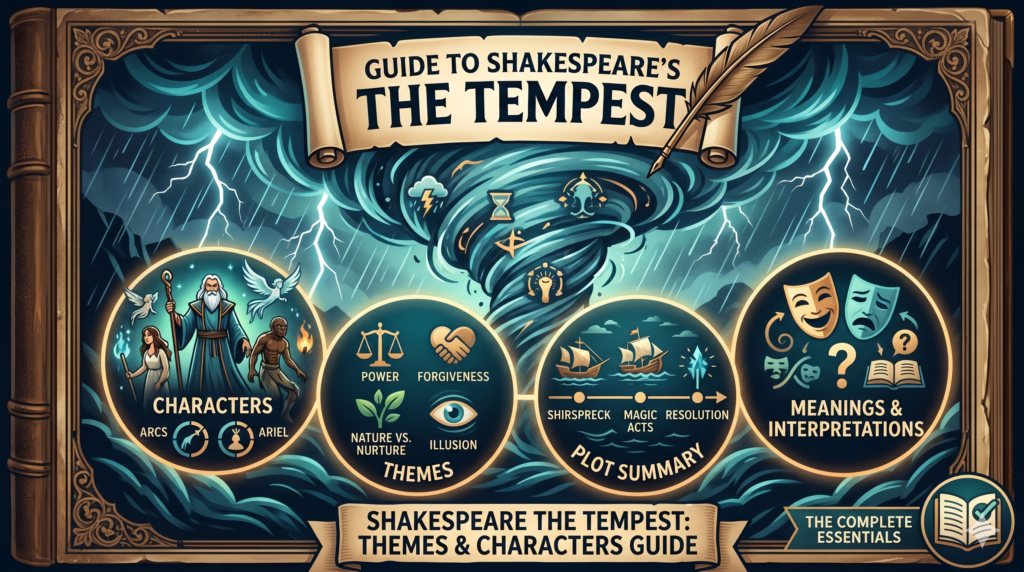
Shakespeare’s characters in The Tempest are richly layered, embodying philosophical ideas while remaining dramatically compelling. Each figure serves the play’s exploration of power dynamics, humanity, and transformation.
Prospero – The Magician, Duke, and Father
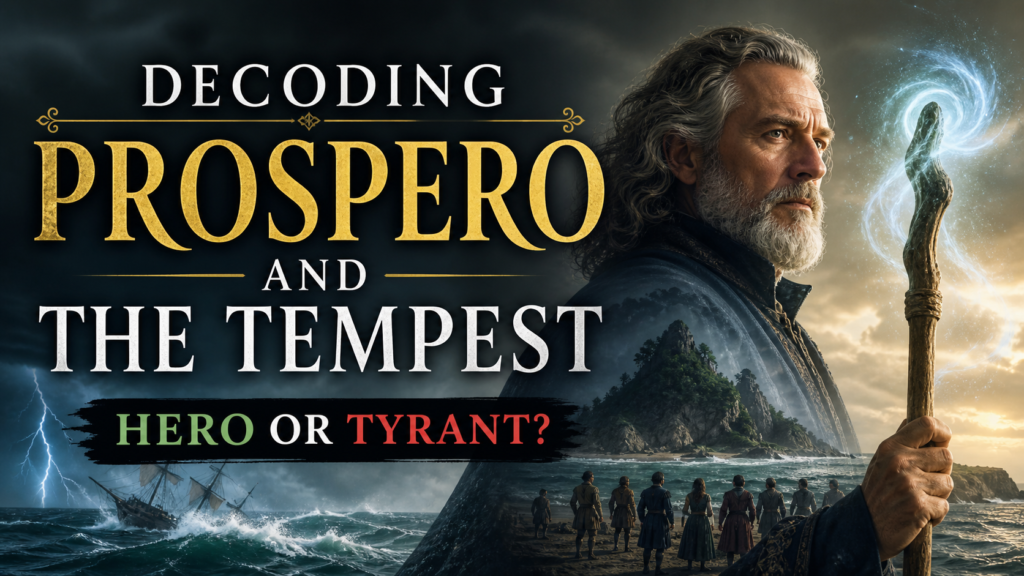
Prospero stands as the central protagonist and architect of the island’s events. As the rightful Duke of Milan, he was betrayed by his brother Antonio and King Alonso. Exiled with his infant daughter Miranda, he has spent twelve years mastering the arts of magic through his books.
Prospero is a complex figure: simultaneously a loving father who carefully engineers Miranda’s future, a stern master to his servants, and a vengeful ruler who initially seeks retribution. His arc from revenge to forgiveness represents the play’s emotional core. Many critics view him as a semi-autobiographical portrait of Shakespeare himself — a master artist who ultimately chooses to renounce his “potent art” and return to ordinary life. His famous lines reveal both wisdom and melancholy, highlighting the burdens of authority and the limits of control.
Miranda – Innocence and Awakening
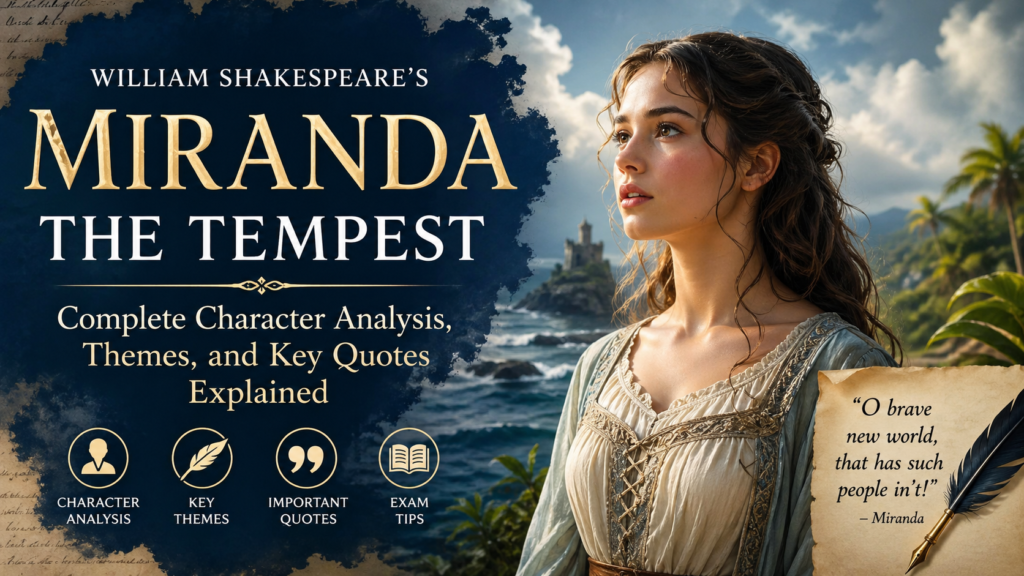
Miranda, Prospero’s daughter, has known no other world than the island. Her innocence and purity contrast with the corruption of the court. The famous exclamation “O brave new world, / That has such people in’t!” captures her wonder upon first seeing other humans. Her swift romance with Ferdinand, carefully supervised by Prospero, symbolizes hope, renewal, and the redemptive power of love. Miranda represents the possibility of a fresh start untainted by past sins.
Ariel – Spirit of the Air
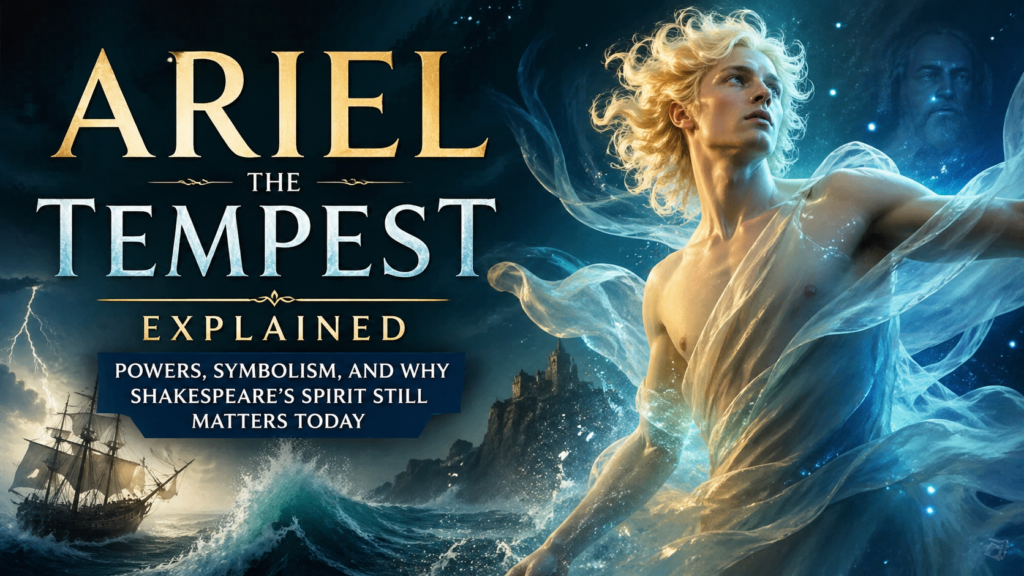
Ariel is an ethereal spirit of the elements, bound to serve Prospero after being freed from imprisonment by the witch Sycorax. Playful, invisible, and immensely powerful, Ariel executes Prospero’s commands with artistic flair — creating storms, illusions, and music. Yet Ariel longs for freedom, repeatedly asking when his service will end. The relationship between Prospero and Ariel explores themes of mastery, gratitude, and liberation. Ariel’s songs are among Shakespeare’s most beautiful lyrical passages, enhancing the play’s dreamlike quality.
Caliban – The “Monster” and Colonized Other
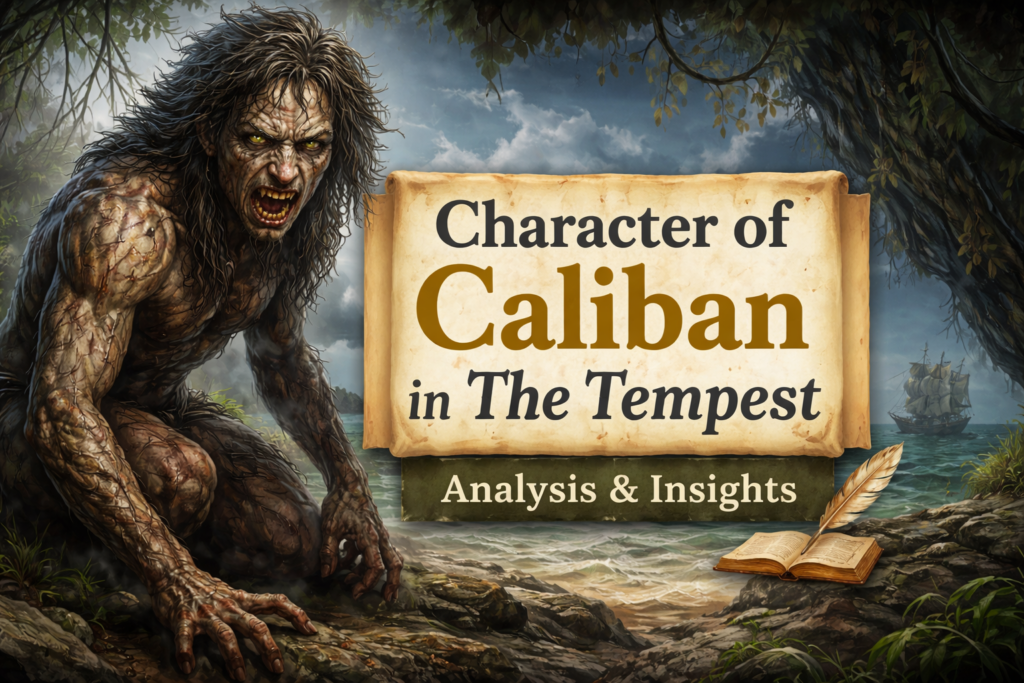
Caliban, the son of the witch Sycorax, is one of Shakespeare’s most fascinating and debated creations. Described as a “savage and deformed slave,” he is both villainous and poetic. He taught Prospero and Miranda how to survive on the island, only to be enslaved after attempting to violate Miranda. Caliban’s eloquent speeches reveal deep sensitivity to the island’s natural beauty (“Be not afeard. The isle is full of noises…”).
In postcolonial readings, Caliban symbolizes the indigenous peoples subjugated by European colonizers. His rebellion with Stephano and Trinculo is both comic and tragic, underscoring the destructive effects of oppression and the longing for autonomy. Caliban challenges simple moral categories, forcing audiences to question who the real “monster” is.
Ferdinand and the Court Party (Alonso, Antonio, Sebastian, Gonzalo)
Ferdinand, the young prince, embodies ideal Renaissance manhood — brave, honorable, and deeply in love. His willingness to perform manual labor to prove himself to Prospero highlights themes of merit and humility.
The court party represents the political world Prospero left behind. Alonso, the King of Naples, grapples with guilt over his role in the usurpation. Antonio and Sebastian embody Machiavellian ambition and moral corruption, plotting murder even while shipwrecked. In contrast, the honest counselor Gonzalo offers utopian visions and genuine loyalty, providing moral grounding. Their collective journey from presumed death to redemption mirrors the play’s movement from chaos to harmony.
Stephano and Trinculo – Comic Relief and Low Comedy
These earthy, drunken servants provide essential comic relief. Their antics with Caliban parody the serious political plots of the nobles, exposing the absurdity of power grabs. Through low humor and drunken logic, Shakespeare critiques social hierarchy and human folly.
Major Themes in The Tempest
The Tempest is thematically dense, offering profound insights into human experience.
Power and Authority
The play examines multiple forms of power — political, magical, paternal, and colonial. Prospero’s control over the island raises questions about legitimate versus illegitimate authority. His eventual relinquishment of magic suggests that true wisdom lies in knowing when to let go.
Forgiveness vs. Revenge
Central to the drama is Prospero’s choice. Though he has every reason for vengeance, Ariel’s gentle reminder that “the rarer action is / In virtue than in vengeance” prompts him to forgive his enemies. This theme resonates as a mature reflection on justice, mercy, and reconciliation.
Colonization and the “Other”
Written during the height of European exploration, the play engages with colonial discourse. Caliban’s famous retort — “You taught me language, and my profit on’t / Is I know how to curse” — powerfully articulates the experience of the colonized. Modern interpretations frequently analyze the dynamics between Prospero (the European invader) and the island’s original inhabitants.
Illusion, Reality, and Art
The entire play is a metatheatrical exploration of illusion. Prospero’s magic parallels Shakespeare’s own craft as a playwright. The celebrated speech “We are such stuff / As dreams are made on” reflects on the ephemeral nature of life, theater, and human achievement. The masque in Act 4 reinforces this artistic self-awareness.
Nature vs. Nurture
Through Caliban and Miranda, Shakespeare probes whether character is determined by birth or upbringing. Caliban’s “vile race” is contrasted with Miranda’s inherent goodness, yet both challenge simplistic conclusions.
Love and Reconciliation
Romantic love between Ferdinand and Miranda offers hope for the future, while broader reconciliation among the courtiers restores social and political order. The play ends on a note of harmonious resolution rare in Shakespeare’s tragedies.
Freedom and Slavery
Ariel’s yearning for liberty stands against Caliban’s enslavement, creating a nuanced meditation on service, bondage, and autonomy.
Symbolism and Literary Devices
The island itself functions as a microcosm of the world, a laboratory for testing human nature away from societal constraints. Prospero’s books and staff symbolize knowledge and power, while the tempest represents both destructive chaos and cleansing transformation. Music and song, primarily through Ariel, create an otherworldly atmosphere and guide characters toward self-discovery. Motifs of sleep, dreams, and metamorphosis permeate the text, reinforcing the play’s dreamlike quality.
The Tempest in Modern Contexts and Adaptations
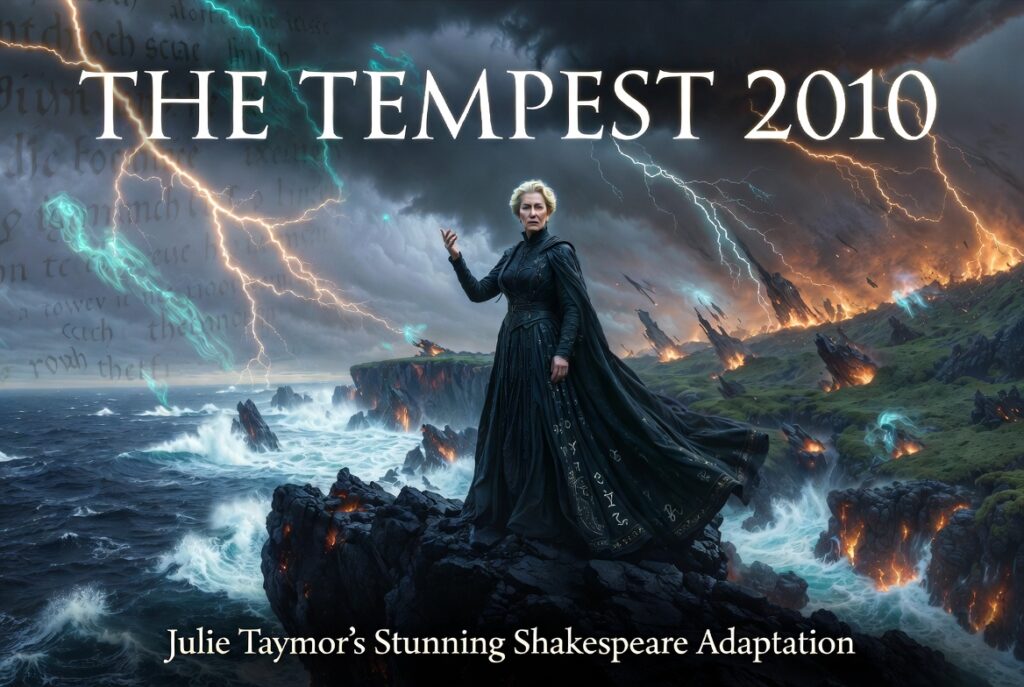
The Tempest continues to inspire creators across media. Notable adaptations include the 1956 sci-fi classic Forbidden Planet, which reimagines the story in space with Robby the Robot as Ariel and Caliban as the Id monster. Julie Taymor’s 2010 film version features Helen Mirren as a female Prospero (Prospera), bringing fresh gender perspectives.
The play’s influence extends to literature (John Fowles’ The Collector), opera (Thomas Adès’ The Tempest), and popular culture. In the 21st century, it speaks to climate anxiety (the conjured storm), debates over colonialism and reparations, leadership ethics, and even artificial intelligence as a new form of “magic.” Its message of forgiveness feels especially relevant in polarized times.
Key Quotes from The Tempest with Analysis
- “We are such stuff / As dreams are made on, and our little life / Is rounded with a sleep.” — Prospero (Act 4, Scene 1). This philosophical reflection on mortality and illusion is one of Shakespeare’s most quoted passages.
- “Be not afeard. The isle is full of noises…” — Caliban (Act 3, Scene 2). Reveals Caliban’s poetic soul and deep connection to the island.
- “O brave new world, / That has such people in’t!” — Miranda (Act 5, Scene 1). Expresses innocent wonder and has entered common parlance.
- “The rarer action is / In virtue than in vengeance.” — Prospero (Act 5, Scene 1). The moral turning point of the play.
Prospero’s Epilogue: “Now my charms are all o’erthrown… / Let your indulgence set me free.” Blurs the boundary between character and actor, asking the audience to participate in the release.
Common Student Questions and Study Tips
- How to write an essay on The Tempest: Focus on one theme (e.g., forgiveness) and support it with specific quotes and character evidence. Compare Prospero’s arc to other Shakespearean leaders.
- Is The Tempest based on a true story? While not strictly historical, it draws heavily from the 1609 Bermuda shipwreck accounts.
- Exam preparation: Memorize key speeches, understand postcolonial and feminist readings, and practice comparing the play to Shakespeare’s other romances like The Winter’s Tale.
The Tempest stands as William Shakespeare’s masterful summation of his theatrical career — a play about letting go, finding forgiveness, and embracing humanity’s better angels. Through its enchanting blend of magic, music, and profound insight, it offers timeless wisdom on power, love, and redemption.
Whether you encounter it on the page, stage, or screen, this summary of The Tempest equips you with the tools to appreciate its full depth. For students seeking clarity, theatergoers wanting