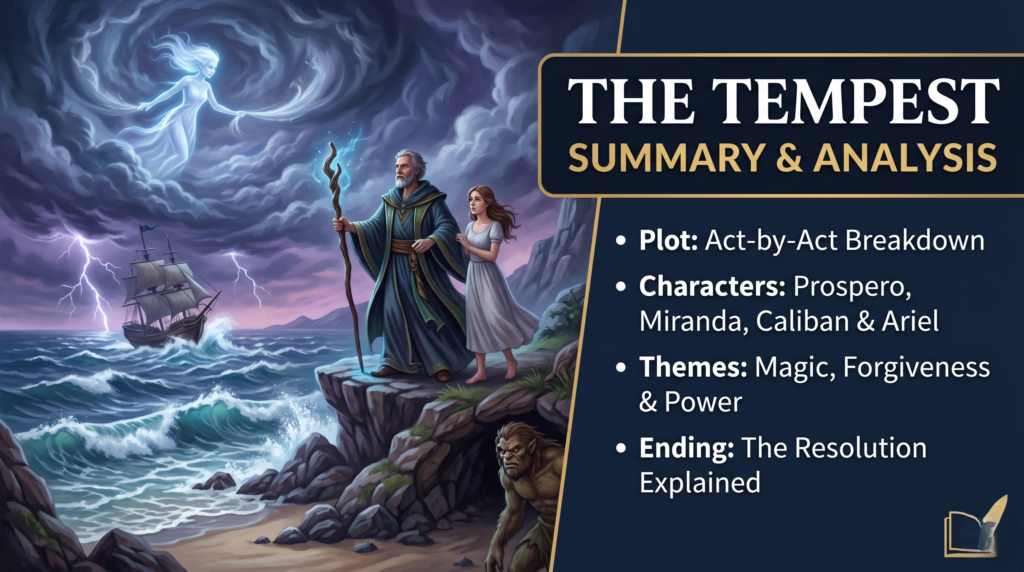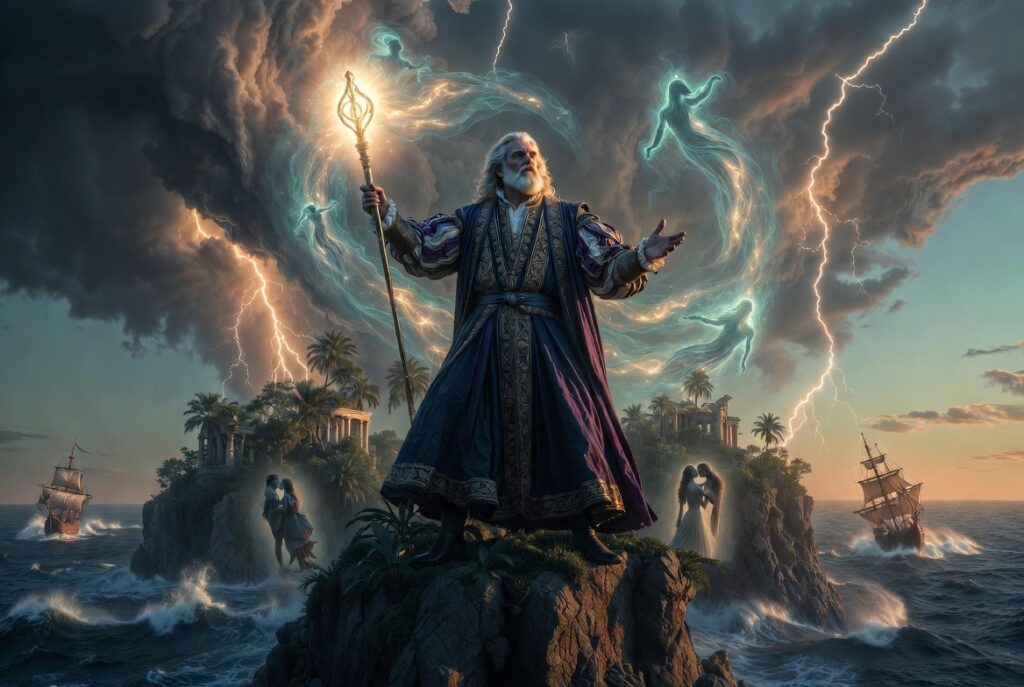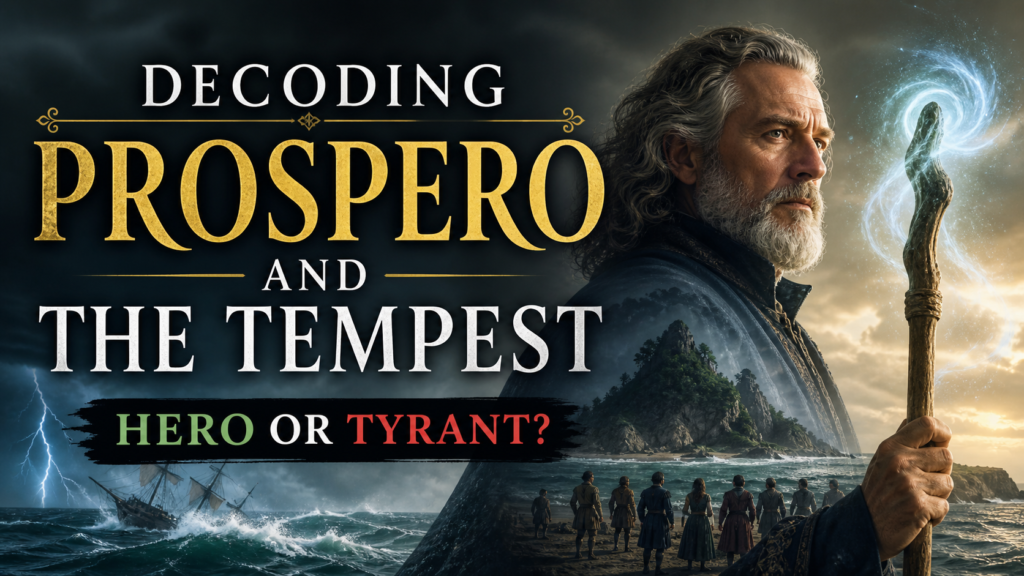
Imagine a violent storm erupting on a seemingly calm sea. A ship carrying nobles and royalty is torn apart by winds and waves summoned not by nature, but by a powerful magician seeking justice for a betrayal twelve years in the making. This is the electrifying opening of William Shakespeare’s The Tempest, widely considered his final solo play and one of his most enchanting works.
What is The Tempest about? At its heart, it is a story of power, revenge, magic, love, and ultimately, forgiveness. Set on a remote, mystical island, the play follows Prospero, the exiled Duke of Milan, as he orchestrates events to reclaim his rightful position while confronting deep questions about authority, humanity, and redemption. Blending elements of romance, comedy, and spectacle, The Tempest stands apart in Shakespeare’s canon for its unity of time and place, its lyrical beauty, and its profound meta-theatrical reflections on art itself.
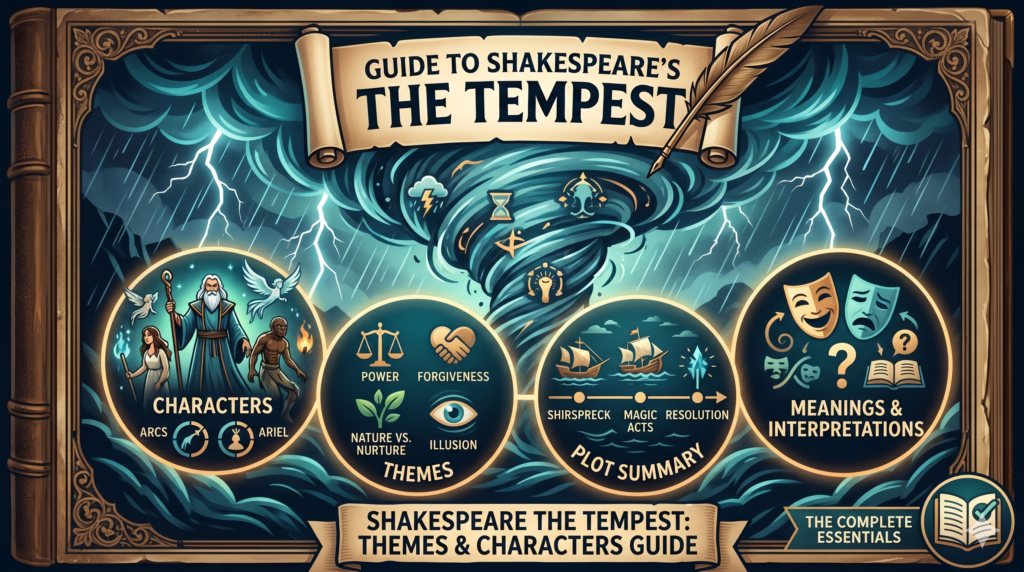
Whether you’re a student tackling the play for the first time, a theater enthusiast, or simply curious about one of literature’s greatest masterpieces, this comprehensive guide delivers everything you need: a detailed plot summary, rich character analyses, exploration of major themes, historical context, symbols, and modern relevance. By the end, you’ll understand not only what happens in The Tempest, but why its magic continues to captivate audiences more than 400 years later.
Historical and Literary Context of The Tempest
To fully appreciate The Tempest, it helps to understand the world in which Shakespeare created it. The play was likely written between 1610 and 1611, during the reign of King James I, and is often viewed as the playwright’s farewell to the stage. It was first performed in 1611 and later included in the First Folio of 1623.
One of the most fascinating aspects of its background is its connection to real-world events. In 1609, the Sea Venture — a flagship carrying supplies and colonists to the struggling Jamestown settlement in Virginia — was caught in a massive hurricane and shipwrecked on the islands of Bermuda. Survivors’ accounts, particularly William Strachey’s True Reportory, described the storm, the “still-vexed Bermoothes,” and the strange, enchanted quality of the islands. These narratives reached London around 1610 and clearly influenced Shakespeare’s depiction of the storm and the isolated island setting.
Unlike many of his plays drawn from existing stories or histories, The Tempest features an largely original plot, though it echoes motifs from Greek romances, Virgil’s Aeneid, and contemporary travel literature about the New World.
Genre and Style: Classified as a “late romance” or tragicomedy, the play mixes serious themes with humor, magic, and a harmonious resolution. It adheres remarkably to the classical unities of time (the action spans roughly four hours) and place (mostly the island). Music, songs, and a masque add spectacular elements suited to the indoor Blackfriars Theatre, where the King’s Men performed.
Many scholars interpret Prospero’s renunciation of magic in the final act as Shakespeare’s own farewell to his “art” — the theater. The play’s meta-theatrical qualities reinforce this reading, blurring the lines between illusion and reality.
Detailed Plot Summary (Spoiler Warning)
The Tempest unfolds in five acts, primarily on a magical island in the Mediterranean. Here is a clear, act-by-act breakdown.
Act 1: The play opens with a terrifying tempest at sea. Onboard are Alonso (King of Naples), his son Ferdinand, his brother Sebastian, Prospero’s treacherous brother Antonio (now Duke of Milan), and the loyal counselor Gonzalo. The ship appears to sink, but all survive thanks to Prospero’s magic.
On the island, Prospero reveals his past to his daughter Miranda. Twelve years earlier, Antonio usurped Prospero’s dukedom with Alonso’s help and set Prospero and the infant Miranda adrift in a rotten boat. They washed ashore on this island, where Prospero — a devoted scholar of magic — has ruled using his books and spirits. His servants include the ethereal Ariel (whom he freed from imprisonment by the witch Sycorax) and the resentful Caliban (Sycorax’s son, whom Prospero educated but later enslaved after an attempted assault on Miranda).
Act 2: The shipwrecked nobles explore the island. Gonzalo imagines an ideal commonwealth, but Antonio and Sebastian plot to murder Alonso and seize power. Meanwhile, the comic subplot begins as the jester Trinculo and the butler Stephano encounter Caliban, who sees them as potential liberators and gods. They plot to kill Prospero and rule the island.
Act 3: Ferdinand and Miranda meet and instantly fall in love — exactly as Prospero had hoped, though he tests Ferdinand’s worthiness. Ariel torments the nobles with visions and accusations. Caliban, Stephano, and Trinculo advance their drunken conspiracy.
Act 4: Prospero stages a divine masque to celebrate the betrothal of Ferdinand and Miranda, featuring goddesses and spirits. It ends abruptly when Prospero remembers the conspiracy against him. He sends Ariel to punish the plotters with illusions and physical torments.
Act 5: Prospero confronts his enemies, dressed in his ducal robes. Ariel’s gentle persuasion — noting the nobles’ genuine remorse — leads Prospero to choose forgiveness over vengeance. He reveals himself, restores order, reunites Alonso with Ferdinand, and renounces his magic. The group prepares to sail back to Italy, leaving Caliban as lord of the island. In the famous Epilogue, Prospero steps out of character to address the audience directly, asking for applause to “set me free.”
The structure is tight and purposeful, with parallel plots (high and low) mirroring each other beautifully.
Main Characters and In-Depth Analysis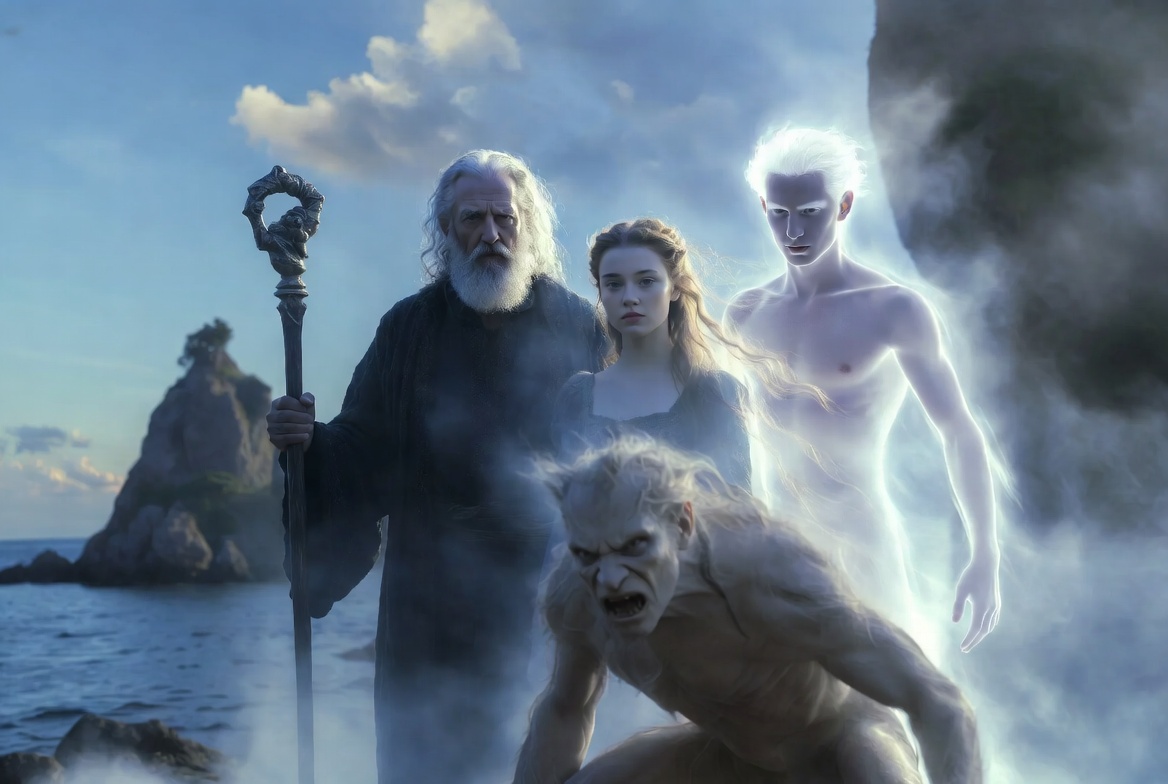
Prospero – The Magician, Father, and Exiled Duke Prospero is one of Shakespeare’s most complex protagonists. As a ruler, he was once too absorbed in his studies, allowing his brother to betray him. On the island, he becomes an absolute master — controlling spirits, orchestrating events, and wielding immense magical power. His arc moves from resentment and control to wisdom and release. Many see him as a self-portrait of Shakespeare: the artist-magician who ultimately lays down his tools.
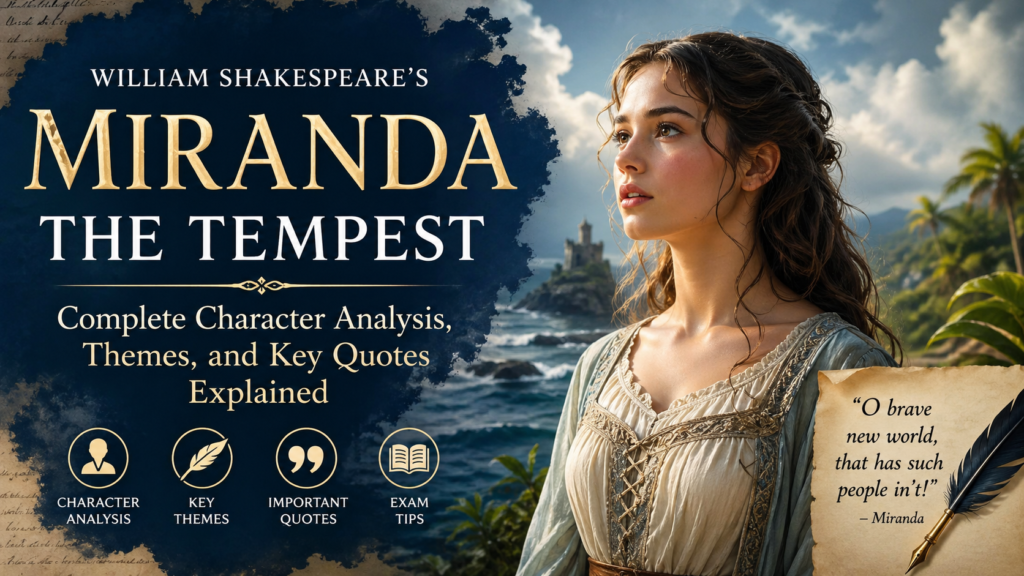
Miranda – Innocence and Discovery Raised in isolation, Miranda represents purity and wonder. Her famous line upon seeing the shipwrecked men — “O brave new world, / That has such people in’t!” (Act 5, Scene 1) — captures both her naiveté and the play’s ironic view of humanity. Her instant love for Ferdinand symbolizes hope and renewal.
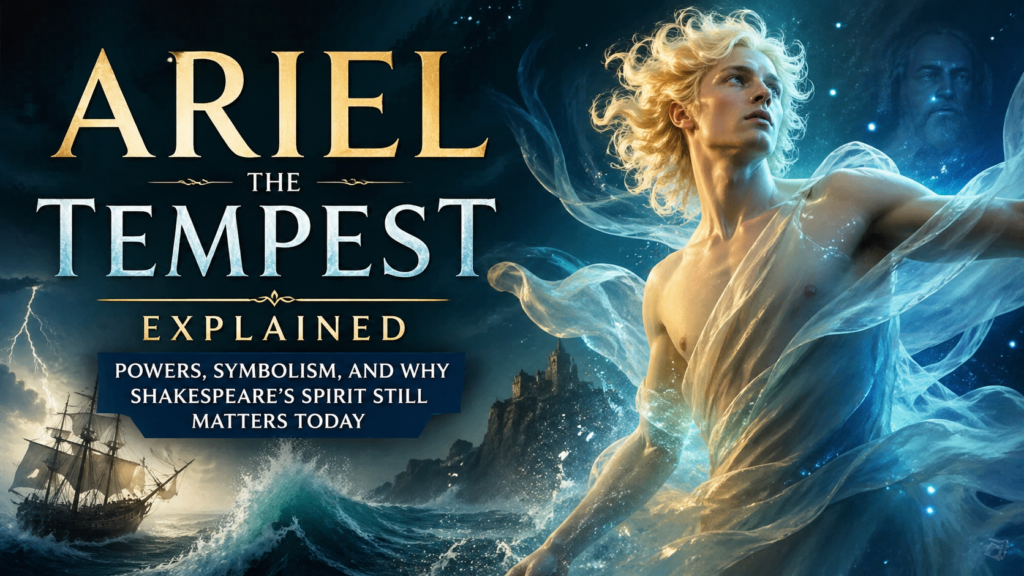
Ariel – The Airy Spirit Ariel is a non-human servant bound to Prospero until granted freedom. Playful, powerful, and poetic, Ariel executes commands with artistry (songs like “Full fathom five thy father lies”). Ariel’s desire for liberty drives much of the emotional resolution.
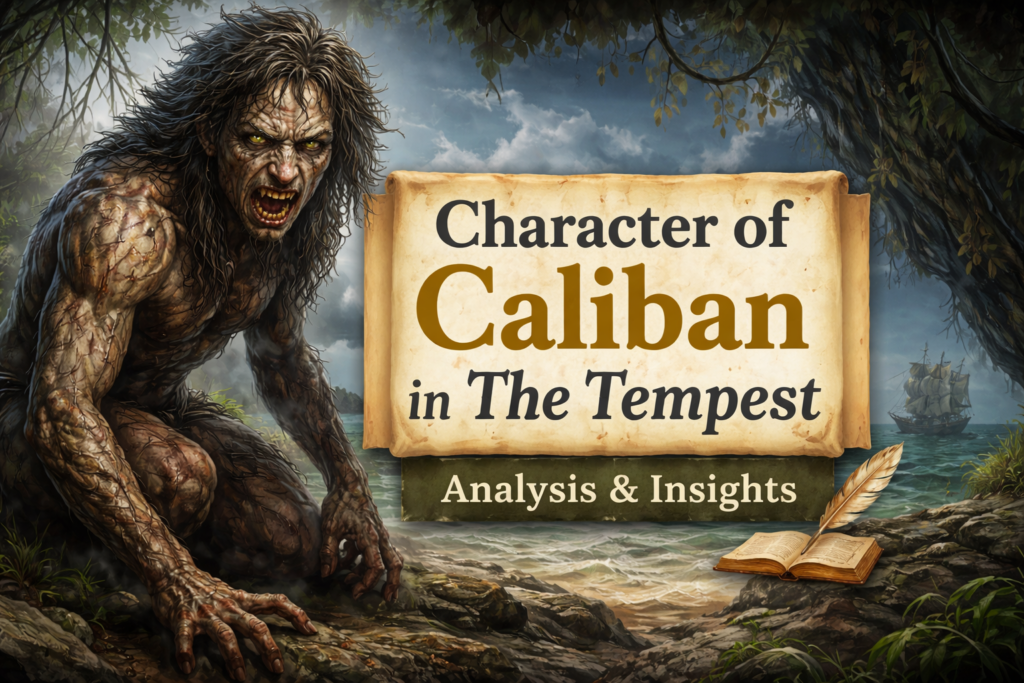
Caliban – The “Monster” and Colonized Figure One of Shakespeare’s most debated characters, Caliban is earthy, poetic, and rebellious. He claims rightful ownership of the island (“This island’s mine, by Sycorax my mother”). His education by Prospero gave him language, which he uses to curse his master. Caliban evokes sympathy as a victim of colonization while remaining morally complex due to his actions.
Supporting Characters: Ferdinand embodies idealized romance; Alonso grapples with guilt; Antonio remains unrepentant; Gonzalo offers humanistic idealism; Stephano and Trinculo provide earthy comic relief that parodies the nobles’ ambitions.
Major Themes in The Tempest (Core Analytical Depth)
The Tempest is remarkably rich in thematic layers for such a concise play. Shakespeare weaves profound philosophical questions into an accessible story of magic and reconciliation, making it one of his most thematically dense works.
Power and Authority Power appears in multiple forms: political (the Milanese dukedom), magical (Prospero’s command over the elements), paternal (Prospero and Miranda), and colonial (control of the island). Prospero’s journey shows both the seductive danger and necessary limits of absolute power. His willingness to relinquish magic at the end underscores a mature understanding that true authority includes self-restraint.
Revenge vs. Forgiveness and Reconciliation The emotional core of the play is Prospero’s transformation. He begins with justified anger after twelve years of exile, using the tempest as an instrument of revenge. Yet Ariel’s observation — “your charm so strongly works ’em / That if you now beheld them, your affections / Would become tender” — prompts him to choose mercy. This theme resonates deeply: forgiveness is not weakness but the highest form of strength. The play ends not with punishment but with restored order and renewed relationships.
Magic, Illusion, and Reality Magic in The Tempest functions as a metaphor for theater itself. Prospero’s “art” creates illusions that teach moral lessons. The play constantly blurs the boundary between performance and reality, culminating in Prospero’s Epilogue, where he asks the audience to release him with their applause. This meta-theatrical dimension makes The Tempest profoundly self-aware about the power of storytelling.
Colonialism and Nature vs. Nurture Modern readers often interpret the Prospero-Caliban relationship through a postcolonial lens. Prospero arrives as an enlightened colonizer, teaches Caliban language and manners, yet seizes control of the island and enslaves its inhabitant. Caliban’s famous response — “You taught me language, and my profit on’t / Is I know how to curse” — captures the double-edged nature of imposed civilization. The play invites debate: Is Caliban’s savagery innate, or a product of oppression? Shakespeare presents a complex, ambiguous view rather than easy answers.
Love, Family, and Generational Hope The tender father-daughter relationship between Prospero and Miranda provides emotional warmth. Miranda’s innocence and Ferdinand’s sincerity represent the possibility of a better future. Their union symbolizes the healing of old political wounds through the next generation — a recurring motif in Shakespeare’s late romances.
Freedom and Slavery Almost every character is bound in some way: Ariel to Prospero, Caliban to servitude, the nobles to their ambitions and guilt, and even Prospero to his own quest for justice. The play explores what genuine freedom means — Ariel gains it, Caliban claims it, and Prospero achieves it by renouncing control.
Symbols and Motifs That Enrich the Play
Shakespeare’s mature craftsmanship shines through recurring symbols that deepen the text:
- The Tempest/Storm: Represents both external chaos and internal emotional turmoil. It is the catalyst that brings everyone together for reckoning and renewal.
- Prospero’s Books and Staff: Symbols of knowledge and power. Books represent intellectual authority; the staff is the instrument of magical control. Prospero drowns his books in the final act, signifying release.
- The Island: Functions as a laboratory for human nature — a potential utopia, prison, or paradise depending on the character’s perspective.
- Music and Ariel’s Songs: Ariel’s ethereal music soothes, seduces, and torments. Songs like “Full fathom five thy father lies” transform death into something rich and strange, highlighting themes of change and rebirth.
- The Chess Game: In Act 5, Miranda and Ferdinand playing chess symbolizes strategic courtship and the game of power, while suggesting harmony achieved through rules and mutual respect.
- The Masque: Represents ideal order and celestial blessing, yet its abrupt end reminds us that perfection is illusory.
The Tempest’s Language, Style, and Dramatic Techniques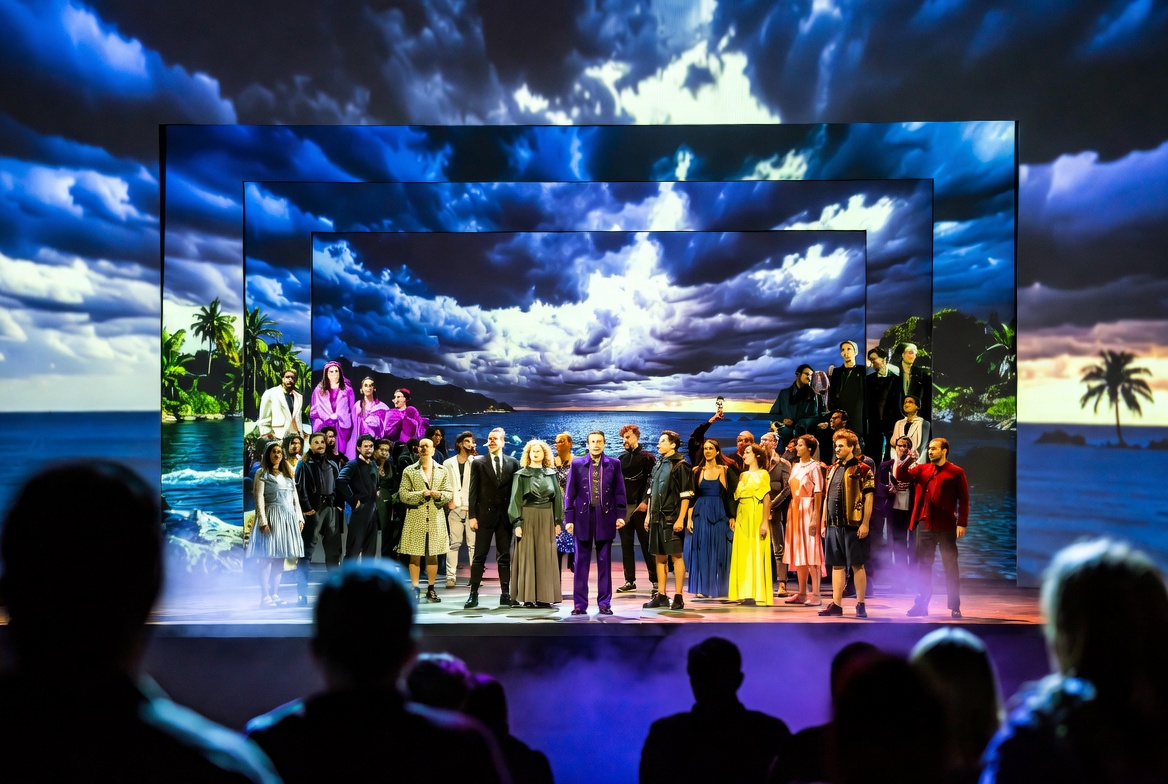
By 1611, Shakespeare’s verse had reached its most refined and lyrical stage. The Tempest features some of his most beautiful poetry, particularly in Ariel’s songs and Prospero’s speeches. The play masterfully shifts between elevated blank verse for nobles and magic, and earthy prose for the comic characters.
Its dramatic techniques are highly sophisticated: parallel plotting (the noble conspiracy mirrors the low characters’ plot), dramatic irony (the audience knows Prospero controls everything), and spectacular stage directions suited to the indoor theater’s capabilities. The unity of time and place creates intense focus and theatrical economy.
Why The Tempest Remains Relevant Today
More than four centuries later, The Tempest continues to speak powerfully to contemporary concerns:
- Leadership and Forgiveness: Prospero offers lessons for modern leaders about balancing justice with mercy.
- Colonial Legacies: The play is frequently staged and studied in light of ongoing discussions about empire, cultural imposition, and indigenous rights.
- Climate and Nature: The opening storm gains new resonance in an era of extreme weather events.
- Art and Creativity: Prospero’s renunciation of magic prompts reflection on when artists should lay down their tools and pass the torch.
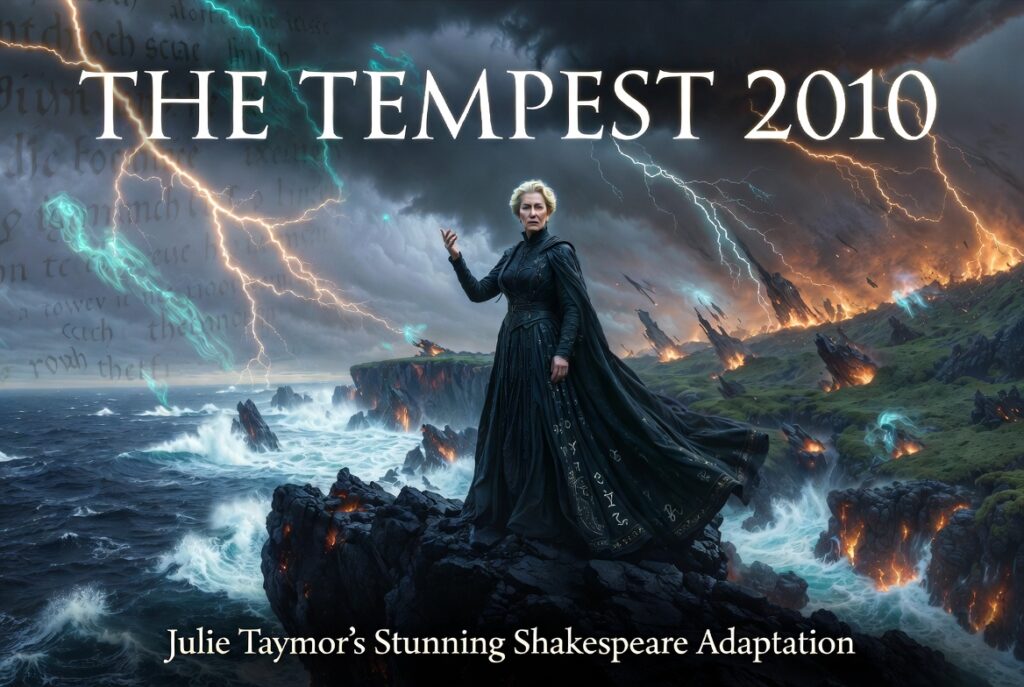
Notable modern adaptations include Julie Taymor’s 2010 film starring Helen Mirren as Prospera, the sci-fi classic Forbidden Planet (1956), and countless theatrical productions that reinterpret Caliban or reframe the island setting. The play’s flexibility makes it a favorite for directors exploring issues of race, gender, and power.
Expert Insights and Study Tips
For students and teachers, here are key analytical approaches:
- Essay Topics: “Is Prospero a tyrant or a benevolent ruler?” “Discuss Caliban as a sympathetic character.” “How does The Tempest explore the nature of theatrical illusion?”
- Essential Quotes:
- “We are such stuff / As dreams are made on, and our little life / Is rounded with a sleep.” (Prospero, Act 4)
- “This thing of darkness I / Acknowledge mine.” (Prospero on Caliban)
- “O brave new world…” (Miranda)
Recommendations:
- Best modern editions: Arden Shakespeare or Folger Shakespeare Library.
- Outstanding performances: The 2010 Mirren film, Royal Shakespeare Company productions, or audiobook versions narrated by leading actors.
- Compare with The Winter’s Tale or Cymbeline to understand Shakespeare’s late style.
The Enduring Magic of The Tempest
The Tempest begins in chaos and ends in harmony. Through Prospero’s journey from vengeance to forgiveness, Shakespeare offers a hopeful vision of humanity’s capacity for growth and reconciliation. As Prospero steps forward in the Epilogue to ask for the audience’s indulgence, we feel the playwright speaking directly to us across the centuries.
This final solo masterpiece encapsulates Shakespeare’s genius: the ability to entertain with magic and spectacle while probing the deepest questions of power, love, freedom, and what it means to be human. Whether you read it, watch it, or study it, The Tempest leaves readers and audiences transformed — just as the island changes everyone who lands upon its shores.
The play’s closing calm after the storm reminds us that even the most powerful among us must eventually release control and trust in the next generation. In doing so, Shakespeare gave us not only one of his greatest works but a beautiful farewell to his own extraordinary career.
Frequently Asked Questions (FAQs)
What is the main message of The Tempest? The central message revolves around forgiveness, the responsible use of power, and the value of releasing control. Mercy ultimately triumphs over revenge.
Is The Tempest based on a true story? Not directly, but it was heavily inspired by the 1609 Sea Venture shipwreck and contemporary accounts of Bermuda and the New World.
What happens to Caliban at the end? Prospero forgives him and leaves him as the sole ruler of the island, though Caliban expresses regret for following Stephano and Trinculo.
Why is Prospero considered a self-portrait of Shakespeare? His renunciation of magic and the Epilogue are widely interpreted as the playwright bidding farewell to the theater and his audience.
Is The Tempest a comedy or a tragedy? It is classified as a romance or tragicomedy — it contains serious themes but ends in reconciliation and joy.
What are the best modern adaptations? Julie Taymor’s 2010 film, Forbidden Planet (1956), and various innovative stage productions that emphasize postcolonial themes.
How long does it take to read The Tempest? Most readers finish it in 2–4 hours due to its relatively short length and engaging pace.