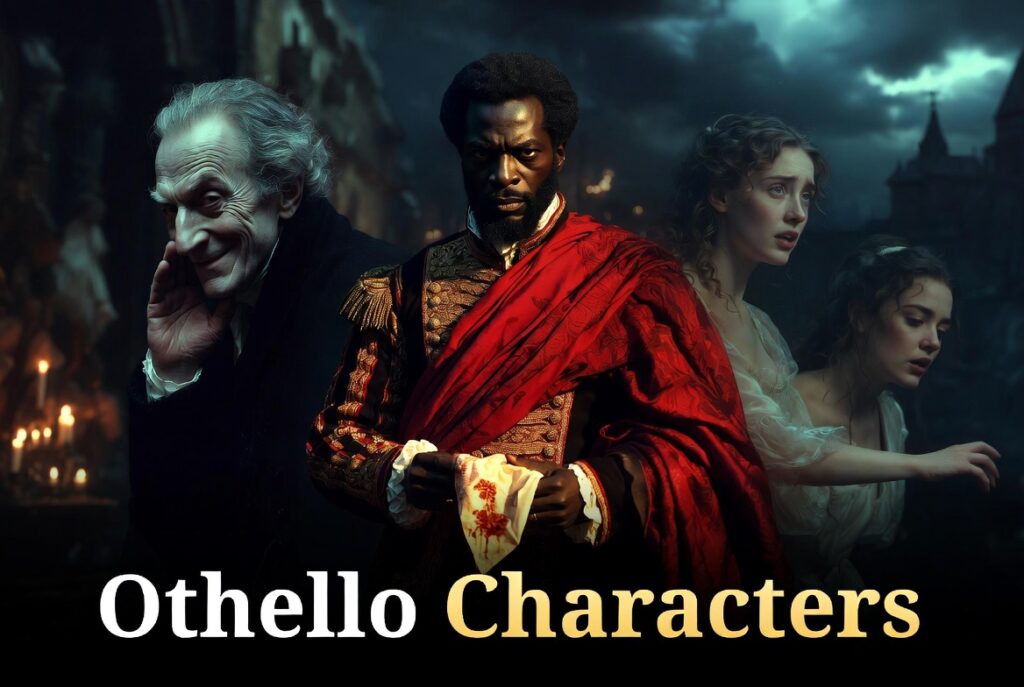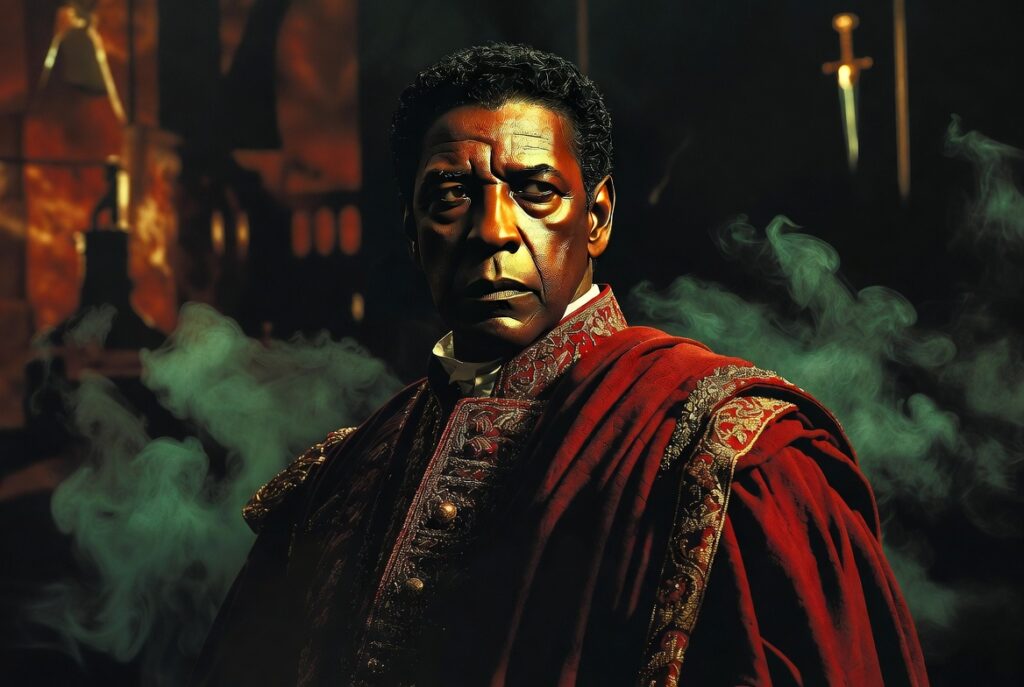
William Shakespeare’s Othello is fundamentally a masterpiece of claustrophobia. While the play opens against the backdrop of a grand military conflict between the Venetian Republic and the Ottoman Empire, the true battlefield quickly shrinks to a single bedroom in Cyprus. The fate of nations takes a backseat to psychological warfare. To truly understand this tragedy, you must look closely at the characters in Othello. Grasping the play requires moving beyond simple hero-and-villain labels to dissect exactly why these individuals tear each other apart.
Whether you are a literature student writing a thesis, an actor preparing for a role, or a theater enthusiast, this guide solves the puzzle of Shakespeare’s most intimate tragedy. We will strip away the archaic language to reveal the raw, deeply human insecurities driving the narrative.
What You Will Learn in This Guide:
-
The psychological profiles of the primary and supporting cast.
-
The true nature of Othello’s hamartia (tragic flaw)—which goes far deeper than mere jealousy.
-
An analysis of Iago’s “motiveless malignity” and manipulation tactics.
-
How character foils mirror the play’s themes of morality, race, and gender.
Expert Insight: This analysis draws on centuries of literary criticism, historical context from early modern England, and modern psychological frameworks to provide a comprehensive, authoritative breakdown of Shakespeare’s classic.
The Protagonist: Othello, the Moor of Venice
Othello is one of Shakespeare’s most complex tragic heroes. He commands immense respect on the battlefield, yet he is disastrously unequipped for the nuanced, deceptive social politics of Venetian peacetime and romantic love.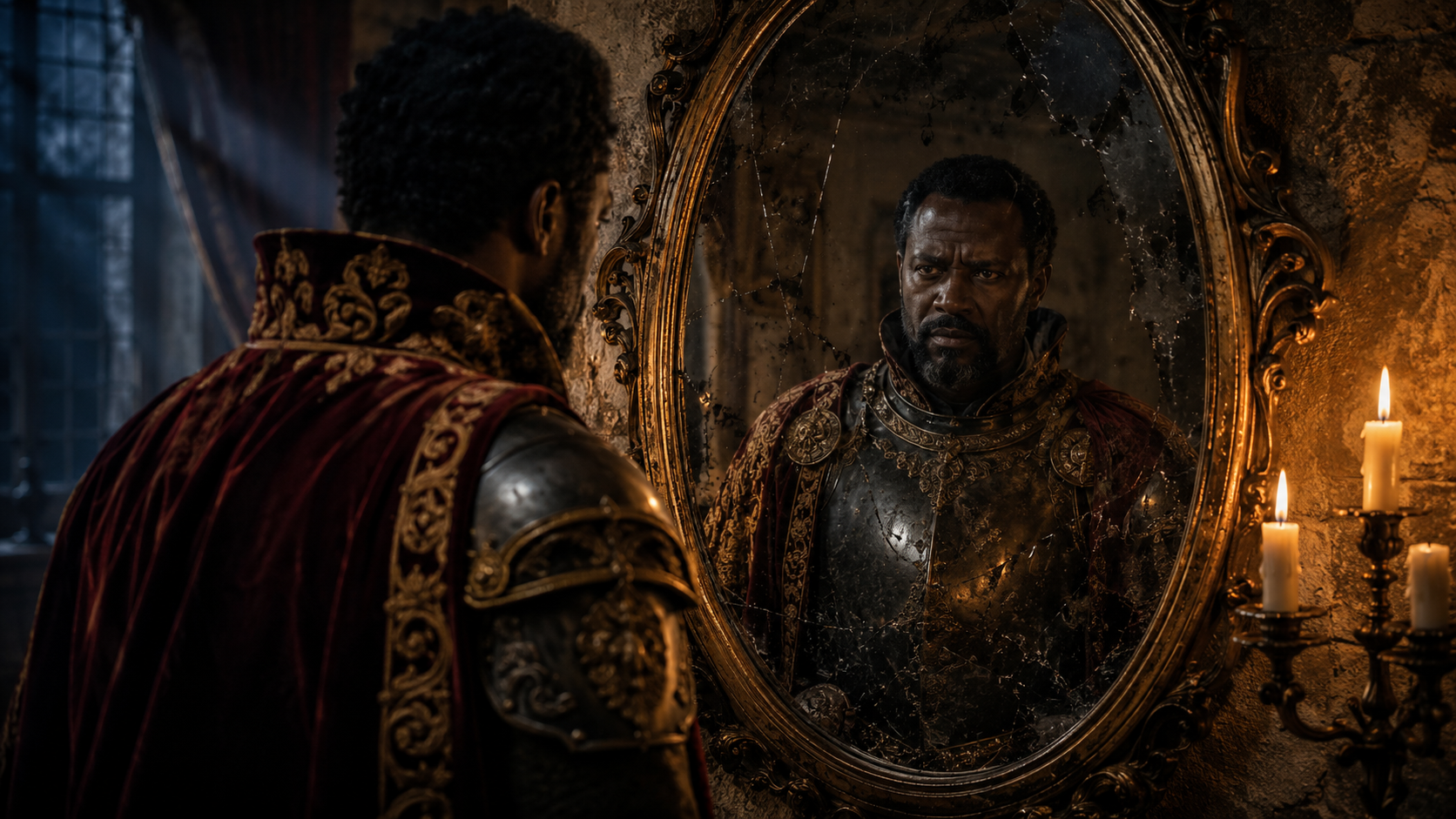
A Noble Leader in a Prejudiced Society
When we first meet Othello, he defies the racist stereotypes held by characters like Brabantio and Iago. Rather than the savage brute they describe, Othello is eloquent, composed, and deeply dignified. He is a celebrated military general, indispensable to the Venetian state. However, his status is highly precarious. He is a Moor—a Black man in a predominantly white, fiercely insular society.
Venice loves Othello the soldier, but it rejects Othello the citizen and son-in-law. This duality creates a profound internal fracture. No matter how many battles he wins, Othello carries an internalized sense of being an outsider, an insecurity that Iago later masterfully exploits.
Othello’s Tragic Flaw (Hamartia)
Traditionally, students are taught that Othello’s tragic flaw is jealousy. While jealousy is the weapon that kills him, it is not the root cause. Othello’s true hamartia is his crippling lack of self-worth in the domestic sphere, paired with an absolute, misplaced trust in men over women.
Othello believes that the rough, masculine camaraderie of soldiers (represented by “honest Iago”) is inherently more trustworthy than the unfamiliar territory of female affection. Because he secretly believes he is unworthy of the young, beautiful, and aristocratic Desdemona, it takes very little for Iago to convince him that her love is a lie. His rapid descent from a poetic, rational leader to a fragmented, violent murderer is driven by the collapse of his fragile self-esteem.
The Scholarly Perspective: Marriage and Tragedy
Literary scholars often point out that the tragedy is fundamentally rooted in the failure to navigate the marital dynamic. As noted by academic critiques, Othello and Desdemona create a disastrous marital state. It is ironically their very passion for an idealized, perfect virtue that induces their ruin (Langis, n.d.). Othello views Desdemona not as a flawed human being, but as a pure, divine anchor for his own soul. When Iago taints that image, Othello feels his entire universe—and his own salvation—crumbling.
Key Quotes to Remember
-
“Keep up your bright swords, for the dew will rust them.”
-
Translation: Put your weapons away.
-
Significance: Spoken in Act 1, this shows Othello’s early, authoritative composure. He commands a room without violence, contrasting sharply with his later erratic behavior.
-
-
“Then must you speak / Of one that loved not wisely, but too well…”
-
Translation: Remember me as someone who loved excessively, lacking the wisdom to manage it.
-
Significance: Othello’s final self-assessment before his suicide. He frames his fatal actions as a consequence of overwhelming love rather than inherent malice.
-
The Antagonist: Iago, the Master Manipulator
If Othello is a study in emotional vulnerability, his ancient (ensign) Iago is a masterclass in sociopathy. Iago is widely considered one of the greatest villains in literary history because of his terrifying intimacy with the audience and his seemingly boundless malice.
“Motiveless Malignity” or Deeply Insecure?
The Romantic poet Samuel Taylor Coleridge famously described Iago as operating out of “motiveless malignity”—doing evil simply for the sake of evil. But looking closely at the text reveals a character boiling over with petty grievances.
Iago lists several motives for destroying Othello:
-
Professional Jealousy: Othello promoted the inexperienced, book-smart Cassio to lieutenant instead of him.
-
Sexual Paranoia: Iago suspects, without a shred of evidence, that Othello has slept with his wife, Emilia.
-
Racism: Iago harbors a deep, visceral prejudice against Othello’s race, frequently using animalistic slurs.
However, none of these motives fully justify the apocalyptic level of revenge he enacts. Iago’s true motivation seems to be an addiction to control. He feels slighted by a world that doesn’t recognize his perceived genius, so he decides to play God, proving his superiority by rewriting the lives of his superiors.
The Psychology of the Machiavel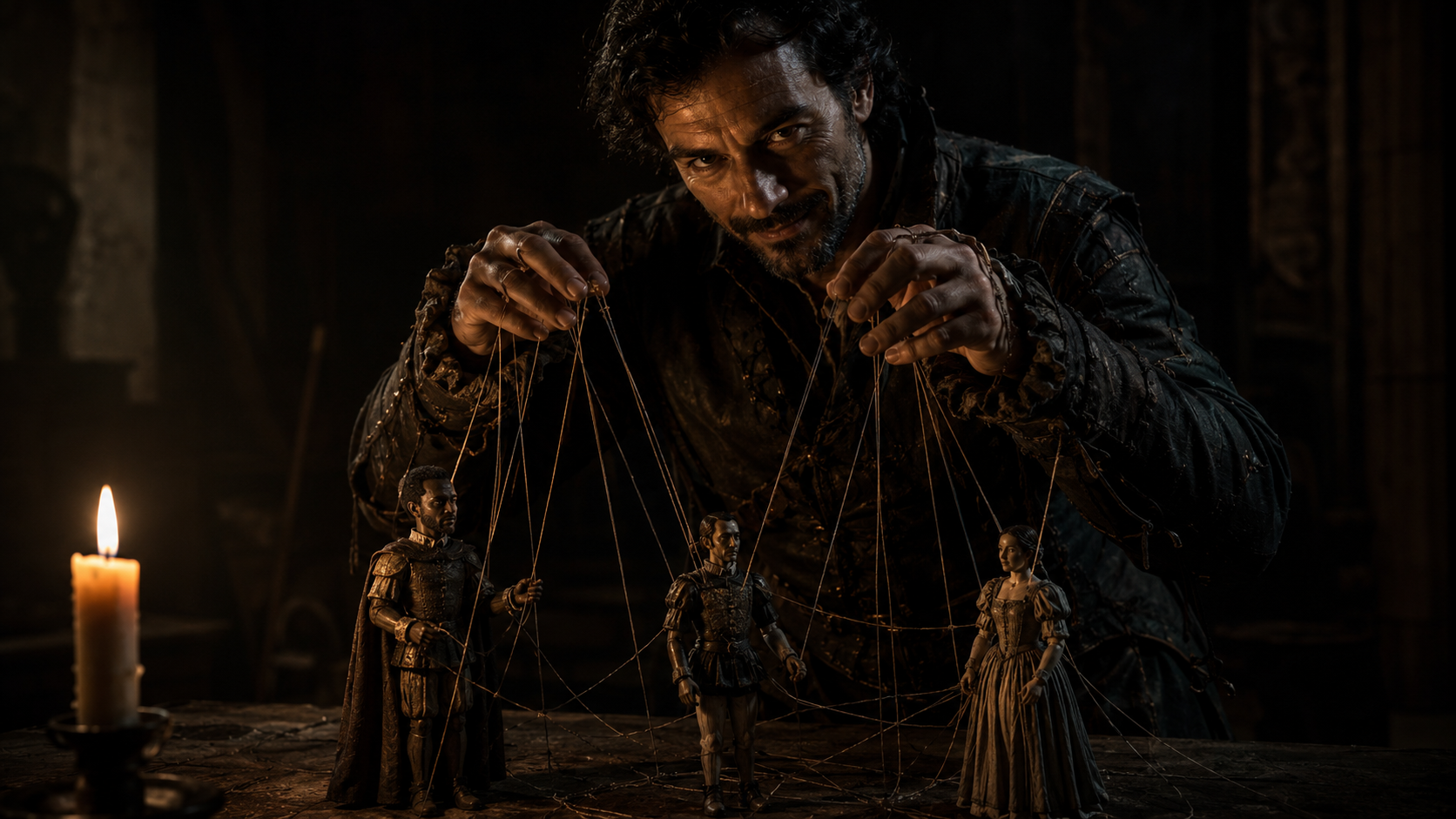
Iago perfectly embodies the early modern literary archetype of the “Machiavel”—a character who uses deception, hypocrisy, and ruthless cunning to achieve his goals.
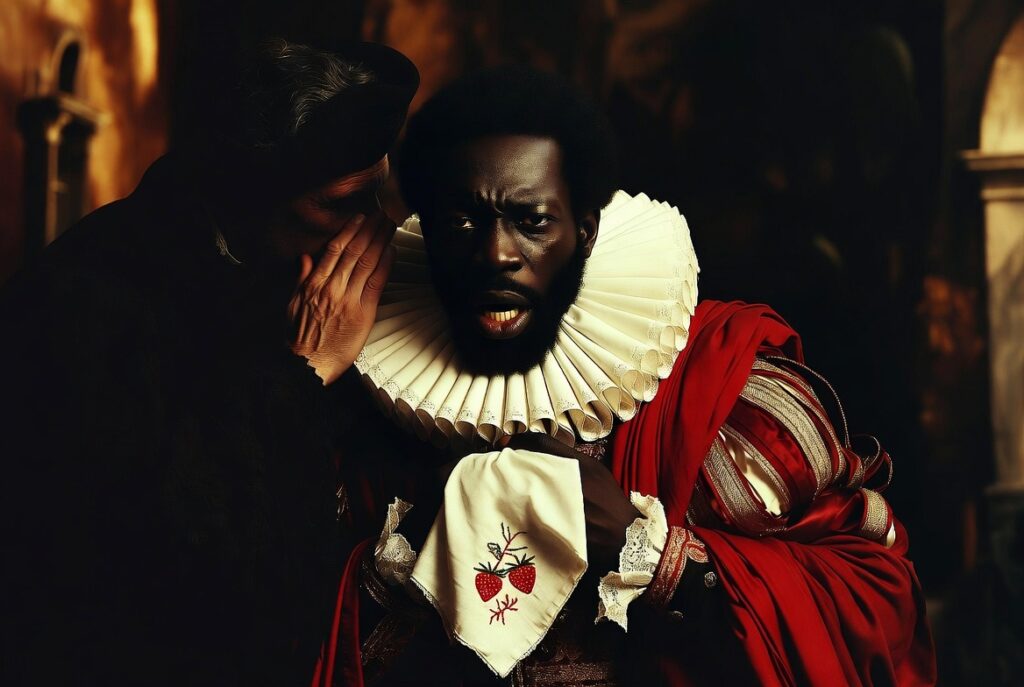
His brilliance lies in his emotional intelligence. Iago does not lie outright as much as he implies, hesitates, and asks leading questions, forcing Othello to fill in the blanks with his own worst fears. He weaponizes the virtues and weaknesses of every other character:
-
He uses Cassio’s courtesy as proof of adultery.
-
He uses Desdemona’s kindness as a tool to implicate her.
-
He uses Othello’s honor to demand “justice” against his wife.
The Tragic Victim: Desdemona
Desdemona is frequently mischaracterized as a completely passive victim. However, a deeper analysis of her role among the characters in Othello reveals a young woman of immense courage whose tragic downfall is paved by her own unshakeable innocence.
Defiance vs. Naivety
In the first act of the play, Desdemona is astonishingly bold. She openly defies her father, Brabantio, and the strict patriarchal norms of Venetian society to elope with a Black military general. When called before the Venetian Senate, she speaks with eloquence and firm resolve, demanding to accompany Othello to the warfront in Cyprus. This early version of Desdemona is a trailblazer, demonstrating agency and a deep, passionate love.
However, once isolated in Cyprus and subjected to Othello’s increasing abuse, her demeanor changes. Her tragic flaw is her profound naivety regarding human cruelty. Because she is completely pure in her intentions, she lacks the framework to understand Othello’s sudden, violent jealousy. Instead of fighting back as her earlier defiance might suggest, she internalizes his anger, assuming she must be at fault or that state affairs have upset him.
The Role of the Handkerchief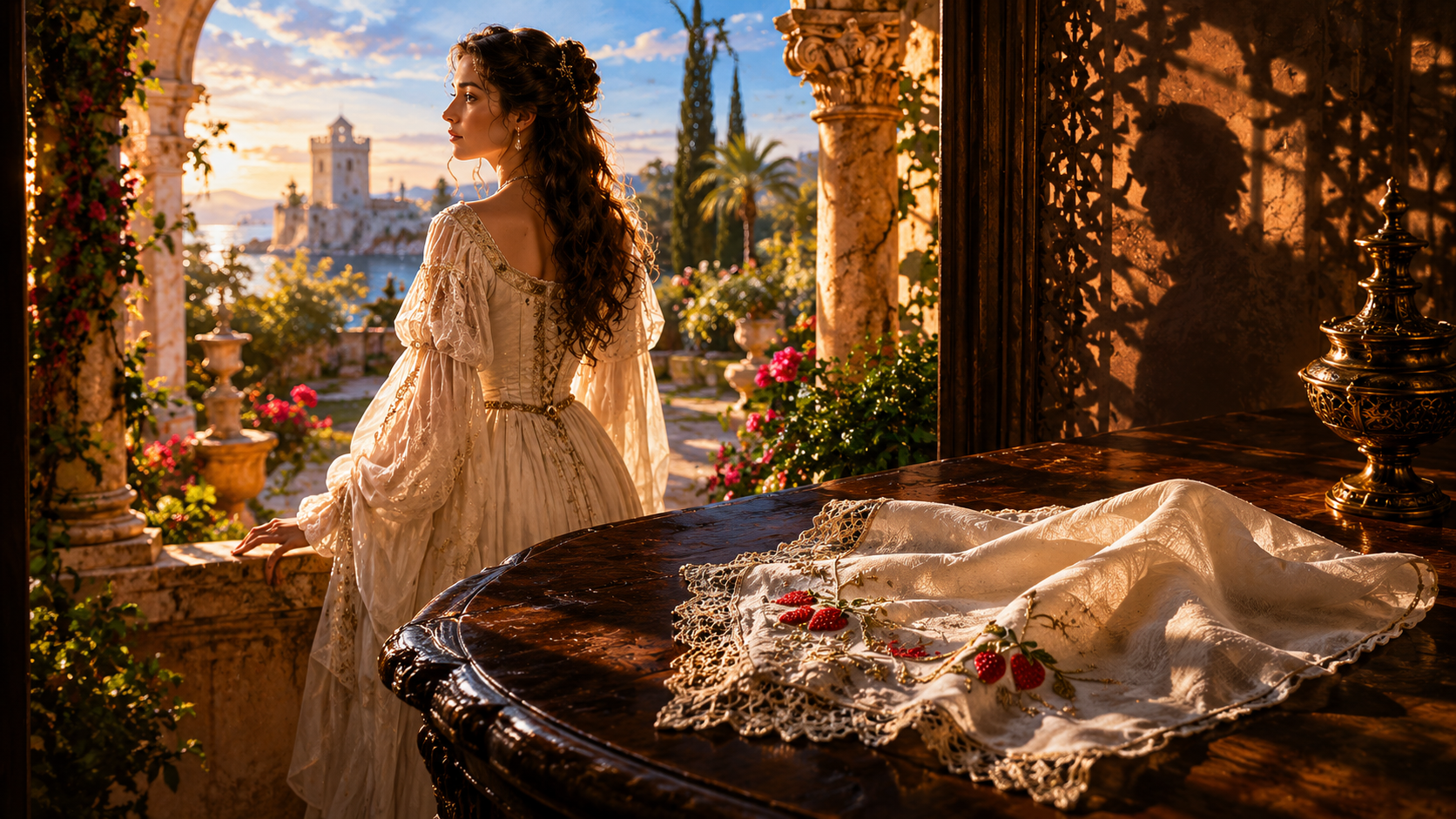
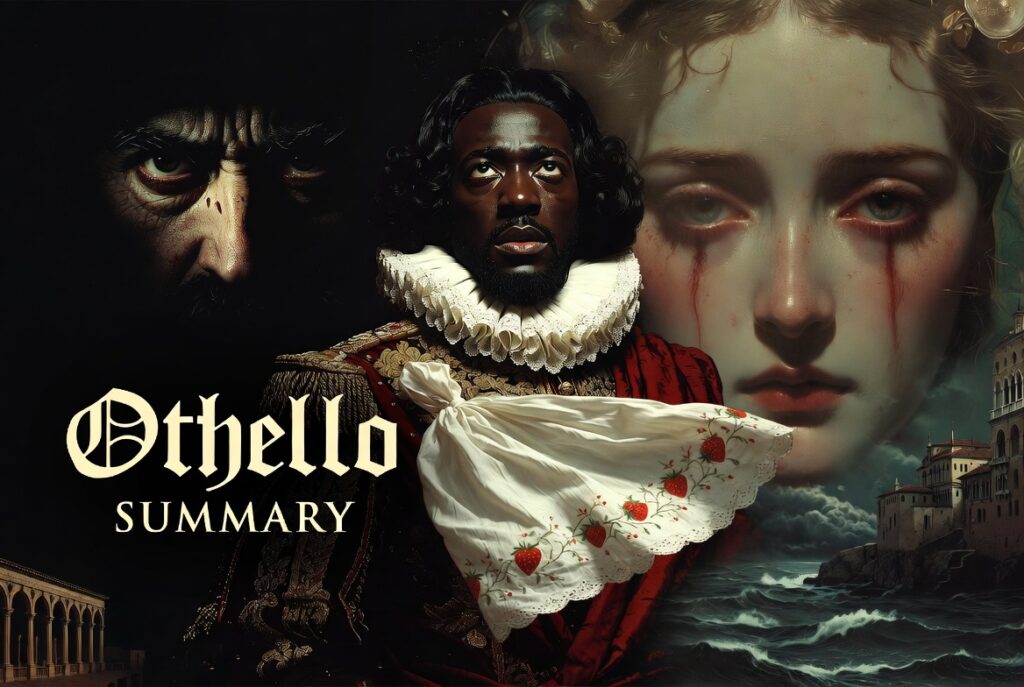
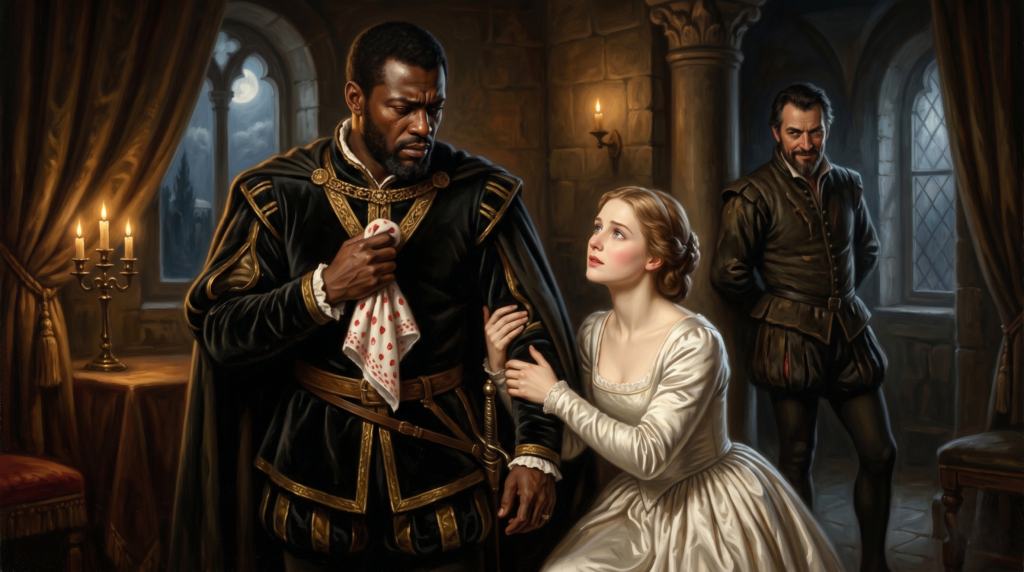
The strawberry-spotted handkerchief is the most critical prop in the play, serving as Iago’s “ocular proof” of infidelity. For Othello, it symbolizes Desdemona’s honor and their marital bond. For Desdemona, losing it is a simple, albeit unfortunate, accident.
Her fatal mistake occurs when Othello aggressively demands the handkerchief. Intimidated by his terrifying shift in behavior and wanting to diffuse his anger, she lies, claiming it is not lost. This singular, panicked lie seals her fate, confirming Iago’s poison in Othello’s mind. Desdemona’s inability to read the severity of the situation—and her continued, innocent pleading for Cassio’s reinstatement while Othello is blinded by jealousy—highlights how her inherent goodness is weaponized against her.
The Supporting Cast: Catalysts for Catastrophe
The tragedy of Othello relies heavily on its secondary characters. Iago’s plot would completely unravel if the supporting cast communicated honestly with one another. Instead, their individual flaws and societal blind spots make them perfect catalysts for disaster.
Emilia: The Voice of Reality and Feminism
Emilia, Iago’s wife and Desdemona’s attendant, undergoes the most profound character arc in the play. Initially, she appears as a submissive, somewhat cynical wife who steals the tragic handkerchief simply to please her emotionally abusive husband.
However, Emilia serves as the vital moral compass of the climax. She is the ultimate foil to Desdemona’s idealism. In her famous “Willow Song” speech, Emilia delivers a surprisingly modern, feminist critique of marriage, arguing that women have the same desires, resentments, and human frailties as men. When she discovers that her husband engineered the tragic murder of her mistress, she sacrifices her own life to expose the truth, refusing to be silenced by the patriarchy.
Cassio: The Flawed Golden Boy
Michael Cassio is young, handsome, educated, and privileged. As an outsider from Florence, his promotion over Iago sets the entire tragedy in motion. Cassio represents the refined, courtly gentleman, treating Desdemona with a reverent, almost exaggerated politeness that Iago easily frames as flirtation.
Yet, Cassio is deeply flawed. His obsession with his “reputation” makes him desperate and easily manipulated. Furthermore, his treatment of women is highly hypocritical. While he worships the aristocratic Desdemona, he openly mocks and disrespects Bianca, a lower-class courtesan who genuinely loves him. This duality exposes the double standards of Venetian masculinity.
Roderigo: The Comedic Fool Turned Tragic Tool
Roderigo is a wealthy, foolish Venetian who is obsessively infatuated with Desdemona. He is the play’s primary comic relief, but his toxic entitlement ultimately makes him a willing accomplice to murder. Iago drains Roderigo’s bank account with the repeated, cynical promise to “put money in thy purse,” exploiting Roderigo’s belief that a woman’s affection can be purchased. Roderigo’s pathetic lack of self-awareness highlights the destructive nature of unrequited, obsessive lust.
Brabantio & Bianca: The Bookends of Society
-
Brabantio: Desdemona’s father represents the deep-seated racism and patriarchal ownership of Venetian society. He loves Othello as a war hero but is physically repulsed by the idea of the Moor marrying his daughter, famously accusing Othello of using “witchcraft.”
-
Bianca: The courtesan in Cyprus serves to expose the hypocrisy of the male characters. Though she is judged and dismissed due to her profession, her genuine grief over Cassio’s injury proves she possesses more authentic emotion and loyalty than the supposedly “honorable” men who mock her.
Character Foils: Mirrors of Morality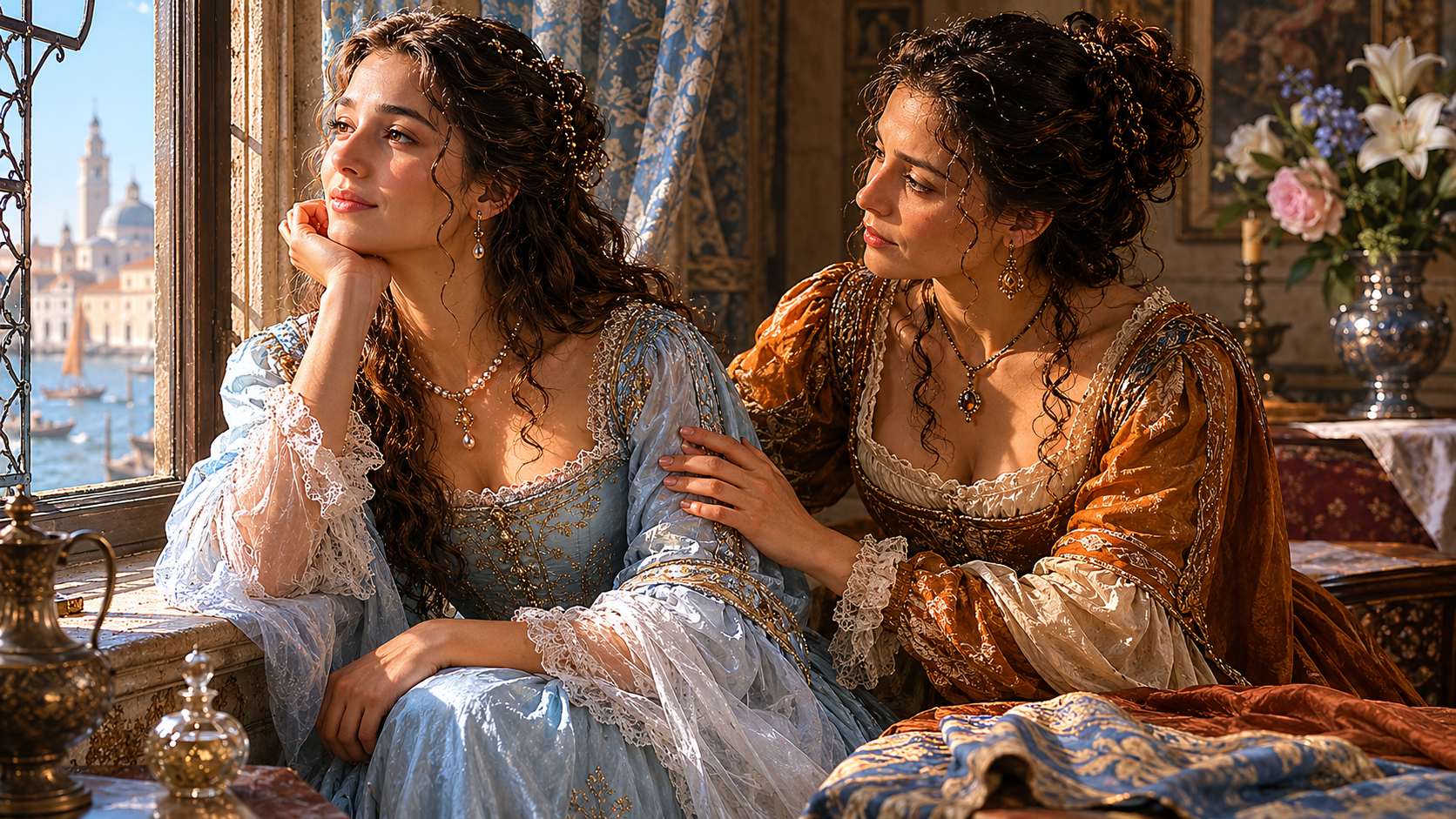
Shakespeare frequently uses character foils—characters with contrasting traits—to highlight specific themes and psychological complexities. The characters in Othello are meticulously paired to emphasize the differences between passion, logic, idealism, and cynicism.
| Character Foil | The Core Contrast | Thematic Significance |
| Othello vs. Iago | Emotion vs. Calculation: Othello is driven by raw, poetic passion and honor. Iago operates purely on cold, ruthless logic and self-interest. | Highlights the vulnerability of honest, emotional individuals when faced with sociopathic manipulation. |
| Desdemona vs. Emilia | Idealism vs. Pragmatism: Desdemona views love as divine and perfect. Emilia views marriage as a transactional, often deeply flawed, earthly institution. | Exposes the harsh realities of early modern womanhood and the danger of naive idealism. |
| Cassio vs. Iago | Courtesy vs. Crudeness: Cassio embodies the polished, respectful courtier. Iago embodies the crude, cynical, battle-hardened soldier. | Contrasts the polished facade of society with the ugly, base instincts lurking beneath the surface. |
The Role of Race and Gender Among the Characters
A thorough analysis of this Shakespearean tragedy is incomplete without addressing the sociological dynamics at play. The characters are completely trapped by the prejudices of their era.
The Elizabethan and Jacobean audiences would have carried specific anxieties about race and miscegenation (interracial marriage). Iago taps directly into these societal fears, using animalistic and racially charged language to isolate Othello. Othello’s tragedy is magnified by the fact that he internalizes this racism. He begins to believe that his blackness makes him inherently unworthy of Desdemona’s whiteness, leading him to accept Iago’s lies over his wife’s truth.
Similarly, the play is a searing indictment of patriarchal anxieties regarding female sexuality. Every male character in the play—Othello, Iago, Cassio, Brabantio, and Roderigo—views women either as pure, virginal goddesses or as unfaithful, deceitful harlots. There is no middle ground. Desdemona is murdered because she is falsely moved from the first category to the second in her husband’s mind.
Frequently Asked Questions (FAQ) about Othello’s Characters
Who is the most complex character in Othello?
While Othello is the tragic hero, Iago is widely considered the most psychologically complex character. His brilliant, improvisational manipulation and his ambiguous, shifting motives have fascinated literary critics and psychologists for centuries. He is the architect of the play’s psychological horror.
Why does Iago hate Othello?
Iago explicitly claims he hates Othello because he was passed over for a promotion in favor of Cassio, and because he suspects Othello slept with his wife, Emilia. However, most scholars agree these are mere excuses. Iago’s hatred is fueled by profound insecurity, racism, and a sociopathic desire to assert dominance over those who hold higher societal status.
Is Othello a tragic hero?
Yes. Othello perfectly fits Aristotle’s definition of a tragic hero. He is a noble, highly respected figure whose downfall is caused by a fatal flaw (hamartia)—in this case, his deeply rooted insecurity and misplaced trust. His tragic end evokes pity and fear, fulfilling the requirements of a classical tragedy.
What are the three main characters in Othello?
The narrative revolves around a central trio: Othello (the noble but vulnerable general), Iago (the manipulative and sociopathic ensign), and Desdemona (the innocent, idealistic wife). The entire plot hinges on the toxic triangle created by Iago’s deceit.
The Enduring Legacy of Othello’s Cast
The enduring power of Othello lies not in its historical setting, but in its terrifyingly accurate portrayal of human frailty. The characters in Othello are not mythological gods or untouchable kings; they are husbands, wives, and colleagues driven by the deeply relatable emotions of jealousy, insecurity, ambition, and love.
By dissecting the psychological motives of Othello, Iago, Desdemona, and the vital supporting cast, we witness a perfect storm of manipulation. Iago’s brilliance was recognizing that he did not need a grand army to destroy the Moor of Venice; he only needed to hold up a distorted mirror to Othello’s own deepest insecurities.