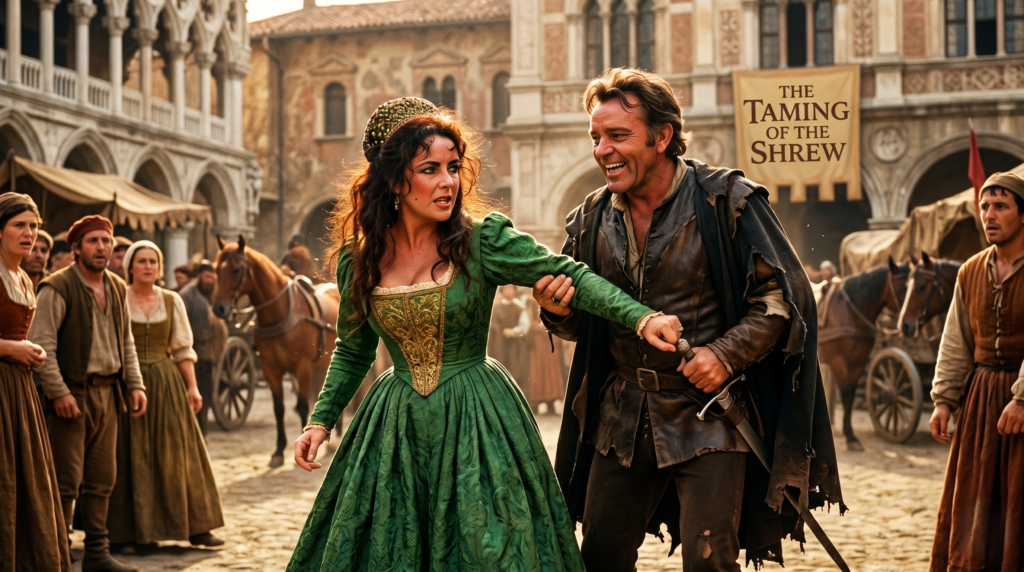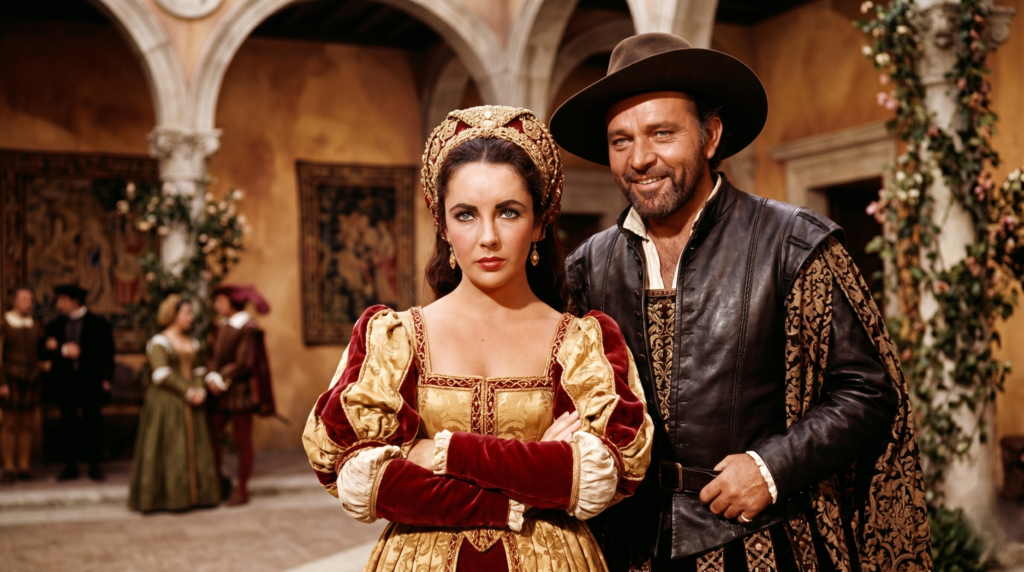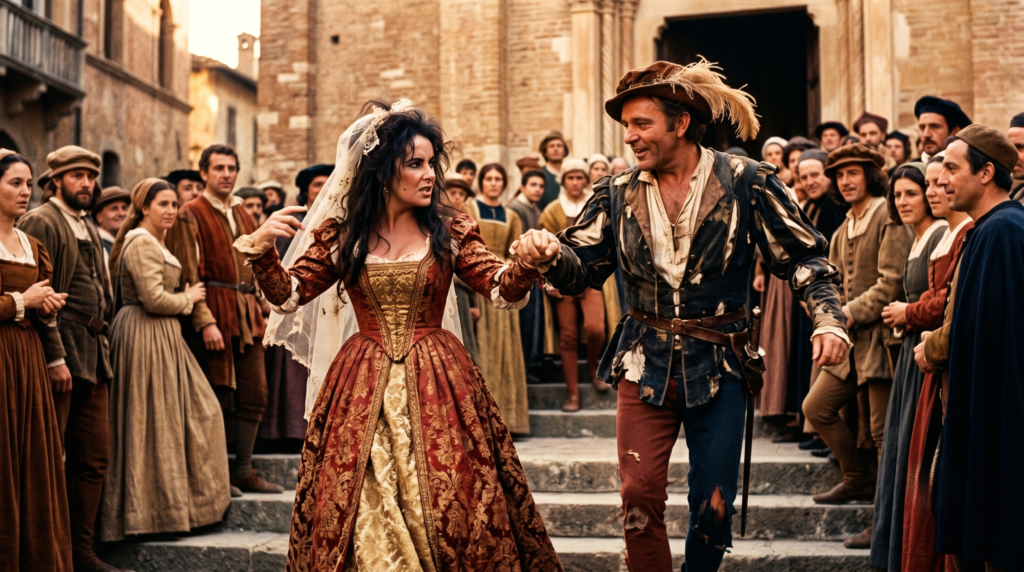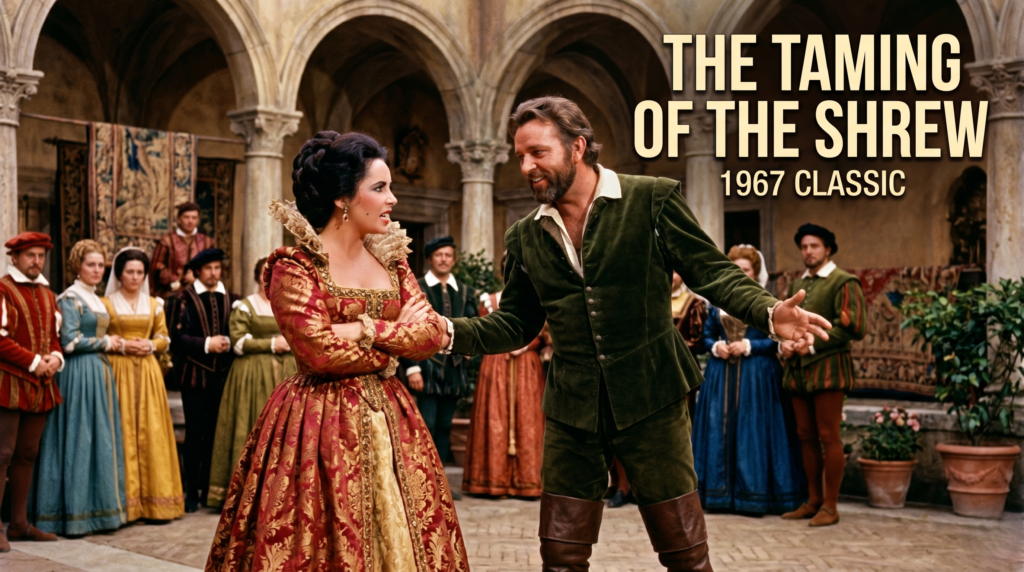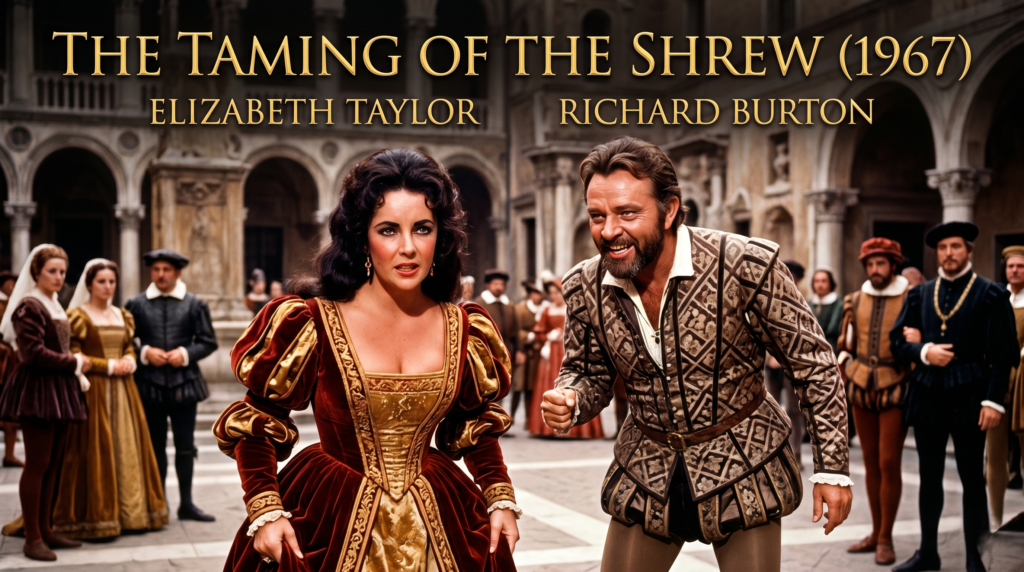
Imagine a fiery Elizabeth Taylor, eyes blazing with defiance, hoisting a lute high above her head before smashing it down in a whirlwind of rage. Opposite her stands Richard Burton, bearded and boisterous, matching her intensity with a grin that promises both chaos and conquest. This is not just another Hollywood spectacle — it is The Taming of the Shrew brought to vivid, colorful life in Franco Zeffirelli’s 1967 film adaptation.
Taming of the Shrew Elizabeth Taylor remains one of the most electrifying intersections of Shakespearean theater and 1960s cinematic glamour. For fans of William Shakespeare’s works and classic film enthusiasts alike, this adaptation offers more than star power: it delivers a rollicking, visually stunning interpretation that captures the play’s wild comedic energy while reflecting the real-life passion of its legendary leads.
As a longtime scholar of Shakespearean drama and its screen translations, I’ve analyzed countless adaptations. Zeffirelli’s The Taming of the Shrew stands out for its bold visual storytelling, the explosive chemistry between Taylor and Burton, and its ability to make Elizabethan wit feel immediate and entertaining. Whether you’re studying the original play, exploring classic cinema, or simply curious about this iconic pairing, this deep dive will help you appreciate why this film continues to captivate audiences decades later.
Understanding Shakespeare’s The Taming of the Shrew: The Original Play
To fully appreciate the 1967 film, we must first ground ourselves in Shakespeare’s source material. The Taming of the Shrew, likely written between 1590 and 1592, is one of the Bard’s earliest comedies. It opens with a clever induction featuring the drunkard Christopher Sly, who is tricked into believing he is a lord watching a play — a meta-theatrical frame that sets a tone of playful deception.
Plot Summary and Structure The main action unfolds in Padua, where the wealthy Baptista Minola has two daughters. The younger, Bianca, is sweet and sought after by multiple suitors. However, Baptista declares that Bianca cannot marry until her elder sister, the sharp-tongued and tempestuous Katharina (Kate), finds a husband. Enter Petruchio, a gentleman from Verona who arrives seeking a rich wife and views Kate’s fiery reputation as a challenge rather than a deterrent. What follows is a battle of wills involving disguise, deception, psychological games, and a famous (and controversial) “taming” process.
Key Themes Shakespeare explores several enduring ideas: the dynamics of courtship and marriage in a patriarchal society, the performance of gender roles, the power of language and wit, and the transformative potential of love (or at least strategic partnership). The play delights in role-playing — suitors disguise themselves as tutors, servants impersonate masters — highlighting how identity can be fluid and performative.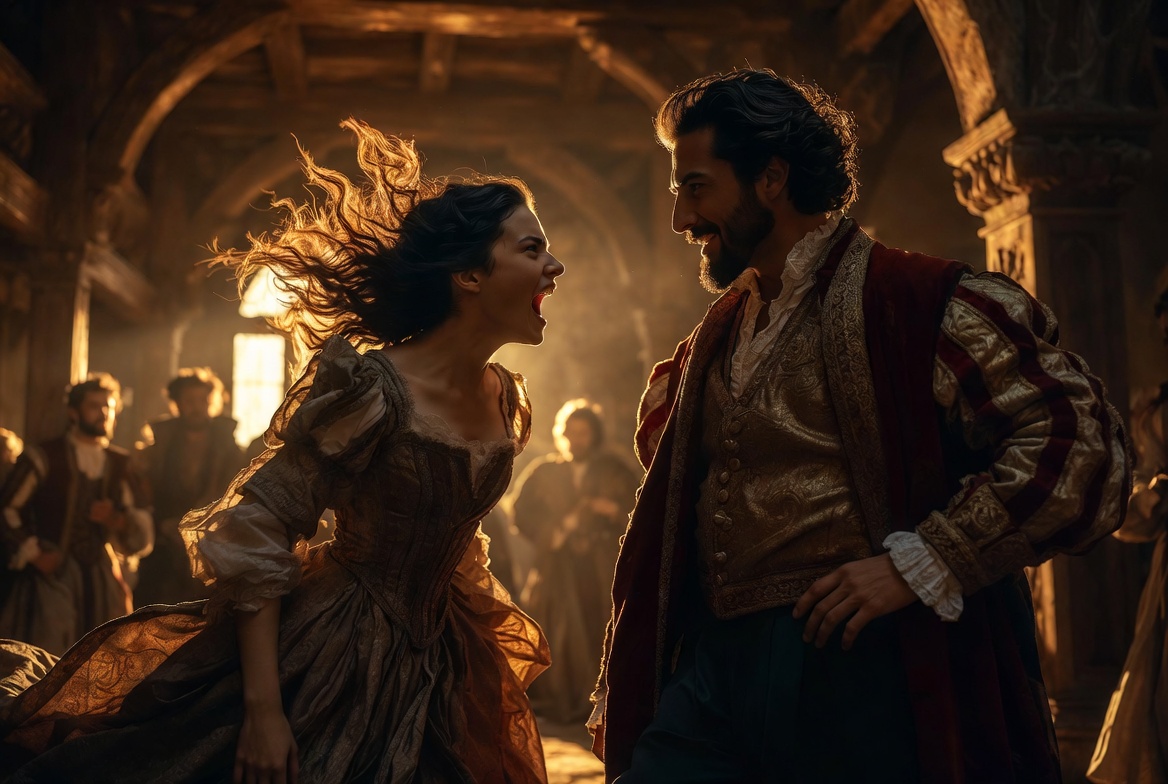
Historical Context In Elizabethan England, shrewish behavior in women was often mocked in popular literature and plays. Marriage was as much an economic transaction as a romantic one. Shakespeare draws from these traditions but infuses them with his signature verbal fireworks and psychological depth. The comedy relies on both physical slapstick and sophisticated wordplay, elements that Zeffirelli would later amplify on screen.
Enduring Controversies No discussion of The Taming of the Shrew is complete without addressing its problematic elements. Modern audiences often grapple with whether the play endorses misogyny or satirizes it. Kate’s final speech, in which she advocates for wifely submission, has been interpreted as everything from genuine transformation to ironic performance. Contemporary readings frequently view it through lenses of power, consent, and mutual respect, seeing potential for a battle of equals rather than domination.
These complexities make the play rich for adaptation. Zeffirelli’s film leans into the comedic battle while softening some edges through star charisma and visual splendor.
The Road to the 1967 Film: Production History and Cultural Moment
Franco Zeffirelli, primarily known for his theatrical and operatic work, made his English-language directorial debut with this project. His vision was grand and operatic — prioritizing visual feast and emotional intensity over strict textual fidelity.
Franco Zeffirelli’s Vision Zeffirelli wanted a lavish, colorful Renaissance world that felt alive and chaotic. Shot entirely on soundstages at Dino De Laurentiis’ studios in Rome, the film features sumptuous sets, vibrant costumes designed by Irene Sharaff, and a lively score by Nino Rota. This approach transformed Shakespeare’s comedy into a cinematic spectacle.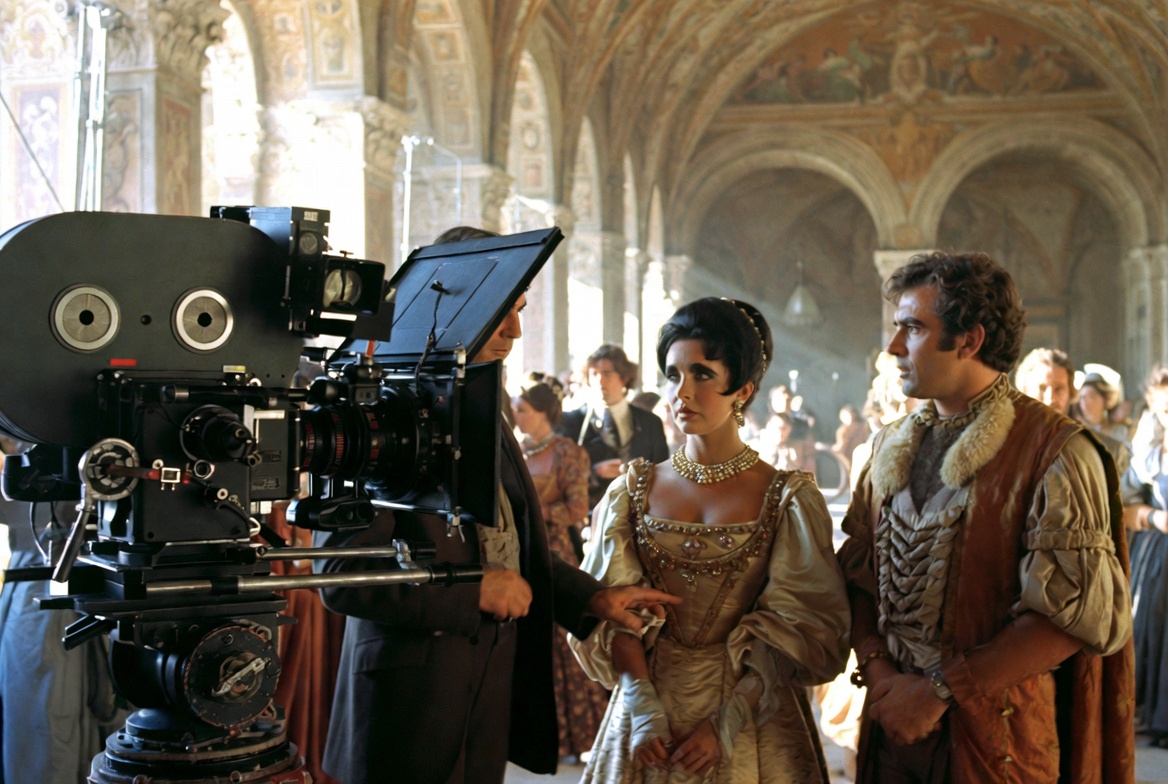
Casting the Burtons The decision to cast Elizabeth Taylor and Richard Burton was both artistic and commercial genius. At the time, the couple was one of the most famous — and scandalous — in the world, fresh from their headline-making romance during Cleopatra. Taylor, making her Shakespearean debut, brought Hollywood glamour and raw emotional power. Burton, a seasoned stage actor with deep classical training, provided gravitas and vocal mastery. Their real-life turbulent passion mirrored the on-screen relationship, adding authentic electricity.
The Burtons co-produced the film, investing over a million dollars of their own money and forgoing upfront salaries for profit participation — a risky but ultimately rewarding move.
Behind-the-Scenes Challenges and Innovations Taylor was initially terrified, having never performed Shakespeare. She reportedly struggled with the verse early on and even requested to reshoot the first day’s scenes once she gained confidence. Zeffirelli and Burton encouraged her, and her performance blossomed into something inventive and fierce.
Production lasted five months, emphasizing physical comedy and elaborate staging. The film’s self-financed nature gave the creative team unusual freedom.
1960s Context Released in 1967, the film arrived during a transitional period in Hollywood. Audiences craved star-driven spectacles amid shifting cultural norms. The Burton-Taylor pairing capitalized on public fascination with celebrity romance while delivering prestige Shakespeare.
Elizabeth Taylor as Katharina: A Star Reborn in Shakespeare
Elizabeth Taylor’s portrayal of Katharina is one of the film’s greatest strengths and surprises. Coming from a background in MGM glamour roles rather than classical theater, Taylor approached the part with both vulnerability and fearless intensity.
Performance Breakdown Taylor’s Kate is physically dynamic — snarling, stomping, and delivering lines with blazing fury. Her famous lute-smashing scene and the chaotic wedding sequence showcase her commitment to physical comedy. Yet she also reveals layers of vulnerability, particularly in quieter moments where hurt flashes beneath the anger. Her vocal delivery, initially a point of nervousness, grows more assured, blending Hollywood expressiveness with Shakespearean rhythm.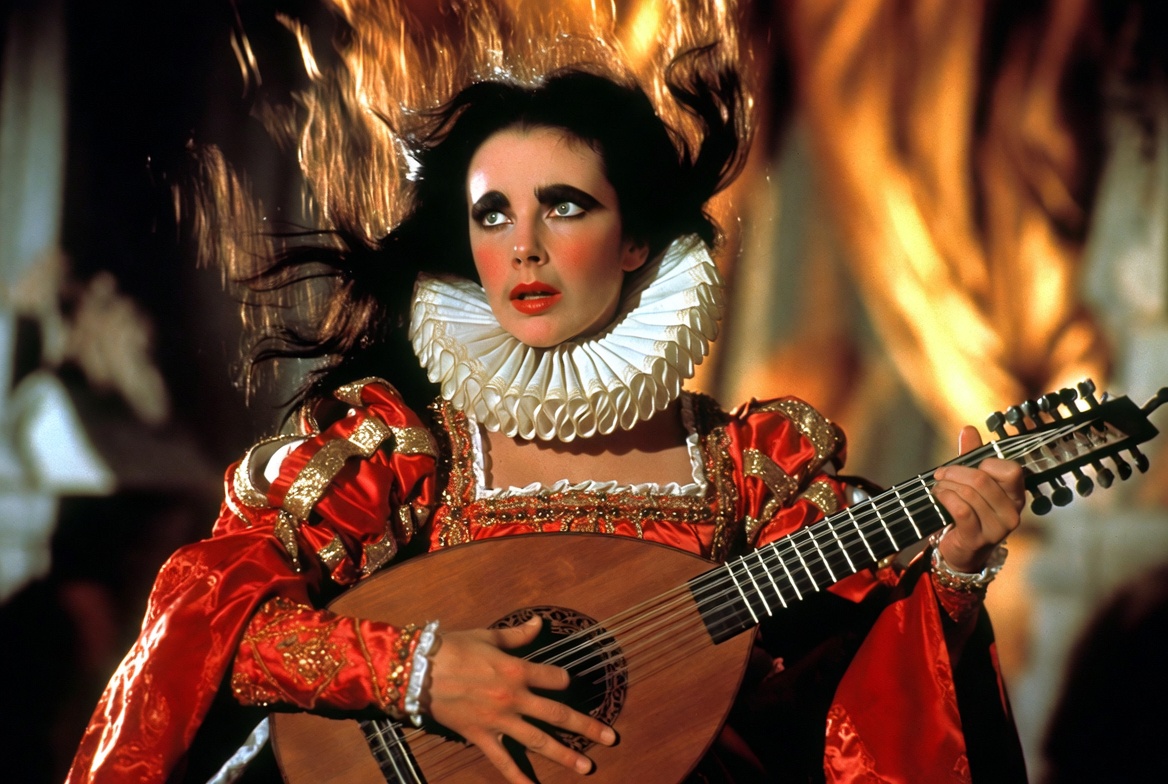
Taylor’s Preparation and Growth Zeffirelli praised Taylor for “inventing the part from scratch.” Without preconceived notions of how Shakespeare “should” be performed, she brought fresh, instinctive energy. Burton’s advice — to treat the verse naturally rather than metronomically — helped her find joy in the role. Her growth during production is evident on screen, turning initial fear into triumphant performance.
Iconic Moments
- The wooing scene: Taylor and Burton’s verbal and physical sparring crackles with chemistry.
- The wedding: Pure slapstick chaos that highlights Kate’s defiance.
- The final speech: Delivered with nuance that invites debate about submission versus strategic partnership.
Taylor’s work earned BAFTA nomination and proved she could excel beyond Hollywood stardom.
Richard Burton as Petruchio: Boisterous Charm and Calculated Madness
Richard Burton’s Petruchio complements Taylor perfectly. With his rich voice and commanding presence, he embodies the character’s larger-than-life qualities.
Interpreting the Character Burton plays Petruchio as a boisterous, often drunken adventurer who enjoys the game as much as the prize. His performance mixes Falstaffian exuberance with intellectual sharpness, making the taming scenes both funny and layered.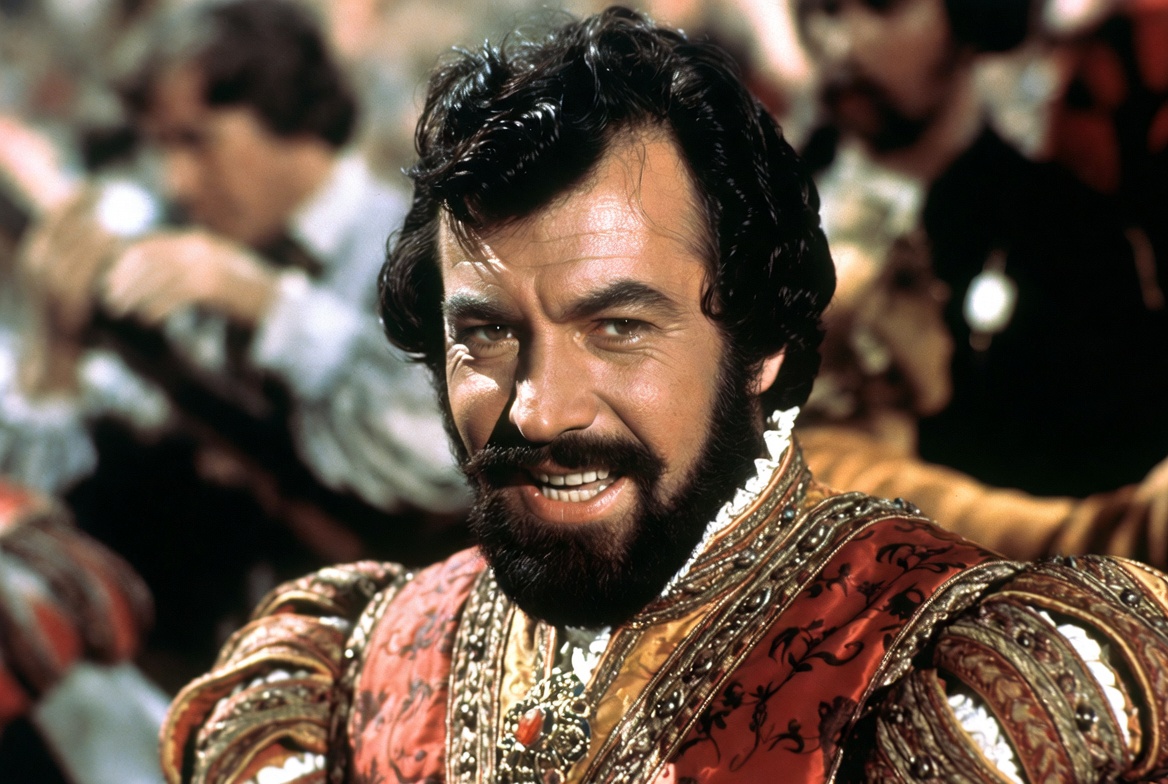
Chemistry with Taylor Their real-life marriage fuels the on-screen fireworks. The push-and-pull feels genuine, elevating the comedy beyond performance into something electric. This was one of their most successful collaborations, showcasing their ability to blend drama with humor.
Supporting Cast Highlights Michael York shines as the romantic Lucentio, Natasha Pyne as the demure Bianca, and Michael Hordern brings dignity and exasperation to Baptista. Cyril Cusack’s Grumio adds delightful comic relief.
How Zeffirelli Captured Shakespeare’s Fiery Comedy on Screen
Franco Zeffirelli’s direction transforms Shakespeare’s The Taming of the Shrew from stage-bound wit into a sprawling, sensory-rich cinematic experience. The 1967 adaptation excels by embracing the play’s chaotic energy while using film’s unique tools to heighten both the humor and emotional stakes.
Visual Spectacle and Cinematography Shot in vibrant Technicolor on elaborate Italian studio sets, the film recreates a sun-drenched, bustling Renaissance Padua. Zeffirelli fills every frame with movement — crowded streets, lavish banquets, and boisterous processions. The costumes by Irene Sharaff are magnificent, particularly Taylor’s fiery red wedding dress and Burton’s flamboyant attire. Oscar-nominated cinematography by Oswald Morris captures the action with dynamic camera work that follows the physical comedy without losing Shakespeare’s verbal precision.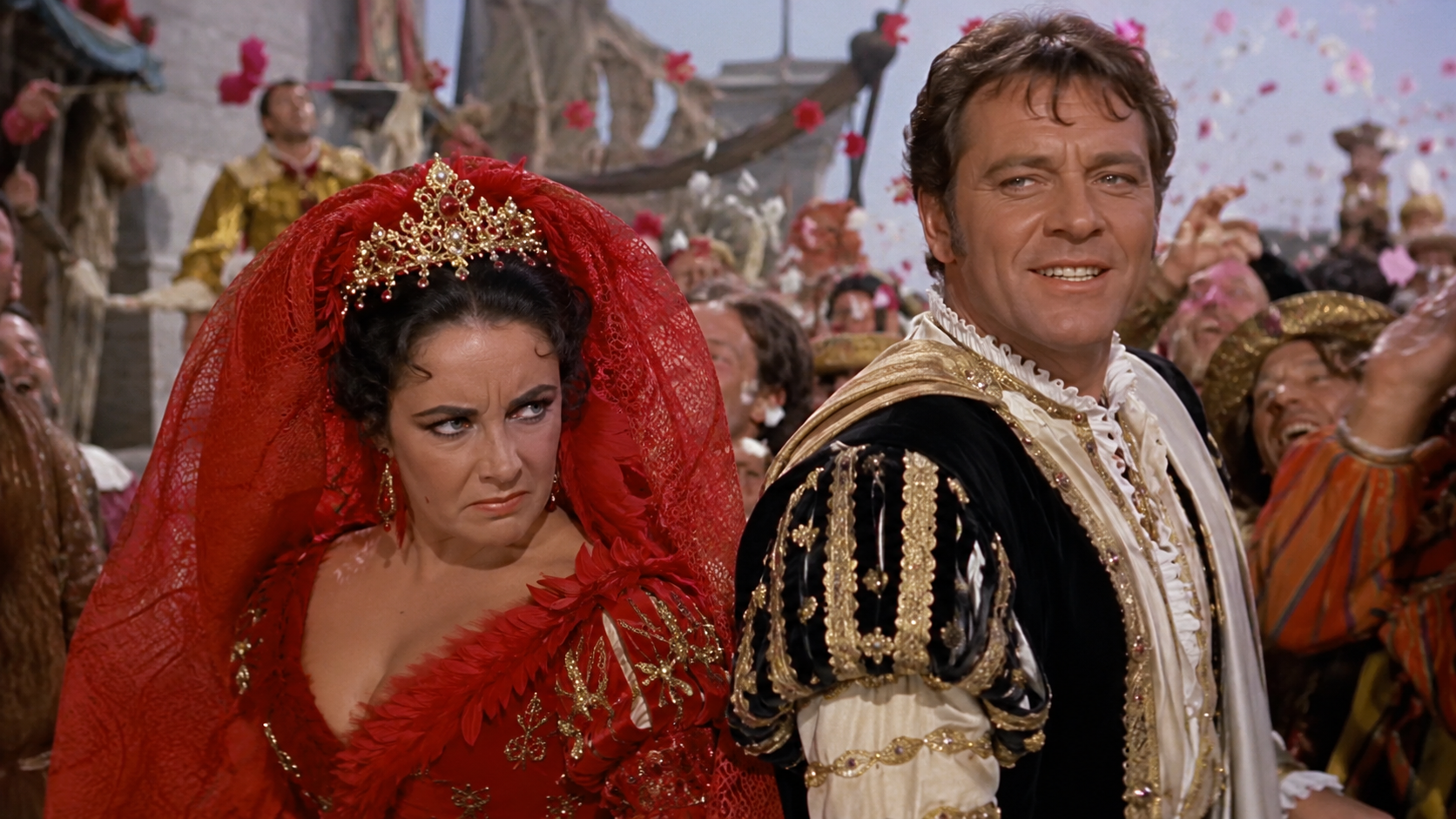
Slapstick, Pacing, and Humor Zeffirelli masterfully balances high verbal comedy with broad physical humor. The wedding scene, where Petruchio arrives late and creates mayhem, becomes a riotous set piece. Nino Rota’s playful, circus-like score enhances the festive atmosphere, turning the film into something closer to a rowdy celebration than a dry literary exercise. This approach makes Taming of the Shrew Elizabeth Taylor highly accessible to modern viewers who might find pure stage productions intimidating.
Faithfulness vs. Creative Liberties While the film condenses and rearranges some scenes for cinematic flow, it retains the core spirit of Shakespeare’s text. Significant cuts were made to subplots, but the central Kate-Petruchio relationship remains intact and vibrant. Zeffirelli amplifies the mutual attraction and intellectual equality between the leads, presenting their relationship as a battle of two strong personalities rather than simple domination. This interpretive choice has helped the adaptation age better than more rigidly patriarchal readings.
Thematic Interpretation The director emphasizes transformation through love and respect. By the final speech, Taylor’s Kate delivers her lines with a knowing sparkle that suggests partnership and strategy, not defeat. This nuanced take on gender dynamics, combined with the stars’ charisma, gives the 1967 Taming of the Shrew enduring appeal in contemporary discussions.
Critical Reception and Commercial Success in 1967
Upon release, the film received polarized but generally enthusiastic reviews that highlighted the Burton-Taylor pairing as its greatest asset.
Contemporary Reviews Critics like Bosley Crowther of The New York Times praised the “boisterous” energy and visual beauty, while acknowledging occasional over-the-top moments. Many reviewers celebrated how the real-life chemistry between Elizabeth Taylor and Richard Burton elevated the material, making the Shakespearean dialogue feel spontaneous and passionate. The film’s blend of prestige literature and Hollywood glamour proved irresistible to audiences.
Box Office Performance The movie was a solid commercial success, grossing over $8 million in North America alone during its initial run — significant for the era. Its worldwide earnings and continued popularity in re-releases demonstrated strong audience demand for star-driven Shakespeare adaptations.
Awards Recognition The film earned five BAFTA nominations, including nods for Taylor’s performance and the costume design. While it didn’t secure major Oscars, its cultural footprint helped pave the way for Zeffirelli’s even more successful Romeo and Juliet in 1968.
Legacy and Influence: Why This Adaptation Still Matters
More than fifty years later, Zeffirelli’s Taming of the Shrew continues to influence how audiences experience Shakespeare on screen.
Impact on Shakespeare on Film This production helped establish the template for visually opulent, star-led adaptations. It directly influenced Zeffirelli’s subsequent work and inspired later directors to take creative risks with classic texts. The success of the Burton-Taylor collaboration proved that mainstream celebrities could successfully tackle Shakespeare without alienating viewers.
Modern Re-evaluations Contemporary scholars and critics often revisit the film through feminist and gender studies lenses. Discussions frequently focus on how Taylor’s strong-willed performance challenges traditional interpretations of Kate as merely “tamed.” Many view the adaptation as a product of its time that nevertheless offers space for readings emphasizing consent, mutual respect, and playful power exchange in relationships.
Cultural References and Enduring Popularity The film remains widely available on streaming platforms and continues to appear in “best Shakespeare movies” lists. It has influenced popular culture, most notably inspiring elements in the 1999 teen comedy 10 Things I Hate About You. Clips of Taylor and Burton’s fiery scenes regularly circulate online, introducing new generations to both the play and these legendary actors.
Comparing the 1967 Film to Other Taming of the Shrew Adaptations
Understanding what makes the Zeffirelli version special becomes clearer when compared to other interpretations.
Vs. Earlier Versions The 1929 silent film starring Mary Pickford and Douglas Fairbanks is charming but limited by technology and shorter runtime. Pickford’s Kate is spunky, yet the film lacks the depth and visual richness of the 1967 production.
Vs. Musical Interpretations Cole Porter’s Kiss Me, Kate (both the 1953 film and stage versions) transforms the story into a meta-theatrical musical. While delightful, it shifts focus toward Broadway energy rather than Shakespeare’s original text. The 1967 film stays closer to the source material while still delivering entertainment.
Vs. Modern Updates 10 Things I Hate About You (1999) relocates the story to a high school setting with Heath Ledger and Julia Stiles. It softens the gender politics for contemporary audiences and adds pop appeal. However, it lacks the grand cinematic scope and classical weight of the Zeffirelli-Burton-Taylor collaboration. Other adaptations like Deliver Us from Eva (2003) further modernize the concept but rarely match the original’s linguistic fireworks.
What Makes Zeffirelli’s Stand Out The combination of Elizabeth Taylor’s star power, Richard Burton’s classical training, Zeffirelli’s operatic vision, and lush production values creates a unique sweet spot — respectful of Shakespeare while unapologetically entertaining.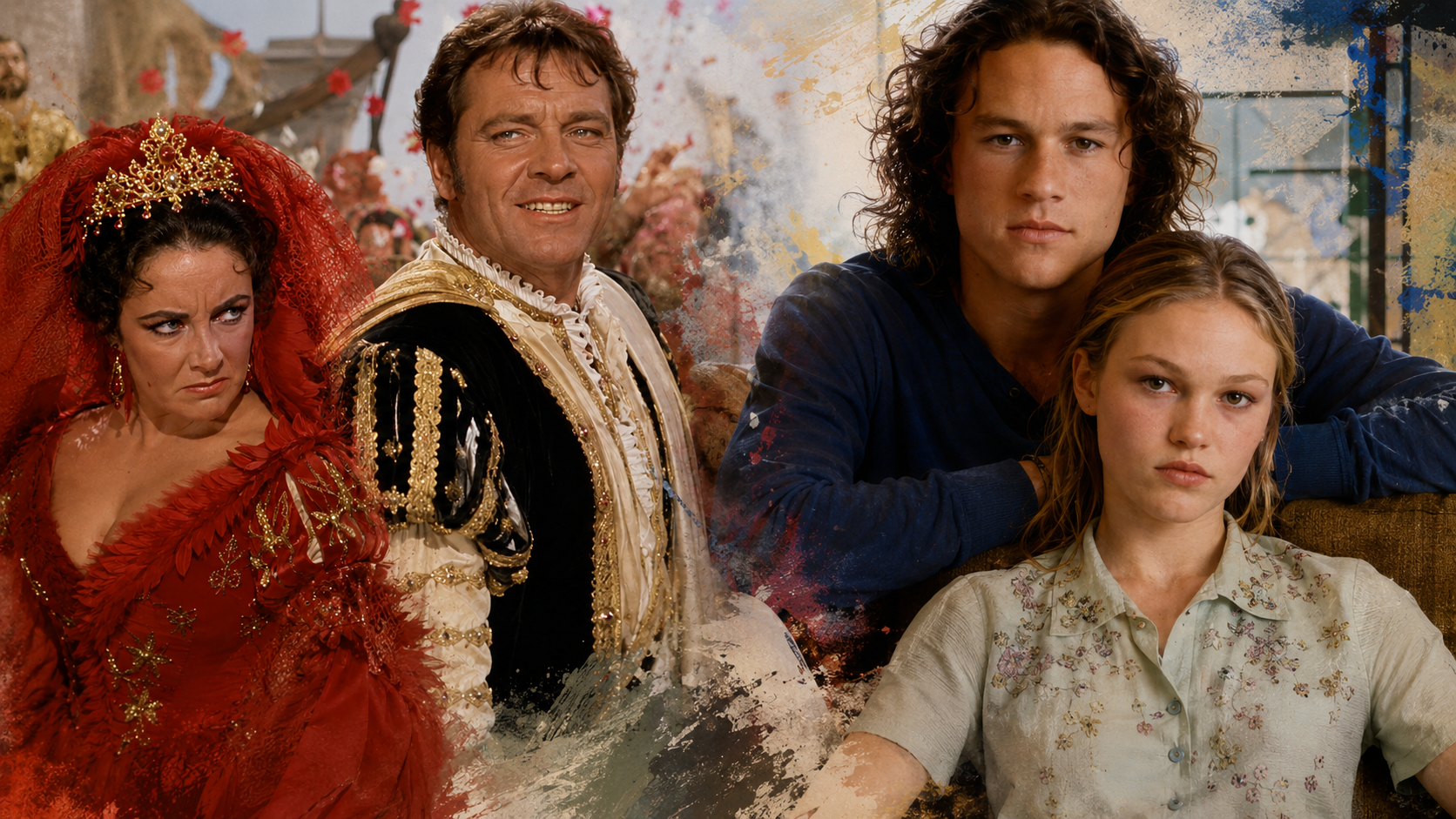
Expert Insights: Lessons for Shakespeare Lovers and Filmmakers
As someone who has taught Shakespeare for years and studied numerous screen adaptations, I recommend approaching The Taming of the Shrew Elizabeth Taylor as both entertainment and scholarly material.
Tips for Reading/Watching Today
- Watch the film after reading the play to spot creative choices.
- Pay attention to non-verbal cues in Taylor and Burton’s performances — much of the “taming” happens through body language and timing.
- Discuss the ending with others: Is Kate truly submissive, or has she mastered the game?
How the Film Helps Modern Audiences This adaptation lowers barriers to Shakespeare by making the comedy visual and energetic. It shows that Elizabethan language can be thrilling when delivered by passionate actors in a vibrant world.
Reflections on Star Power The Burton-Taylor pairing demonstrates how celebrity charisma can breathe new life into classic texts, making them relevant across generations.
Frequently Asked Questions (FAQs)
Is the 1967 Taming of the Shrew faithful to Shakespeare? It is reasonably faithful in spirit while making necessary cuts for pacing. The core story, characters, and many famous lines remain intact.
Was Elizabeth Taylor good at Shakespeare? Yes. Despite initial nerves, her performance is bold, physical, and emotionally layered — one of her strongest dramatic roles.
How does the film handle the play’s controversial ending? It presents Kate’s final speech with nuance and a hint of playfulness, suggesting mutual understanding rather than outright submission.
Where to watch the 1967 adaptation? It is available on major streaming services, Blu-ray, and DVD. Check your local library or classic film platforms.
What other Shakespeare films star Elizabeth Taylor or Richard Burton? This was Taylor’s only Shakespeare film. Burton appeared in several, including Hamlet (1964) and The Spy Who Came in from the Cold, though Taming of the Shrew remains one of his most accessible.
Taming of the Shrew Elizabeth Taylor stands as a landmark achievement in bringing Shakespeare to the silver screen. Franco Zeffirelli’s vibrant direction, combined with the legendary chemistry between Elizabeth Taylor and Richard Burton, created a fiery, funny, and visually spectacular adaptation that captures the wild heart of Shakespeare’s comedy.
This 1967 film continues to reward viewers by blending Elizabethan wit with Hollywood glamour, offering insights into gender dynamics, performance, and the timeless nature of romantic conflict. Whether you’re a dedicated Shakespeare scholar, a classic film buff, or discovering the play for the first time, this adaptation serves as an excellent gateway into one of the Bard’s most provocative works.
I encourage you to watch the film, revisit the original text, and form your own opinions about its complex themes. Share your thoughts in the comments — which moment between Taylor and Burton stands out most to you?
For more in-depth explorations of Shakespeare’s plays and their cinematic adaptations, explore our other articles on William Shakespeare here.