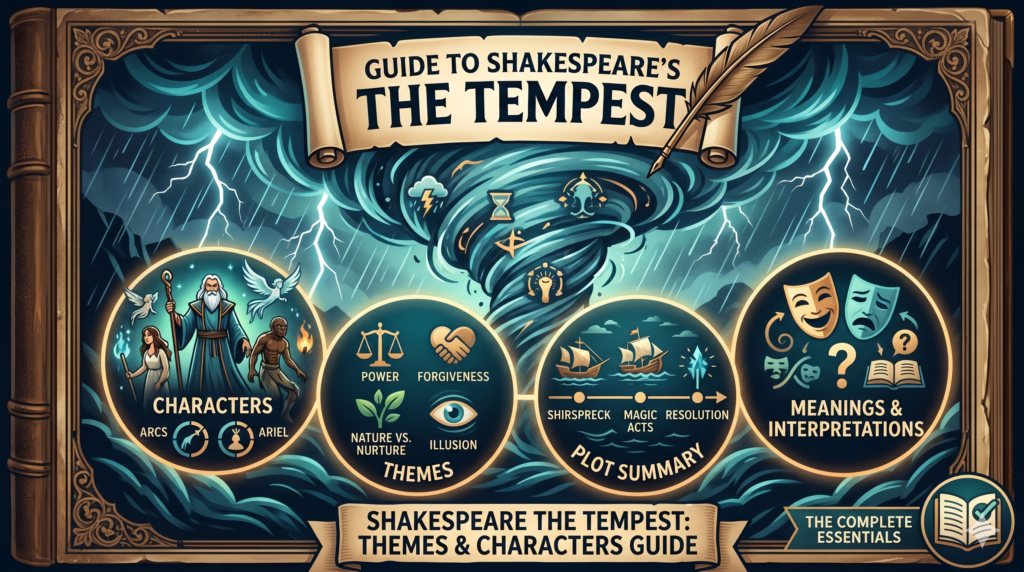
Shakespeare’s The Tempest stands as one of the most enchanting and profound works in English literature. In this complete The Tempest character guide, we explore the rich personalities that populate this magical island, revealing their depths, conflicts, and timeless significance. Whether you’re a student preparing for exams, a theater enthusiast, or a literature lover seeking deeper understanding, this guide offers comprehensive analysis far beyond basic summaries.
Written around 1611 and widely regarded as Shakespeare’s final solo-authored play, The Tempest masterfully blends romance, comedy, tragedy, and spectacle. Its characters are not mere players in a story of shipwreck and revenge but intricate studies of power, forgiveness, humanity, and redemption. This skyscraper guide delivers detailed character breakdowns, historical context, thematic connections, modern interpretations, and practical study resources to help you truly master the play.
Overview of The Tempest – Setting, Plot, and Themes
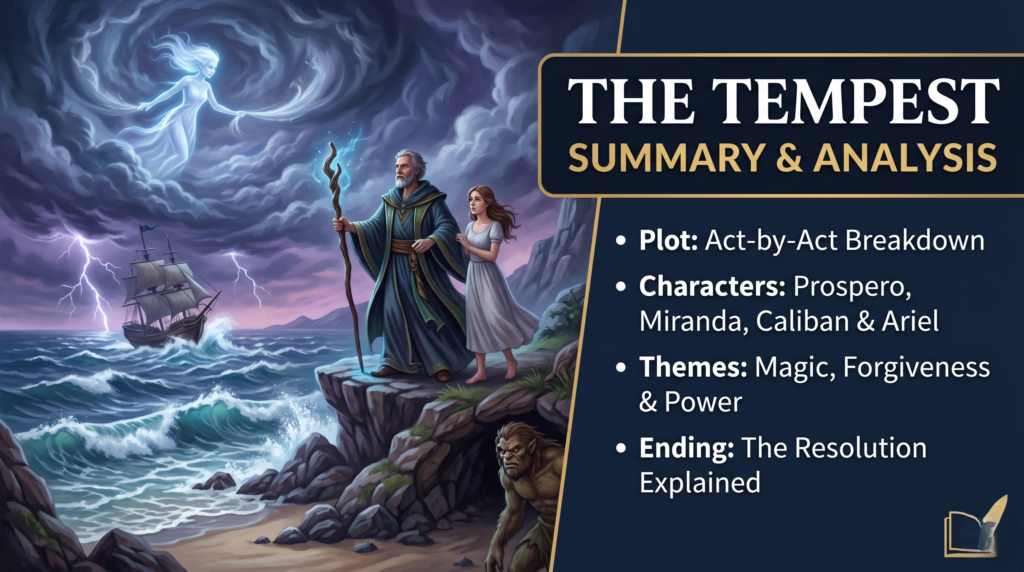
The Tempest unfolds on a remote, mysterious island where Prospero, the deposed Duke of Milan, has lived in exile for twelve years with his daughter Miranda. Through his magical arts, he conjures a storm that brings his enemies to the island, setting in motion events that will resolve old betrayals and forge new beginnings.
The play draws inspiration from real shipwreck accounts (notably the 1609 Sea Venture wreck in Bermuda) and Montaigne’s essays on New World exploration. Its major themes include:
- Power and Colonialism: The dynamics between rulers and the ruled.
- Forgiveness vs. Revenge: Prospero’s journey from bitterness to mercy.
- Illusion vs. Reality: Magic, theater, and the nature of art.
- Master-Servant Relationships: Questions of freedom, loyalty, and control.
- Redemption and Reconciliation: The possibility of personal and political renewal.
Understanding The Tempest characters is crucial because Shakespeare uses them to explore these ideas with remarkable psychological insight. Each figure serves both dramatic and symbolic functions, making the play endlessly adaptable across centuries and cultures.
Prospero – The Duke, Magician, and Father
Prospero is the central character and the architect of the entire action. As the rightful Duke of Milan, he was betrayed by his brother Antonio and King Alonso of Naples, cast adrift at sea with the infant Miranda.
Prospero’s Background and Motivations Exiled for twelve years, Prospero has devoted himself to the study of magic, transforming from a neglectful ruler into a powerful sorcerer. His primary motivations are twofold: securing Miranda’s future and reclaiming his dukedom. However, his methods raise important questions about justice and tyranny.
His Use of Magic and Control Prospero commands the elements through his books and his servant Ariel. He orchestrates the shipwreck, manipulates the courtiers, and tests the young lovers. His magic represents both creative power and dangerous authoritarian control.
Character Development and Arc The play traces Prospero’s evolution from a figure consumed by revenge to one capable of forgiveness. By the end, he breaks his staff and drowns his books, choosing humanity over magic. This renunciation is one of Shakespeare’s most moving moments.
Prospero as Shakespeare’s Self-Portrait? Many scholars see Prospero as a stand-in for Shakespeare himself — a master artist preparing to retire. His famous speech (“Our revels now are ended”) is often interpreted as the playwright’s farewell to the stage.
Key Quotes and Analysis “Our revels now are ended. These our actors, / As I foretold you, were all spirits and / Are melted into air, into thin air…” (Act 4, Scene 1). This passage brilliantly connects theater, magic, and the fleeting nature of life.
Expert Insight: Prospero embodies a fascinating duality — both victim of betrayal and perpetrator of control. His treatment of Ariel and Caliban reveals the complexities of power, making him one of Shakespeare’s most human and conflicted protagonists.
Miranda – The Innocent Daughter
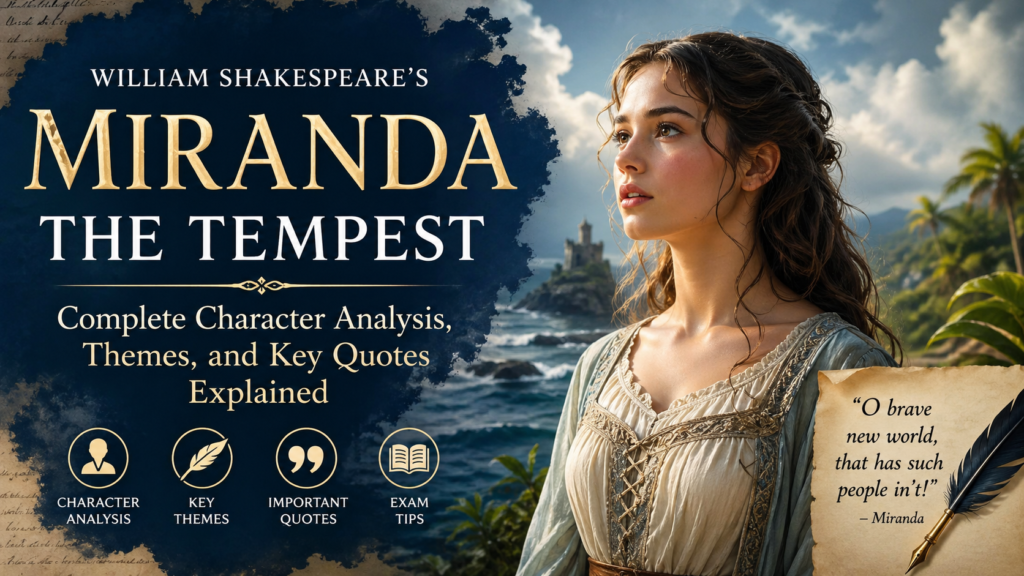
Miranda is Prospero’s fifteen-year-old daughter, who has known no other world than their island exile.
Miranda’s Character Traits and Upbringing Raised in isolation, Miranda possesses a gentle, compassionate nature combined with remarkable innocence and curiosity. She is horrified by the suffering caused by her father’s storm, showing immediate empathy.
Her Relationship with Prospero and Ferdinand Prospero has been both a loving yet controlling father. Miranda’s meeting with Ferdinand represents her first encounter with the wider world and young love. Their instant affection provides the play’s romantic heart.
Symbolism of Purity and Discovery Her famous line, “O brave new world, / That has such people in’t!” (Act 5, Scene 1), captures the wonder of discovery while carrying gentle irony, as she has yet to witness human corruption.
Feminist Readings of Miranda Modern critics often examine Miranda through a feminist lens, noting how she is both idealized and constrained by her father’s plans. She represents both the purity of nature and the object of male protection and political alliance.
Ariel – The Loyal Spirit
Ariel is an airy spirit bound to serve Prospero after being rescued from imprisonment in a tree by the witch Sycorax.
Ariel’s Nature and Powers Unlike earthly creatures, Ariel can become invisible, control the elements, and create illusions. His ethereal quality makes him a perfect instrument for Prospero’s designs.
Relationship with Prospero (Freedom vs. Servitude) Though loyal, Ariel repeatedly asks for his promised freedom. Their relationship explores themes of service, gratitude, and liberation. Prospero’s eventual release of Ariel is deeply touching.
Ariel as a Symbol of Art and Imagination Many interpreters view Ariel as representing the creative spirit — fluid, imaginative, and capable of both beauty and mischief.
Key Scenes and Comic/Tragic Elements Ariel’s role in the masque and his haunting songs add lyrical beauty to the play. His invisible torments of the courtiers blend comedy with psychological depth.
Caliban – The “Monster” and Slave
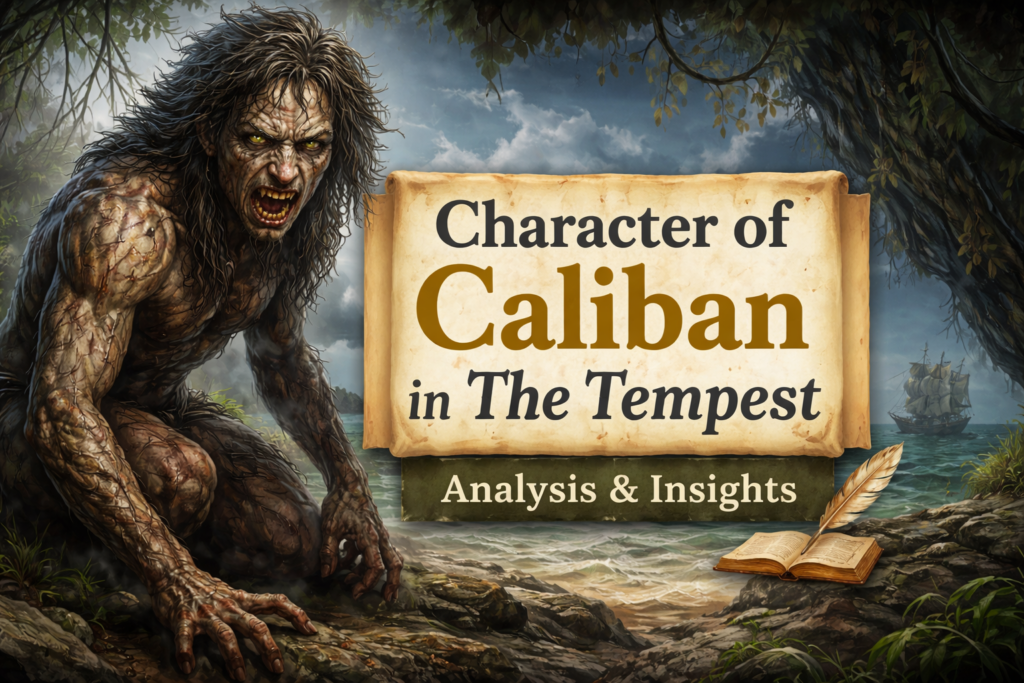
Caliban is one of Shakespeare’s most complex and debated The Tempest characters. The son of the witch Sycorax, he is described as a “savage and deformed slave” yet possesses some of the play’s most beautiful poetry.
Caliban’s Origins and Appearance Born on the island before Prospero’s arrival, Caliban initially welcomed the newcomers, showing them its wonders. After attempting to violate Miranda, Prospero enslaves him and treats him with contempt. His physical description — often portrayed as monstrous or fish-like — has fueled centuries of interpretation.
His Relationship with Prospero and Miranda Caliban’s bond with Prospero is deeply antagonistic. He resents losing his autonomy over the island, famously declaring, “This island’s mine, by Sycorax my mother, / Which thou tak’st from me” (Act 1, Scene 2). His relationship with Miranda is equally layered: he once loved her and taught her about the island, but his aggression led to permanent estrangement.
Colonialism and Post-Colonial Interpretations In modern readings, Caliban has become a powerful symbol of the colonized “Other.” Post-colonial critics view him as representing indigenous peoples dispossessed by European invaders. His rebellion against Prospero mirrors real-world resistance to imperialism. This interpretation has made Caliban especially relevant in 20th and 21st-century productions worldwide.
Caliban’s Poetry and Humanity Despite his coarse behavior, Caliban speaks some of the play’s most lyrical lines. His speech “Be not afeard. The isle is full of noises…” (Act 3, Scene 2) reveals a deep sensitivity to beauty and a profound connection to the natural world. This contrast between his actions and his eloquence humanizes him and challenges simplistic villain labels.
Modern Relevance – Caliban as a Symbol of the Oppressed Today, Caliban represents the marginalized voice fighting against oppression. His character invites readers to question who truly owns land, knowledge, and power. He remains one of Shakespeare’s most adaptable figures, appearing in literature, theater, and political discourse across cultures.
Ferdinand – The Young Prince and Lover
Ferdinand, son of King Alonso, arrives on the island after the shipwreck and immediately falls in love with Miranda.
Ferdinand’s Role in the Romance Plot As the ideal romantic hero, Ferdinand provides the play’s purest love story. Prospero deliberately tests him by making him perform menial labor, ensuring his love is genuine rather than superficial.
His Tests of Love and Character Ferdinand proves his worth through patience and devotion. His willingness to carry logs for Miranda demonstrates true nobility of character, contrasting sharply with the treacherous ambitions of the other courtiers.
Contrast with Other Male Characters While Prospero is controlling, Antonio and Sebastian are corrupt, and Caliban is raw, Ferdinand represents youthful idealism and honorable masculinity. His union with Miranda symbolizes hope and the reconciliation of past political conflicts.
The Court Party – Alonso, Sebastian, and Antonio
The noblemen shipwrecked on the island represent the corrupt political world Prospero escaped.
King Alonso – Guilt, Redemption, and Fatherhood Alonso, King of Naples, aided Antonio’s betrayal of Prospero. Throughout the play, he grieves the apparent loss of his son Ferdinand. His arc moves from despair to joy and eventual repentance, highlighting the theme of redemption.
Sebastian and Antonio – Ambition, Betrayal, and Corruption These two characters embody unchecked political ambition. Even on the island, they plot to murder Alonso and seize power. Their unrepentant nature contrasts with Prospero’s choice of forgiveness, underscoring Shakespeare’s examination of human morality.
Power Dynamics and Political Themes The interactions among the court party reveal how power corrupts and how fragile political alliances truly are. Shakespeare uses these The Tempest characters to critique Renaissance court intrigue while offering a more hopeful vision through reconciliation.
Gonzalo – The Honest Counsellor
Gonzalo, an honest and optimistic Neapolitan counselor, stands out as a beacon of integrity amid the court’s corruption.
He provided Prospero and Miranda with books and supplies during their exile, demonstrating loyalty and compassion. His utopian vision of an ideal society — “I’ th’ commonwealth I would by contraries / Execute all things” — offers both gentle satire and sincere hope. Gonzalo represents the possibility of moral decency even in a flawed political world.
The Comic Subplot Characters – Stephano, Trinculo, and Caliban
Shakespeare balances the play’s serious themes with a riotous comic subplot involving two drunken servants.
Stephano and Trinculo’s Low Comedy Stephano (a butler) and Trinculo (a jester) provide much-needed comic relief. Their drunken antics and ridiculous ambitions create some of the play’s funniest moments.
The Drunken Rebellion and Its Satirical Purpose When they encounter Caliban, they plot a rebellion against Prospero, with Stephano imagining himself as king of the island. This subplot brilliantly mirrors the political conspiracy of Sebastian and Antonio, showing that base ambition exists at all social levels.
How This Subplot Mirrors the Main Political Plot Through parody, Shakespeare highlights the absurdity of power struggles and the universal human flaws of greed and folly. The failure of this drunken revolt reinforces the play’s message about order, authority, and justice.
Relationships and Character Dynamics in The Tempest
The strength of The Tempest lies in its intricate web of relationships:
- Master-Servant Relationships: Prospero’s control over Ariel and Caliban raises questions about freedom, debt, and authority.
- Father-Daughter Bond: Prospero and Miranda share a tender yet controlling relationship marked by deep love and Prospero’s desire to protect her future.
- Young Love: Miranda and Ferdinand represent hope, renewal, and the healing power of romance.
- Betrayal and Reconciliation: The noblemen’s story explores how past wrongs can be addressed through forgiveness.
Character Relationships Overview (Suggested Table for Visual Aid):
| Character Pair | Dynamic | Key Theme |
|---|---|---|
| Prospero & Ariel | Master & Servant | Freedom vs. Loyalty |
| Prospero & Caliban | Master & Slave | Colonialism & Resentment |
| Prospero & Miranda | Father & Daughter | Protection & Control |
| Miranda & Ferdinand | Lovers | Discovery & Hope |
| Stephano & Caliban | False Allies | Ambition & Deception |
Symbolism and Archetypes in The Tempest Characters
Shakespeare crafted The Tempest characters as rich symbolic figures:
- Prospero as the Magus: Represents the artist, the ruler, and the father figure.
- Ariel vs. Caliban: The eternal contrast between spirit (air) and body (earth), intellect and instinct.
- The Island as a Character: A magical space of transformation where illusions are stripped away.
- The Masque: Reinforces themes of art, illusion, and harmony.
Modern Interpretations and Adaptations of The Tempest Characters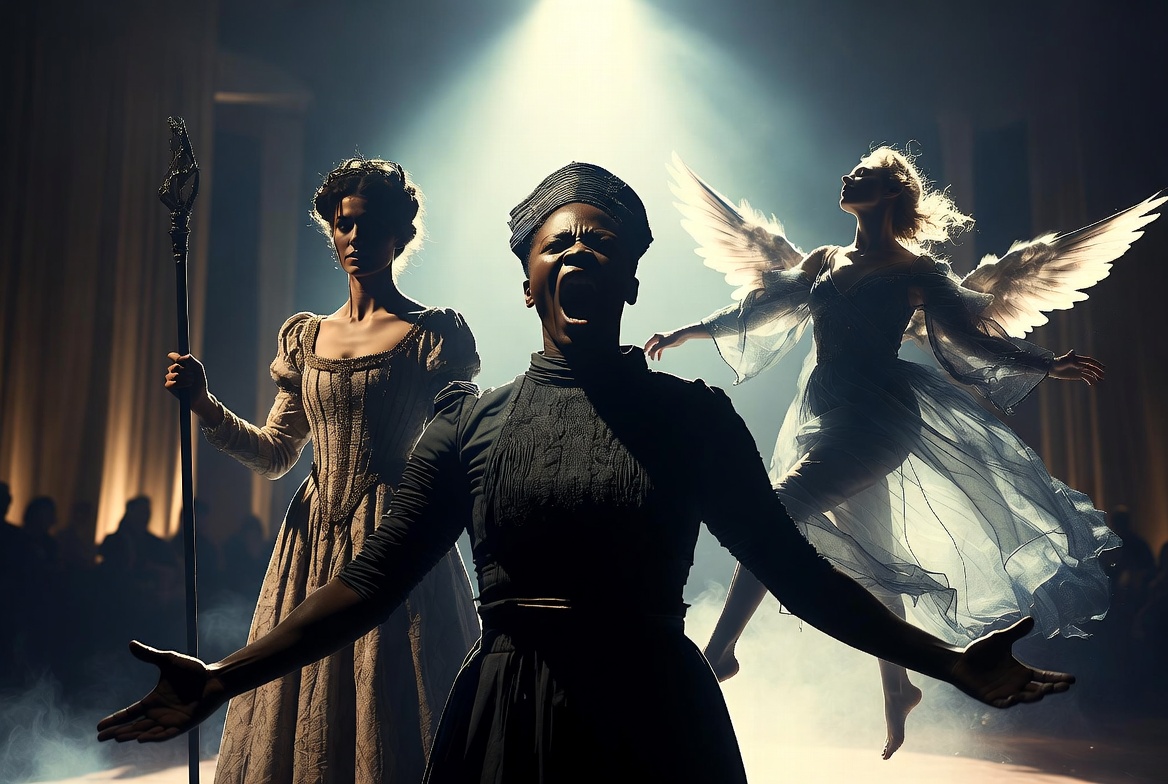
The Tempest has inspired countless reinterpretations precisely because its characters are so richly layered and symbolically potent. Modern directors, writers, and scholars continue to find new meanings in these The Tempest characters, making the play remarkably relevant to contemporary concerns.
Post-Colonial Readings Caliban has emerged as the central figure in post-colonial criticism. Thinkers like Aimé Césaire (in his play A Tempest) reimagine Caliban as a heroic freedom fighter against Prospero’s European imperialism. This lens examines how language, land, and power are used as tools of domination. Productions in Africa, the Caribbean, and Latin America often emphasize Caliban’s perspective, transforming him from a “monster” into a symbol of resistance and cultural survival.
Feminist and Psychoanalytic Perspectives Miranda’s character receives significant attention in feminist readings. While traditionally seen as the embodiment of purity, modern critics explore how she is objectified and controlled by the male figures around her. Prospero’s orchestration of her marriage to Ferdinand raises questions about agency and patriarchal authority. Psychoanalytic interpretations often view Prospero as a figure struggling with his own shadow — projecting his repressed desires and fears onto Caliban and Ariel.
Notable Adaptations
- Forbidden Planet (1956): A science-fiction classic that reimagines Prospero as a scientist on another planet, with Ariel as a robot and Caliban as the “monster from the id.”
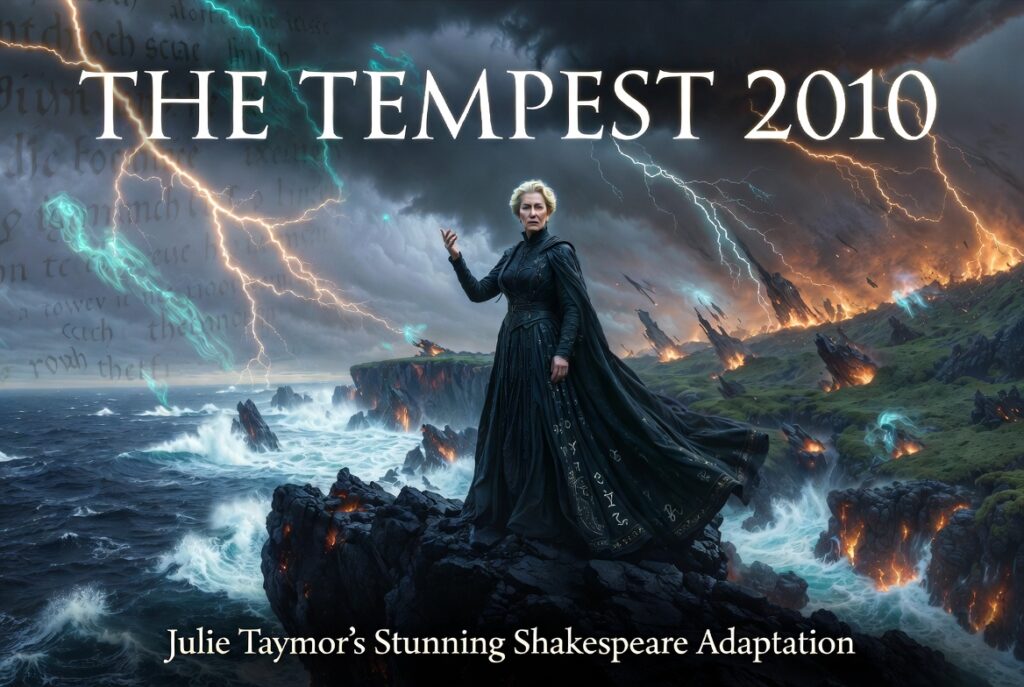
- Julie Taymor’s The Tempest (2010): Features Helen Mirren as a female Prospera, bringing fresh gender dynamics to the story.
- Derek Jarman’s The Tempest (1979): A bold, punk-influenced queer reading that emphasizes magic, spectacle, and liberation.
- Contemporary theater productions frequently cast actors of color as Caliban and Ariel, highlighting issues of race, slavery, and immigration.
These adaptations demonstrate how The Tempest character analysis evolves with society, addressing themes like climate change (the island as a fragile ecosystem), political polarization, and the ethics of power in the digital age.
Relevance to Contemporary Issues Today’s readers connect Prospero’s renunciation of magic with leadership lessons about knowing when to step down. Ariel’s servitude speaks to gig economy workers and emotional labor, while Caliban’s struggle resonates with indigenous rights movements and decolonization efforts. The play’s emphasis on forgiveness feels particularly urgent in our divided world.
Tips for Studying The Tempest Characters
Mastering The Tempest characters can significantly improve your understanding of the entire play. Here are practical, expert-recommended strategies:
Best Ways to Analyze Characters for Essays and Exams
- Use the STEAL method (Speech, Thoughts, Effects on others, Actions, Looks) for each major character.
- Compare and contrast characters (e.g., Ariel vs. Caliban, Prospero vs. Antonio).
- Track character development across the five acts.
- Support every point with direct quotations and line references.
Key Passages Every Student Should Know
- Caliban’s “The isle is full of noises” speech (Act 3, Scene 2)
- Prospero’s “Our revels now are ended” (Act 4, Scene 1)
- Miranda’s “O brave new world” (Act 5, Scene 1)
- Prospero’s Epilogue
Acting Advice for Performers Prospero requires balancing authority with vulnerability. Ariel demands physical lightness and vocal musicality. Caliban benefits from exploring both rage and poetry — avoiding one-dimensional monstrous portrayals. Focus on the master-servant power dynamics in rehearsals.
Discussion Questions for Teachers and Book Clubs
- Is Prospero a hero, tyrant, or both?
- Does Caliban deserve sympathy or condemnation?
- What does the play suggest about the nature of freedom?
- How does The Tempest reflect Shakespeare’s views on his own art?
Frequently Asked Questions (FAQs)
Who is the protagonist in The Tempest? Prospero is widely considered the protagonist. As the central driving force who controls most events, his journey from revenge to forgiveness forms the play’s emotional core.
Is Caliban a villain or a victim? Caliban is both. He commits genuine wrongs (attempting to assault Miranda), yet he is also a victim of colonization and enslavement. Shakespeare deliberately makes him morally complex rather than purely evil.
What does Ariel represent? Ariel symbolizes imagination, art, and the spirit world. He represents the creative forces that can be harnessed but ultimately seek freedom.
Why does Prospero give up his magic? Prospero renounces magic to embrace his humanity, return to Milan as a mortal ruler, and break the cycle of power and illusion. It represents maturity, forgiveness, and the acceptance of life’s natural limits.
How does The Tempest explore colonialism? Through Prospero’s takeover of the island, his subjugation of Caliban and Ariel, and references to New World exploration. The play both reflects and critiques the colonial mindset of Shakespeare’s time.
Which character is most like Shakespeare? Prospero is most frequently viewed as Shakespeare’s self-portrait — a masterful creator who ultimately lays down his tools and asks for the audience’s applause and forgiveness.
The Tempest character guide reveals why Shakespeare’s final masterpiece continues to captivate audiences more than 400 years after its creation. From Prospero’s profound journey of forgiveness to Caliban’s raw humanity, Miranda’s innocent wonder, and Ariel’s ethereal grace, these characters form a rich tapestry that explores what it means to be human.
The play’s genius lies in its refusal to offer simple answers. Instead, it presents flawed, contradictory, and deeply relatable figures who mirror our own struggles with power, love, resentment, and redemption. Whether you approach The Tempest as a student seeking better grades, an actor preparing for performance, or a reader looking for timeless wisdom, understanding its characters unlocks the play’s true magic.
As Prospero says in the Epilogue, the play’s ultimate power rests in the hands of the audience. We invite you to revisit the text, watch a performance, or share your thoughts in the comments below. Which The Tempest character resonates most with you, and why?