Imagine standing before a canvas where a brooding storm threatens a serene yet charged landscape. A flash of lightning illuminates broken columns, a distant city, a watchful young man with a staff, and a nearly nude woman nursing her child by a river. This is Giorgione’s The Tempest, one of the most mysterious and revolutionary paintings in Western art history. Created around 1506–1508 in Venice, it captivates viewers with its poetic ambiguity and atmospheric power. For enthusiasts of William Shakespeare, the shared title and thematic resonances with his late romance The Tempest (1611) invite a deeper exploration of how visual and literary art from the Renaissance era intertwine to explore human vulnerability, nature’s fury, mystery, and redemption.
Giorgione The Tempest stands as a cornerstone of High Renaissance innovation, blending figures seamlessly into a dramatic natural setting in ways that prefigure modern landscape painting. On a Shakespeare-focused site like this, examining the painting through the lens of the playwright’s final solo masterpiece offers fresh insights. Both works embody the Renaissance fascination with transformation, the supernatural, exile, and the limits of human (or artistic) control. This article unravels the painting’s enigmas while drawing thoughtful parallels, providing the comprehensive analysis Shakespeare lovers and art enthusiasts seek to enrich their understanding.
Who Was Giorgione? The Enigmatic Master of Venetian Renaissance
Giorgione, born Giorgio Barbarelli da Castelfranco around 1477–1478 in the small town of Castelfranco Veneto, remains one of the most elusive figures in art history. Little is documented about his personal life, and his career was tragically short—he died in 1510, likely from the plague, at about age 32 or 33. Despite this, his influence on Venetian painting was profound, rivaling that of his probable teacher Giovanni Bellini and shaping the young Titian.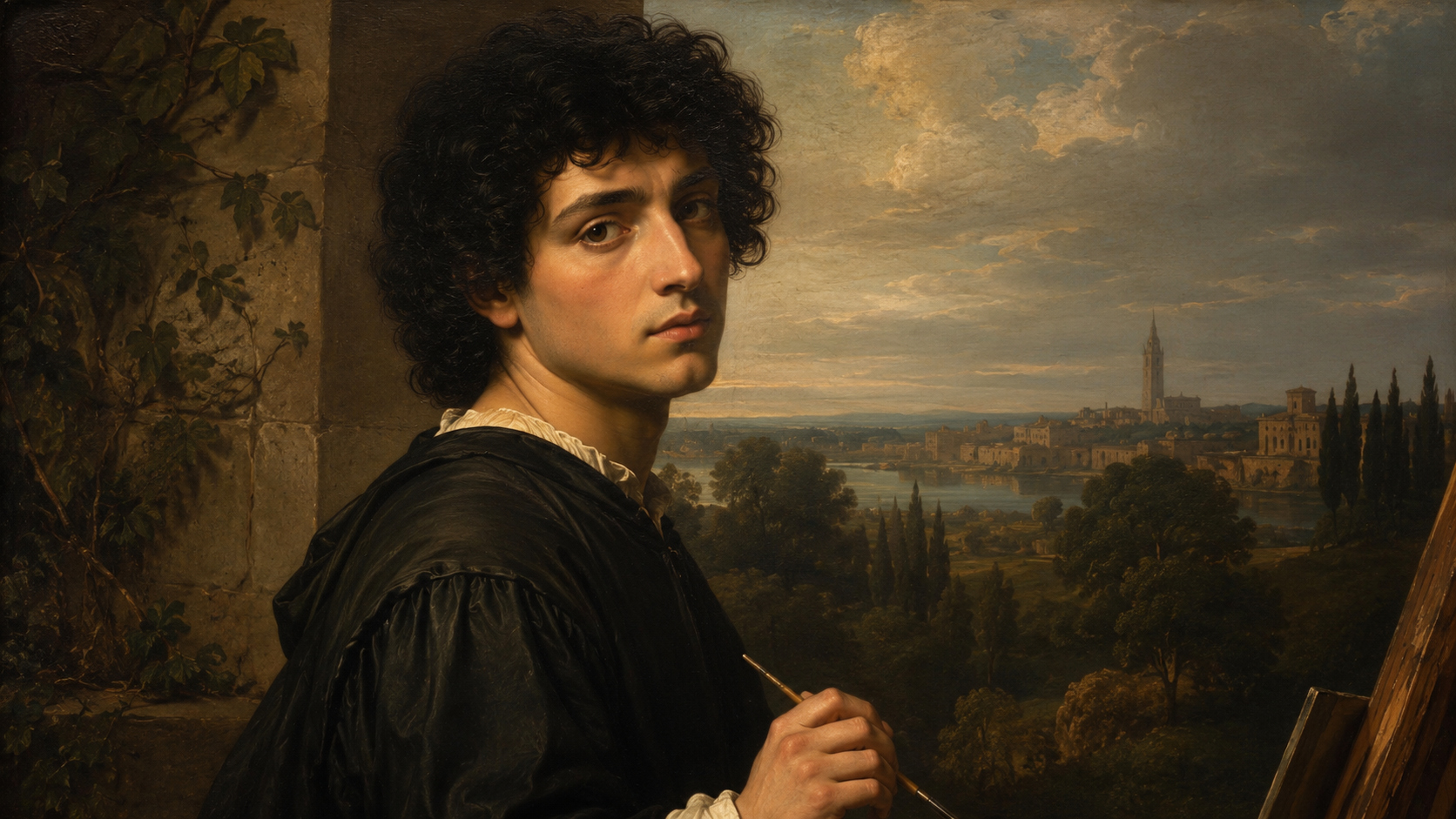
Giorgione thrived in the vibrant intellectual milieu of early 16th-century Venice, a wealthy republic at the crossroads of trade, humanism, and classical revival. Patrons like the noble Gabriele Vendramin commissioned works that prioritized poesia—poetic evocation—over clear narrative. Giorgione shifted away from the linear precision of Florentine art toward color (colorito), atmosphere, and emotional mood. His style emphasized soft transitions, luminous light, and the integration of human figures into expansive landscapes, creating a sense of mystery and introspection.
This innovative approach aligned with broader Renaissance trends: the revival of Virgilian pastoral poetry, Neoplatonic philosophy, and a growing appreciation for art as a vehicle for personal contemplation rather than didactic storytelling. Giorgione’s brief but brilliant output helped establish the Venetian School’s emphasis on sensuality, nature, and ambiguity—qualities that resonate deeply with Shakespeare’s own blending of classical sources, magic, and human drama.
The Painting in Detail – A Visual and Technical Analysis
Composition and Key Elements
Giorgione’s The Tempest measures approximately 82 x 73 cm and is executed in oil on canvas, now housed in Venice’s Gallerie dell’Accademia. The scene unfolds in a lush, verdant landscape under a darkening sky split by a dramatic lightning bolt. In the left foreground stands a young man, often described as a soldier or shepherd, dressed in contemporary Venetian attire, holding a long staff and gazing toward the right. Across a stream or river, a woman sits partially nude, breastfeeding an infant. Behind them lies a ruined structure with broken classical columns, a bridge, and a fortified city in the distance. A stork (or heron) perches on the rooftop of a building, adding another layer of symbolic intrigue.
The composition masterfully balances tension and tranquility. The figures appear somewhat detached from one another, heightening the sense of mystery. The lightning bolt serves as both a literal and symbolic focal point, illuminating the scene while suggesting imminent danger or divine intervention.
Technique and Innovation
Technical analysis reveals Giorgione’s groundbreaking methods. He worked directly on the canvas with minimal underdrawing, layering thin glazes of oil paint to achieve luminous effects and atmospheric perspective. This “sfumato-like” blending creates soft edges and a dreamlike quality. X-radiography conducted in 1939 uncovered a significant pentimento: the male figure was painted over an earlier composition featuring a second seated female nude bathing her feet in the stream. This change suggests the artist evolved the work during creation, possibly shifting its thematic intent.
The Tempest is celebrated as one of the earliest Western paintings where landscape dominates, elevating nature from mere backdrop to emotional protagonist. This innovation influenced not only Titian but later artists exploring mood and environment, much as Shakespeare used storms and islands to externalize inner turmoil.
Historical and Cultural Context in Renaissance Venice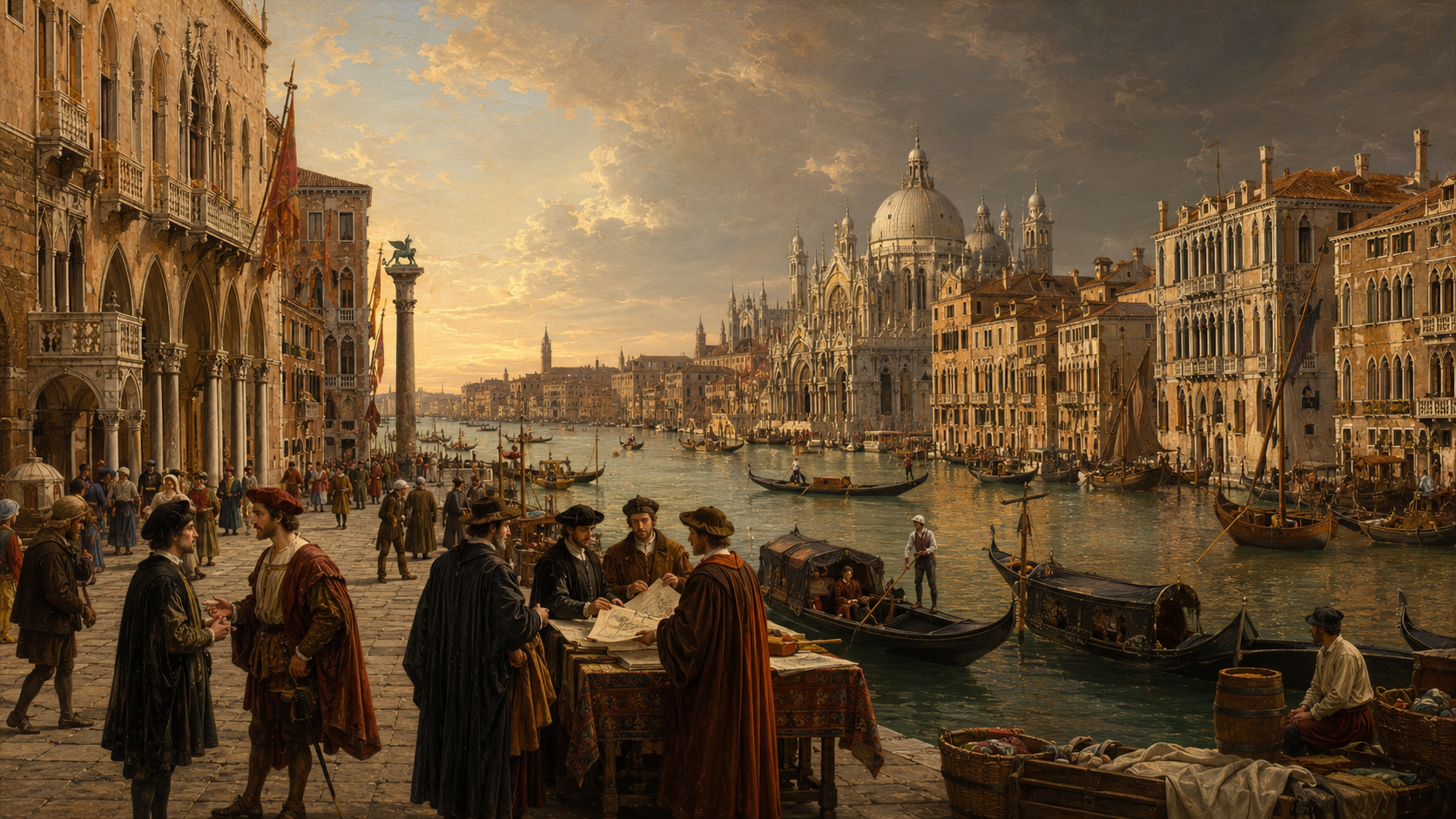
The early 1500s were turbulent for Venice. The Republic faced military threats from the League of Cambrai (1508–1517), economic pressures, and shifting power dynamics. Yet culturally, it flourished with humanist scholarship, the printing revolution, and a love for pastoral ideals drawn from Virgil, Jacopo Sannazaro’s Arcadia, and Pietro Bembo’s poetic theories.
The Tempest was likely commissioned by Gabriele Vendramin, a collector with a noted interest in antiquities and esoteric themes. Marcantonio Michiel, a contemporary Venetian connoisseur, described it in 1530 simply as “the little landscape with the storm, with the gypsy and the soldier,” focusing on its mood rather than a specific story. This reticence underscores the painting’s intentional ambiguity.
In this context, Giorgione’s work reflects a shift toward art as impresa—a personal emblem or poetic invention—mirroring how Shakespeare later drew on classical and contemporary sources to craft layered, open-ended narratives in plays like The Tempest.
Unraveling the Mystery – Major Interpretations of The Tempest
Few artworks have generated as much scholarly debate as Giorgione The Tempest. Its deliberate lack of a clear narrative has led to dozens of competing theories, each revealing as much about the interpreter’s era as about the painting itself. This ambiguity is not a flaw but a deliberate artistic choice, aligning with Renaissance ideals of poesia—painting as visual poetry that invites personal reflection rather than dictating meaning.
Religious and Biblical Readings One enduring interpretation views the figures through a Christian lens. The nursing woman and child have been seen as the Virgin Mary and infant Christ during the Flight into Egypt, with the male figure as Joseph or a protective shepherd. The storm symbolizes divine wrath or the trials of earthly existence, while the broken columns evoke the ruins of the Old Testament order giving way to the New. Other biblical suggestions include Adam and Eve with their son Cain, emphasizing themes of expulsion, labor, and original sin. These readings connect the painting to the strong religious undercurrents of Venetian society.
Mythological and Classical Interpretations Classical sources offer rich alternatives. Some scholars link the scene to the myth of Paris and Oenone, or to Iasion and Demeter from Virgil’s Aeneid, where a mortal encounters a goddess in a sacred grove. The pastoral setting strongly recalls Jacopo Sannazaro’s Arcadia and Virgilian eclogues, popular in Venetian literary circles. The lightning bolt and river may represent Jupiter’s intervention or natural forces shaping human fate. These interpretations highlight Giorgione’s engagement with humanist revival of antiquity, a context Shakespeare also drew upon heavily in The Tempest.
Allegorical and Sociopolitical Views More contextual readings tie the painting to Venetian politics. The soldier and gypsy (as the woman was once called) have been interpreted as embodiments of Fortitude and Charity, or as symbols of Venice’s resilience amid the Wars of the League of Cambrai. Family-specific theories suggest the figures represent members of the Vendramin clan, with the child symbolizing continuity amid turmoil. X-ray evidence of compositional changes supports the idea that Giorgione adapted the work to suit his patron’s personal impresa or emblematic intentions.
Poetic/Fantasia Theory The most compelling modern view, advanced by scholars like Salvatore Settis and others, posits that the painting has no single “correct” subject. Instead, it functions as a capriccio or visual fantasia—intentionally enigmatic to provoke contemplation. Marcantonio Michiel’s vague 1530 description supports this, prioritizing atmospheric effect over story. This approach mirrors Shakespeare’s use of layered ambiguity in The Tempest, where magic, illusion, and reality blur, leaving audiences to grapple with deeper philosophical questions.
Expert consensus today embraces this multiplicity. No interpretation fully satisfies all elements (the lightning, the stork, the distant city, the figures’ detachment), which is precisely the point. This mystery-solving journey enriches both art historians and Shakespeare enthusiasts seeking cross-medium insights.
Thematic Echoes in Shakespeare’s The Tempest
While Giorgione died over a century before Shakespeare wrote The Tempest (1611), the shared title and Renaissance cultural DNA create powerful resonances. Both works use storm imagery, enigmatic characters, and liminal natural settings to explore profound human questions—making Giorgione The Tempest a visual companion to Shakespeare’s play.
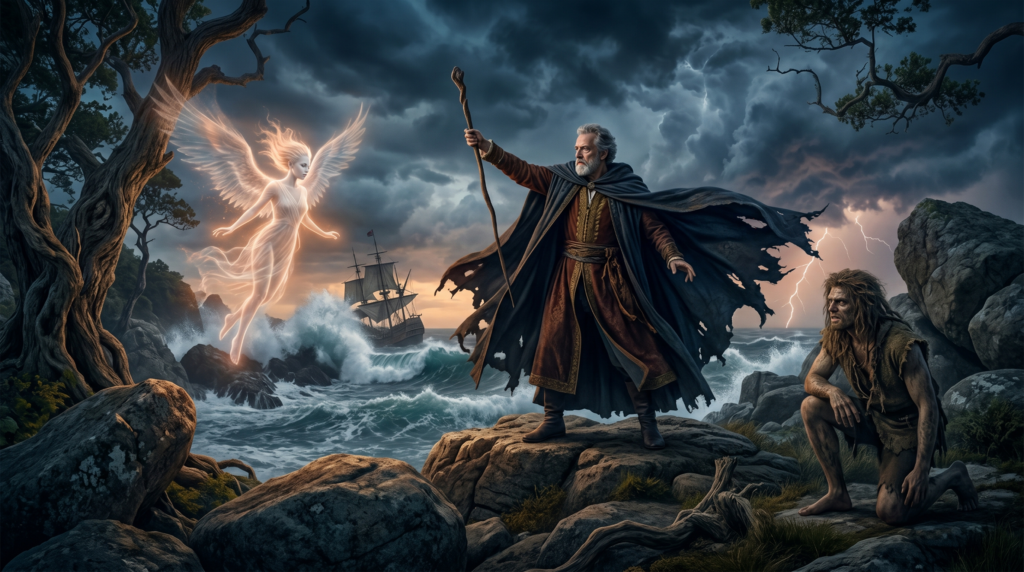
Storms as Metaphors for Chaos and Transformation The painting’s central lightning bolt and threatening clouds parallel the opening shipwreck in Shakespeare’s play, orchestrated by Prospero’s magic. In both, the tempest is not mere weather but a catalyst for change: disrupting old orders, exposing vulnerabilities, and enabling redemption. Prospero’s “tempest” is controlled and theatrical, much like Giorgione’s storm is frozen in a single, dramatic moment—art taming nature’s fury.
Nature, Landscape, and the Human Condition Giorgione pioneered the integration of figures into a dominant, emotive landscape. Similarly, Shakespeare’s island in The Tempest is a character in its own right—lush, magical, and transformative. Both evoke pastoral ideals while acknowledging nature’s uncontrollable power. The painting’s ruined architecture amid verdant growth mirrors the play’s themes of civilization versus wilderness, exile, and renewal. Shakespeare enthusiasts often note how the visual poetry of Venetian landscapes may have indirectly influenced Elizabethan imagination through travel accounts and prints.
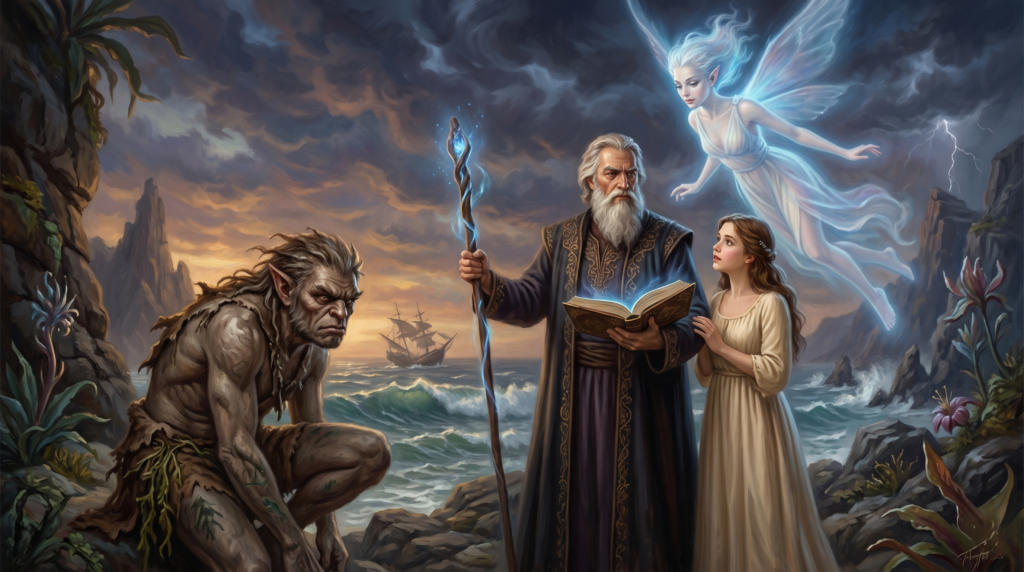
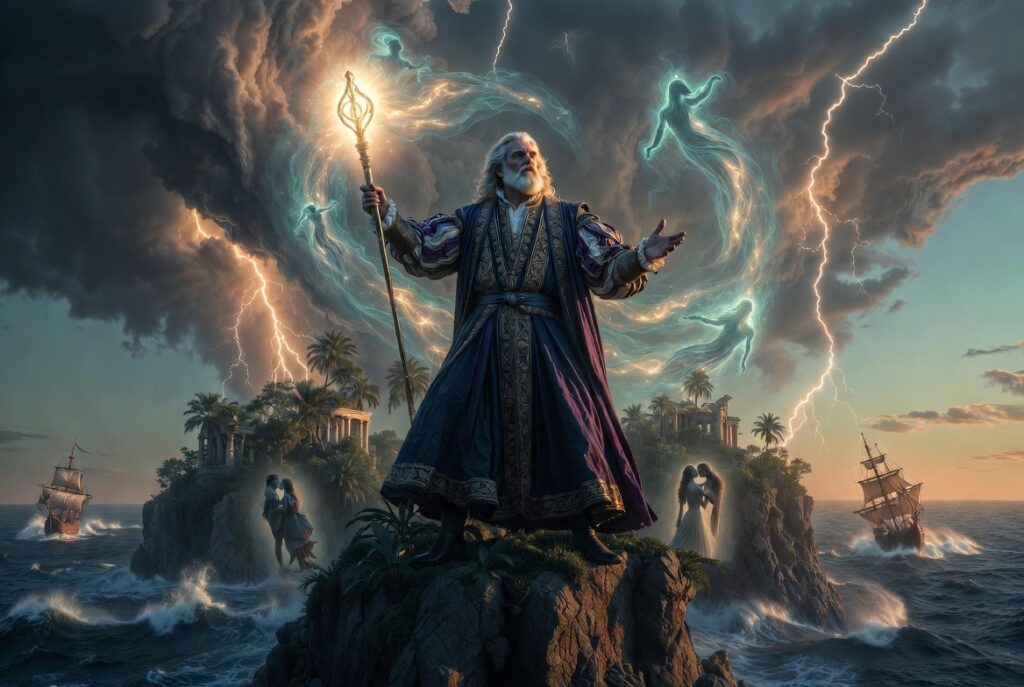
Mystery, Magic, and Ambiguity The unidentified figures in The Tempest painting echo the enigmatic identities and shifting realities in Shakespeare’s drama—Prospero as duke/magician/playwright, Ariel and Caliban as embodiments of spirit and earth. Both works thrive on unresolved tension. Just as viewers project meanings onto Giorgione’s scene, audiences interpret Prospero’s intentions and the play’s colonial, political, or autobiographical layers. This shared ambiguity invites active engagement, a hallmark of great Renaissance art and literature.
Redemption, Family, and Reconciliation The nursing mother and child in the painting suggest themes of nurturing and continuity amid crisis, paralleling Prospero’s relationship with Miranda and his ultimate forgiveness of enemies. Both works move from disruption toward harmony: the storm passes, families reunite, and order is restored—though not without lingering questions. These parallels illuminate Shakespeare’s engagement with visual culture and the broader Renaissance fascination with transformation and the redemptive power of art.
Artistic Legacy and Influence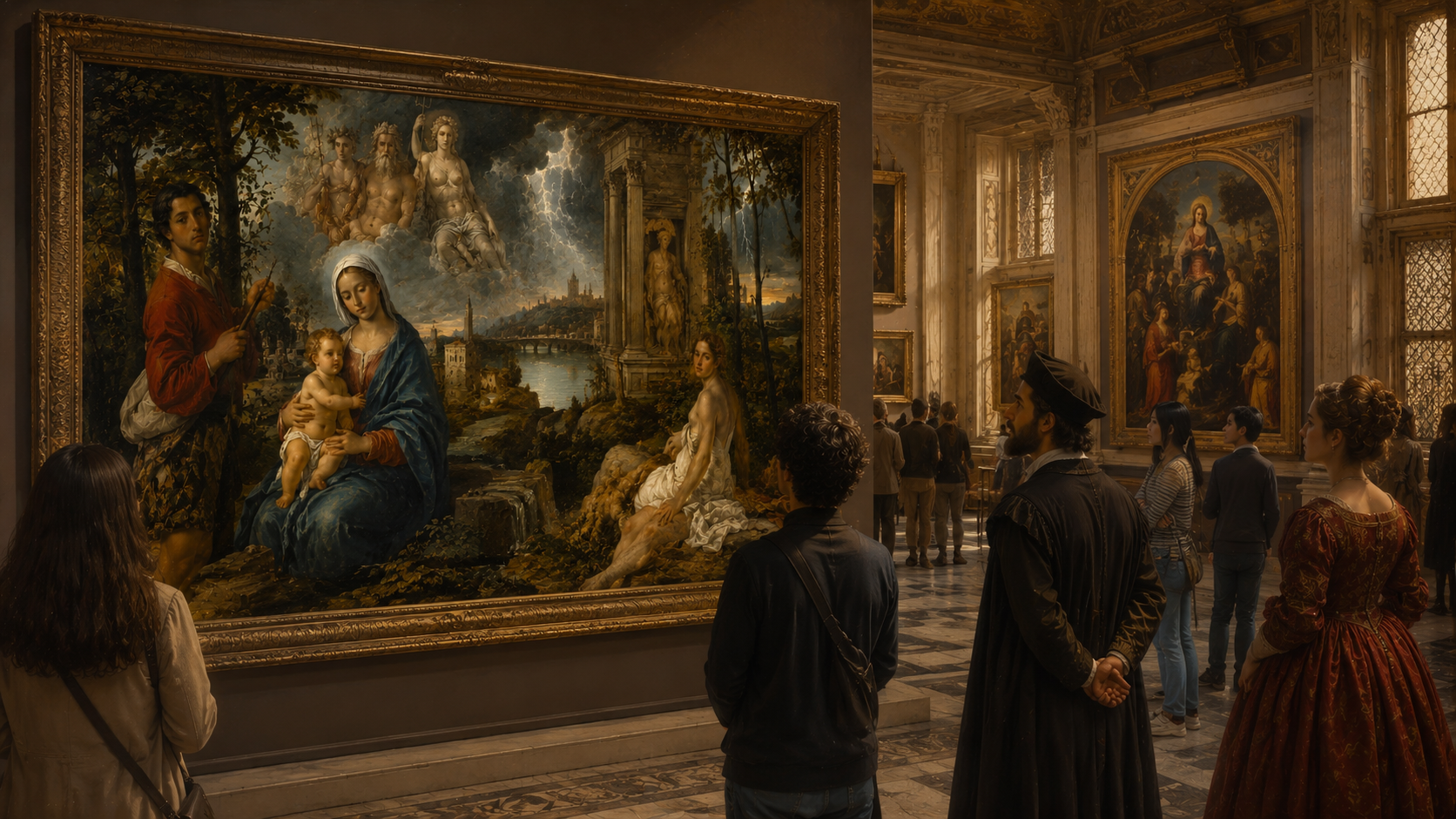
Giorgione The Tempest profoundly shaped the Venetian School. Titian, who completed some of Giorgione’s unfinished works, absorbed its atmospheric techniques and carried them into his own masterpieces. The painting helped establish landscape as a serious genre in Western art, influencing later developments from Claude Lorrain to the Romantic movement.
Its reception has been consistently admiring. Lord Byron praised its evocative power, and it remains a highlight of the Gallerie dell’Accademia. Conservation efforts and ongoing technical studies continue to reveal new insights, reinforcing its status as a timeless masterpiece.
Why These Works Still Captivate Us Today
In our fast-paced, explanation-driven world, the enduring appeal of Giorgione The Tempest and Shakespeare’s The Tempest lies in their embrace of mystery. Both remind us that some truths resist simple decoding, offering instead spaces for wonder, personal interpretation, and emotional resonance. Contemporary themes—climate anxiety (literal storms), political upheaval, the power of art to heal or provoke, and questions of authority and forgiveness—find natural echoes here.
Practical Tips for Deeper Engagement
- View high-resolution images of the painting online or visit Venice if possible.
- Read or watch The Tempest productions while keeping Giorgione’s imagery in mind.
- Explore scholarly resources for nuanced interpretations.
- Reflect personally: What story does the painting tell you?
Expert Insights and Further Exploration
Comparative Table: Giorgione’s The Tempest and Shakespeare’s The Tempest
| Element | Painting | Play |
|---|---|---|
| Storm | Literal lightning, impending chaos | Magical shipwreck, controlled |
| Setting | Venetian-inspired landscape | Remote magical island |
| Human Figures | Enigmatic, detached | Complex, illusory roles |
| Themes | Ambiguity, nature’s power | Forgiveness, art, reconciliation |
| Legacy | Pioneering landscape art | Bridge to modern theater and romance |
Recommended Resources
- David Alan Brown’s Giorgione: The Poet of Silence
- Editions of Shakespeare’s The Tempest with Renaissance context
- Exhibition catalogs from the Accademia
- Scholarly articles on Venetian poesia and Elizabethan visual culture
Giorgione The Tempest remains a pinnacle of Renaissance innovation, its poetic ambiguity offering endless discovery. When viewed alongside Shakespeare’s The Tempest, it enriches our appreciation of how visual and literary artists of the era captured the human spirit amid uncertainty and transformation. For Shakespeare readers, this cross-disciplinary journey provides fresh perspectives on familiar themes and deepens our connection to the cultural currents that shaped the playwright’s genius.
The mystery endures because it invites us to participate. Next time you encounter a storm—literal or metaphorical—consider how these masterpieces transform turmoil into art. Explore more Renaissance influences on Shakespeare here on the site, and let these timeless works continue to inspire.
FAQs
What is the meaning of Giorgione’s The Tempest? There is no single definitive meaning. Scholars propose religious, mythological, allegorical, and poetic interpretations, with intentional ambiguity being central to its power.
Is there a direct connection between Giorgione’s painting and Shakespeare’s play? No documented historical link exists, but strong thematic and titular resonances make them compelling companions for comparative study.
Why is The Tempest considered groundbreaking? It is among the first Western paintings to treat landscape as the primary subject, using atmosphere and mood to convey emotion and mystery.
How does the painting reflect Renaissance Venice? It embodies Venetian humanism, pastoral ideals, and artistic innovation amid political turbulence, prioritizing color, light, and poetic effect.