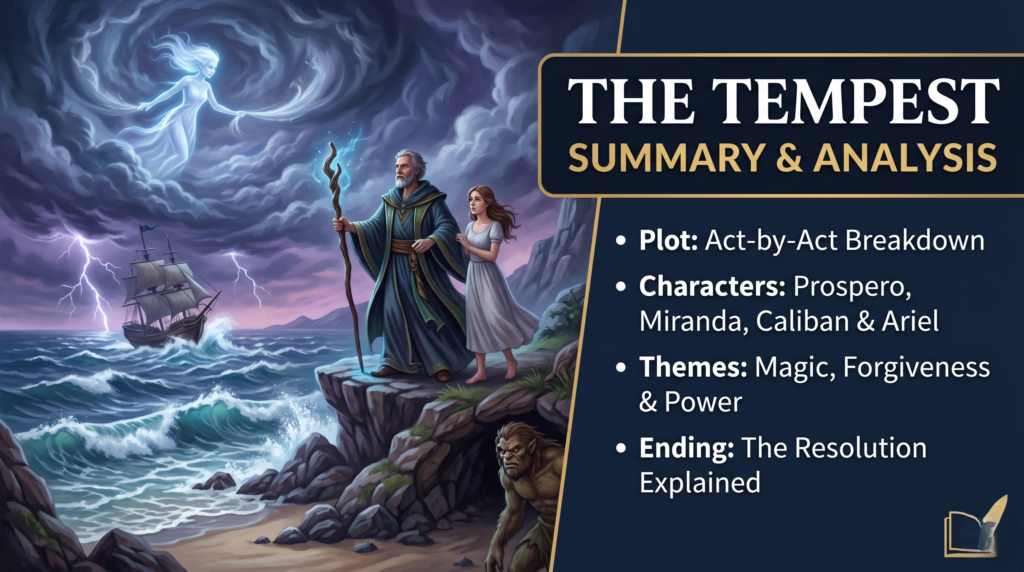
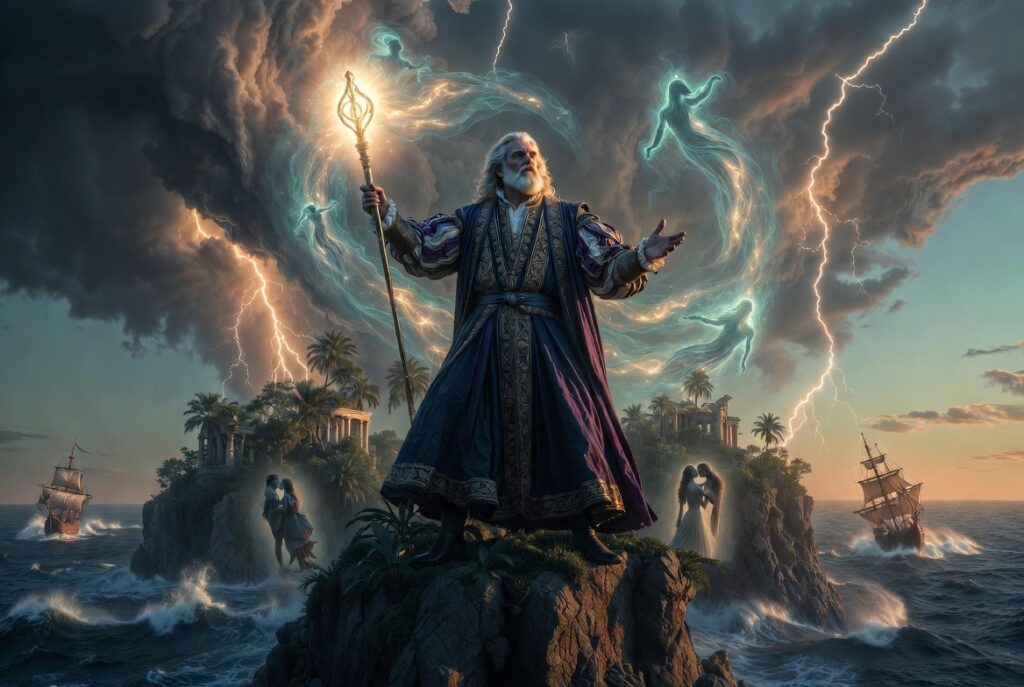
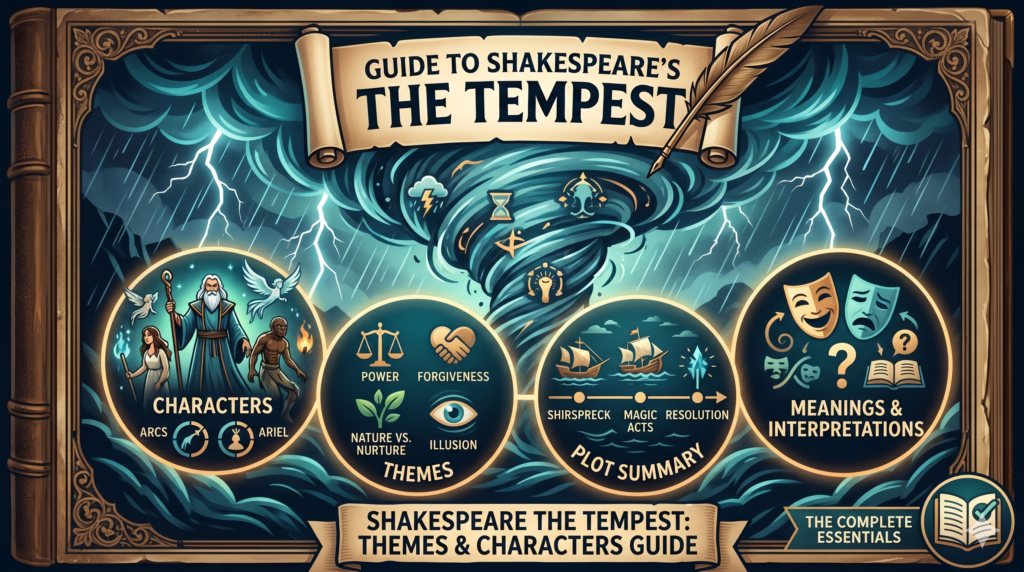
Imagine a violent storm erupting on a distant sea, a ship torn apart by waves conjured by invisible forces, and an exiled duke wielding magic to reclaim his destiny. This is the electrifying opening of William Shakespeare’s The Tempest, a play that continues to captivate audiences more than 400 years after its creation.
If you’re searching for the tempest overview, you’ve come to the right place. This comprehensive guide delivers everything you need to understand Shakespeare’s final masterpiece — from its gripping plot and complex characters to its profound themes and lasting cultural impact.
Whether you’re a student preparing for exams, a theater enthusiast, a teacher designing lessons, or simply a lover of classic literature, this in-depth exploration will provide clear insights, thoughtful analysis, and practical tools to help you fully appreciate one of Shakespeare’s most enchanting works.
Historical and Literary Context of The Tempest
The Tempest was likely written between 1610 and 1611, making it one of Shakespeare’s last solo-authored plays. It was first performed at the Blackfriars Theatre and later at the Court of King James I during the winter of 1611-1612.
This timing is significant. Shakespeare, then in his late forties, was approaching the end of his extraordinary career. After the great tragedies (Hamlet, Othello, King Lear, Macbeth), he turned toward a new genre often called “romances” or “tragicomedies” — plays that blend serious themes with hope, forgiveness, and reconciliation.
Key Influences on The Tempest:
- The 1609 shipwreck of the Sea Venture off Bermuda provided contemporary inspiration. Accounts of survivors reaching the island and the “still-vexed Bermoothes” directly influenced the play’s island setting.
- Michel de Montaigne’s essay “Of the Cannibals” shaped ideas about civilization and savagery, particularly in the character of Caliban.
- Classical sources such as Virgil’s Aeneid and Ovid’s Metamorphoses echo in the play’s structure and magical elements.
- Contemporary travel narratives and the emerging European colonial expansion added political and philosophical depth.
The Tempest stands as Shakespeare’s artistic farewell. Many scholars view Prospero’s renunciation of magic in the final act as the playwright’s own goodbye to the theater.
Detailed Plot Summary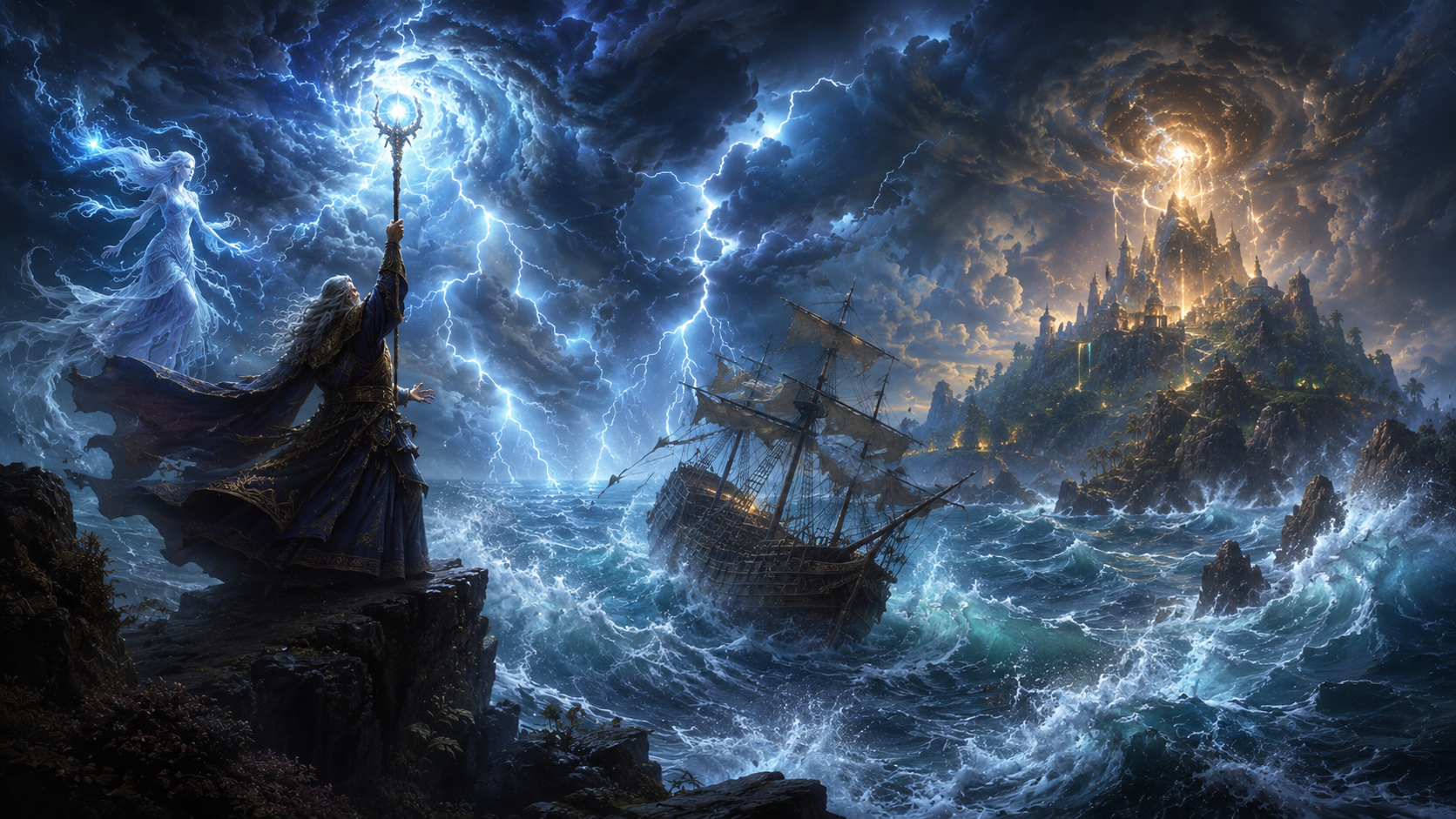
The Tempest follows the classical unities of time, place, and action more closely than most of Shakespeare’s works. The entire story unfolds over a single afternoon on a remote Mediterranean island.
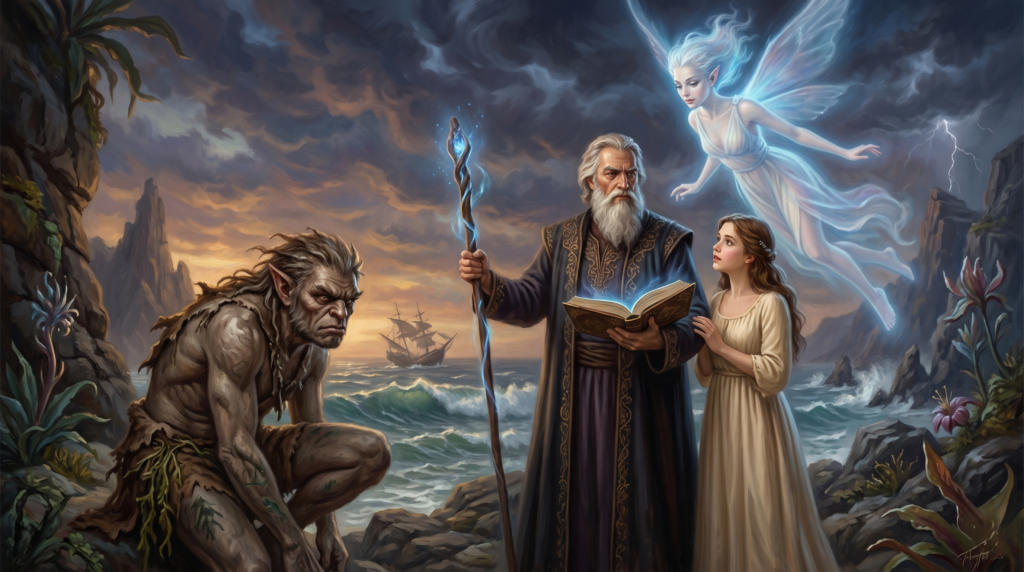
Act 1: The Storm and Arrival on the Island A terrible tempest wrecks a ship carrying Alonso, King of Naples, his son Ferdinand, and others. Unbeknownst to them, the storm is orchestrated by Prospero, the rightful Duke of Milan, who has lived in exile on the island for twelve years with his daughter Miranda. Using his servant spirit Ariel, Prospero brings the survivors safely ashore while separating them into different groups.
Act 2: Plots and Subplots While Ferdinand mourns what he believes is his father’s death, King Alonso and his companions face their own dangers. Meanwhile, the drunken butler Stephano and jester Trinculo encounter Caliban, Prospero’s resentful slave, forming a comic yet dangerous conspiracy against the magician.
Act 3: Magic, Love, and Tests Ferdinand and Miranda meet and instantly fall in love — a union Prospero both encourages and tests. Ariel continues to manipulate the nobles, leading them through illusions and confrontations with their past sins.
Act 4: The Masque Prospero presents a spectacular masque celebrating the engagement of Ferdinand and Miranda, featuring goddesses and spirits. This dazzling scene highlights themes of fertility, harmony, and art.
Act 5: Reconciliation and Resolution Prospero confronts his enemies, chooses forgiveness over vengeance, and releases Ariel. The play ends with reconciliation, restored political order, and Prospero’s famous epilogue, where he asks the audience for applause to set him free.
The tight structure and magical resolution distinguish The Tempest from earlier Shakespearean works.
Main Characters Analysis
Prospero: The Magician, Duke, Father, and Artist Prospero is one of Shakespeare’s most complex creations. As the exiled Duke of Milan, he uses his extensive magical knowledge to control the island and orchestrate events. His character raises profound questions: Is he a benevolent ruler or a tyrannical colonizer? His deep love for Miranda contrasts with his harsh treatment of Caliban and Ariel. Many interpret Prospero as Shakespeare’s self-portrait — a master artist ready to lay down his tools.
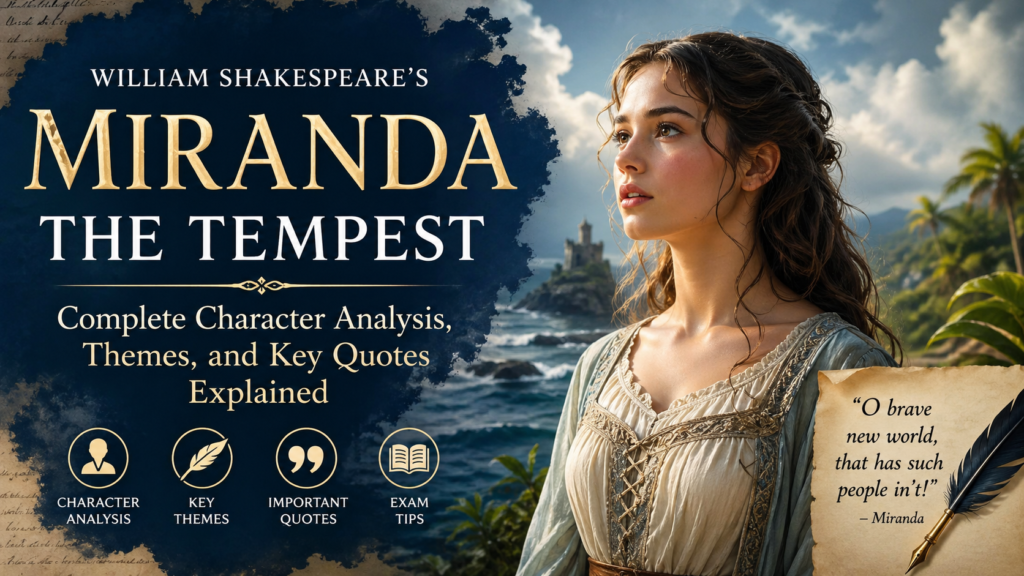
Miranda: Innocence and Wonder Raised in isolation, Miranda embodies purity and compassion. Her famous line “O brave new world, that has such people in’t!” captures her wide-eyed discovery of humanity. Her romance with Ferdinand represents hope and renewal.
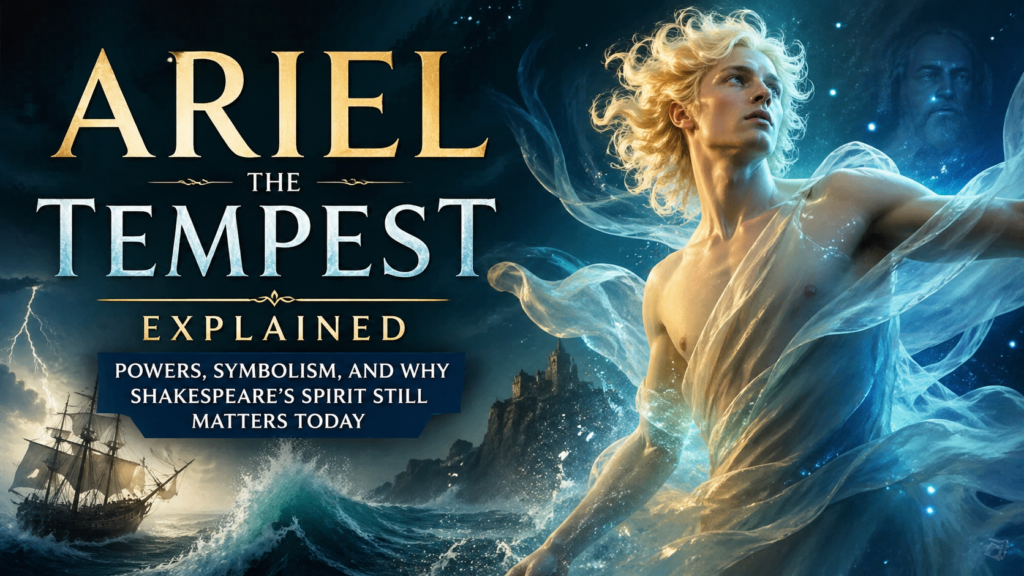
Ariel: Spirit of Air and Freedom Ariel is an airy spirit bound to serve Prospero after being rescued from imprisonment. Delicate, powerful, and musical, Ariel longs for freedom. The relationship between master and servant explores themes of obligation and liberty.
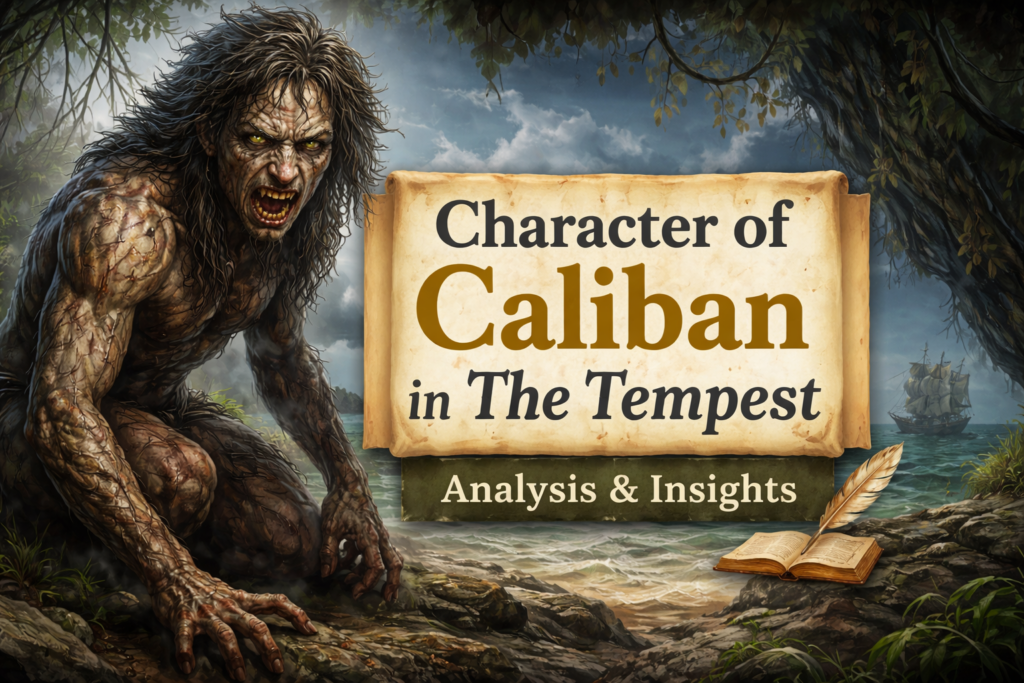
Caliban: The Savage and the Poet Son of the witch Sycorax, Caliban is both monster and victim. He claims rightful ownership of the island, yet attempts violence against Miranda. His beautiful poetry (“Be not afeard; the isle is full of noises”) reveals unexpected depth. Caliban has become a central figure in postcolonial studies.
Supporting Characters Ferdinand represents noble youth and true love. Alonso, Antonio, and Sebastian embody political betrayal and guilt. The comic duo Stephano and Trinculo provide earthy humor and parallel the more serious plots.
Major Themes in The Tempest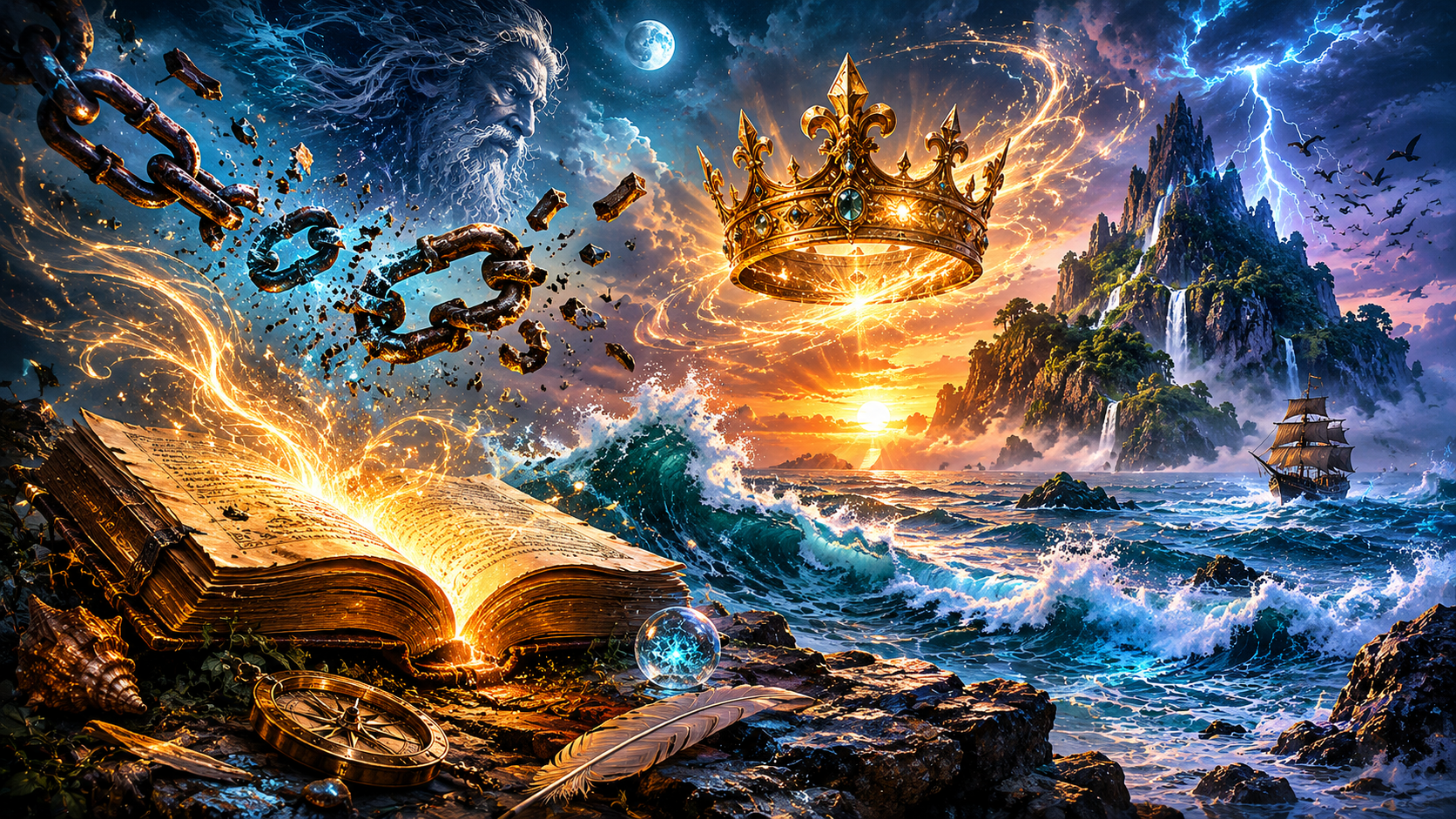
The Tempest explores several profound ideas that remain relevant today:
Power and Authority The play examines legitimate versus usurped power. Prospero’s restoration raises questions about justice and governance.
Forgiveness vs. Revenge Prospero’s journey from vengeance to mercy forms the emotional core. His decision to forgive represents profound wisdom and humanity.
Colonization and the “Other” Through Caliban, Shakespeare engages with ideas of civilization, savagery, and imperialism. Modern readings often view the play through a postcolonial lens, seeing Prospero as a European colonizer.
Art, Magic, and Illusion Magic serves as a metaphor for theatrical art. Prospero’s control of illusions mirrors the playwright’s craft.
Nature vs. Nurture The play debates whether character is determined by birth or education — most famously through Caliban’s line: “You taught me language, and my profit on’t / Is I know how to curse.”
Freedom and Bondage Multiple characters — Ariel, Caliban, Ferdinand, and even Prospero — seek different forms of liberation.
Symbolism, Motifs, and Literary Devices
The island itself functions as a microcosm of the world — a blank canvas where society can be rebuilt. The tempest symbolizes both destruction and renewal. Prospero’s books represent knowledge and power. Music and Ariel’s songs create an ethereal atmosphere that blurs reality and illusion.
Shakespeare masterfully blends blank verse for noble characters, prose for comic ones, and exquisite songs. The masque in Act 4 is a spectacular metatheatrical moment that celebrates art itself.
Shakespeare’s Innovative Techniques
The Tempest demonstrates remarkable technical control. By observing the classical unities, Shakespeare creates intense dramatic focus. The play’s metatheatrical elements — especially Prospero’s epilogue — break the fourth wall in a way that feels strikingly modern.
The seamless integration of comedy, romance, and serious political drama showcases Shakespeare at the height of his dramatic craftsmanship.
Critical Reception and Interpretations
Early audiences enjoyed The Tempest as spectacular entertainment. Romantic critics like Coleridge praised its poetic beauty. In the 20th century, postcolonial critics (most notably Aimé Césaire in his adaptation Une Tempête) reinterpreted Caliban as a symbol of resistance against colonialism.
Feminist readings examine Miranda’s limited agency, while ecocritical approaches focus on the relationship between humans and nature. Psychological interpretations see Prospero’s island as a manifestation of the mind.
Modern Relevance and Legacy
In 2026, The Tempest feels remarkably contemporary. Its exploration of forgiveness resonates in divided times. Themes of climate and nature’s power speak to current environmental concerns. Questions of migration, power, and cultural clash remain urgent.
Notable Adaptations:
- Forbidden Planet (1956) – a groundbreaking sci-fi version.
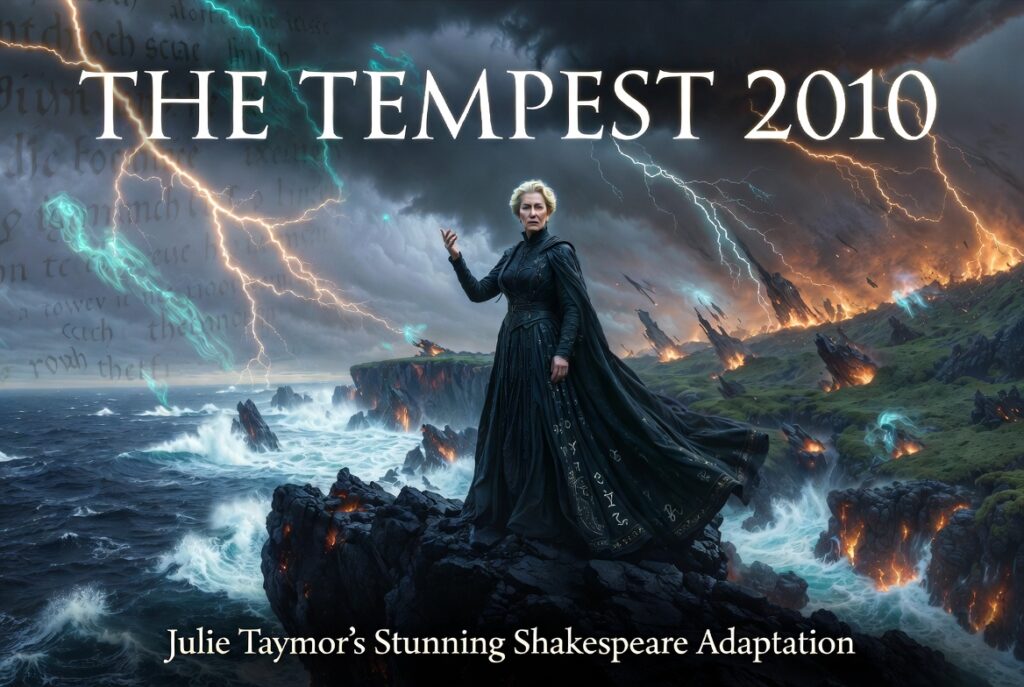
- Julie Taymor’s 2010 film starring Helen Mirren as Prospera.
- Numerous operas, ballets, and literary retellings.
- Contemporary stage productions that emphasize diversity and decolonization.
Practical Study Guide and Tips
Essential Quotes:
- “We are such stuff / As dreams are made on; and our little life / Is rounded with a sleep.” (Prospero)
- “Hell is empty, / And all the devils are here.” (Antonio)
- “Be not afeard: the isle is full of noises…” (Caliban)
Discussion Questions:
- Is Prospero a hero or a tyrant?
- How does the play portray colonialism?
- What does Miranda’s “brave new world” mean today?
Essay Tips: Always connect specific language and imagery to broader themes. Compare The Tempest with other late romances like The Winter’s Tale or Cymbeline for deeper analysis.
Frequently Asked Questions
Is The Tempest based on a true story? Not directly, but it draws heavily from the real-life Sea Venture shipwreck.
Does Prospero represent Shakespeare? Many scholars believe so, particularly in his farewell to magic and the stage.
Why is Caliban so important? He embodies the tension between civilization and nature, and has become a powerful symbol in discussions of oppression and resistance.
Is The Tempest a comedy, tragedy, or romance? It is classified as a romance — a genre that moves through danger toward harmony and reconciliation.
The Tempest remains one of Shakespeare’s most moving achievements — a play about power, forgiveness, art, and letting go. Through Prospero’s journey, Shakespeare offers profound insights into what it means to be human and to create.
As you close this The Tempest overview, I encourage you to read the play, watch a performance, or explore its adaptations. Its magic still works. The island awaits.