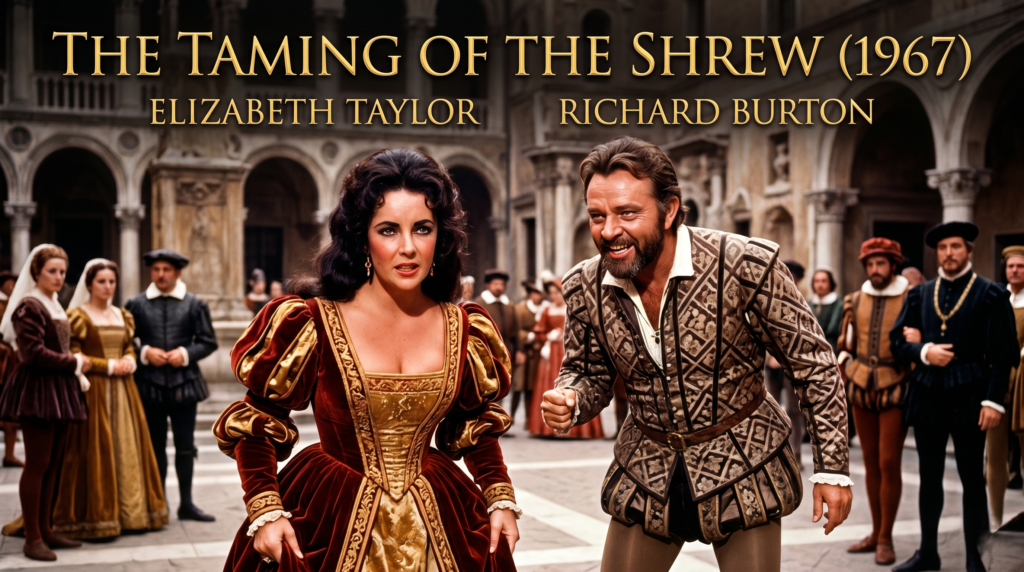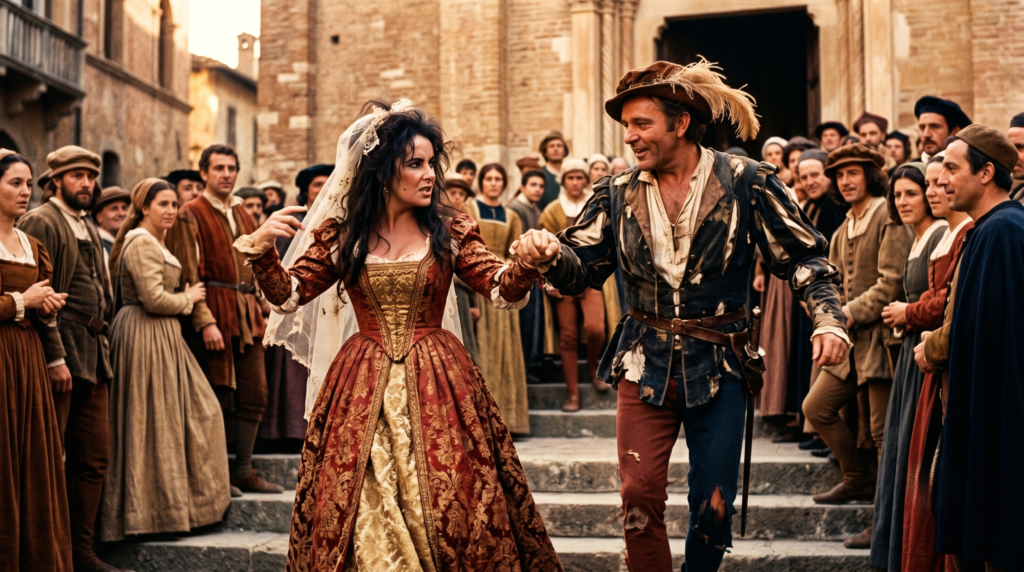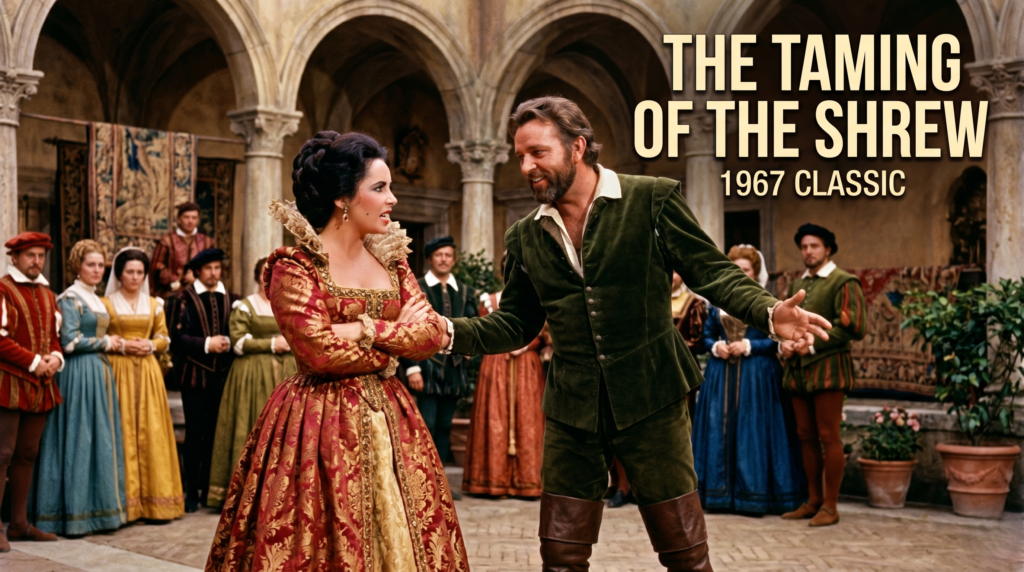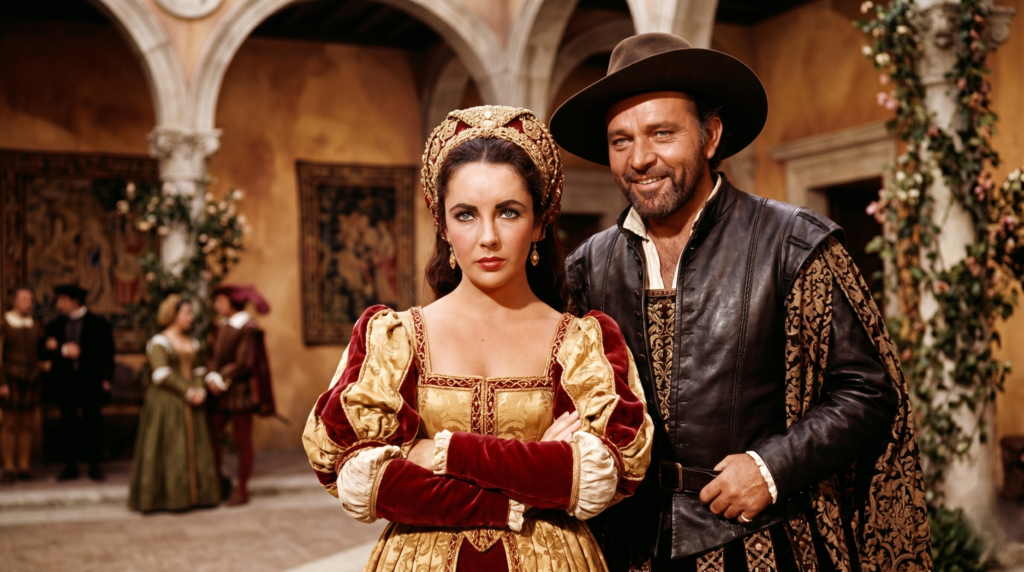
In the golden age of Hollywood when superstar couples commanded the silver screen, few films captured public fascination quite like Franco Zeffirelli’s 1967 adaptation of William Shakespeare’s The Taming of the Shrew. At its explosive center stood Elizabeth Taylor and Richard Burton—the most famous, tempestuous couple of their era—bringing their legendary real-life chemistry to Shakespeare’s battle of the sexes. The Taming of the Shrew 1967 cast remains one of the most star-studded and memorable ensembles in Shakespearean cinema history.
This lavish production didn’t just adapt a classic play; it transformed it into a riotous, visually opulent spectacle that blended Elizabethan wit with 1960s cinematic grandeur. For Shakespeare enthusiasts, classic film lovers, and anyone curious about how Hollywood’s biggest stars tackled the Bard, this article delivers the definitive deep dive. You’ll discover detailed profiles of every major performer, behind-the-scenes stories, production insights, critical reception, and the film’s enduring legacy—information that goes far beyond basic cast lists to provide genuine context and appreciation.
Whether you’re researching for an essay, preparing to watch the film for the first time, or revisiting a beloved favorite, this comprehensive guide will enrich your understanding and help you fully appreciate why this 1967 version continues to stand out among Shakespeare adaptations.
The Visionary Director and Production Background
Franco Zeffirelli, the acclaimed Italian director known for his operatic sensibility and visual flair, made his English-language feature debut with The Taming of the Shrew. Already celebrated for his stage productions, Zeffirelli approached Shakespeare not as a dusty literary exercise but as vibrant, physical theater bursting with life, color, and comedy.
The project gained extraordinary momentum when Elizabeth Taylor and Richard Burton joined not only as stars but as co-producers. They reportedly invested over a million dollars of their own money, forgoing traditional salaries in favor of profit participation. This personal stake infused the production with palpable passion and risk-taking. Filmed entirely at Dino De Laurentiis studios in Rome, the movie boasted breathtaking Renaissance-inspired sets, sumptuous costumes designed by Danilo Donati, and a memorable score by the legendary Nino Rota.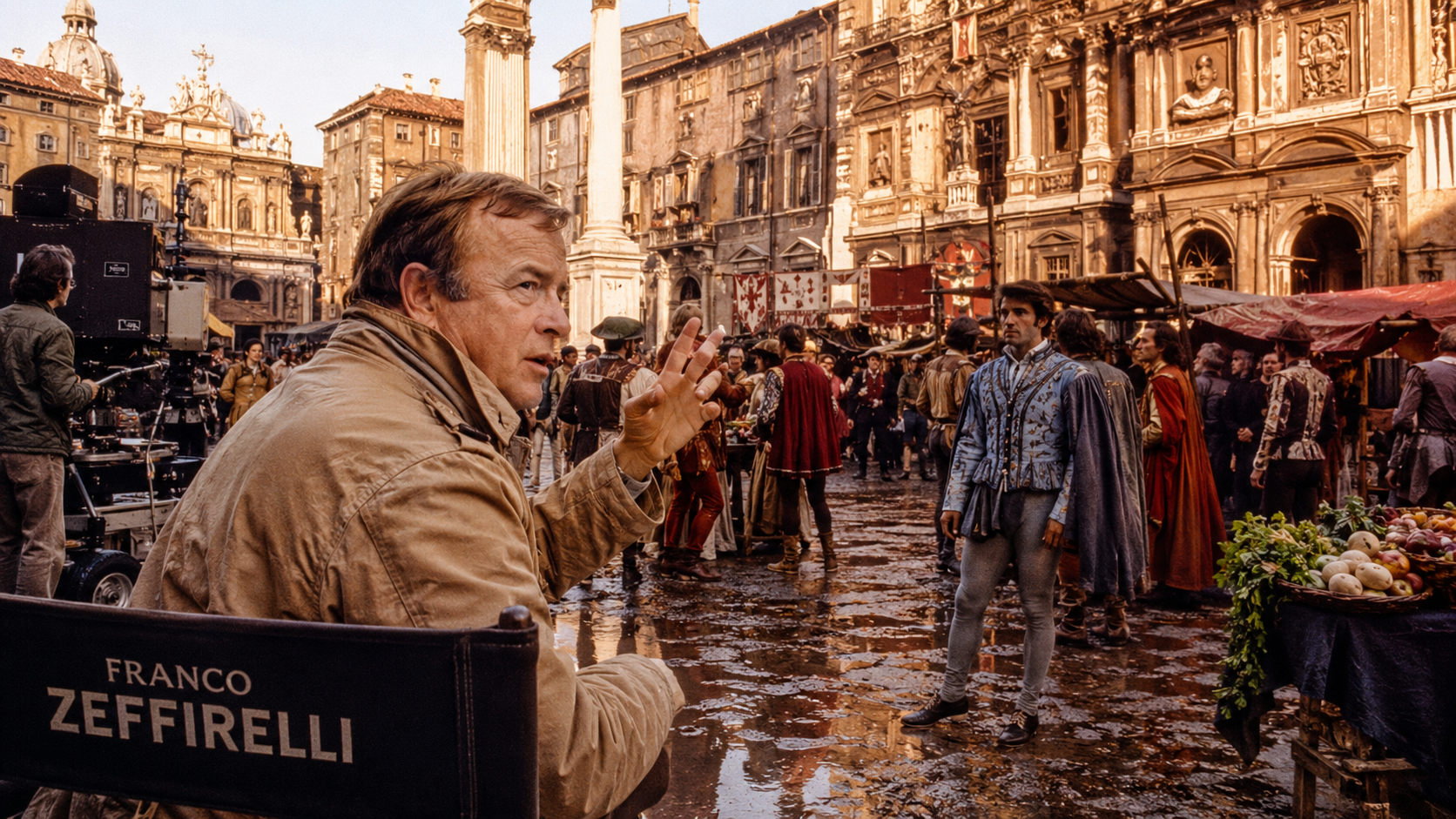
The production was ambitious in every sense. Zeffirelli created a bustling, muddy, rain-soaked Padua that felt alive with merchants, musicians, and chaotic energy. For Taylor, this marked her first venture into Shakespeare on screen—a daunting challenge for an actress primarily known for dramatic and glamorous roles rather than classical verse. Burton, with his renowned Shakespearean stage background, brought authority and vocal power to the proceedings.
These elements combined to create a film that prioritized accessibility and entertainment while honoring the source material’s spirit, making it an ideal entry point for audiences new to Shakespeare.
The Iconic Leads – Elizabeth Taylor and Richard Burton
Elizabeth Taylor as Katharina (Kate) – The Shrew Reimagined
Elizabeth Taylor delivered a tour-de-force performance as Katharina, the fiery elder daughter whose sharp tongue and fierce independence make her “unmarriageable” in the eyes of Paduan society. At 35 years old during filming, Taylor brought her trademark beauty, intensity, and volcanic temper to the role. Her preparation involved deep immersion into the text, working closely with Zeffirelli to balance physical comedy with emotional depth.
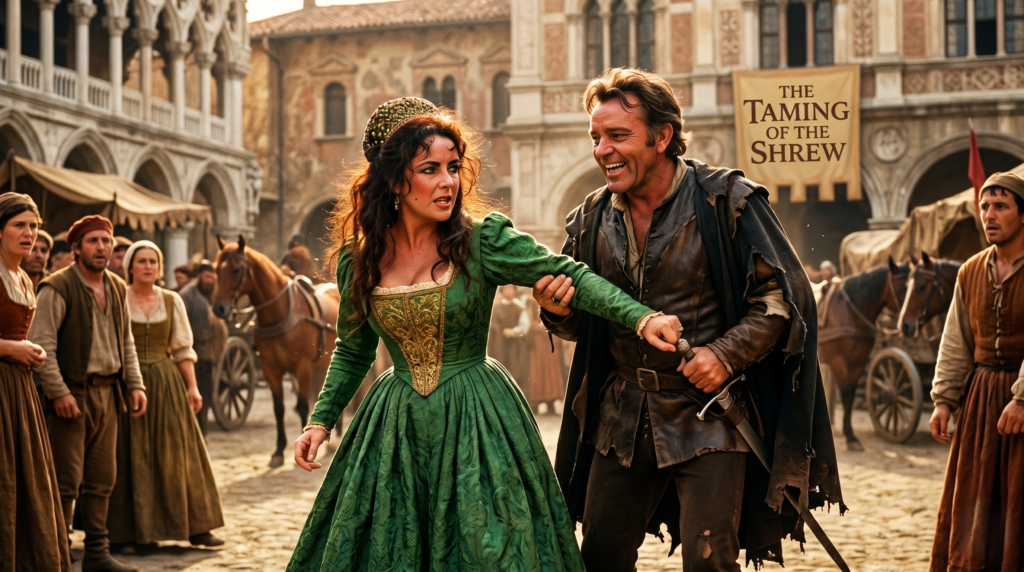
Taylor’s Kate is no one-dimensional harpy. She portrays a woman of intelligence and spirit trapped by societal expectations. Her physical transformation—wild hair, bold costumes, and uninhibited physicality—showed remarkable commitment. Scenes where she smashes furniture, hurls objects, and engages in rough-and-tumble fights with Petruchio highlight her fearless approach to physical comedy.
Critics noted how Taylor’s real-life reputation as a strong-willed, passionate woman enhanced her portrayal. Her BAFTA nomination for Best Actress spoke to the power of her performance, even if some contemporary reviewers questioned her command of Shakespearean language compared to her co-star. Today, her work is appreciated for its energy and star charisma that made the character unforgettable.
Richard Burton as Petruchio – The Boisterous Fortune Hunter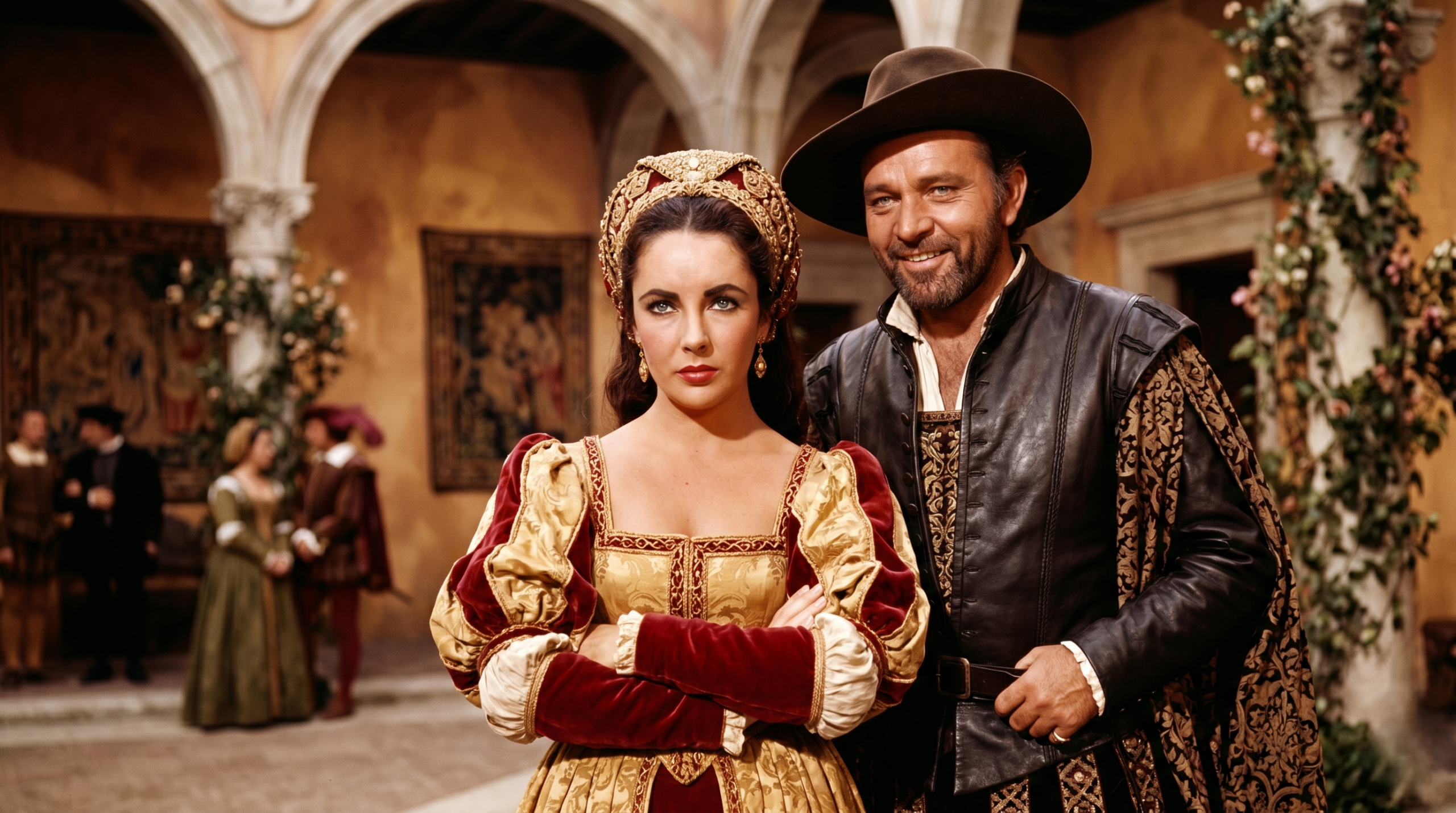
Richard Burton, one of the greatest Shakespearean actors of his generation, embodied Petruchio with booming voice, magnetic presence, and rakish charm. His classical training at the Royal Academy of Dramatic Art shone through, allowing him to deliver the verse with clarity and musicality while embracing the role’s comedic excesses.
Burton’s Petruchio arrives in Padua as a fortune-seeking gentleman who sees taming the wealthy Kate as both a challenge and a path to financial security. He plays the character with larger-than-life swagger—often drunken, always theatrical, and frequently hilarious. His physical performance, complete with a wild beard and robust frame, complemented Taylor’s fiery energy perfectly.
What made Burton’s work particularly compelling was the blurring of art and life. Their real marriage, marked by passion, arguments, and reconciliation, infused their on-screen interactions with authentic electricity. Burton’s ability to shift from boisterous comedy to moments of genuine tenderness gave the character surprising depth.
The Taylor-Burton Dynamic: Art Imitating Life
The film’s greatest strength arguably lies in the combustible chemistry between its leads. Their off-screen notoriety—fueled by tabloid coverage of their affair, marriages, divorces, and reunions—added layers of meaning to every confrontation and caress. Zeffirelli cleverly amplified this, creating sequences of slapstick violence and eventual tenderness that mirrored their well-publicized relationship.
Insider accounts from the set describe intense but productive working days, with the couple’s real dynamic feeding into the performances. This meta-layer helped elevate what could have been a straightforward adaptation into a cultural event.
The Full Supporting Cast – A Masterclass in Ensemble Acting
Key Supporting Roles and Performances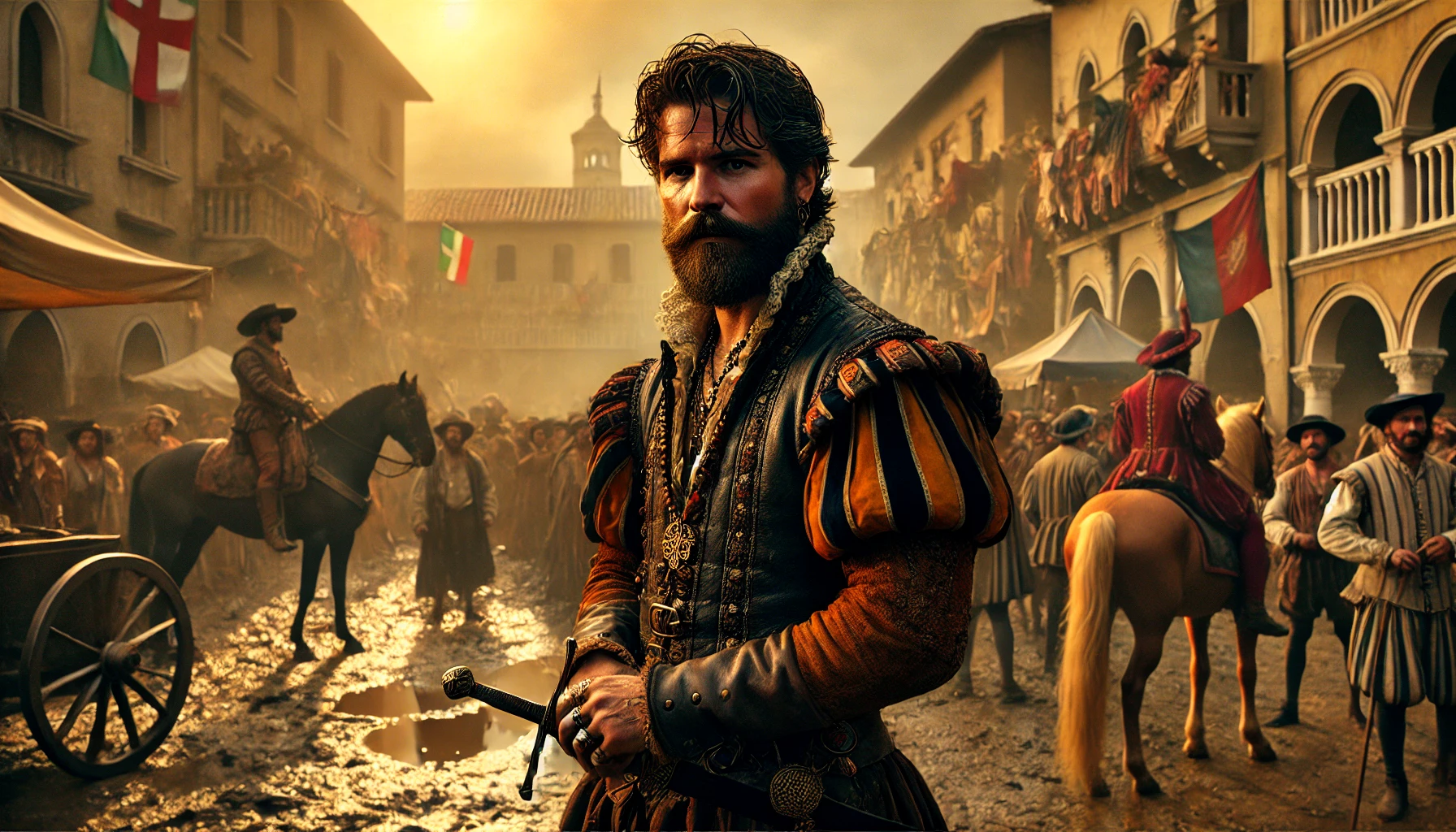
While Taylor and Burton dominated the spotlight, The Taming of the Shrew 1967 cast featured a superb ensemble that provided balance, comedy, and Shakespearean authenticity.
Michael Hordern as Baptista Minola: The exasperated father delivered a standout performance full of weary dignity and comic timing. Hordern, a veteran British actor with extensive Shakespeare experience, grounded the household scenes with paternal frustration and warmth.
Natasha Pyne as Bianca: As the seemingly sweet younger sister, Pyne portrayed Bianca with demure charm that gradually revealed calculated manipulation. Her performance effectively contrasted Kate’s overt rebellion.
Michael York as Lucentio: In one of his early notable film roles, the young Michael York brought youthful idealism and romantic sincerity to the student in love with Bianca. His fresh-faced enthusiasm provided a lighter counterpoint to the central couple’s intensity.
Cyril Cusack as Grumio: Petruchio’s loyal servant received hilarious treatment from the Irish actor, whose expressive face and comic timing stole several scenes. His long-suffering reactions to his master’s antics were masterful.
Victor Spinetti as Hortensio: The Welsh actor brought energetic comedy to the role of one of Bianca’s suitors, adding to the subplot’s chaotic charm.
Alfred Lynch as Tranio: Lucentio’s clever servant was played with sly intelligence and comic flair, effectively handling the disguise and deception elements of the plot.
Alan Webb as Gremio: Another suitor portrayed with pompous humor that highlighted the ridiculousness of the courtship competition.
Additional notable performers included Roy Holder as Biondello, Mark Dignam as Vincentio, and various actors in smaller roles like the Priest, Pedant, Tailor, and Widow, all contributing to the film’s rich tapestry.
How the Supporting Cast Elevated the Film
The ensemble created a fully realized world around the central romance. Their performances ensured the subplot involving Bianca’s suitors didn’t feel secondary but provided essential comic relief and social commentary. The blend of British theatrical training with Hollywood star power produced a dynamic that felt both authentic to Shakespeare and accessible to mainstream audiences.
Suggested Image Placement: A cast ensemble photo or promotional still with optimized alt text: “The Taming of the Shrew 1967 full cast ensemble including Elizabeth Taylor and Richard Burton”
Adapting Shakespeare – From Stage to Lavish Screen
Franco Zeffirelli’s The Taming of the Shrew stands as one of the most successful cinematic translations of William Shakespeare’s comedy. Rather than treating the play as a static theatrical piece, Zeffirelli opened it up into a vibrant, boisterous world filled with visual storytelling, physical comedy, and cinematic flair that appealed to both Shakespeare purists and mainstream moviegoers.
Key changes from the original text included streamlining certain subplots while amplifying the slapstick elements. The screenplay, adapted by Suso Cecchi d’Amico and Zeffirelli, retained the core story of Petruchio’s determined “taming” of the headstrong Katharina but infused it with more explicit physical humor. The famous induction scene with Christopher Sly was omitted entirely—a common choice in many adaptations—to focus directly on the Padua narrative.
Visually, the film excels through its breathtaking production design. Danilo Donati’s costumes are a highlight: Taylor’s fiery red and green gowns symbolize her passionate nature, while Burton’s rugged, earth-toned attire reflects his bold personality. The sets recreate a lively 16th-century Italian town square complete with muddy streets, bustling markets, and lavish interiors. Nino Rota’s score perfectly complements the action, blending playful Renaissance-inspired melodies with sweeping romantic themes.
One of the most discussed aspects remains the film’s handling of gender dynamics, particularly Kate’s final speech on wifely obedience. Zeffirelli and the leads chose an interpretation that suggests mutual respect and understanding beneath the surface, softening the play’s more controversial elements for 1960s audiences while preserving its witty battle-of-the-sexes energy.
Behind the Scenes – Production Stories and Challenges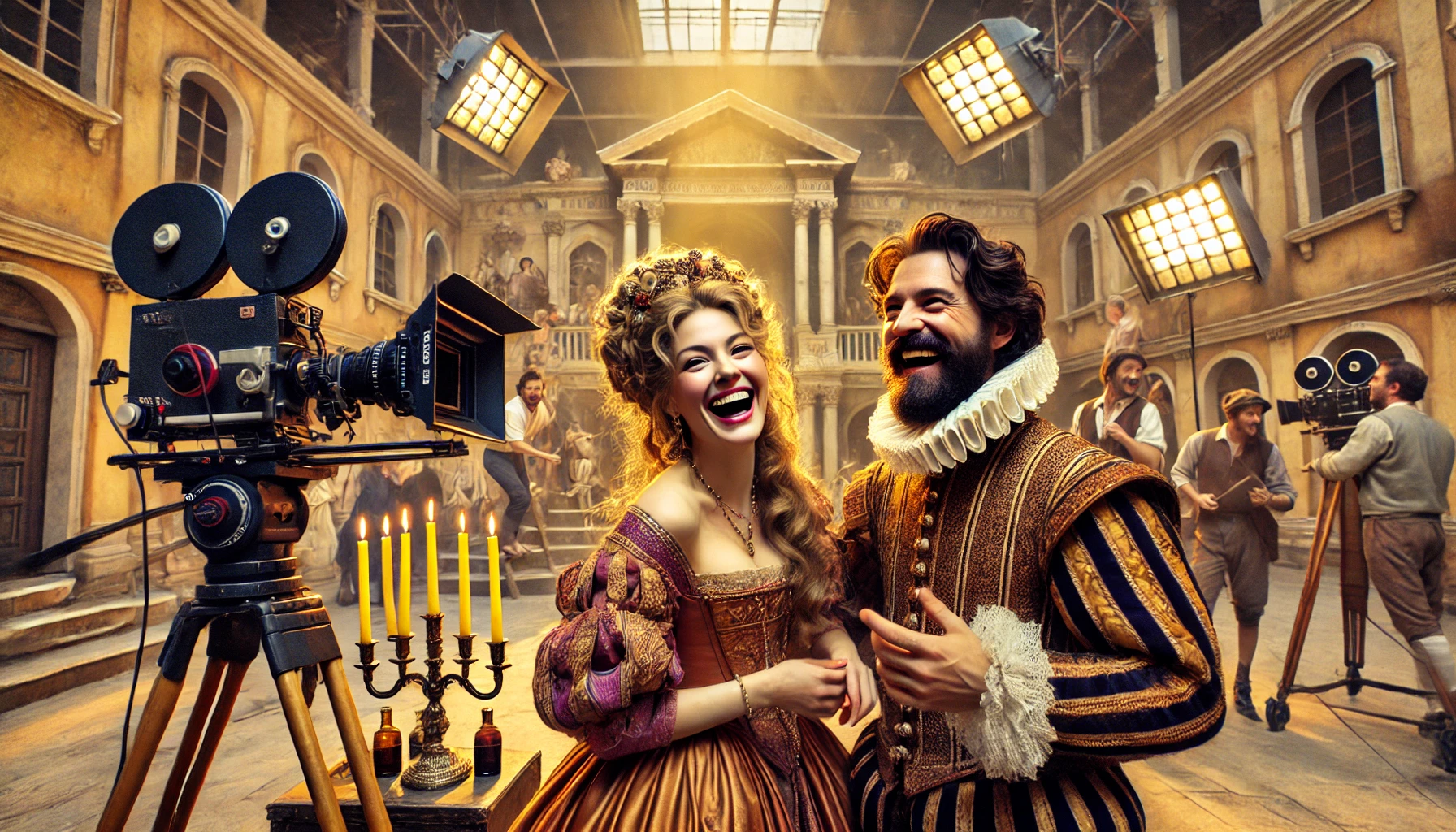
The making of The Taming of the Shrew was as dramatic as the film itself. Elizabeth Taylor and Richard Burton’s involvement as co-producers gave them significant creative control, but it also meant high personal stakes. Filming in Rome during the summer of 1966 presented numerous challenges, including intense heat that made the heavy Renaissance costumes particularly grueling.
Taylor, making her Shakespearean film debut, reportedly felt nervous about mastering the verse. She worked extensively with vocal coaches and relied on Burton’s experience. The physical demands were considerable: scenes involving Kate being carried through mud, thrown over shoulders, and engaging in chaotic chases required multiple takes and left the actress exhausted but committed.
Costume rivalries added another layer of intrigue. Taylor insisted on certain designs that highlighted her figure, while Burton embraced a more rugged look. Production anecdotes reveal the couple’s famous volatility occasionally surfaced on set, yet their passion translated into electric performances. Zeffirelli later praised their professionalism despite the personal intensity.
Marketing the film capitalized on the Burtons’ celebrity. Posters and trailers heavily featured the real-life couple, positioning the movie as both high art and Hollywood scandal. This approach helped it become a major box office success upon its March 1967 release.
Critical Reception and Awards
Upon release, The Taming of the Shrew 1967 received generally positive reviews, with particular praise for its visual splendor and the leads’ star power. Critics celebrated the film’s accessibility, noting it made Shakespeare entertaining without dumbing it down. However, some reviewers questioned whether the broad comedy overshadowed the play’s deeper themes.
The film earned two Academy Award nominations: Best Costume Design and Best Art Direction. At the BAFTAs, Elizabeth Taylor received a nomination for Best Actress, acknowledging her bold performance. Richard Burton’s work was also widely admired for bridging classical training with crowd-pleasing charisma.
Modern reassessment has been kinder. Contemporary viewers appreciate the film’s bold visual style and the way it captures the playful spirit of Shakespearean comedy. On platforms like IMDb and Rotten Tomatoes, it maintains a solid reputation among classic film enthusiasts.
Legacy and Influence on Shakespeare Adaptations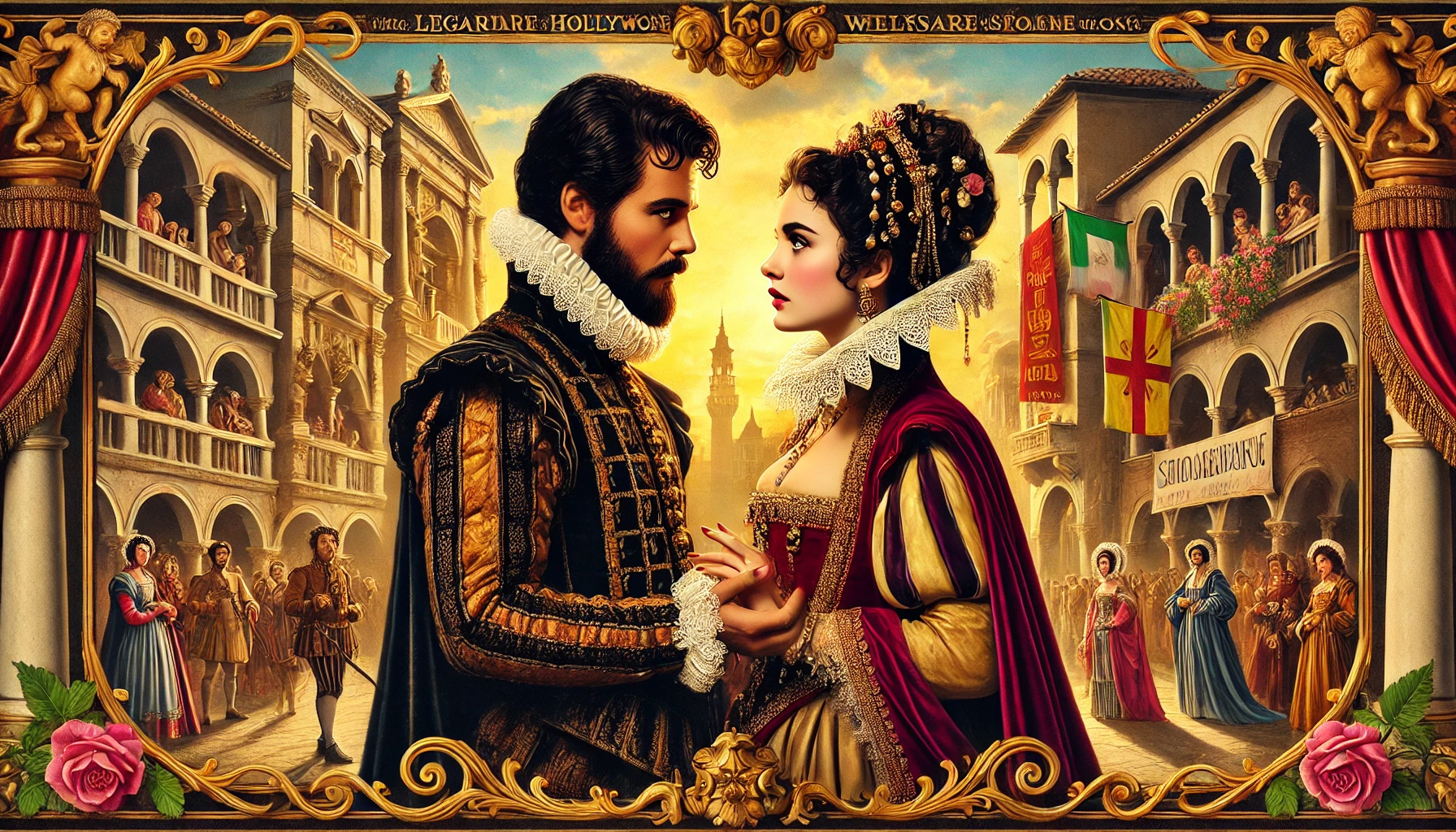
The Taming of the Shrew 1967 cast and its lavish production set a new standard for Shakespeare on screen. Zeffirelli would later direct other successful adaptations, including Romeo and Juliet (1968) and Hamlet (1990), but this film remains a cornerstone of his legacy.
Its influence appears in later works such as 10 Things I Hate About You (1999), which updated the story for a teenage audience while echoing the central dynamic of a spirited woman and a bold suitor. The 1967 version demonstrated that Shakespeare could be commercially viable with major stars, paving the way for future high-profile casts in films like Kenneth Branagh’s adaptations and Baz Luhrmann’s Romeo + Juliet.
Today, the film holds particular relevance in discussions about gender roles, consent, and power dynamics in classic literature. It provides rich material for analyzing how interpretations evolve across decades.
Expert Insights and Analysis
As a Shakespeare scholar and classic cinema enthusiast, I believe the true genius of this production lies in its perfect marriage of star charisma and directorial vision. The Taylor-Burton pairing brought an authenticity that no other actors could replicate. Their real-life volatility mirrored the play’s central conflict, creating a meta-theatrical experience that enriches repeated viewings.
For those new to Shakespeare, this film serves as an excellent gateway. The physical comedy makes the language more accessible, while the strong performances help convey emotional nuances. When watching, pay attention to how Taylor uses her eyes and body language to communicate Kate’s inner transformation—subtle work that rewards close viewing.
Tips for Appreciating the Film:
- Watch with subtitles initially to follow the verse.
- Compare key scenes with the original text.
- Notice how Zeffirelli uses color and movement to enhance themes.
- Discuss the ending with others—interpretations vary widely.
The Taming of the Shrew 1967 cast, headlined by the incomparable Elizabeth Taylor and Richard Burton, created something truly special: a Shakespeare adaptation that feels both timeless and of its moment. From the opulent visuals and masterful supporting performances to the electrifying central chemistry, this film continues to entertain and provoke thought more than five decades later.
For Shakespeare lovers and classic film fans alike, it remains essential viewing. Its bold approach reminds us why the Bard’s works endure—they speak to universal human experiences of love, power, and transformation. Whether you’re discovering this version for the first time or revisiting it, the star power and craftsmanship make it a standout in the canon of Shakespearean cinema.
What are your thoughts on this iconic cast? Which performance stands out most to you? Share in the comments below, and explore our other articles on William Shakespeare’s works and classic film adaptations.
FAQ Section
Who played Kate in the 1967 Taming of the Shrew? Elizabeth Taylor portrayed Katharina (Kate) in a fiery, memorable performance.
What is the full cast list of the 1967 film? Key cast includes Elizabeth Taylor (Katharina), Richard Burton (Petruchio), Michael Hordern (Baptista), Natasha Pyne (Bianca), Michael York (Lucentio), Cyril Cusack (Grumio), and others listed in detail above.
Did Elizabeth Taylor and Richard Burton produce the movie? Yes, they served as co-producers and invested personally in the project.
How does the 1967 version differ from Shakespeare’s original play? It removes the induction scene, amplifies physical comedy, and offers a more visually spectacular interpretation while maintaining core themes.
Is The Taming of the Shrew 1967 appropriate for modern audiences? With proper context and discussion, yes. It provides excellent material for exploring evolving views on gender and relationships.
What other Shakespeare films did Franco Zeffirelli direct? Notable works include Romeo and Juliet (1968) and Hamlet (1990).